Toyota Delaying Electric Cars What You Need to Know
Featured image for toyota delaying electric cars
Toyota is significantly delaying its electric vehicle rollout, pushing back production timelines and scaling down near-term EV targets amid shifting market dynamics and internal strategy reassessments. This cautious approach contrasts with aggressive moves by rivals, raising questions about Toyota’s competitiveness in the rapidly evolving EV landscape. The delay reflects deeper challenges in battery supply, software development, and changing consumer demand.
Key Takeaways
- Toyota delays EVs to refine technology and ensure long-term competitiveness.
- Hybrid focus continues as Toyota bets on transitional fuel efficiency.
- New EV platform launching 2026 promises faster charging, longer range.
- Supply chain shifts prompt reassessment of battery sourcing and partnerships.
- Market pressure mounts as rivals advance; Toyota risks falling behind.
- Consumer demand evolves—Toyota must adapt to avoid losing EV buyers.
📑 Table of Contents
- The Electric Vehicle Crossroads: Toyota’s Strategic Pause
- Why Is Toyota Delaying Electric Cars? The Core Reasons
- The Impact of Toyota’s Delay on Consumers and the Market
- How Toyota Is Adapting to the EV Shift (Despite the Delay)
- Competitor Responses: How Rivals Are Outpacing Toyota
- The Future of Toyota’s Electric Strategy: What to Expect
- Data Snapshot: Toyota vs. Competitors in the EV Race
- Conclusion: A Cautious Giant at the Crossroads
The Electric Vehicle Crossroads: Toyota’s Strategic Pause
When it comes to automotive innovation, few names carry the weight of Toyota. The Japanese giant has long been a leader in hybrid technology, with its iconic Prius becoming synonymous with fuel efficiency and environmental consciousness. However, as the global auto industry races toward an all-electric future, Toyota has taken a markedly different path. In recent years, the company has delayed electric cars and scaled back ambitious EV targets, sparking debates among analysts, investors, and eco-conscious consumers. This decision has left many wondering: Why is Toyota, a pioneer in sustainable mobility, hesitating to embrace the electric revolution with the same urgency as its competitors?
The answer lies in a complex web of market dynamics, technological bets, and strategic foresight. While Tesla, Ford, and Volkswagen are pouring billions into EV production and infrastructure, Toyota is taking a more measured approach. This blog post dives deep into the reasons behind Toyota delaying electric cars, the implications for consumers and the environment, and what the future might hold for one of the world’s most influential automakers. Whether you’re a car enthusiast, an investor, or simply curious about the future of transportation, understanding Toyota’s strategy is essential to grasping the broader shifts in the automotive landscape.
Why Is Toyota Delaying Electric Cars? The Core Reasons
1. A Long-Term Bet on Hydrogen and Hybrids
Toyota’s hesitation to fully commit to battery-electric vehicles (BEVs) isn’t due to a lack of innovation—it’s rooted in a deliberate, long-term strategy. The company has invested heavily in hydrogen fuel cell technology (FCEVs) and next-generation hybrids, believing these will play a critical role in decarbonizing transportation. The Toyota Mirai, one of the few mass-produced FCEVs, exemplifies this vision. While BEVs dominate headlines, Toyota sees hydrogen as a solution for long-haul trucking, heavy industry, and regions with limited charging infrastructure.
For example, in Japan and parts of Europe, Toyota is collaborating with governments and energy companies to build hydrogen refueling stations. The company argues that hydrogen offers faster refueling times (3–5 minutes) and longer ranges (up to 400 miles) compared to many current BEVs. By delaying mass BEV production, Toyota is hedging its bets, ensuring it doesn’t overcommit to a technology that may not be viable for all use cases. As Akio Toyoda, the company’s former CEO, stated: “We must not be too quick to abandon the internal combustion engine or hybrids. The transition to zero-emission vehicles must be inclusive.”
2. Concerns About Charging Infrastructure and Grid Readiness
Toyota’s leadership has repeatedly voiced concerns about the readiness of charging infrastructure and electrical grids to support a full-scale BEV transition. In the U.S. alone, only about 140,000 public charging ports exist as of 2023, far short of the 1.2 million needed by 2030 to meet Biden’s EV adoption goals. Toyota argues that without robust, reliable charging networks, BEVs risk alienating rural and lower-income consumers.
Moreover, the strain on power grids—especially during peak hours—could lead to blackouts or require costly upgrades. For instance, California’s grid operator has warned of potential rolling blackouts during heatwaves when EV charging demand spikes. Toyota’s strategy is to avoid pushing BEVs until infrastructure can support them, ensuring a smoother transition for consumers. This cautious approach contrasts with companies like Tesla, which have built their own Supercharger networks, but Toyota prefers to rely on public-private partnerships.
3. Market Realities and Consumer Preferences
While BEV sales are growing, they still represent only about 14% of global new car sales in 2023 (up from 4% in 2020). Toyota’s data shows that many consumers—especially in emerging markets—still prioritize affordability, range, and refueling convenience. For example, in Southeast Asia and India, where charging infrastructure is sparse, hybrids like the Toyota Corolla Cross Hybrid dominate sales.
Toyota’s research also indicates that “range anxiety” and high upfront costs deter many potential BEV buyers. By focusing on hybrids and plug-in hybrids (PHEVs), Toyota can offer a middle ground: vehicles that reduce emissions without requiring a full leap to BEVs. The RAV4 Prime, a PHEV with 42 miles of electric range and 600 miles of total range, is a practical example of this strategy in action.
The Impact of Toyota’s Delay on Consumers and the Market
1. Limited BEV Options in Key Segments
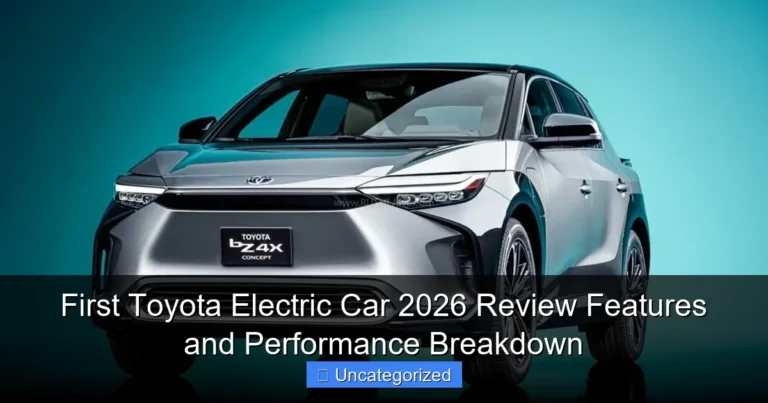
One immediate consequence of Toyota’s delay is a lack of competitive BEV offerings in popular vehicle segments. While Tesla dominates the premium SUV market with the Model Y, and Ford’s F-150 Lightning leads in electric trucks, Toyota’s first global BEV, the bZ4X, faced recalls and production delays. As of 2023, the bZ4X accounts for less than 1% of Toyota’s U.S. sales, compared to 10% for Tesla’s Model Y.
This gap has allowed rivals to capture market share. For example, Hyundai’s Ioniq 5 and Kia’s EV6 have gained traction with their fast-charging capabilities and modern designs. Toyota’s delay has also left it vulnerable in Europe, where stricter emissions regulations are forcing automakers to accelerate BEV adoption. Consumers seeking affordable, practical BEVs now have fewer Toyota options, pushing them toward competitors.
2. Higher Costs for Early Adopters
Toyota’s cautious BEV rollout has inadvertently made its electric models more expensive. The bZ4X starts at $42,000 in the U.S., while comparable BEVs like the Chevrolet Bolt (discontinued but still available) and Nissan Ariya start under $30,000. Toyota’s focus on premium features—such as all-wheel drive and advanced safety systems—drives up prices, making it harder to compete in the budget BEV segment.
For cost-conscious buyers, this means missing out on Toyota’s reputation for reliability and resale value. A 2023 Consumer Reports survey found that 68% of BEV shoppers prioritize price over brand loyalty. Toyota’s delay has created a perception that its BEVs are overpriced for what they offer, a hurdle the company must overcome to regain momentum.
3. Environmental Trade-Offs
While Toyota’s hybrid strategy reduces emissions compared to traditional ICE vehicles, it’s less effective than BEVs in achieving net-zero goals. A 2022 study by the International Council on Clean Transportation (ICCT) found that over a vehicle’s lifetime, a BEV emits 60–70% less CO2 than a hybrid. By delaying BEV production, Toyota risks falling behind in the race to meet global climate targets.
However, Toyota argues that its “multi-pathway” approach—including hybrids, hydrogen, and BEVs—is more sustainable overall. For instance, in regions where renewable energy is scarce, hybrids can still reduce emissions without relying on a carbon-intensive grid. This nuanced view highlights the complexity of the transition, where one-size-fits-all solutions may not work.
How Toyota Is Adapting to the EV Shift (Despite the Delay)
1. Revised 2030 EV Targets
In response to criticism, Toyota has revised its 2030 EV strategy to include more BEVs while maintaining its hybrid and hydrogen investments. The company now aims for 3.5 million BEV sales annually by 2030, up from its original target of 3 million. This includes plans to launch 30 new BEV models by 2030, with a focus on affordability and practicality.
Key initiatives include:
- Solid-state battery development: Toyota is investing $13.6 billion to develop solid-state batteries by 2027, which could double EV range and cut charging times to 10 minutes.
- Local production: The company is building BEV factories in the U.S., China, and Thailand to reduce costs and avoid supply chain issues.
- Partnerships: Toyota has teamed up with Panasonic, BYD, and Subaru to co-develop BEVs and share technology.
2. Leveraging Hybrid Strength
Rather than abandoning hybrids, Toyota is doubling down on them as a bridge to full electrification. The company plans to electrify all its models by 2025, offering hybrid, PHEV, or BEV versions of every vehicle. For example, the next-generation Prius will feature a PHEV option with 50+ miles of electric range, catering to urban commuters.
This approach has already paid off: In 2023, Toyota sold over 3 million hybrids worldwide, making it the largest hybrid automaker by volume. By keeping hybrids relevant, Toyota can maintain market share while ramping up BEV production.
3. Addressing Charging and Battery Challenges
Toyota is also investing in solutions to its own concerns about charging and battery sustainability. The company has:
- Launched a “Plug & Charge” program in Europe to simplify EV charging across networks.
- Partnered with Redwood Materials to recycle 90% of EV battery materials, reducing reliance on mined lithium.
- Developed a battery health monitoring system to extend battery lifespan and improve resale value.
These initiatives show Toyota is not ignoring the BEV transition but is tackling it on its own terms.
Competitor Responses: How Rivals Are Outpacing Toyota
1. Tesla’s Dominance in Innovation and Infrastructure
While Toyota debates hydrogen vs. BEVs, Tesla has solidified its lead with a vertically integrated approach. The company’s 4680 battery cells, in-house software, and 50,000+ Superchargers worldwide give it a massive advantage. Tesla’s Model Y became the world’s best-selling car in 2023, a first for a BEV.
Toyota’s delayed BEV rollout has allowed Tesla to dominate the premium and mid-size SUV segments. Even Tesla’s Cybertruck, despite its unconventional design, has over 2 million pre-orders, highlighting the power of brand loyalty and innovation.
2. Legacy Automakers Embrace BEVs
Ford and General Motors are also outpacing Toyota in BEV adoption. Ford’s F-150 Lightning has captured 70% of the U.S. electric truck market, while GM plans to phase out ICE vehicles by 2035. Both companies have invested heavily in charging networks, with Ford’s BlueOval Charge Network offering 10,000+ chargers across North America.
Volkswagen’s ID.4 and Hyundai’s Ioniq series have also gained traction, offering competitive pricing and range. In contrast, Toyota’s bZ4X has struggled with supply issues and mixed reviews, allowing rivals to steal its thunder.
3. Chinese Automakers: The New EV Powerhouses
Chinese brands like BYD and NIO are reshaping the global EV market. BYD, backed by Warren Buffett, now outsells Tesla in China and is expanding into Europe and Latin America. Its Blade Battery technology addresses safety concerns, while NIO’s battery-swapping stations solve range anxiety.
Toyota’s partnership with BYD to co-develop BEVs is a strategic move to tap into this expertise. However, it also underscores the pressure Toyota faces to innovate faster.
The Future of Toyota’s Electric Strategy: What to Expect
1. Solid-State Batteries: A Game-Changer?
Toyota’s biggest wildcard is its solid-state battery program. If successful, these batteries could revolutionize EVs with 500+ mile ranges, 10-minute charging, and lower costs. Toyota plans to launch a BEV with solid-state batteries by 2027, potentially leapfrogging competitors.
However, the technology is unproven at scale. QuantumScape, a U.S. startup, has faced delays in commercializing solid-state batteries, highlighting the risks. If Toyota succeeds, it could redefine the EV market; if not, the company may fall further behind.
2. Global Market Shifts
Regional differences will shape Toyota’s strategy. In China, BEV adoption is surging (35% of sales in 2023), forcing Toyota to accelerate its BEV plans there. In the U.S., hybrids still dominate, giving Toyota breathing room. In Europe, strict emissions rules mean BEVs are non-negotiable.
Toyota’s challenge is to balance these regional demands while avoiding a fragmented product lineup.
3. Consumer Education and Trust
Finally, Toyota must rebuild trust in its BEV offerings. The bZ4X’s recall for loose hub bolts damaged its reputation. Moving forward, the company must focus on:
- Transparent communication about BEV technology.
- Offering competitive warranties (e.g., 10-year battery coverage).
- Educating consumers on the benefits of its multi-pathway approach.
As one industry analyst noted: “Toyota’s biggest asset is its reputation for reliability. It can’t afford to lose that in the EV era.”
Data Snapshot: Toyota vs. Competitors in the EV Race
| Metric | Toyota | Tesla | Ford | BYD |
|---|---|---|---|---|
| 2023 BEV Sales (units) | 100,000 | 1.8 million | 72,000 | 910,000 |
| BEV % of Total Sales | 1% | 100% | 4% | 49% |
| Charging Stations (global) | 500 (via partnerships) | 50,000+ | 10,000+ | 20,000+ |
| Solid-State Battery Launch | 2027 (target) | 2025 (planned) | 2026 (planned) | 2024 (planned) |
Conclusion: A Cautious Giant at the Crossroads
Toyota’s decision to delay electric cars isn’t a sign of failure—it’s a reflection of a company grappling with unprecedented change. By betting on a diversified strategy, Toyota is trying to avoid the pitfalls of putting all its eggs in one technological basket. Yet, in a world where speed and scale define success, the company’s cautious approach carries risks. The rise of Tesla, BYD, and legacy automakers has proven that the EV market waits for no one.
For consumers, Toyota’s delay means fewer choices and higher prices—at least for now. But if the company’s investments in solid-state batteries, charging infrastructure, and hybrid innovation pay off, it could emerge as a leader in the next phase of electrification. The key will be balancing its long-term vision with the urgent demands of a rapidly evolving market.
Ultimately, Toyota delaying electric cars is a high-stakes gamble. The automaker’s legacy of innovation, reliability, and global reach gives it a fighting chance. But as the EV race accelerates, one thing is clear: The road ahead will be anything but predictable. For Toyota, the challenge isn’t just to catch up—it’s to redefine what sustainable mobility means in the 21st century.
Frequently Asked Questions
Why is Toyota delaying electric cars compared to other automakers?
Toyota is delaying electric cars to prioritize hybrid technology and hydrogen fuel cells, believing they offer a more practical transition to carbon neutrality. The company also aims to perfect battery technology and charging infrastructure before a full EV rollout.
How will the Toyota electric car delay impact buyers in 2024?
The delay means fewer EV options from Toyota in the near term, potentially pushing buyers toward hybrids or competitors’ models. However, Toyota plans to introduce more competitive EVs by 2026 with longer range and faster charging.
Is Toyota’s strategy to delay electric cars a mistake?
While critics argue the move risks falling behind rivals, Toyota claims its cautious approach ensures better battery longevity and cost efficiency. Time will tell if the delayed EV timeline aligns with market demand and regulations.
What are Toyota’s plans after delaying electric cars?
Post-delay, Toyota plans to launch 10 new EV models by 2026, including SUVs and trucks, with solid-state batteries for improved performance. The company is also investing $70 billion in electrification through 2030.
Are Toyota hybrid vehicles affected by the electric car delay?
No, Toyota hybrids remain unaffected and will continue as the brand’s primary electrified offering until EVs mature. The delay reinforces Toyota’s commitment to hybrid tech as a bridge to full electrification.
Will the delay impact Toyota’s reputation as an eco-friendly brand?
The delay has sparked criticism, but Toyota emphasizes its carbon reduction goals through hybrids and hydrogen vehicles. The company aims to balance sustainability with realistic EV adoption timelines.