Toyota electric and petrol car lineup review

Featured image for toyota electric and petrol car
Image source: carserviceperth.com.au
Toyota’s electric and petrol car lineup blends reliability with innovation, offering a balanced mix of fuel-efficient hybrids, robust petrol engines, and emerging fully electric models. From the versatile RAV4 Hybrid to the futuristic bZ4X EV, Toyota delivers practical performance and cutting-edge technology across its range, ensuring eco-conscious drivers and traditionalists alike find a vehicle that fits their lifestyle.
Key Takeaways
- Prioritize efficiency: Toyota’s petrol models offer reliable fuel economy for daily driving.
- Embrace electrification: Electric and hybrid options deliver lower emissions and long-term savings.
- Assess driving needs: Choose hybrids for flexibility, EVs for short urban commutes.
- Consider total cost: Lower running costs of electric models offset higher upfront prices.
- Check charging access: Home or public charging is essential for electric Toyota ownership.
- Value safety features: All models include Toyota Safety Sense for peace of mind.
- Plan for the future: Toyota’s electrified lineup aligns with global sustainability goals.
📑 Table of Contents
- Toyota Electric and Petrol Car Lineup Review: What You Need to Know
- Toyota’s Hybrid Legacy: The Foundation of Their Electric Strategy
- The Rise of Toyota’s Fully Electric Vehicles
- Petrol-Powered Toyota Models: Still Going Strong
- Comparing Toyota’s Electric and Petrol Car Lineup: Which Is Right for You?
- Ownership Experience: Maintenance, Costs, and Long-Term Value
- Final Thoughts: Is Toyota the Right Choice for You?
Toyota Electric and Petrol Car Lineup Review: What You Need to Know
Choosing a new car is one of those big life decisions—like picking a neighborhood to live in or deciding what to name your dog. It’s exciting, a little overwhelming, and full of trade-offs. If you’re shopping for a reliable, fuel-efficient, and future-ready vehicle, Toyota is probably already on your radar. The Japanese automaker has built a reputation over decades for making cars that last, cost less to maintain, and just… work. But with the world shifting toward electric vehicles (EVs), you might be wondering: where does Toyota stand in the electric and petrol car lineup today?
Let’s be honest—Toyota was a bit slow to jump fully into the EV game compared to Tesla or Hyundai. But that doesn’t mean they’ve been sitting idle. In fact, Toyota has been quietly building a smart, balanced strategy that blends their legendary petrol engines with hybrid and fully electric models. They’re not betting everything on one technology. Instead, they’re offering a range of options—petrol, hybrid, plug-in hybrid, and full electric—so drivers can choose what fits their lifestyle, budget, and environmental goals. Whether you’re commuting 10 miles a day in the city or planning a cross-country road trip, Toyota has something in their electric and petrol car lineup that might surprise you.
Toyota’s Hybrid Legacy: The Foundation of Their Electric Strategy
Before we dive into fully electric models, it’s important to understand that Toyota’s real strength lies in hybrids. The Prius, launched in 1997, wasn’t just a car—it was a cultural moment. It proved that fuel efficiency didn’t have to mean sacrificing style or performance. Today, Toyota’s hybrid technology is more refined than ever, and it forms the backbone of their electric and petrol car lineup.

Visual guide about toyota electric and petrol car
Image source: car-images.bauersecure.com
How Toyota Hybrids Work: A Simple Explanation
Toyota’s Hybrid Synergy Drive system combines a petrol engine with an electric motor. The car automatically switches between the two—or uses both at once—depending on driving conditions. For example, when you’re cruising on the highway, the petrol engine does most of the work. But when you’re stuck in stop-and-go traffic or pulling away from a red light, the electric motor takes over. This seamless transition saves fuel and reduces emissions without requiring you to plug in.
One of the coolest things about Toyota hybrids is regenerative braking. Every time you slow down, the car captures energy that would normally be lost as heat and uses it to recharge the battery. It’s like getting a little bonus charge just from driving normally. Over time, this adds up to serious fuel savings.
Popular Hybrid Models in the Lineup
Right now, some of the most popular models in Toyota’s electric and petrol car lineup are hybrids. The Toyota Corolla Hybrid, for instance, gets up to 53 miles per gallon (mpg) in the city—impressive for a compact sedan. It’s perfect for daily commuters who want to cut fuel costs without switching to a full EV.
Then there’s the Toyota RAV4 Hybrid, one of the best-selling SUVs in America. It offers all-wheel drive, plenty of cargo space, and up to 41 mpg combined. If you live in a snowy area or just want the extra confidence of AWD, this is a smart pick. And for families, the Toyota Highlander Hybrid delivers three rows of seating, advanced safety features, and still manages 36 mpg combined—rare for a large SUV.
Even the Toyota Camry Hybrid proves that midsize sedans don’t have to be boring. With a smooth ride, upscale interior, and up to 52 mpg in the city, it’s a great option for anyone who wants comfort and efficiency in one package.
Why Hybrids Are Still a Smart Choice in 2024
You might be thinking, “Aren’t hybrids old news? Shouldn’t I go full electric?” Not necessarily. Hybrids are ideal if you don’t have reliable home charging, live in an apartment, or frequently take long road trips. They eliminate range anxiety—the fear of running out of battery—because you can always fill up at a gas station.
Plus, hybrids often cost less upfront than full EVs. For example, the Corolla Hybrid starts around $24,000, while the base Tesla Model 3 is over $38,000. And because Toyota hybrids are known for their durability, you’re likely to keep the car for 10+ years with minimal repairs. That long-term value is hard to beat.
The Rise of Toyota’s Fully Electric Vehicles
While hybrids dominate Toyota’s current sales, the company is making a serious push into full electric vehicles. Their first major EV, the Toyota bZ4X, launched in 2022, marked a turning point. It’s a compact SUV designed from the ground up as an electric car—no petrol engine, no compromise.
Toyota bZ4X: The First Step Into Full EV Territory
The bZ4X comes in two versions: front-wheel drive (FWD) and all-wheel drive (AWD). The FWD model offers up to 252 miles of range on a single charge, while the AWD version drops slightly to around 228 miles. That’s not class-leading—Tesla’s Model Y offers over 330 miles—but it’s solid for daily driving and weekend trips.
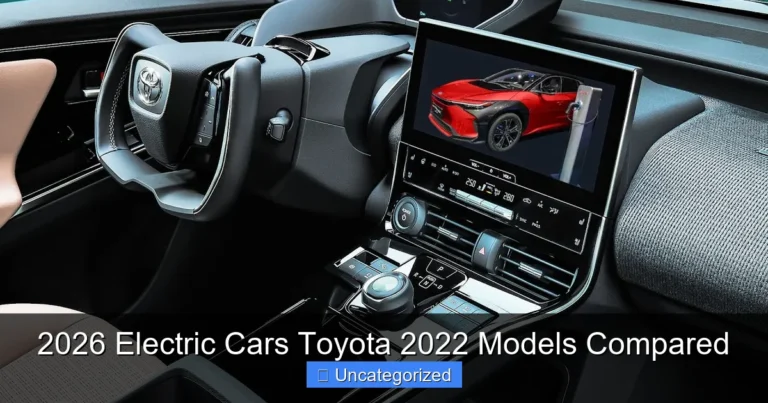
One standout feature is the available solar roof, which can add a few extra miles of range per day by harnessing sunlight. It’s not a game-changer, but it’s a clever touch that shows Toyota’s commitment to innovation. The interior is spacious, with a minimalist dashboard and a large 12.3-inch touchscreen. Safety features like adaptive cruise control, lane-keeping assist, and automatic emergency braking come standard.
Charging and Real-World Performance
Charging the bZ4X is straightforward. At home, a Level 2 charger (240V) can replenish the battery in about 9 hours. On the road, DC fast chargers can take it from 10% to 80% in roughly 30 minutes. That’s fast enough for a coffee break during a long drive.
In real-world use, the bZ4X feels smooth and quiet. The electric motor delivers instant torque, so acceleration is snappy—especially in city driving. The ride is comfortable, though some reviewers note that the suspension can feel a bit firm on rough roads. Overall, it’s a practical, well-built EV that fits nicely into Toyota’s lineup.
What’s Next for Toyota EVs?
Toyota has big plans for the future. They’ve announced a $70 billion investment in electrification by 2030, with goals to sell 3.5 million EVs annually by then. Upcoming models include the Toyota bZ3, a sedan developed with Chinese automaker BYD, and the Toyota Urban SUV, a smaller EV aimed at European and Asian markets.
They’re also working on solid-state batteries, which promise faster charging, longer range, and improved safety. While these won’t hit the market until the late 2020s, they could give Toyota a major edge in the EV race. For now, the bZ4X is a solid entry point into Toyota’s electric future.
Petrol-Powered Toyota Models: Still Going Strong
Despite the buzz around electrification, petrol-powered cars still make up the majority of Toyota’s sales. And for good reason—many drivers still prefer the simplicity, range, and refueling speed of traditional engines. Toyota’s petrol models are known for their reliability, fuel efficiency, and low cost of ownership.
Top Petrol Models in the Lineup
The Toyota Camry remains one of the best midsize sedans on the market. With a 2.5-liter four-cylinder engine, it delivers 203 horsepower and up to 39 mpg on the highway. The interior is quiet and well-appointed, with available leather seats, a premium JBL sound system, and a 9-inch touchscreen. It’s a great choice for families or professionals who want a comfortable, dependable ride.
For SUV lovers, the Toyota RAV4 (non-hybrid version) offers a 2.5-liter engine with 203 horsepower and up to 35 mpg highway. It’s rugged, practical, and comes with standard all-wheel drive on most trims. Whether you’re hauling kids to soccer practice or heading to the mountains, the RAV4 handles it all with ease.
The Toyota Tacoma is another standout—especially if you need a truck. With a 3.5-liter V6 engine producing 278 horsepower, it’s built for towing and off-roading. The TRD Off-Road and TRD Pro trims add features like skid plates, upgraded suspension, and all-terrain tires. It’s not the most fuel-efficient (around 20 mpg combined), but it’s incredibly capable and built to last.
Why Petrol Models Still Make Sense
Petrol cars are often cheaper to buy and insure than hybrids or EVs. They’re also easier to maintain—no need to worry about battery degradation or charging infrastructure. And if you drive mostly on highways or in rural areas with limited charging stations, a petrol car might be the most practical choice.
Plus, Toyota’s petrol engines are engineered for longevity. Many owners report driving their Camrys or Corollas well past 200,000 miles with minimal issues. That kind of reliability is hard to find elsewhere.
Comparing Toyota’s Electric and Petrol Car Lineup: Which Is Right for You?
So, how do you decide between a petrol, hybrid, or fully electric Toyota? It really depends on your lifestyle, driving habits, and priorities. Let’s break it down with some practical examples.
Scenario 1: City Commuter with Short Daily Drives
If you live in the city and drive less than 30 miles a day, a hybrid like the Corolla Hybrid or Prius is a no-brainer. You’ll save money on gas, reduce emissions, and never worry about charging. Plus, many cities offer HOV lane access and reduced tolls for hybrids.
Scenario 2: Family Road Trip Enthusiast
If you frequently drive long distances—say, visiting relatives across state lines or taking summer vacations—a petrol SUV like the Highlander or RAV4 might be better. You can fill up in minutes and won’t stress about finding charging stations in remote areas.
Scenario 3: Eco-Conscious Urban Dweller with Home Charging
If you’re committed to reducing your carbon footprint and have a garage with a 240V outlet, the bZ4X could be a great fit. You’ll enjoy zero emissions, low fuel costs, and the latest tech features. Just make sure your daily driving stays within the 250-mile range.
Scenario 4: Budget-Conscious Buyer
If upfront cost is your biggest concern, a petrol model like the Toyota Corolla (starting around $22,000) offers excellent value. It’s reliable, fuel-efficient, and backed by Toyota’s strong resale value.
Here’s a quick comparison table to help you visualize the options:
| Model | Type | Starting Price | MPG / Range | Best For |
|---|---|---|---|---|
| Corolla | Petrol | $22,050 | 32 city / 41 hwy | Budget buyers, daily commuters |
| Corolla Hybrid | Hybrid | $23,500 | 53 city / 46 hwy | Fuel-efficient city driving |
| RAV4 | Petrol | $28,275 | 27 city / 35 hwy | Families, outdoor enthusiasts |
| RAV4 Hybrid | Hybrid | $31,225 | 41 city / 38 hwy | Efficient SUV with AWD |
| bZ4X | Electric | $42,000 | 252 miles (FWD) | Eco-friendly urban drivers |
Ownership Experience: Maintenance, Costs, and Long-Term Value
One of the biggest advantages of owning any Toyota—whether petrol, hybrid, or electric—is the long-term value. These cars are built to last, and their maintenance costs are among the lowest in the industry.
Maintenance and Repairs
Toyota’s reputation for reliability means fewer trips to the mechanic. Petrol models typically need oil changes every 10,000 miles (thanks to synthetic oil), while hybrids and EVs require even less frequent servicing. The bZ4X, for example, has no oil changes, spark plugs, or exhaust system to worry about.
That said, EV repairs can be more expensive if something goes wrong with the battery or motor. But Toyota offers an 8-year/100,000-mile warranty on hybrid and EV batteries, which gives peace of mind. And because EVs have fewer moving parts, the overall risk of mechanical failure is lower.
Fuel and Charging Costs
Let’s talk dollars and cents. If you drive 15,000 miles a year, here’s how the costs compare (based on national averages):
- Petrol Corolla: ~$1,400/year in gas
- Corolla Hybrid: ~$800/year in gas
- bZ4X: ~$600/year in electricity (assuming home charging)
EVs win on fuel costs, but remember to factor in potential charging station fees if you rely on public networks. Also, electricity rates vary by region—some states offer discounted rates for off-peak charging, which can save even more.
Resale Value
Toyota vehicles consistently rank high in resale value. According to Kelley Blue Book, the RAV4 and Camry retain over 60% of their value after three years. The bZ4X is newer, so long-term data isn’t available yet, but early signs suggest strong demand in the used EV market.
Hybrids also hold their value well, especially as gas prices fluctuate. If you plan to sell or trade in your car in 5–7 years, a Toyota is a smart investment.
Final Thoughts: Is Toyota the Right Choice for You?
After reviewing Toyota’s electric and petrol car lineup, one thing is clear: they offer something for almost everyone. Whether you’re drawn to the efficiency of a hybrid, the simplicity of a petrol engine, or the innovation of a full EV, Toyota has a model that fits your needs.
They may not have the flashiest EVs or the most horsepower in every category, but Toyota excels in reliability, practicality, and long-term value. Their strategy—balancing petrol, hybrid, and electric options—shows they’re listening to real drivers, not just chasing trends.
If you’re ready to make a change, start by test-driving a few models. Visit a dealership, take the Corolla Hybrid for a spin, then try the bZ4X. See how each feels on the road, how intuitive the tech is, and whether the interior suits your lifestyle. And don’t forget to ask about incentives—many states offer tax credits for EVs and hybrids.
At the end of the day, the best car is the one that makes your life easier, saves you money, and puts a smile on your face when you hit the road. With Toyota’s electric and petrol car lineup, you’ve got plenty of great options to choose from.
Frequently Asked Questions
What are the key differences between Toyota electric and petrol car models?
Toyota electric cars, like the bZ4X, offer zero-emission driving, lower running costs, and instant torque, while petrol models (e.g., Corolla, RAV4) provide longer range, faster refueling, and proven reliability. The choice depends on your priorities: sustainability and efficiency versus convenience and upfront cost. Both lineups feature Toyota’s renowned safety tech and durability.
Which Toyota electric or petrol car is best for city driving?
For city driving, the Toyota electric bZ4X or Prius Plug-in Hybrid excels with quiet operation, compact size, and regenerative braking. Petrol options like the Yaris Hybrid also shine with agile handling and excellent fuel economy in stop-and-go traffic.
How does the performance of Toyota petrol cars compare to their electric counterparts?
Toyota electric cars deliver smoother, quieter acceleration with instant power, while petrol models offer higher top speeds and more consistent performance in extreme temperatures. However, EVs generally have lower maintenance needs due to fewer moving parts.
Are Toyota electric cars more expensive than petrol models?
Yes, Toyota electric cars typically have a higher purchase price due to battery costs, but government incentives and lower charging/fueling expenses can offset this over time. Petrol models remain more affordable upfront, with a wider range of budget-friendly options.
What is the driving range of Toyota electric and petrol cars?
Toyota electric vehicles like the bZ4X offer 250–300 miles per charge, while petrol models (e.g., Camry, Highlander) exceed 400–500 miles per tank. Hybrids, such as the RAV4 Hybrid, strike a balance with 500+ miles and reduced emissions.
Does Toyota offer hybrid options between electric and petrol?
Absolutely! Toyota’s hybrid lineup (e.g., Prius, Corolla Hybrid) combines petrol engines with electric motors for improved fuel efficiency and lower emissions. Plug-in hybrids (PHEVs) like the RAV4 Prime offer short electric-only ranges before switching to hybrid mode.