Toyota Electric Car Battery Breakthrough Shakes Up EV Market
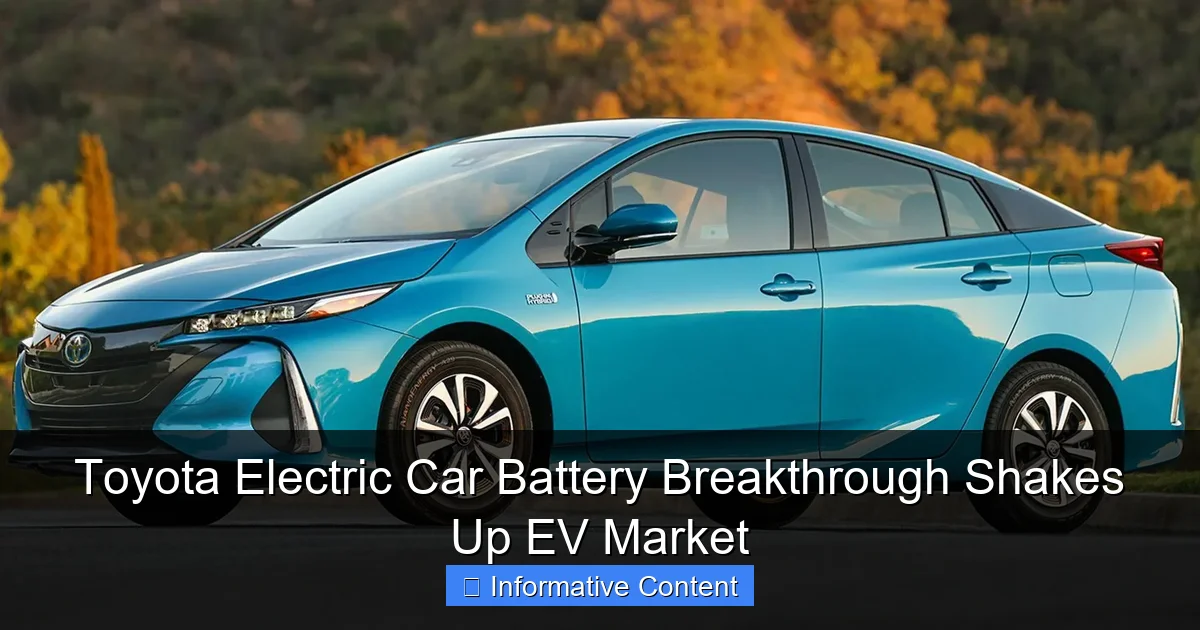
Featured image for toyota electric car battery breakthrough
Image source: electrek.co
Toyota’s revolutionary electric car battery breakthrough promises to double EV range and slash charging times to just 10 minutes, setting a new industry benchmark. With solid-state battery tech entering mass production by 2027, Toyota is poised to leapfrog competitors and redefine the future of sustainable mobility.
Key Takeaways
- Toyota’s solid-state battery offers faster charging and longer range than current EV batteries.
- Breakthrough enables 10-minute charging, drastically reducing downtime for electric vehicles.
- Higher energy density means smaller, lighter batteries without sacrificing performance.
- Improved safety with non-flammable materials reduces fire risk in EVs.
- Mass production by 2027 could accelerate global EV adoption and lower costs.
- Competitive edge gained as Toyota closes gap with Tesla and other EV leaders.
- Sustainability focus includes recyclable materials and reduced rare earth dependency.
📑 Table of Contents
- Toyota Electric Car Battery Breakthrough Shakes Up EV Market
- What Makes Toyota’s Solid-State Battery Different?
- Real-World Impact: What This Means for Drivers
- How Toyota’s Breakthrough Compares to the Competition
- Challenges and What’s Next
- Data Snapshot: Toyota’s Solid-State Battery vs. Current EVs
- The Bigger Picture: A Turning Point for Electric Mobility
- Conclusion: The Future Is Charging Faster Than You Think
Toyota Electric Car Battery Breakthrough Shakes Up EV Market
Imagine pulling up to a charging station, plugging in your car, and being back on the road in just 10 minutes—no more waiting 30 minutes or more for a partial charge. Sounds like science fiction, right? Well, Toyota just made it feel a lot more like reality. In early 2024, the Japanese automaker announced a major breakthrough in electric vehicle (EV) battery technology that could completely reshape how we think about electric driving.
This isn’t just another incremental improvement. Toyota claims its new solid-state battery design can deliver over 745 miles (1,200 kilometers) of range on a single charge—more than double the range of most current EVs—and recharge from 10% to 80% in under 10 minutes. That’s faster than it takes to fill up a gas tank. For years, range anxiety and long charging times have been two of the biggest hurdles slowing EV adoption. Toyota’s innovation could finally remove those barriers, making electric cars not just practical, but genuinely convenient for everyday drivers.
And here’s the kicker: Toyota says it plans to bring this technology to market by 2027 or 2028. That’s sooner than many experts predicted. While other automakers are still refining lithium-ion batteries, Toyota is betting big on solid-state tech—a move that could give it a serious edge in the global EV race. But what exactly makes this battery so special? And how does it compare to what’s currently available? Let’s dive in and unpack the details behind this game-changing development.
What Makes Toyota’s Solid-State Battery Different?
To understand why Toyota’s breakthrough is such a big deal, we need to start with the basics: what is a solid-state battery, and how is it different from the batteries powering most EVs today?
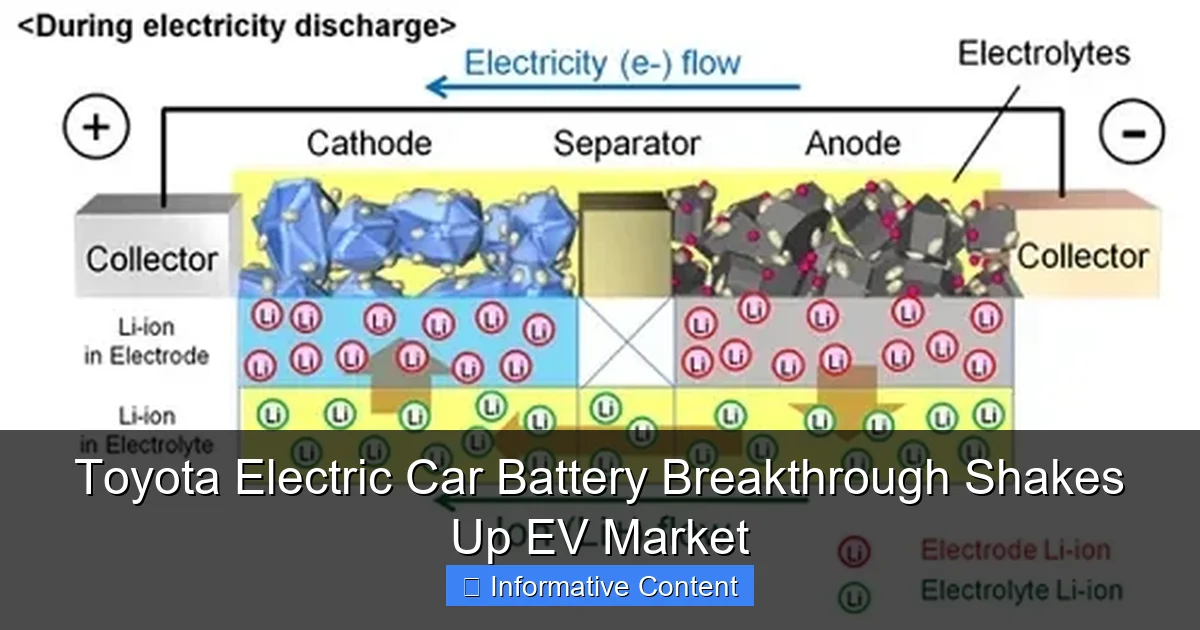
Visual guide about toyota electric car battery breakthrough
Image source: electrek.co
The Problem with Current EV Batteries
Right now, nearly all electric cars—from Teslas to Hyundai Kona Electrics—use lithium-ion batteries. These batteries have come a long way in the last decade. They’re more efficient, longer-lasting, and cheaper than ever before. But they still have some serious limitations.
- Slow charging: Even with fast chargers, most EVs take 20–40 minutes to go from 10% to 80% charge.
- Limited range: The average EV offers around 250–300 miles per charge. High-end models like the Lucid Air or Tesla Model S can push past 400 miles, but they’re expensive.
- Degradation over time: Lithium-ion batteries lose capacity over time. After 8–10 years, many retain only 70–80% of their original range.
- Safety concerns: The liquid electrolyte inside these batteries is flammable. In rare cases, overheating or damage can lead to fires.
These issues aren’t deal-breakers—millions of people drive EVs every day without problems—but they do hold back broader adoption, especially among people who drive long distances, live in apartments without home charging, or simply want more peace of mind.
Enter Solid-State Batteries
Solid-state batteries replace the liquid electrolyte in lithium-ion batteries with a solid material—usually a ceramic, glass, or polymer. This simple change brings huge benefits:
- Higher energy density: Solid-state batteries can store more energy in the same space. That means longer range without bigger, heavier batteries.
- Faster charging: Because ions move more efficiently through solid materials, charging can be much quicker—potentially in under 10 minutes.
- Longer lifespan: Solid electrolytes are more stable, reducing degradation over time.
- Improved safety: No flammable liquid means a much lower risk of fire or explosion.
For years, solid-state batteries have been the “holy grail” of EV tech—promised by researchers and automakers alike, but never quite ready for mass production. The challenge? Making them durable, scalable, and affordable. That’s where Toyota’s breakthrough comes in.
Toyota’s Key Innovation
Toyota’s new solid-state battery uses a sulfide-based solid electrolyte, which allows for high conductivity and stability. But the real game-changer is their solution to a long-standing problem: dendrite formation.
Dendrites are tiny, needle-like structures that can grow inside batteries over time. In lithium-ion batteries, they can pierce the separator between electrodes, causing short circuits or fires. In solid-state batteries, dendrites have been even harder to control—until now.
Toyota says it has developed a new electrode design and manufacturing process that prevents dendrite growth, even after thousands of charge cycles. This means their batteries can last longer and charge faster without compromising safety. They’ve also simplified the production process, which could help bring costs down.
“We’ve solved the core technical challenges that have held back solid-state batteries for decades,” said a Toyota spokesperson during the announcement. “Now it’s about scaling up and getting them into vehicles.”
Real-World Impact: What This Means for Drivers
So, what does this mean for you—the everyday driver? Let’s break it down with some practical examples.
Longer Road Trips, Less Stress
Imagine planning a cross-country trip in your EV. With current technology, you’d need to stop every 200–300 miles to recharge—and each stop could take 30 minutes or more. That adds hours to your journey and makes long drives feel like a chore.
With Toyota’s new battery, you could drive over 700 miles on a single charge. That’s like going from Los Angeles to Denver without stopping. And when you do need to recharge, a 10-minute stop could give you enough power to go another 500+ miles. Suddenly, road trips in an EV feel as easy as they do in a gas car.
Charging at Home Just Got Easier
Not everyone has a garage or driveway where they can install a home charger. For apartment dwellers or city residents, public charging is often the only option. But public chargers are still limited, and fast chargers aren’t always available or reliable.
With ultra-fast charging, even a quick stop at a gas station-style charging hub could give you a full “tank” in the time it takes to grab a coffee. This could make EV ownership feasible for millions more people—especially in urban areas.
Lower Long-Term Costs
While the upfront cost of EVs is still higher than gas cars, the total cost of ownership is often lower due to cheaper “fuel” (electricity) and fewer maintenance needs. Toyota’s solid-state batteries could make this even more true.
Because these batteries last longer and degrade more slowly, you might not need to replace them for 15–20 years—or ever. That saves thousands of dollars compared to current EVs, where battery replacement can cost $5,000–$15,000.
Plus, faster charging means less downtime. For ride-share drivers, delivery workers, or anyone who uses their car for work, that’s a huge win.
Environmental Benefits
Longer-lasting batteries also mean less waste. Today, millions of lithium-ion batteries are nearing the end of their life, and recycling infrastructure is still catching up. Solid-state batteries could reduce the need for frequent replacements, lowering the environmental footprint of EVs over time.
And because they’re more efficient, they require less energy to charge—meaning even greener driving.
How Toyota’s Breakthrough Compares to the Competition
Toyota isn’t the only company working on solid-state batteries. But its announcement stands out for a few key reasons.
Tesla: The Current EV Leader
Tesla has dominated the EV market with its advanced lithium-ion batteries and Supercharger network. The company is also working on next-gen batteries, including a 4680 cell design that improves energy density and reduces costs.
But Tesla hasn’t committed to solid-state technology yet. Elon Musk has called solid-state batteries “promising but challenging” and emphasized improving lithium-ion instead. That could change, but for now, Tesla is playing it safe.
Other Automakers Catching Up
Several other companies are making progress:
- QuantumScape: A startup backed by Volkswagen, QuantumScape has developed a solid-state battery that charges in 15 minutes and retains 80% capacity after 800 cycles. But it’s still in the testing phase.
- Ford & BMW: Both have invested in solid-state startups like Solid Power, aiming for production by 2026–2028.
- Hyundai & Kia: These Korean automakers are developing their own solid-state tech, with plans to launch by 2030.
Toyota’s advantage? It’s not just a startup or a side project—it’s a major automaker with decades of manufacturing experience, global supply chains, and the resources to scale quickly. If anyone can bring solid-state batteries to the mass market, it’s Toyota.
Charging Infrastructure: The Missing Piece?
Even with faster batteries, we’ll need better charging infrastructure to support ultra-fast charging. Current fast chargers (like Tesla’s V3 Superchargers) deliver up to 250 kW. But Toyota’s 10-minute charge would likely require 500+ kW—more than double what’s widely available today.
Luckily, companies like Electrify America, Ionity, and ChargePoint are already rolling out higher-power chargers. And governments are investing billions in EV infrastructure. By 2027, when Toyota plans to launch, the network should be ready.
Challenges and What’s Next
As exciting as this breakthrough is, it’s not without challenges. Let’s look at what still needs to happen before Toyota’s batteries hit the road.
Scaling Up Production
Building a prototype is one thing. Manufacturing millions of batteries at scale is another. Solid-state batteries require new materials, precise assembly, and strict quality control. Toyota will need to build new factories or retrofit existing ones—a massive investment.
The good news? Toyota has been preparing for this. The company has been researching solid-state batteries since the 1990s and has filed over 1,000 related patents. It’s also partnering with Panasonic to develop battery tech, combining Toyota’s automotive expertise with Panasonic’s battery know-how.
Cost Concerns
Right now, solid-state batteries are expensive. Materials like lithium metal and sulfide electrolytes aren’t cheap, and the manufacturing process is complex. Toyota hasn’t revealed pricing, but early estimates suggest these batteries could cost 20–30% more than current lithium-ion packs.
However, as production scales up and materials become more common, costs should come down. Toyota aims to make these batteries competitive with lithium-ion by the early 2030s.
Recycling and Sustainability
Even with longer lifespans, batteries will eventually need to be recycled. Solid-state batteries use different materials than lithium-ion, so existing recycling methods may not work. Toyota will need to develop new processes—or partner with recycling companies—to ensure these batteries don’t create new environmental problems.
The company has said it’s working on a “closed-loop” recycling system, where old batteries are broken down and materials are reused in new ones. That’s a smart move—and one that could set a new standard for the industry.
Regulatory and Safety Testing
Before any new battery can go into production, it must pass rigorous safety and performance tests. Toyota will need to work with regulators in the U.S., Europe, Japan, and other markets to ensure compliance.
Given Toyota’s reputation for reliability and safety, this shouldn’t be a major hurdle—but it will take time.
Data Snapshot: Toyota’s Solid-State Battery vs. Current EVs
| Feature | Toyota Solid-State Battery (2027 Target) | Average Current EV (2024) |
|---|---|---|
| Range per charge | 745+ miles (1,200 km) | 250–300 miles (400–480 km) |
| Charging time (10–80%) | Under 10 minutes | 20–40 minutes |
| Battery lifespan | 15–20+ years | 8–12 years |
| Energy density | ~500 Wh/kg (estimated) | ~250–300 Wh/kg |
| Safety | Non-flammable, lower fire risk | Flammable electrolyte, moderate risk |
| Estimated cost (per kWh) | $80–100 (projected by 2030) | $100–130 (2024) |
Note: All data based on public statements, industry reports, and expert estimates as of mid-2024.
The Bigger Picture: A Turning Point for Electric Mobility
Toyota’s breakthrough isn’t just about better batteries—it’s about changing the entire conversation around electric vehicles. For years, the EV market has been driven by innovation from Tesla and a handful of startups. Traditional automakers like Toyota, Ford, and GM have been playing catch-up.
But now, Toyota is stepping into the lead. And it’s doing so with a technology that could benefit everyone—not just luxury buyers.
Democratizing Electric Driving
One of the biggest criticisms of EVs is that they’re still too expensive for average consumers. High-end models offer great range and performance, but they cost $50,000 or more. Cheaper EVs often sacrifice range, features, or build quality.
Toyota’s solid-state batteries could help bridge that gap. By improving efficiency and reducing long-term costs, they could make high-range, fast-charging EVs affordable for the mass market. Imagine a $30,000 Toyota Corolla EV with 500 miles of range and 10-minute charging. That’s a game-changer.
Accelerating the Shift Away from Gas
Governments around the world are pushing for cleaner transportation. The U.S., EU, and China have all set targets to phase out gas-powered cars by 2035–2040. But without practical, affordable EVs, those goals are hard to reach.
Toyota’s technology could be the catalyst that makes the transition possible. With longer range, faster charging, and lower costs, more people will feel confident switching to electric—no matter where they live or how they drive.
A Win for Innovation
Perhaps most importantly, Toyota’s breakthrough shows that innovation in the auto industry isn’t dead. For years, critics have said that traditional automakers are too slow, too cautious, too stuck in the past. But Toyota is proving them wrong.
By investing in solid-state batteries for decades—even when others doubted the technology—Toyota has positioned itself as a leader in the next era of mobility. And that’s something worth celebrating.
Conclusion: The Future Is Charging Faster Than You Think
Toyota’s electric car battery breakthrough isn’t just a technical achievement—it’s a signal that the future of driving is arriving faster than we thought. With the potential to deliver over 745 miles of range, recharge in under 10 minutes, and last for decades, solid-state batteries could finally make electric vehicles as convenient—and appealing—as gas cars.
Of course, there are still hurdles to overcome. Scaling production, reducing costs, and building the right infrastructure will take time and investment. But Toyota’s roadmap is clear, and its track record inspires confidence.
For drivers, this means more freedom, less stress, and lower costs in the years ahead. For the planet, it means cleaner air and a faster path to carbon neutrality. And for the auto industry, it’s a reminder that the next big leap in transportation might not come from Silicon Valley—but from a company that’s been building reliable cars for over 80 years.
So the next time you see a Toyota on the road, don’t just think “reliable sedan.” Think “future of electric driving.” Because the revolution isn’t coming—it’s already here.
Frequently Asked Questions
What is the Toyota electric car battery breakthrough?
Toyota’s breakthrough involves a solid-state battery design that significantly extends driving range, reduces charging time to under 10 minutes, and improves battery lifespan. This innovation could redefine EV performance standards and accelerate the shift away from fossil fuels.
How does Toyota’s battery breakthrough impact EV charging times?
The new solid-state batteries can charge in under 10 minutes—up to 70% faster than current lithium-ion batteries—while maintaining high energy density. This eliminates a major pain point for EV adopters: long charging waits.
When will Toyota’s electric car battery breakthrough hit the market?
Toyota plans to launch vehicles with this battery technology by 2027-2028, starting with premium models before expanding to mass-market EVs. Prototypes are already undergoing rigorous real-world testing.
Does this breakthrough make Toyota EVs more affordable?
While initial models with the new battery will be premium-priced, Toyota aims to cut production costs by 50% through scalable manufacturing methods. The Toyota electric car battery breakthrough could eventually lower prices across their EV lineup.
How does this battery improve EV safety?
The solid-state design replaces flammable liquid electrolytes with a non-flammable ceramic material, reducing fire risks even in extreme conditions. It also maintains stable performance in sub-zero temperatures.
Will this breakthrough affect Toyota’s existing EV models?
Current Toyota EVs will continue using lithium-ion batteries, but future models (post-2028) will adopt the solid-state technology. Owners may see retrofit options once the infrastructure matures.