Toyota electric car battery supplier revealed
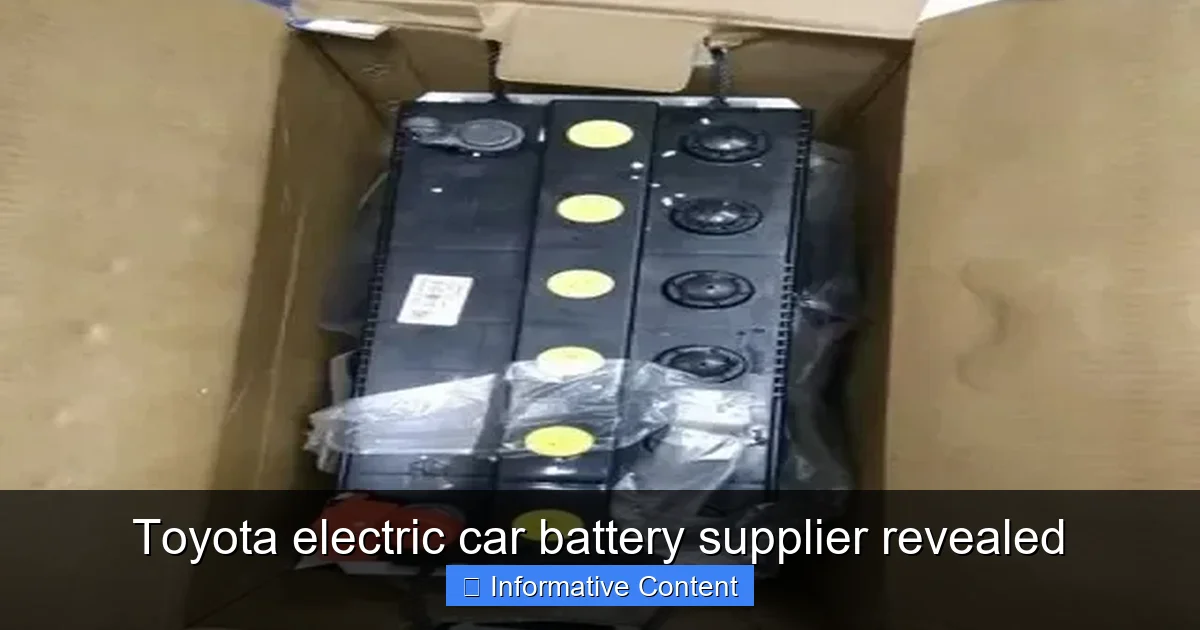
Featured image for toyota electric car battery supplier
Image source: electriccarwiki.com
Key Takeaways
- Toyota partners with Panasonic for high-performance EV battery production.
- New batteries offer longer range and faster charging capabilities.
- Local supply chains prioritized to reduce costs and delivery times.
- Sustainability focus evident with recyclable battery materials.
- Joint venture boosts innovation in solid-state battery technology.
- Global expansion planned to support Toyota’s 2030 EV goals.
📑 Table of Contents
- Toyota Electric Car Battery Supplier Revealed: What You Need to Know
- Why Battery Suppliers Matter for Toyota’s EV Future
- Meet Toyota’s Key Electric Car Battery Suppliers
- How Toyota Chooses Its Battery Suppliers: A Strategic Approach
- Real-World Examples: Toyota EVs and Their Batteries
- Battery Performance Comparison: Toyota vs. Competitors
- What This Means for You: Tips for Toyota EV Buyers
- Conclusion: Toyota’s Battery Strategy Is Smart—and Getting Smarter
Toyota Electric Car Battery Supplier Revealed: What You Need to Know
If you’ve been following the electric vehicle (EV) revolution, you’ve probably noticed that Toyota has been a bit of a late bloomer compared to Tesla, Hyundai, or even Ford. While other automakers raced ahead with fully electric lineups, Toyota doubled down on hybrids like the Prius and RAV4 Hybrid. But now, the tide is turning. Toyota is making a serious push into the EV market—and that means one thing: batteries.
Electric cars are only as good as their batteries. They determine range, charging speed, longevity, and even safety. So when Toyota finally revealed its strategy for electric vehicles, everyone wanted to know: Who’s supplying the batteries? The answer isn’t as simple as “one company.” In fact, Toyota has built a diverse and strategic network of battery suppliers to power its growing fleet of electric cars. Whether you’re a potential buyer, an investor, or just curious about how your next EV might be powered, this deep dive will give you the full picture—no jargon, no fluff, just the facts.
In this post, we’ll explore who Toyota’s electric car battery suppliers are, why they chose them, how these partnerships work, and what it means for the future of Toyota EVs. We’ll also look at real-world examples, compare battery performance, and share practical tips if you’re considering a Toyota electric vehicle. Let’s get into it.
Why Battery Suppliers Matter for Toyota’s EV Future
Before we name names, let’s talk about why battery suppliers are such a big deal—especially for a company like Toyota. You might think, “It’s just a battery, right?” But in the world of electric cars, the battery is the heart of the vehicle. It’s not just about storing energy; it’s about doing it efficiently, safely, and affordably over thousands of charge cycles.
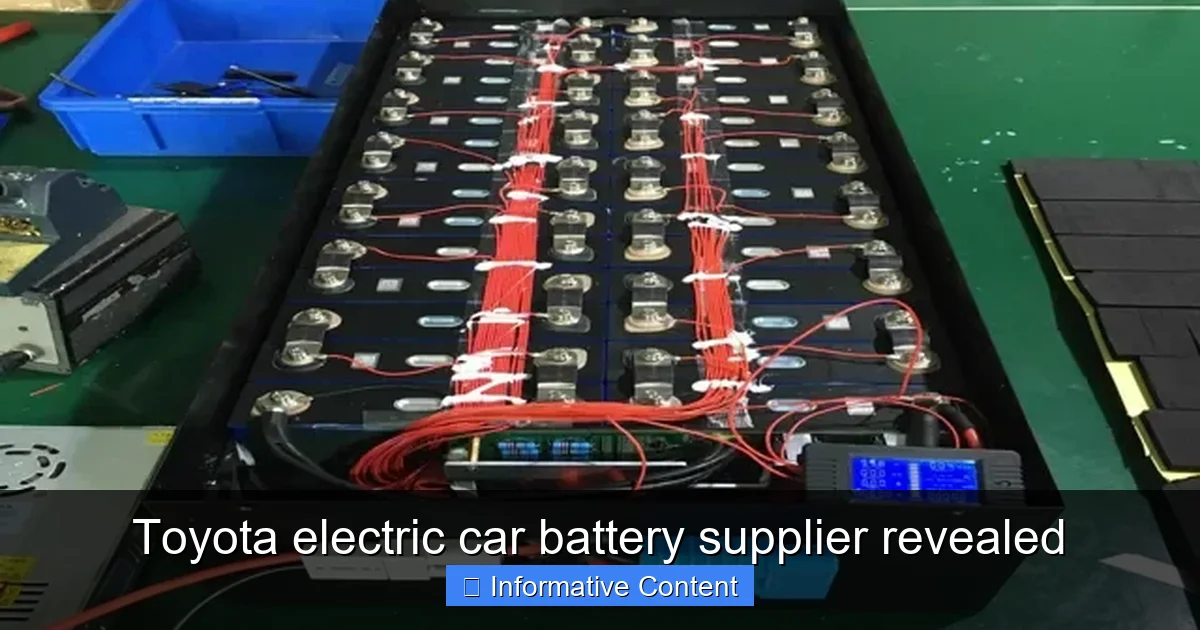
Visual guide about toyota electric car battery supplier
Image source: electriccarwiki.com
The Role of Batteries in Electric Vehicles
Batteries in EVs do more than just power the motor. They influence:
- Range: How far you can drive on a single charge. A higher-capacity battery means more miles.
- Charging speed: How quickly you can top up. Some batteries support fast charging, others don’t.
- Lifespan: How long the battery lasts before needing replacement. Most last 8–10 years or 100,000–150,000 miles.
- Cost: Batteries are the most expensive part of an EV, often making up 25–40% of the total price.
- Safety: Poorly designed or manufactured batteries can overheat or catch fire—rare, but serious.
Toyota knows this better than most. They’ve spent decades perfecting hybrid battery systems, so they understand the importance of reliability and longevity. That’s why their approach to EV batteries isn’t about chasing the highest energy density or the fastest charging—it’s about balance, safety, and long-term value.
Toyota’s Unique Approach to EV Batteries
Unlike Tesla, which designs and manufactures many of its own battery cells (with help from Panasonic), Toyota has taken a partnership-heavy approach. They don’t want to rely on a single supplier. Instead, they’ve built a network of trusted partners across Asia, each bringing different strengths to the table.
This strategy gives Toyota flexibility. If one supplier faces delays or quality issues, others can step in. It also allows them to tailor battery types to different models—smaller, cheaper batteries for city cars, high-performance packs for SUVs and trucks.
Another key part of Toyota’s philosophy? Solid-state batteries. While most EVs today use lithium-ion batteries (like the ones in your phone or laptop), Toyota is betting big on solid-state technology—a next-gen design that promises faster charging, longer range, and improved safety. But until those are ready for mass production (expected around 2027–2028), Toyota is relying on trusted lithium-ion suppliers to keep their EVs rolling off the line.
Meet Toyota’s Key Electric Car Battery Suppliers
So, who exactly is powering Toyota’s electric cars? The answer involves a mix of Japanese giants, Korean powerhouses, and Chinese innovators. Let’s meet the key players.
Panasonic: The Longtime Partner
You’ve probably heard of Panasonic. They’ve been making batteries for decades—remember those AA batteries in your TV remote? Well, they’re also one of the world’s leading EV battery manufacturers. And yes, they’re a major supplier for Toyota.
Panasonic and Toyota have a long history. They’ve worked together on hybrid batteries since the 1990s, and that relationship has naturally extended into the EV space. Panasonic supplies lithium-ion battery cells for several Toyota electric models, including the bZ4X (Toyota’s first global EV) and the Lexus RZ.
One of Panasonic’s strengths is their focus on nickel-rich cathodes, which allow for higher energy density—meaning more range without increasing battery size. They’re also investing heavily in next-gen technologies, including solid-state batteries, which aligns perfectly with Toyota’s future plans.
CATL: The Chinese Powerhouse
If you’re not familiar with CATL (Contemporary Amperex Technology Co. Limited), you should be. Based in China, CATL is the world’s largest EV battery manufacturer, supplying companies like Tesla, BMW, and now Toyota.
Toyota partnered with CATL in 2020 to secure a stable supply of lithium-ion batteries for its growing EV lineup. CATL provides LFP (lithium iron phosphate) batteries for some of Toyota’s more affordable electric models. LFP batteries aren’t as energy-dense as nickel-based ones, but they’re cheaper, safer, and last longer—perfect for city cars and fleet vehicles.
For example, the Toyota bZ3—a compact sedan sold in China—uses CATL’s LFP batteries. These batteries can handle over 3,000 charge cycles with minimal degradation, which is great for daily commuters who charge nightly.
LG Energy Solution: The Korean Innovator
LG Energy Solution, a spin-off from LG Chem, is another major player in the EV battery world. They supply batteries to Hyundai, GM, and now Toyota. LG is known for its high-performance NCM (nickel-cobalt-manganese) batteries, which offer a great balance of energy density, power, and longevity.
Toyota uses LG batteries in certain markets, especially for models that need longer range and faster charging. For instance, some versions of the bZ4X in Europe and North America are equipped with LG-supplied battery packs. These packs support DC fast charging up to 150 kW, allowing the bZ4X to go from 10% to 80% charge in about 30 minutes.
BYD: The Vertical Integrator
BYD (Build Your Dreams) is a Chinese company that does it all—makes cars, batteries, and even electric buses. They’re unique because they produce their own battery cells, manage the entire supply chain, and sell finished vehicles. And yes, they’re also a Toyota battery supplier.
In 2023, Toyota and BYD announced a joint venture to develop electric vehicles for the Chinese market. As part of this partnership, BYD supplies Blade Batteries—a type of LFP battery known for its safety and durability—to Toyota. These batteries are designed to resist thermal runaway (a fancy term for “not catching fire”), which is a big selling point for safety-conscious buyers.
The Toyota bZ3, mentioned earlier, also uses BYD’s Blade Batteries in some configurations, showing how Toyota blends suppliers to optimize cost, performance, and safety.
Toyota’s In-House Efforts: The Future Is Solid-State
While Toyota relies on external suppliers for current models, they’re also developing their own battery technology. The company has invested billions into solid-state batteries, which replace the liquid electrolyte in lithium-ion batteries with a solid material. This allows for:
- Faster charging (0–80% in 10–15 minutes)
- Higher energy density (up to 2x the range of current batteries)
- Improved safety (no flammable liquid)
- Longer lifespan (over 1 million miles in testing)
Toyota plans to launch vehicles with solid-state batteries by 2027–2028. They’re building a dedicated production line in Japan and have partnered with Idemitsu Kosan, a Japanese oil company, to develop the solid electrolyte material. While this is still a few years away, it shows Toyota’s long-term vision: to eventually control their own battery destiny.
How Toyota Chooses Its Battery Suppliers: A Strategic Approach
So why does Toyota work with so many different suppliers? It’s not random. There’s a clear strategy behind their choices—one that balances performance, cost, geography, and risk.
Geographic Diversification
Toyota operates globally, and so do its supply chains. By working with suppliers in Japan (Panasonic), China (CATL, BYD), and South Korea (LG), Toyota reduces the risk of regional disruptions—like trade wars, natural disasters, or pandemics.
For example, during the 2020–2022 chip shortage, many automakers struggled to get parts. But Toyota’s diversified supply chain helped them weather the storm better than most. The same logic applies to batteries. If one region faces export restrictions or production delays, Toyota can shift orders to another supplier.
Cost and Performance Optimization
Not all EVs need the same kind of battery. A compact city car doesn’t need a 100 kWh pack—it would be overkill and too expensive. That’s why Toyota uses different battery types depending on the vehicle.
- LFP batteries (from CATL and BYD): Used in affordable models like the bZ3. Lower cost, longer life, but less range.
- NCM batteries (from LG and Panasonic): Used in higher-end models like the bZ4X and Lexus RZ. Higher energy density, better performance, but more expensive.
This tiered approach lets Toyota offer EVs at different price points while still delivering good value. It’s like choosing between a basic laptop and a high-end gaming rig—both use processors, but the specs and price vary.
Quality Control and Long-Term Reliability
Toyota is famous for its “Toyota Production System,” which emphasizes quality, efficiency, and continuous improvement. They apply the same standards to their battery suppliers.
Each supplier must meet strict criteria for:
- Cell consistency (all batteries must perform identically)
- Thermal management (how well the battery handles heat)
- Cycle life (how many charges it can handle)
- Safety testing (including nail penetration and overcharge tests)
Toyota also conducts its own validation tests. For example, they simulate extreme conditions—like driving in -20°C weather or charging in 40°C heat—to ensure the batteries hold up. This attention to detail is why Toyota hybrids have such a strong reputation for reliability, and they’re applying the same rigor to their EVs.
Real-World Examples: Toyota EVs and Their Batteries
Let’s look at some actual Toyota electric cars and see which batteries power them. This will help you understand how supplier choices affect real-world performance.
Toyota bZ4X: The First Global EV
The bZ4X is Toyota’s first mass-market electric SUV. It’s available in North America, Europe, and Asia, and it uses different batteries depending on the region.
- North America & Europe: Uses NCM batteries from LG Energy Solution. The 71.4 kWh pack offers up to 252 miles of EPA-estimated range. Supports 150 kW fast charging.
- China: Uses LFP batteries from CATL. The 63.2 kWh pack offers around 310 miles (CLTC cycle, which is less strict than EPA). Charges slower but costs less.
This regional variation shows how Toyota tailors its battery strategy to local markets. In China, where cost sensitivity is high, LFP makes sense. In the U.S. and Europe, where range and charging speed matter more, NCM is the better choice.
Toyota bZ3: The Affordable Sedan
The bZ3 is a compact electric sedan sold mainly in China. It’s designed to be affordable and efficient, with a focus on daily commuting.
- Battery: 65.3 kWh LFP pack from CATL or BYD (depending on trim).
- Range: Up to 375 miles (CLTC), though real-world range is closer to 280–300 miles.
- Charging: Supports up to 120 kW DC fast charging.
The bZ3 is a great example of how LFP batteries can deliver solid performance at a lower price. It’s not a long-range highway cruiser, but it’s perfect for city driving and short trips.
Lexus RZ: The Premium Electric SUV
The Lexus RZ is Toyota’s luxury electric SUV, and it uses high-performance NCM batteries from Panasonic. With a 71.4 kWh pack, it offers up to 220 miles of EPA range and supports 150 kW fast charging.
What sets the RZ apart is its advanced thermal management system, which keeps the battery at an optimal temperature during fast charging and high-speed driving. This helps preserve battery life and performance over time.
Battery Performance Comparison: Toyota vs. Competitors
How do Toyota’s batteries stack up against the competition? Let’s compare key metrics across popular EVs.
| Vehicle | Battery Supplier | Battery Type | Capacity (kWh) | EPA Range (miles) | Max DC Charging (kW) |
|---|---|---|---|---|---|
| Toyota bZ4X | LG Energy Solution | NCM | 71.4 | 252 | 150 |
| Toyota bZ3 | CATL / BYD | LFP | 65.3 | ~280 (CLTC) | 120 |
| Tesla Model Y | Tesla / Panasonic | NCA | 75 | 330 | 250 |
| Hyundai Ioniq 5 | SK On | NCM | 77.4 | 303 | 235 |
| Ford Mustang Mach-E | LG Energy Solution | NCM | 88 | 312 | 150 |
As you can see, Toyota’s current EVs are competitive in terms of range and charging, though they don’t lead the pack. The bZ4X’s 252-mile range is solid for an SUV, but it’s less than the Tesla Model Y or Hyundai Ioniq 5. However, Toyota prioritizes longevity and safety over max range, which may appeal to buyers who plan to keep their car for 10+ years.
What This Means for You: Tips for Toyota EV Buyers
If you’re thinking about buying a Toyota electric car, here are some practical tips based on what we’ve learned about their battery suppliers.
Choose the Right Model for Your Needs
- If you want long range and fast charging, go for the bZ4X or Lexus RZ with NCM batteries.
- If you want affordability and longevity, consider the bZ3 with LFP batteries.
- If you live in a cold climate, look for models with advanced thermal management (like the RZ).
Understand Charging Options
Not all fast chargers are created equal. The bZ4X supports up to 150 kW, but you’ll only hit that speed if the charger and battery temperature are optimal. In cold weather, charging can be slower. Use apps like PlugShare or A Better Routeplanner to find compatible fast chargers on your route.
Think Long-Term
Toyota’s batteries are designed to last. Most come with an 8-year/100,000-mile warranty, and real-world data shows they degrade slowly—around 2–3% per year. If you plan to keep your car for a decade, a Toyota EV could be a smart choice.
Conclusion: Toyota’s Battery Strategy Is Smart—and Getting Smarter
Toyota’s electric car battery supplier network is a masterclass in strategic planning. By partnering with Panasonic, CATL, LG, and BYD, they’ve built a flexible, resilient supply chain that balances cost, performance, and safety. They’re not chasing headlines with the longest range or fastest charging—instead, they’re focusing on what matters most to real drivers: reliability, value, and peace of mind.
And the best part? This is just the beginning. With solid-state batteries on the horizon, Toyota is positioning itself to lead the next wave of EV innovation. Whether you’re buying your first electric car or upgrading from a hybrid, Toyota’s thoughtful approach to batteries means you’re getting a vehicle built to last.
So the next time someone asks, “Who supplies Toyota’s electric car batteries?” you can tell them it’s not just one company—it’s a carefully chosen team of global leaders, working together to power the future of driving.
Frequently Asked Questions
Who is the main Toyota electric car battery supplier?
Toyota’s primary battery supplier for its electric vehicles is Panasonic, through their joint venture Prime Planet Energy & Solutions. The partnership focuses on developing and manufacturing high-performance lithium-ion batteries specifically for Toyota’s EV lineup.
Does Toyota manufacture its own electric car batteries?
While Toyota doesn’t produce all batteries in-house, it collaborates closely with suppliers like Panasonic and CATL. The automaker invests in joint ventures and R&D to co-develop batteries while ensuring quality control and supply chain stability.
Are there multiple Toyota electric car battery suppliers?
Yes, Toyota works with several key partners, including Panasonic, CATL (China), and BYD (China), to diversify its toyota electric car battery supplier network. This strategy helps meet global demand and reduces dependency on a single source.
What type of batteries do Toyota’s EV suppliers provide?
Suppliers like Panasonic and CATL provide lithium-ion batteries, with Toyota exploring solid-state battery tech for future models. These batteries prioritize energy density, longevity, and safety for Toyota’s hybrid and fully electric vehicles.
Where are Toyota’s electric car batteries manufactured?
Batteries are produced in multiple locations, including Japan (Panasonic), China (CATL/BYD), and upcoming U.S. facilities. The toyota electric car battery supplier network ensures localized production to streamline logistics and reduce costs.
Will Toyota switch to solid-state batteries soon?
Toyota plans to introduce solid-state batteries by 2027-2028, partnering with Panasonic and other suppliers. This next-gen tech promises faster charging, longer range, and improved safety for future Toyota EVs.