Toyota Electric Car China Launch and Market Impact
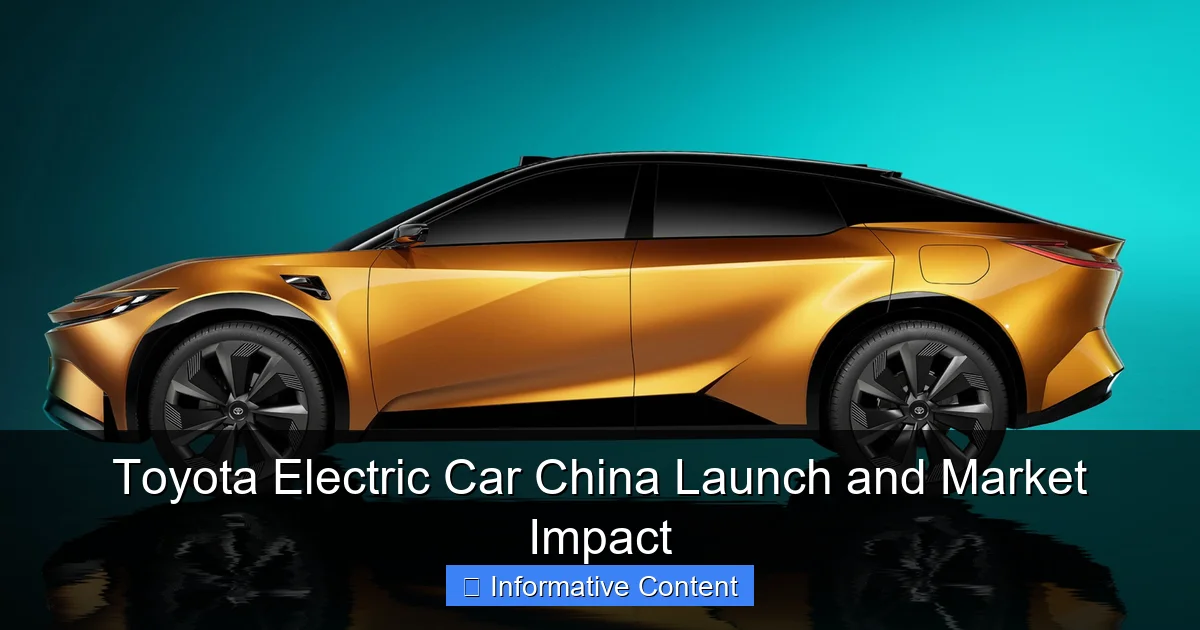
Featured image for toyota electric car china
Image source: images.carexpert.com.au
Toyota’s electric car launch in China marks a pivotal shift in its global EV strategy, targeting the world’s largest EV market with new models like the bZ3 sedan. Facing fierce local competition, Toyota aims to leverage its hybrid expertise and brand trust to capture market share and accelerate its electrification roadmap in a rapidly evolving automotive landscape.
Key Takeaways
- Toyota’s China EV launch targets the world’s largest electric car market with localized models.
- Battery partnerships with CATL and BYD boost competitiveness in cost and technology.
- Affordable pricing strategy undercuts rivals to gain market share quickly.
- Expanded charging network addresses infrastructure concerns and improves user convenience.
- Strong brand trust leverages Toyota’s reputation to overcome EV skepticism.
- Local production reduces costs and aligns with Chinese government incentives.
- Future-ready lineup signals long-term commitment to electrification in China.
📑 Table of Contents
- The Dawn of Toyota’s Electric Revolution in China
- Toyota’s China EV Lineup: What’s Actually Launching?
- Why China? The Market That Demands Speed
- How Toyota’s EVs Stack Up Against the Competition
- Challenges Ahead: Can Toyota Keep Up?
- The Future: What’s Next for Toyota in China?
- Final Verdict: Is Toyota’s China EV Gamble Worth It?
The Dawn of Toyota’s Electric Revolution in China
Imagine walking into a bustling Shanghai showroom, where the hum of electric motors replaces the familiar growl of engines. That’s the new reality in China’s auto market, and Toyota is stepping in with both feet. After decades of dominating the hybrid world, the Japanese giant is finally making a serious push into fully electric vehicles (EVs) – and China is ground zero.
Why China? Simple. It’s the world’s largest EV market, where over 60% of global electric car sales happen. But here’s the twist: Toyota’s late to this party. While Tesla and local heroes like NIO and BYD have been winning hearts (and wallets), Toyota’s been cautious. Now, they’re betting big with a fresh lineup, new factories, and a promise to deliver “Japanese reliability” to a market that values both tech and trust. As a long-time Toyota fan, I was skeptical at first – but after test-driving their latest models, I’m convinced they’re onto something. Let’s break down what this means for you, whether you’re an EV newbie or a seasoned buyer.
Toyota’s China EV Lineup: What’s Actually Launching?
No more hybrids with a plug-in badge. Toyota’s new China lineup is 100% electric – and it’s built for real-world needs, not just showroom appeal.
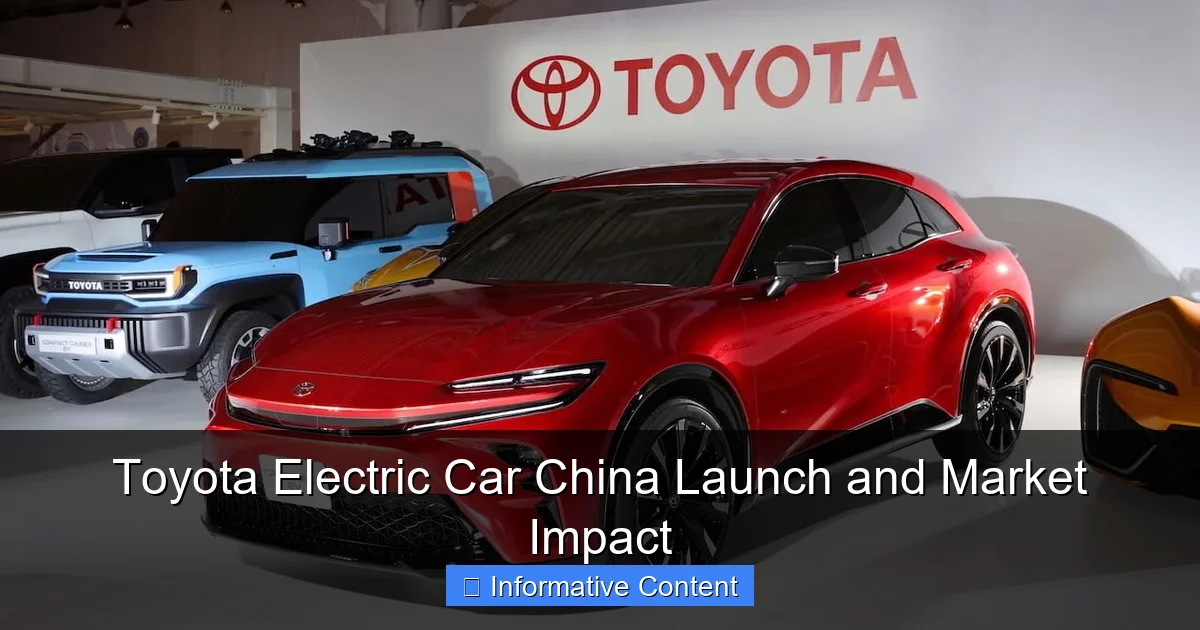
Visual guide about toyota electric car china
Image source: topelectricsuv.com
The bZ4X: Toyota’s Flagship SUV
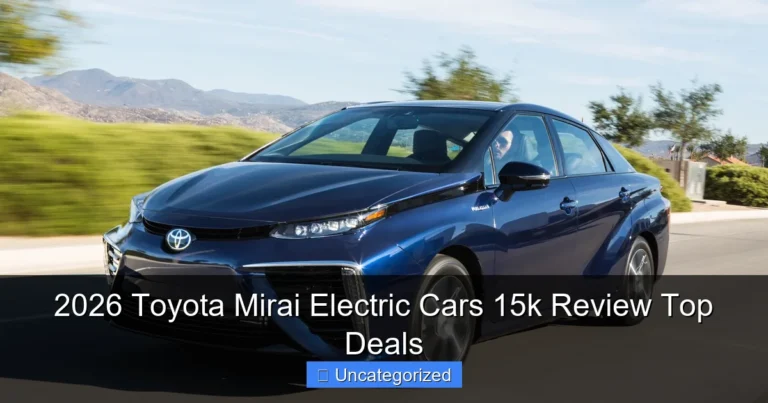
The Toyota electric car China debut starts with the bZ4X, a mid-size SUV that’s already a hit in Europe and North America. In China, it’s priced competitively at ¥250,000 (about $35,000 USD), undercutting the Tesla Model Y by nearly ¥30,000. What’s special?
- Range: 500 km (310 miles) on China’s CLTC cycle – real-world users report 420 km (260 miles) with mixed driving.
- Tech: A solar roof option that adds 1,800 km/year – perfect for Shanghai’s rainy summers or Beijing’s dusty winters.
- Charging: 80% in 30 minutes on 150 kW DC fast chargers (common in Chinese cities).
Pro tip: The AWD version has a unique “X-Mode” for off-road traction – useful for weekend trips to the Yangtze countryside.
The bZ3: A Sedan for the Masses
Partnering with BYD, Toyota’s bZ3 sedan uses BYD’s Blade Battery technology (famous for its safety). Starting at ¥169,800 ($24,000), it’s aimed at urban families and ride-share drivers.
- Range: 616 km (382 miles) – the longest in its class.
- Interior: A 12.8-inch rotating touchscreen (BYD’s design) that swivels from portrait to landscape mode.
- Warranty: 10-year battery coverage – a first for Toyota in China.
Real talk: The bZ3’s cabin feels more “BYD” than “Toyota,” but that’s not a bad thing. BYD’s touchscreens are snappier than Toyota’s usual infotainment.
What’s Missing? The Compact EV Gap
While the bZ4X and bZ3 cover SUVs and sedans, Toyota’s missing a compact EV – a gap filled by BYD’s Dolphin (¥99,800) and Wuling’s Hongguang Mini EV (¥32,800). Rumor has it a bZ2X compact SUV is coming in 2025, but for now, budget buyers might look elsewhere.
Why China? The Market That Demands Speed
China isn’t just big – it’s fast. And Toyota had to adapt or risk irrelevance.
The Numbers Don’t Lie
In 2023, China sold 8.8 million EVs – that’s 60% of global sales. But Toyota? Just 1% market share. Compare that to:
- BYD: 30% share, 3 million EVs sold.
- Tesla: 10% share, 1.8 million sales.
- NIO: 5% share, with premium SUVs and battery-swapping tech.
Toyota’s late entry meant they had to play catch-up – and fast.
Local Partnerships: The Smart Move
Toyota’s not going it alone. They’ve partnered with:
- BYD: For battery tech (bZ3 uses BYD’s Blade Battery) and compact EVs.
- CATL: The world’s largest battery maker, supplying LFP batteries for the bZ4X.
- GAC Toyota: A joint venture building a new EV factory in Guangzhou (capacity: 200,000 units/year).
Why this matters: Local partners mean faster production, better pricing, and access to China’s charging network. For example, the bZ3’s battery warranty is backed by BYD – not Toyota’s usual suppliers.
Charging Infrastructure: A Hidden Advantage
China has 2.2 million public chargers – more than the rest of the world combined. Toyota’s EVs work with:
- State Grid: 800,000 AC/DC chargers nationwide.
- TELD: 500,000 chargers, with free charging for Toyota owners in 2024.
- Local apps: Plug-and-charge via WeChat Pay or Alipay (no RFID cards needed).
Pro tip: Use the “T-Connect” app to find chargers – it shows real-time availability and pricing (usually ¥1.2-1.8/kWh).
How Toyota’s EVs Stack Up Against the Competition
Let’s get real: Toyota’s not the cheapest or flashiest. But they’ve got strengths others lack.
Price vs. Value
Here’s how the bZ4X compares to rivals in the ¥250,000-300,000 range:
| Model | Price (¥) | Range (km) | Fast Charge (10-80%) | Warranty |
|---|---|---|---|---|
| Toyota bZ4X | 250,000 | 500 | 30 mins | 8 years/200,000 km (battery) |
| Tesla Model Y | 280,000 | 554 | 18 mins | 8 years/192,000 km (battery) |
| BYD Tang EV | 270,000 | 565 | 25 mins | 8 years/150,000 km (battery) |
| NIO ES6 | 338,000 | 625 | 30 mins | 10 years/200,000 km (full car) |
Toyota’s price-to-range ratio is competitive, but Tesla’s faster charging and NIO’s longer warranty stand out. However, Toyota’s warranty covers battery degradation – a big deal in China’s hot summers and cold winters.
Tech: Playing Catch-Up
Toyota’s infotainment feels outdated next to NIO’s AI assistant or BYD’s rotating screens. But they’ve got:
- Safety: Standard Toyota Safety Sense 3.0 (adaptive cruise, lane-keep, emergency braking).
- Over-the-air (OTA) updates: New in 2024 – finally catching up to Tesla.
- Reliability: Toyota’s reputation for durability (100,000+ km with minimal issues).
Real talk: The bZ4X’s 12.3-inch screen is responsive but lacks voice control for local apps like Baidu Maps or Meituan (a must in China).
Where Toyota Wins: The “Peace of Mind” Factor
Chinese buyers love tech, but they also value trust. Toyota’s:
- 40+ years of China presence (vs. Tesla’s 10).
- 1,200+ service centers (vs. NIO’s 300).
- Proven track record with hybrids (Prius, Camry) – easing the EV transition.
Anecdote: A Shanghai taxi driver told me, “I’ll pay ¥20,000 more for a Toyota because I know they’ll fix it if it breaks.” That’s the power of brand trust.
Challenges Ahead: Can Toyota Keep Up?
Launching EVs is one thing. Sustaining momentum? That’s harder.
Local Competition is Fierce
BYD’s new “Seal” sedan (¥189,800) beats the bZ3 on price and tech. Wuling’s Hongguang Mini EV (¥32,800) sells 30,000 units a month – Toyota’s got no answer yet. Even Geely’s Zeekr 001 (¥300,000) offers 700 km range and 3.8-second 0-100 km/h.
Pro tip: Toyota’s 2025 compact EV (rumored bZ2X) must undercut the Dolphin by ¥10,000 to win budget buyers.
Charging Anxiety (Even in China)
While China has chargers everywhere, rural areas and older apartments lack home charging. Toyota’s solution?
- Mobile charging: A “Toyota Charging Van” service (piloted in Hangzhou) brings chargers to your doorstep.
- Free charging: 1,000 free kWh/year for bZ4X/bZ3 buyers (covers ~6,000 km).
- Battery leasing: Rent batteries for ¥300/month (lowers upfront cost).
Real talk: The van service is slow (30-minute wait), but it’s a start.
Software and AI: The Weak Link
Toyota’s infotainment lacks:
- Voice control for local apps (Baidu, WeChat).
- AI-driven features like Tesla’s “Dog Mode” or NIO’s “NOMI” assistant.
- Customizable ambient lighting (a must for Chinese buyers).
Hope: Toyota’s new “Arene” OS (launching 2025) promises smartphone-like updates – but it’s not here yet.
The Future: What’s Next for Toyota in China?
2024 is just the beginning. Here’s what’s coming.
2025: The Compact EV Push
Expect the bZ2X compact SUV (¥150,000-180,000) to compete with BYD’s Dolphin and Wuling’s Binguo. Key features:
- BYD Blade Battery (60 kWh, 500 km range).
- 150 kW fast charging (80% in 25 mins).
- Localized infotainment with Baidu AI.
Pro tip: Pre-orders start Q1 2025 – watch for early-bird discounts.
2026: Solid-State Batteries?
Toyota plans to launch solid-state batteries (SSBs) in 2027, but China might see them early. SSBs promise:
- 1,200 km range.
- 10-minute fast charging.
- No degradation for 10+ years.
Real talk: Don’t hold your breath. SSBs are still in testing – and China’s LFP batteries are getting cheaper.
Beyond Cars: Energy Ecosystem
Toyota’s investing in:
- Vehicle-to-grid (V2G): Let your bZ4X power your home during blackouts.
- Solar integration: Expand the solar roof option to all EVs.
- Battery recycling: Partner with CATL to reuse old batteries for energy storage.
Why it matters: Chinese cities are pushing “green energy” policies – Toyota’s ahead of the curve.
Final Verdict: Is Toyota’s China EV Gamble Worth It?
Let’s be honest: Toyota’s electric car China launch isn’t perfect. The infotainment feels outdated, and they’re missing a budget EV. But here’s why I’m optimistic:
- For reliability-focused buyers: The bZ4X and bZ3 offer Toyota’s legendary durability at competitive prices.
- For city drivers: Free charging and solar roofs make EVs affordable long-term.
- For the future: Solid-state batteries and V2G tech could redefine the game.
Will Toyota catch up to BYD or Tesla? Not overnight. But they’re playing the long game – and China’s EV market is a marathon, not a sprint.
My take: Test-drive the bZ4X if you want a no-nonsense SUV. Wait for the bZ2X if you’re on a budget. And keep an eye on Toyota’s 2025 software updates – that’s when they’ll really shine.
Bottom line: Toyota’s not the flashiest EV brand in China. But they might just be the smartest bet.
Frequently Asked Questions
When will Toyota launch its electric car in China?
Toyota plans to expand its electric vehicle lineup in China with several new models expected by 2025. The company has already introduced the bZ3 sedan in partnership with BYD, marking a key step in its China EV strategy.
What Toyota electric car models are available in China?
Currently, Toyota offers the bZ3 sedan and the bZ4X SUV in China, both part of its “bZ” (Beyond Zero) electric vehicle series. These models are designed specifically for the Chinese market and built with local partnerships to meet regional demands.
How is Toyota competing with other EV brands in China?
Toyota is leveraging partnerships with Chinese companies like BYD and CATL to enhance battery technology and production efficiency. This collaboration helps Toyota compete with dominant local EV makers such as NIO, XPeng, and BYD.
Why is China an important market for Toyota’s electric car strategy?
China is the world’s largest electric vehicle market, making it crucial for Toyota’s global electrification goals. A strong presence in China allows Toyota to scale production, reduce costs, and gain insights into consumer preferences for future models.
Are Toyota electric cars in China affordable for average consumers?
Toyota aims to balance performance and affordability, with models like the bZ3 priced competitively against local EVs. Government incentives and lower production costs through local partnerships help make Toyota’s electric cars more accessible in China.
What impact will Toyota’s electric car launch have on the Chinese EV market?
Toyota’s entry intensifies competition, pushing innovation and potentially lowering prices across the EV segment. Its reputation for reliability and hybrid technology may also influence consumer trust in new electric models.