Toyota Electric Car for 13000 Is It Real or a Scam
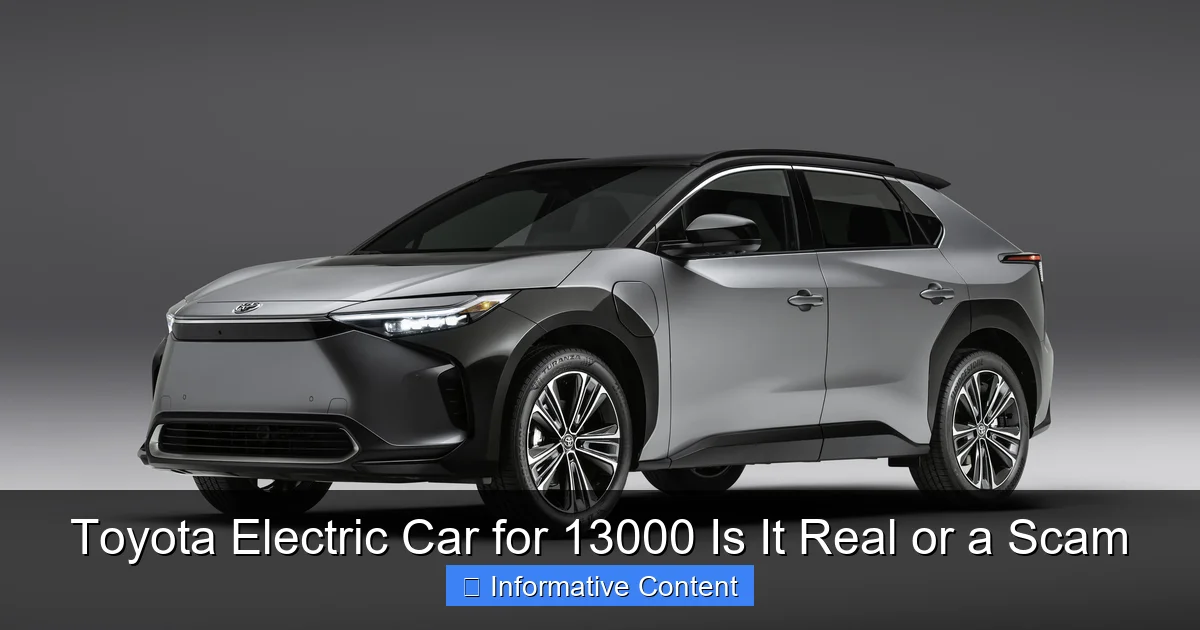
Featured image for toyota electric car for $13000
Image source: hdcarwallpapers.com
Toyota has not officially released an electric car for $13,000, and any claims of such a model are likely misleading or part of an online scam. While affordable EVs are on the horizon, current Toyota electric vehicles like the bZ4X start well above $40,000—making a $13K price point unrealistic without major compromises or hidden terms. Always verify offers through official Toyota channels to avoid scams and stay informed on upcoming budget-friendly models.
Key Takeaways
- Verify the source: Confirm if Toyota officially announced a $13,000 EV before trusting claims.
- Check for subsidies: The price may reflect local incentives—research eligibility and availability.
- Assess model specs: Low-cost EVs often have limited range—compare real-world performance data.
- Beware of scams: Avoid upfront payments for unverified “pre-orders” or exclusive deals.
- Monitor release timelines: Toyota’s affordable EV is likely in development—watch for 2025+ launches.
- Explore alternatives: Consider existing budget EVs like the Nissan Leaf or used Toyota hybrids.
📑 Table of Contents
- Toyota Electric Car for 13000 Is It Real or a Scam
- Understanding Toyota’s Real Electric Vehicle Lineup
- Why $13,000 Seems Too Good to Be True
- How to Spot a Toyota EV Scam
- Affordable Alternatives to a $13,000 Toyota EV
- Tips for Buying a Real Toyota EV
- Conclusion: The Truth About the $13,000 Toyota Electric Car
Toyota Electric Car for 13000 Is It Real or a Scam
Imagine this: you’re scrolling through your social media feed, maybe sipping your morning coffee, when suddenly—bam!—an ad pops up. “Toyota Electric Car for Just $13,000!” Your heart skips a beat. A brand-new Toyota EV for less than the price of a used Honda Civic? That sounds… too good to be true. And honestly? It probably is.
We’ve all been there—tempted by deals that seem almost magical. But when it comes to electric vehicles (EVs), especially from a trusted automaker like Toyota, the reality often doesn’t match the hype. So, is there actually a Toyota electric car for $13,000? Or is this just another online scam dressed up as a dream come true? In this post, we’re diving deep into the truth behind this viral claim. We’ll explore Toyota’s real EV lineup, examine why $13,000 seems suspiciously low, and help you spot red flags so you don’t fall for a scam. Whether you’re a first-time EV buyer or just curious about affordable electric mobility, this guide will give you the facts—no fluff, no hype, just honest insight.
Understanding Toyota’s Real Electric Vehicle Lineup
Before we jump into whether a $13,000 Toyota EV is real, let’s take a step back and look at what Toyota actually offers in the electric vehicle space. Toyota has been a pioneer in hybrid technology for decades—think Prius—but their journey into fully electric vehicles (BEVs, or battery electric vehicles) has been more gradual compared to brands like Tesla or Hyundai.

Visual guide about toyota electric car for $13000
Image source: s1.cdn.autoevolution.com
Toyota’s Current EV Models
As of 2024, Toyota’s fully electric lineup is still growing. The most notable model is the Toyota bZ4X, their first mass-market battery electric SUV. It’s designed to compete with vehicles like the Hyundai Ioniq 5 and Ford Mustang Mach-E. The bZ4X comes with front-wheel or all-wheel drive, offers up to 252 miles of EPA-estimated range, and features modern tech like a 12.3-inch touchscreen, wireless Apple CarPlay, and Toyota Safety Sense 3.0.
But here’s the catch: the starting price for a new Toyota bZ4X is around $42,000 before any incentives. Even with federal tax credits (up to $7,500 for eligible buyers), the out-the-door cost is still well above $30,000. That’s more than double the $13,000 figure floating around online.
Upcoming and Concept EVs
Toyota has announced plans to launch 30 new electric models globally by 2030. Some of these, like the rumored compact EV or urban-focused city car, could eventually come in at lower price points. However, none of these are currently available in the U.S. market, and even the most affordable projected models are expected to start around $25,000–$30,000.
For example, Toyota teased a small electric vehicle concept called the “Urban SUV” at recent auto shows. While it’s designed to be more affordable, early estimates suggest it won’t dip below $28,000—still nowhere near $13,000. So, unless Toyota pulls off a miracle in cost-cutting (which is unlikely given their reputation for quality and safety), a $13,000 Toyota EV isn’t on the horizon anytime soon.
Why Toyota EVs Are Priced Higher
Several factors contribute to the higher price of Toyota’s electric vehicles:
- Battery Technology: Lithium-ion batteries are expensive to produce. While costs are coming down, they still make up a significant portion of an EV’s price.
- Build Quality: Toyota is known for durability and reliability. Their EVs are built to last, which means higher material and engineering costs.
- Safety and Features: Toyota includes advanced driver-assistance systems (ADAS), high-strength steel frames, and premium interiors—features that add to the cost.
- Dealer Markups and Demand: In some regions, high demand for EVs has led to dealer markups, further increasing prices.
So, while Toyota is working toward more affordable EVs, the reality is that $13,000 is far below what it costs to produce even a basic electric vehicle with modern safety and performance standards.
Why $13,000 Seems Too Good to Be True
Let’s do some quick math. The average price of a new car in the U.S. in 2024 is around $48,000. Even used EVs typically start at $20,000 or more, depending on age, mileage, and battery health. So, a brand-new Toyota EV for $13,000? That’s not just a discount—it’s a financial anomaly.
Comparing Real EV Prices
To put things in perspective, here’s a quick comparison of entry-level electric vehicles currently available in the U.S.:
| Vehicle | Starting Price (New) | Estimated Range | Brand |
|---|---|---|---|
| Nissan Leaf | $28,040 | 149–212 miles | Nissan |
| Chevrolet Bolt EV | $26,500 | 259 miles | Chevrolet |
| Hyundai Kona Electric | $32,950 | 260 miles | Hyundai |
| Toyota bZ4X | $42,000 | 252 miles | Toyota |
| Used Nissan Leaf (2018) | $12,000–$15,000 | 150 miles | Nissan |
As you can see, even the most affordable new EVs are priced well above $25,000. The only way to get close to $13,000 is by buying a used, older model—like a 2018 Nissan Leaf with high mileage and degraded battery capacity. But even then, it’s not a Toyota, and it’s not new.
The Hidden Costs of “Cheap” EVs
Let’s say you do find a Toyota EV listed for $13,000. Before you celebrate, consider these red flags:
- Battery Degradation: Older EVs lose range over time. A 2015 Toyota RAV4 EV (yes, Toyota made one!) might have originally had 100 miles of range—but after 8–10 years, it could be down to 60–70 miles. That’s not practical for daily commuting.
- Warranty Voided: Most EV battery warranties last 8 years or 100,000 miles. A $13,000 EV is likely out of warranty, meaning any battery replacement could cost $5,000–$15,000.
- Safety Concerns: Older EVs may not meet current safety standards. They might lack modern airbags, stability control, or crash avoidance systems.
- Charging Limitations: Many older EVs only support Level 2 charging (240V), not fast DC charging. That means longer charging times and fewer compatible public stations.
In short, a $13,000 EV—whether Toyota or not—is likely a high-mileage, outdated model with hidden costs. It’s not the same as buying a new, reliable, feature-rich vehicle.
The Psychology Behind the $13,000 Claim
So why do these ads keep popping up? It’s simple: scammers know people want affordable EVs. With gas prices fluctuating and environmental concerns growing, more drivers are looking to go electric. But high prices are a barrier. That’s where the $13,000 Toyota EV comes in—it’s a psychological hook.
These ads often appear on social media, classified sites like Craigslist, or shady automotive forums. They use phrases like “limited time offer,” “government rebate included,” or “exclusive dealer discount” to create urgency. Some even fake VIN numbers or use stolen photos of real Toyota EVs to look legitimate.
The goal? Get you to click, call, or send money—often for a “reservation fee” or “shipping deposit.” Once they have your cash, they disappear. No car, no refund, no accountability.
How to Spot a Toyota EV Scam
Now that we’ve established that a $13,000 Toyota electric car is almost certainly not real, let’s talk about how to protect yourself. Scammers are getting smarter, but there are still clear warning signs if you know what to look for.
Red Flags to Watch For
Here are the most common signs of an EV scam:
- Unrealistically Low Price: If it’s more than 40% below market value, it’s a red flag. Remember: new EVs cost $25,000+, even for budget brands.
- No Physical Dealership or Address: Legitimate sellers have a real location. Scammers often use fake addresses or P.O. boxes.
- Pressure to Act Fast: “Only 3 left!” or “Offer expires tonight!” are classic tactics to prevent you from thinking or researching.
- Requests for Upfront Payment: Never send money via wire transfer, gift cards, or cryptocurrency for a car you haven’t seen or test-driven.
- Poor Grammar or Spelling: Scam ads often have typos, awkward phrasing, or broken English.
- No VIN or Inconsistent VIN: A Vehicle Identification Number (VIN) should be provided. You can run it through free tools like NICB’s VINCheck to see if it’s stolen or fake.
Where Scams Commonly Appear
Be extra cautious on these platforms:
- Facebook Marketplace: Easy to set up fake profiles and post fake listings.
- Craigslist: No verification process for sellers.
- Instagram and TikTok Ads: Flashy videos with “too good to be true” claims.
- Email Spam: “You’ve been pre-approved for a $13,000 Toyota EV!” — delete immediately.
What to Do If You Spot a Scam
If you come across a suspicious listing:
- Don’t Engage: Don’t call, message, or click links.
- Report It: Use the platform’s reporting tool (e.g., Facebook’s “Report Post”).
- Warn Others: Leave a comment (if safe) to alert other users.
- Check Official Sources: Visit Toyota’s official website or contact a local dealer to verify if the deal exists.
Remember: if something feels off, it probably is. Trust your gut.
Affordable Alternatives to a $13,000 Toyota EV
Just because a $13,000 Toyota EV isn’t real doesn’t mean you can’t find an affordable electric vehicle. There are legitimate ways to go electric without breaking the bank—especially if you’re open to used cars, incentives, or alternative brands.
Used EVs Under $20,000
While you won’t find a Toyota, you can find reliable used EVs from other manufacturers:
- Nissan Leaf (2018–2020): Priced between $12,000–$18,000. Look for models with the 40 kWh or 62 kWh battery for better range.
- Chevrolet Bolt EV (2017–2020): Often available for $15,000–$20,000. Great range (238–259 miles), but check for battery recalls—Chevrolet offers free replacements.
- Hyundai Ioniq Electric (2017–2020): Compact and efficient, priced around $14,000–$19,000.
- Kia Soul EV (2015–2019): Fun design, decent range (~100 miles), and often under $18,000.
Tip: Use trusted sites like CarGurus, Autotrader, or Cars.com. Filter by “electric” and set your max price to $20,000. Always get a pre-purchase inspection from a mechanic familiar with EVs.
Federal and State Incentives
Even if you buy used, you might qualify for incentives:
- Federal Tax Credit: Up to $4,000 for used EVs under $25,000 (must meet income and vehicle requirements).
- State Rebates: California offers up to $2,000 for low-income buyers. Colorado, New York, and others have similar programs.
- Utility Discounts: Some electric companies offer rebates for EV purchases or home charger installations.
Check the Alternative Fuels Data Center for a full list of incentives in your area.
Leasing as an Option
Leasing a new EV can be more affordable than buying. For example, the Chevrolet Bolt EV is often available for under $200/month with $0 down. While you don’t own the car, it’s a low-risk way to drive electric without a huge upfront cost.
Bonus: Many leases include free maintenance and roadside assistance.
Consider a Plug-In Hybrid
If you’re not ready for a full EV, a plug-in hybrid (PHEV) might be a good middle ground. Toyota offers the Prius Prime and RAV4 Prime, which run on electricity for 25–40 miles before switching to gas. The RAV4 Prime starts around $38,000, but federal and state incentives can bring it down significantly.
Plus, you get the best of both worlds: electric driving for daily commutes and gas for long trips.
Tips for Buying a Real Toyota EV
If you’re set on owning a Toyota electric vehicle—and willing to pay a fair price—here’s how to do it the right way.
Buy from an Authorized Dealer
Always purchase from a Toyota-certified dealership. They offer:
- Factory warranties (including 8-year/100,000-mile battery coverage)
- Certified pre-owned (CPO) programs for used models
- Financing options and trade-in evaluations
- Access to service centers and genuine parts
You can find your nearest dealer on Toyota’s official website.
Research Incentives and Financing
Before you buy, check for:
- Federal tax credits (if eligible)
- State and local rebates
- Dealer incentives (e.g., cashback, low APR financing)
- Utility company discounts
Example: In 2024, some Toyota dealers offered $2,000 cashback on the bZ4X, effectively lowering the price to around $40,000.
Test Drive and Inspect
Never buy an EV without a test drive. Pay attention to:
- Battery range and charging speed
- Interior comfort and tech features
- Noise levels and ride quality
- Charging port location and compatibility
For used EVs, always get a battery health report. Some dealers offer this for free.
Plan for Charging
Owning an EV means thinking about charging. Ask yourself:
- Can I install a Level 2 charger at home?
- Are there public chargers near my workplace or frequently visited areas?
- How often will I need to charge?
A home charger costs $500–$1,000 installed, but it’s worth it for convenience and faster charging.
Conclusion: The Truth About the $13,000 Toyota Electric Car
So, is there a Toyota electric car for $13,000? The short answer is no—not a new, reliable, safe one. While the idea is tempting, the reality is that electric vehicles, even from budget-friendly brands, cost significantly more than $13,000. Toyota’s current and upcoming EVs are priced between $28,000 and $42,000, and for good reason: they include advanced technology, long-range batteries, and top-tier safety features.
The $13,000 figure is almost always a scam—designed to lure in unsuspecting buyers with the promise of an impossible deal. These scams thrive on urgency, fake urgency, and emotional appeals. But with a little knowledge and caution, you can avoid falling victim.
If you’re serious about going electric, focus on realistic options: used EVs from reputable brands, leasing programs, or taking advantage of federal and state incentives. And if you’re set on Toyota, wait for their more affordable models to arrive—or consider a plug-in hybrid as a stepping stone.
Remember: a great deal doesn’t have to be a miracle. It just has to be honest, transparent, and within the realm of possibility. Stay informed, stay skeptical, and drive smart.
Frequently Asked Questions
Is there really a Toyota electric car for $13,000?
As of now, there is no new Toyota electric car officially priced at $13,000. While Toyota offers affordable hybrid and electric models, their current EVs like the bZ4X start well above that price point.
Could a $13,000 Toyota electric car be a scam?
Yes, it’s possible. Scammers sometimes advertise fake or non-existent vehicles at unrealistically low prices to lure buyers. Always verify listings through official Toyota dealers or trusted automotive websites.
Are there any used Toyota electric cars for around $13,000?
You might find older or high-mileage used Toyota electric or hybrid models near that price, such as a used Prius Prime or RAV4 Hybrid, but fully electric Toyotas at $13,000 are rare and should be thoroughly inspected.
Why is the Toyota electric car for $13,000 so cheap?
If a Toyota EV is listed at $13,000, it may be due to high mileage, battery degradation, or hidden damage. Extremely low prices often signal red flags, so proceed with caution and request a vehicle history report.
Where can I find a legitimate Toyota electric car for $13,000?
Check certified pre-owned programs, reputable dealerships, or platforms like Toyota’s official website. Be wary of private sellers or websites offering new EVs at suspiciously low prices.
Will Toyota release an electric car for $13,000 in the future?
Toyota has announced plans for more affordable electric vehicles, but a $13,000 model isn’t confirmed. Future budget-friendly EVs may come closer to this price as technology advances and production scales up.