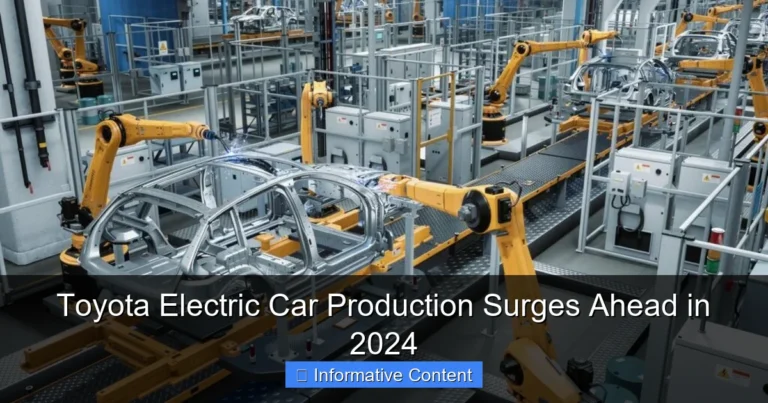
Toyota Electric Car Forecast Whats Next for the Auto Giant
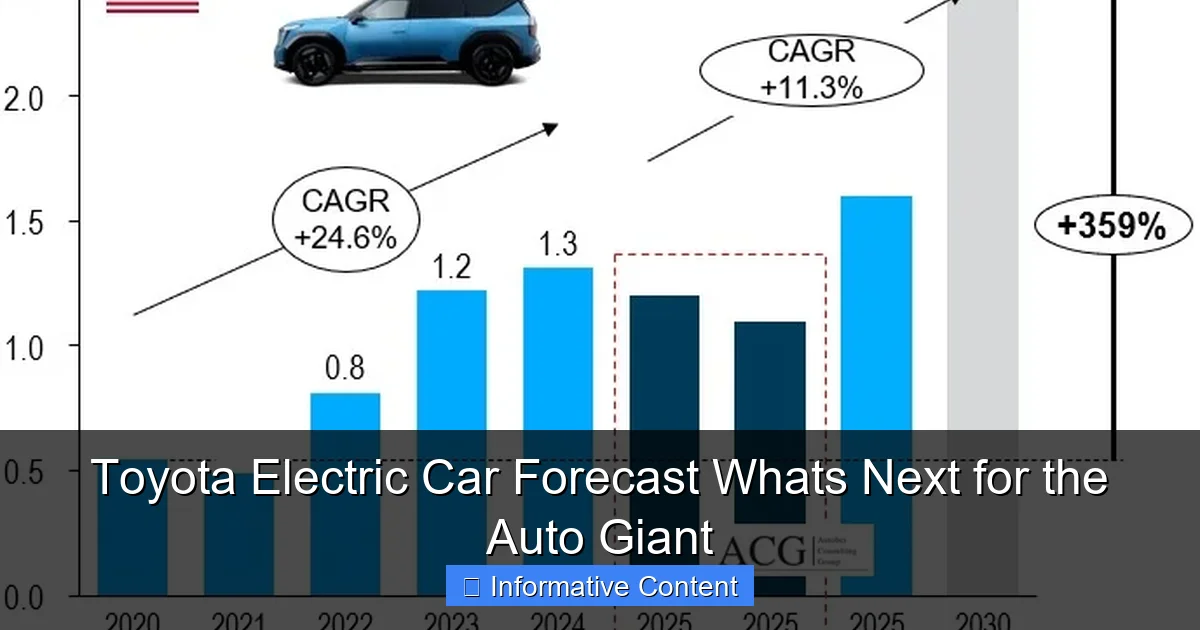
Featured image for toyota electric car forecast
Image source: autobei.com
Toyota is accelerating its electric vehicle (EV) ambitions with a bold forecast that aims to launch 30 new EV models by 2030, targeting global sales of 3.5 million units annually. Despite its historic focus on hybrids, the auto giant is now investing heavily in battery technology and partnerships to compete in the fast-evolving EV market. This strategic shift signals Toyota’s commitment to leading the future of sustainable mobility while maintaining its reputation for reliability and innovation.
Key Takeaways
- Toyota plans 30 new EV models by 2030 to accelerate its electric transition.
- Solid-state batteries expected by 2027–2028 could boost range and charging speed.
- $70 billion investment in electrification signals strong long-term commitment to EVs.
- Hybrid focus remains key as Toyota balances EV growth with current market demand.
- Global production expansion underway with new EV plants in the U.S. and Japan.
- Partnerships with tech firms aim to enhance battery and software capabilities.
📑 Table of Contents
- Introduction: Toyota’s Slow Burn Into the Electric Future
- The Current State of Toyota’s EV Game: Playing Catch-Up or Setting the Pace?
- What’s on the Horizon: Toyota’s Upcoming EV Models (2025–2030)
- Battery Tech and Manufacturing: The Hidden Engine of Toyota’s EV Push
- Global Strategy: How Toyota Plans to Win (or Survive) in a Competitive Market
- Challenges and Criticisms: Can Toyota Overcome Its Reputation for Being “Too Slow”?
- Data Table: Toyota’s EV Roadmap (2024–2030)
- Conclusion: The Long Game Is Just Beginning
Introduction: Toyota’s Slow Burn Into the Electric Future
Imagine you’re at a family dinner, and your cousin—let’s call him Dave—is proudly showing off his brand-new Tesla. The conversation turns to electric vehicles (EVs), and someone asks, “Hey, what about Toyota? They make great cars. Why aren’t they all over the EV market like everyone else?”
It’s a fair question. For decades, Toyota has been a household name, synonymous with reliability, innovation, and smart engineering. But when it comes to electric vehicles, the automaker has often seemed… well, a little behind the curve. While Tesla, Ford, Hyundai, and even Volkswagen have launched full-scale EV blitzes, Toyota has taken a more cautious, methodical approach. That’s not because they don’t care. It’s because Toyota is playing a long game—one that’s finally starting to take shape. In this deep dive into the toyota electric car forecast, we’ll explore what’s next for the auto giant, from upcoming models and battery tech to global strategy and real-world implications for drivers like you.
The Current State of Toyota’s EV Game: Playing Catch-Up or Setting the Pace?
Where Toyota Stands Today (2024)
As of 2024, Toyota’s electric vehicle lineup is still modest compared to its competitors. The Toyota bZ4X is the company’s first dedicated EV, launched in 2022. It’s a solid entry—offering decent range (around 252 miles on the FWD version), a spacious interior, and Toyota’s legendary build quality. But it hasn’t set the world on fire. Sales have been steady but not spectacular, and early issues like delayed production and software glitches didn’t help.
Visual guide about toyota electric car forecast
Image source: s.hdnux.com
Still, Toyota isn’t starting from scratch. They’ve sold over 20 million hybrids globally (including the iconic Prius), giving them deep experience in electrified powertrains. That’s not nothing. But hybrids are not full EVs. And in a market where “electric” means zero tailpipe emissions, Toyota’s hybrid-first strategy has drawn criticism for being too slow to adapt.
Why the Delay? A Strategic, Not Stupid, Move
Let’s be real—Toyota didn’t miss the EV boat because they’re clueless. They’re cautious. And there’s a method to the madness.
- Consumer readiness: Toyota has long argued that many drivers aren’t ready for EVs due to range anxiety, charging infrastructure gaps, and high upfront costs. By focusing first on hybrids and plug-in hybrids (PHEVs), they’ve given the market time to mature.
- Supply chain stability: Toyota’s “just-in-time” manufacturing model relies on predictable supply chains. The EV transition requires massive new investments in batteries, rare earth metals, and charging networks. Toyota wanted to wait until these systems were more stable.
- Global market diversity: Toyota sells cars in over 170 countries. Not all have the same EV infrastructure. In developing markets, hybrids still make more sense than full EVs. So Toyota’s “multi-pathway” approach—EVs, hybrids, hydrogen, PHEVs—is designed to meet different needs in different regions.
So while others rushed in, Toyota waited. But now, the tide is turning. And the toyota electric car forecast is shifting from “maybe someday” to “here we go.”
What’s on the Horizon: Toyota’s Upcoming EV Models (2025–2030)
The bZ Series: More Than Just the bZ4X
Toyota’s “Beyond Zero” (bZ) series is the backbone of its EV strategy. The bZ4X is just the beginning. By 2026, Toyota plans to launch at least 10 new electric models under the bZ banner. These will span multiple segments—sedans, SUVs, crossovers, and even light trucks.
Here’s what’s coming:
- bZ3X: A compact SUV aimed at urban drivers. Expected to have a 250-mile range and a price tag under $30,000 (after incentives). Think of it as a Prius-sized EV.
- bZ5X: A midsize three-row SUV for families. Think Highlander-sized but fully electric. Projected range: 300+ miles.
- bZ Compact SUV: A sportier, lower-slung crossover targeting younger buyers. Could feature a more dynamic design and performance tuning.
- bZ Sedan: A sleek, aerodynamic sedan with advanced driver aids and a minimalist interior. Possibly a direct competitor to the Tesla Model 3.
These models will be built on Toyota’s new e-TNGA platform (electric Toyota New Global Architecture), which is modular, flexible, and designed specifically for EVs. It allows for different battery sizes, motor configurations, and body types—making it easier and cheaper to scale production.
Beyond bZ: EVs from Lexus and Other Brands
Don’t forget—Toyota owns Lexus. And Lexus is going all-in on EVs. The Lexus RZ (a luxury version of the bZ4X) is already on the road. But more exciting models are coming:
- Lexus Electrified Sport: A high-performance coupe inspired by the LFA. Expected range: 400+ miles. 0–60 mph in under 3 seconds. A halo car for Toyota’s EV ambitions.
- Lexus Electrified Sedan: A luxury sedan with advanced AI features, autonomous driving capabilities, and a focus on comfort and quietness.
And let’s not overlook Subaru—another Toyota partner. The Solterra (Subaru’s version of the bZ4X) shows how Toyota is sharing EV tech across brands to speed up development and reduce costs.
Real-World Example: The bZ3 in China
Here’s a fun twist: Toyota launched the bZ3—a fully electric sedan—exclusively in China, in partnership with BYD (yes, the Chinese EV giant). It uses BYD’s Blade Battery (LFP chemistry), which is safer, cheaper, and longer-lasting than traditional NMC batteries.
Why China first? Because the Chinese EV market is the most competitive and fastest-growing in the world. By launching the bZ3 there, Toyota is testing its EV strategy in the toughest environment possible. If it works in China, it can work anywhere.
Battery Tech and Manufacturing: The Hidden Engine of Toyota’s EV Push
From NMC to Solid-State: Toyota’s Battery Evolution
Batteries are the heart of any EV. And Toyota is investing heavily in next-gen battery tech. Currently, the bZ4X uses NMC (Nickel Manganese Cobalt) batteries—common in most EVs. But Toyota is already moving beyond that.
- LFP (Lithium Iron Phosphate): Toyota is expanding its use of LFP batteries, especially in lower-cost models like the bZ3. LFP batteries are safer, last longer, and use fewer scarce materials. They’re slightly heavier and less energy-dense, but perfect for city driving and budget EVs.
- Solid-State Batteries: This is the big one. Toyota has been researching solid-state batteries for over a decade. Unlike liquid electrolyte batteries, solid-state batteries use a solid material to transfer ions. The benefits?
- Faster charging (10–15 minutes for 80% charge)
- Higher energy density (up to 2x current batteries)
- Longer lifespan (10+ years)
- Safer (less risk of fire)
Toyota plans to launch its first solid-state battery EV in 2027–2028. That’s not tomorrow, but it’s not far off. And when it arrives, it could be a game-changer—especially if it’s paired with Toyota’s reliability and affordability.
Building the Future: Toyota’s U.S. Battery Plants
To support its EV ambitions, Toyota is building massive battery factories—especially in the U.S., where EV adoption is accelerating.
In North Carolina, Toyota is investing $13.9 billion to build a new battery plant. When completed (by 2025), it will produce enough batteries for 1.2 million EVs per year. The plant will make:
- Prismatic LFP batteries
- High-nickel NMC batteries
- Solid-state battery prototypes (by 2027)
This is huge. It means Toyota won’t have to rely on third-party battery suppliers (like Panasonic or LG). It also helps them qualify for U.S. federal EV tax credits under the Inflation Reduction Act (IRA), which require battery materials to be sourced domestically or from free-trade partners.
Practical Tip: What This Means for You
If you’re waiting for a Toyota EV with long range, fast charging, and low cost, keep an eye on 2027–2028. That’s when solid-state batteries could start rolling out. But don’t wait too long—by then, the market might be flooded with options. Consider:
- Test driving a current Toyota hybrid or PHEV (like the RAV4 Prime) to get used to electrified driving.
- Installing a home charger now, even if you’re not buying an EV yet. It’s easier and cheaper to do it early.
- Following Toyota’s battery news—especially updates from the North Carolina plant.
Global Strategy: How Toyota Plans to Win (or Survive) in a Competitive Market
The Multi-Pathway Approach: Not All EVs Are the Same
Here’s Toyota’s big idea: There’s no one-size-fits-all solution for decarbonizing transport. That’s why they’re pursuing a “multi-pathway” strategy—offering EVs, hybrids, PHEVs, and even hydrogen fuel cell vehicles (like the Mirai).
This approach makes sense in a world where:
- Charging infrastructure is uneven (great in Norway, spotty in rural India)
- Energy sources vary (renewables in Germany, coal in parts of Asia)
- Consumer preferences differ (some want performance, others want affordability)
So while Tesla says “EVs or nothing,” Toyota says “Whatever works best for you.” This flexibility could be a strength—especially in emerging markets where EVs are still a luxury.
Regional Focus: North America, China, and Europe
Toyota’s EV strategy varies by region:
- North America: Focus on SUVs, trucks, and crossovers. The bZ5X and future electric Tundra are key. Battery plant in NC = local supply chain.
- China: Fastest EV adoption in the world. Toyota is partnering with local firms (like BYD) to speed up development and avoid import tariffs.
- Europe: Stringent emissions rules and high EV demand. Toyota is launching smaller EVs (like the bZ3X) and expanding charging partnerships.
By tailoring its strategy to each region, Toyota avoids the “one-size-fits-all” trap that has hurt some global automakers.
Charging Infrastructure: The Missing Link
Let’s be honest—no matter how good the car is, if you can’t charge it, you won’t buy it. Toyota knows this. So they’re investing in charging networks.
- Toyota is part of the IONITY network in Europe (fast chargers along highways).
- In the U.S., Toyota is partnering with ChargePoint and EVgo to give bZ4X owners free charging for a year.
- They’re also exploring wireless charging and bidirectional charging (where your car can power your home).
This isn’t just about convenience. It’s about trust. If drivers believe they can charge their Toyota EV anywhere, anytime, they’re more likely to switch.
Challenges and Criticisms: Can Toyota Overcome Its Reputation for Being “Too Slow”?
The Perception Problem: “Toyota Doesn’t Get EVs”
Despite its long-term vision, Toyota faces a real challenge: public perception. For years, critics have said Toyota “doesn’t get EVs.” They point to:
- The slow rollout of the bZ4X
- Early software bugs and production delays
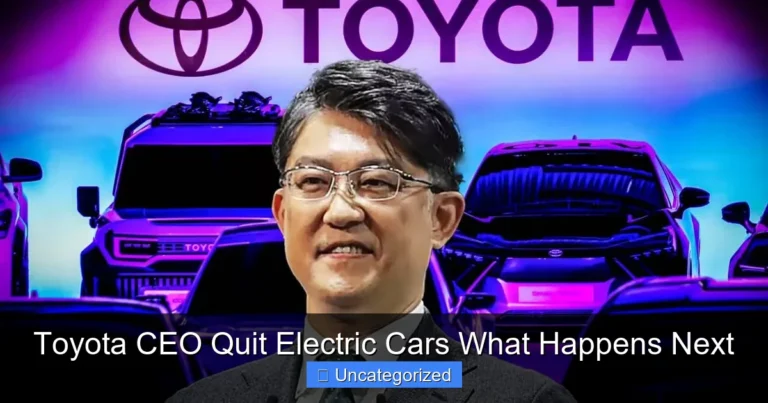
- A CEO who once called EVs “overhyped” (though he’s since changed his tune)
This perception can hurt sales. People want innovation, excitement, and speed. And so far, Toyota’s EV story has been more “steady and reliable” than “revolutionary.”
The Competition Is Fierce
Let’s not sugarcoat it—the competition is tough. Tesla still dominates the premium EV market. Ford’s F-150 Lightning is a hit with truck lovers. Hyundai and Kia are winning with affordable, long-range EVs like the Ioniq 5 and EV6. Even Chinese brands like BYD and NIO are expanding globally.
Toyota can’t afford to be second best. They need to deliver EVs that are not just reliable, but desirable—with great design, intuitive tech, and strong performance.
Can Toyota Innovate Fast Enough?
This is the million-dollar question. Toyota’s strength is consistency. Its weakness is speed. But the EV market moves fast. New tech, new players, and new regulations emerge every year.
To succeed, Toyota must:
- Accelerate R&D—especially in software, AI, and autonomous driving
- Improve user experience (UX) in its infotainment systems (current systems are clunky compared to Tesla or Hyundai)
- Embrace over-the-air (OTA) updates to fix bugs and add features remotely
- Build a stronger EV brand identity—something beyond “the reliable Toyota that also makes EVs”
If they can do that, the toyota electric car forecast could shift from “cautious observer” to “industry leader.”
Data Table: Toyota’s EV Roadmap (2024–2030)
| Year | Model | Key Features | Expected Range | Target Market |
|---|---|---|---|---|
| 2024 | bZ4X (refresh) | Improved software, faster charging | 252–300 miles | North America, Europe |
| 2025 | bZ3X | Affordable compact SUV, LFP battery | 250 miles | Urban drivers, budget buyers |
| 2026 | bZ5X | Three-row SUV, 300+ miles, AWD | 300+ miles | Families, SUV lovers |
| 2027 | Lexus Electrified Sport | Performance coupe, 0–60 mph <3s | 400+ miles | Luxury/performance buyers |
| 2028 | Solid-State EV (first model) | 15-min fast charge, 500+ miles range | 500+ miles | Tech adopters, long-haul drivers |
| 2030 | Multiple EVs across segments | AI integration, bidirectional charging | 300–600 miles | Global markets |
Conclusion: The Long Game Is Just Beginning
So, what’s next for Toyota in the EV world? The toyota electric car forecast isn’t about flashy announcements or record-breaking sales in 2024. It’s about building a sustainable, scalable, and customer-focused EV future—one that plays to Toyota’s strengths: reliability, global reach, and long-term thinking.
Yes, they started slow. Yes, they’ve faced criticism. But Toyota isn’t trying to win a sprint. They’re in it for the marathon. And with solid-state batteries on the horizon, a growing lineup of EVs, and massive investments in manufacturing and infrastructure, the pieces are finally coming together.
For drivers, this means more choices, better tech, and—hopefully—lower prices over time. If Toyota can deliver EVs that are not only dependable but also exciting, they could reclaim their spot at the top of the automotive world.
So next time Dave brags about his Tesla, smile and say, “Wait till you see what Toyota’s got in 2028.” Because the future of electric mobility might just be a little more patient, a little more practical, and a whole lot more reliable than we thought.
Frequently Asked Questions
What is Toyota’s electric car forecast for the next 5 years?
Toyota plans to launch 10 new electric vehicle (EV) models by 2026, targeting 1.5 million annual EV sales by 2027. The automaker is investing heavily in solid-state batteries and new EV platforms to accelerate its shift toward electrification.
Is Toyota falling behind in the electric car market?
While Toyota was slower than rivals like Tesla and Ford to adopt EVs, its electric car forecast shows aggressive catch-up plans. The company is focusing on hybrid-to-EV transitions and partnerships with Panasonic and BYD to strengthen its EV portfolio.
When will Toyota release affordable electric cars?
Toyota aims to introduce sub-$30,000 EVs by 2025-2026, targeting mass-market adoption. These models will leverage cost-saving innovations like next-gen batteries and simplified manufacturing processes.
What battery technology is Toyota betting on for its EVs?
Toyota’s electric car forecast includes breakthroughs in solid-state batteries, promising faster charging and longer ranges (up to 750 miles). The first prototypes are expected by 2027, with mass production planned for 2030.
How does Toyota plan to compete with Tesla in the EV space?
Toyota is leveraging its hybrid expertise to build reliable, long-range EVs while expanding charging infrastructure partnerships. Its strategy combines affordability, durability, and new battery tech to differentiate from Tesla’s premium-focused lineup.
Will Toyota phase out gasoline cars by 2030?
Toyota hasn’t set a full phase-out date but plans for 50% of global sales to be electrified (hybrid/EV) by 2025. The company remains committed to a “multi-pathway” approach, including hydrogen and hybrids, alongside full EVs.