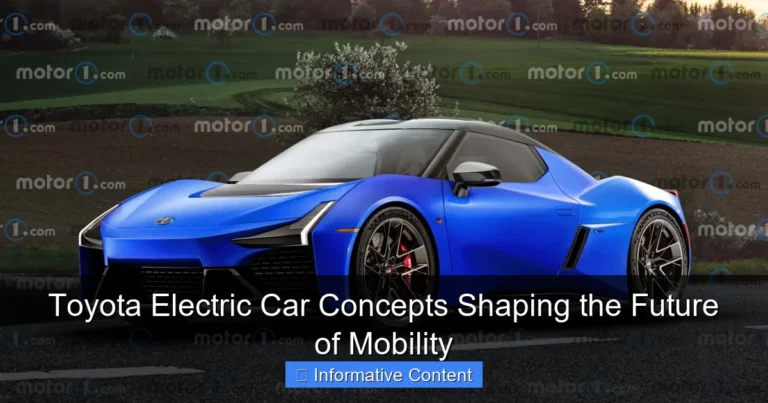
Toyota Electric Car Future What to Expect in 2025 and Beyond
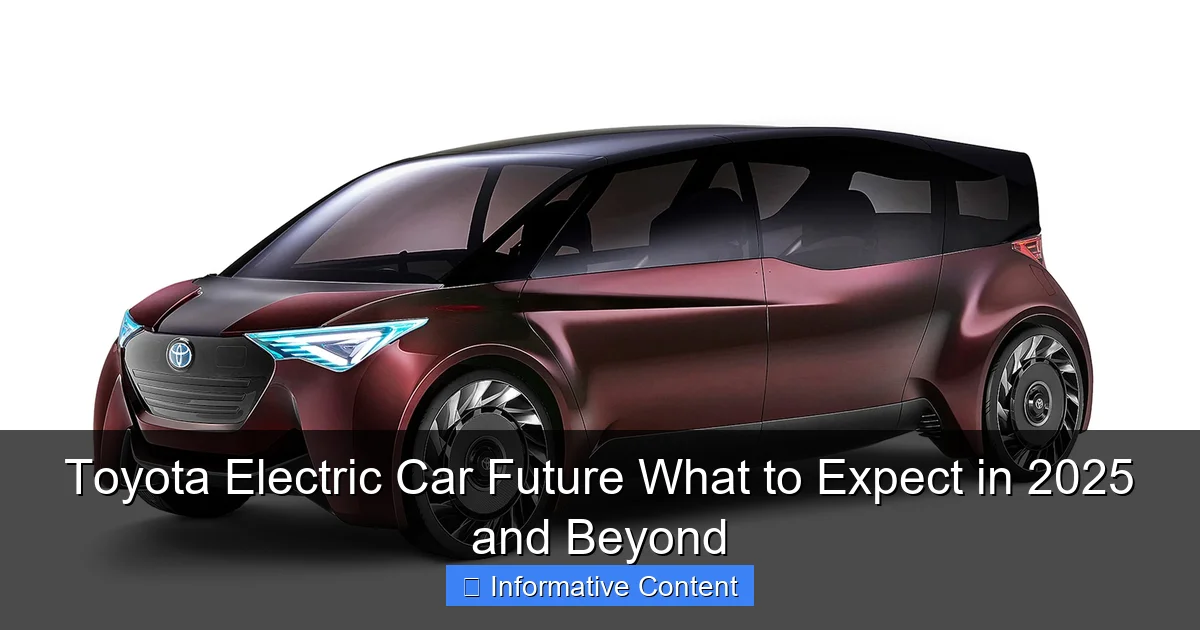
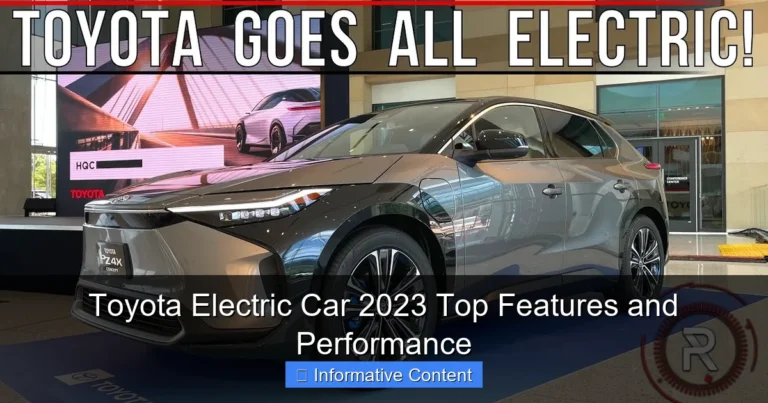
Featured image for toyota electric car future
Image source: images.hgmsites.net
Toyota is accelerating its electric vehicle (EV) strategy with a bold $70 billion investment to launch 30 new EV models by 2030, marking a major shift from its hybrid-focused legacy. Expect cutting-edge solid-state batteries, expanded charging infrastructure, and a fully electric pickup by 2025, positioning Toyota as a serious contender in the global EV race.
Key Takeaways
- Toyota plans 30+ EV models by 2030: Massive expansion signals a bold shift toward electrification.
- Solid-state batteries coming by 2027-2028: Promises faster charging and longer range for future models.
- Focus on affordability and practicality: EVs designed for everyday drivers, not just luxury markets.
- Hybrid tech remains a bridge strategy: Continued investment in hybrids supports transition to full EVs.
- Global production ramp-up by 2025: New factories and supply chains will boost EV availability worldwide.
- Emphasis on sustainability beyond batteries: Recycled materials and eco-friendly manufacturing are key priorities.
📑 Table of Contents
- Toyota Electric Car Future: What to Expect in 2025 and Beyond
- Toyota’s Strategic Shift Toward Electrification
- Breakthrough Battery Technologies on the Horizon
- Toyota’s Global EV Rollout and Market Strategy
- Performance and Design: EVs That Don’t Compromise
- Challenges and What to Watch For
- Data Snapshot: Toyota’s EV Roadmap
- Conclusion: A Quiet Revolution in the Making
Toyota Electric Car Future: What to Expect in 2025 and Beyond
Imagine this: You’re driving down a quiet suburban street, the only sound the soft hum of your car’s electric motor. No engine noise, no gas station stops—just smooth, silent power. That’s not a scene from a sci-fi movie. It’s the future Toyota is quietly building, one electric vehicle at a time. For decades, Toyota has been synonymous with reliability, fuel efficiency, and innovation—think of the Prius, the car that made hybrids mainstream. But now, the automotive giant is shifting gears, accelerating into the electric future with a bold vision for 2025 and beyond.
While some automakers raced ahead with flashy electric models, Toyota took a more measured approach, perfecting hybrid technology and investing heavily in hydrogen fuel cells. But don’t mistake caution for hesitation. In recent years, Toyota has made it clear: the future is electric, and they’re ready to lead—not just follow. With new battery technologies, a growing lineup of EVs, and a commitment to sustainability, Toyota is positioning itself as a serious contender in the EV race. Whether you’re a long-time Toyota fan or just curious about what’s coming next, this is a story worth following.
Toyota’s Strategic Shift Toward Electrification
Toyota’s journey into the electric car future hasn’t been a straight line. For years, the company championed hybrid and hydrogen-powered vehicles, believing they offered a more practical path to reducing emissions. But as battery technology improved and consumer demand for fully electric vehicles surged, Toyota realized it needed to pivot. In 2021, the company announced a $70 billion investment in electrification, with plans to launch 30 new battery electric vehicles (BEVs) by 2030. That’s a massive shift for a brand once seen as slow to embrace full electrification.
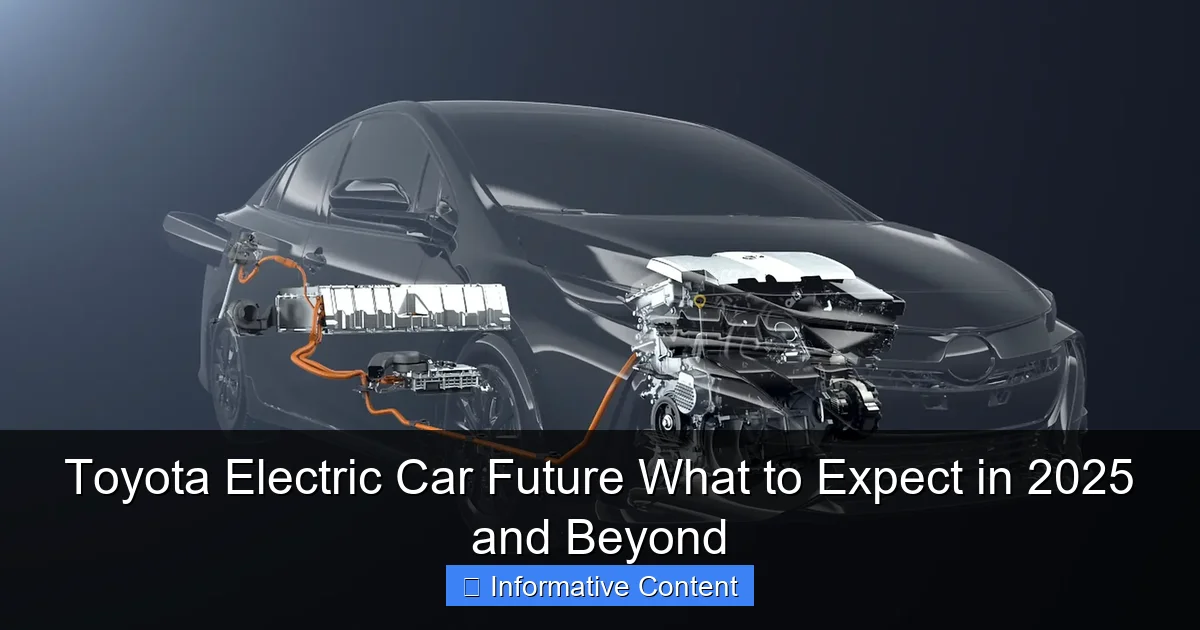
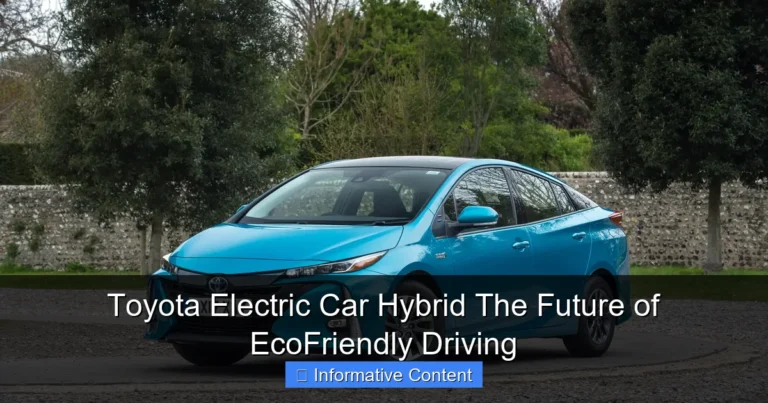
Visual guide about toyota electric car future
Image source: car-images.bauersecure.com
Why the Change of Heart?
So, what changed? For one, global regulations are tightening. Countries like the UK, France, and Canada have set deadlines to phase out internal combustion engines, pushing automakers to go electric. At the same time, Tesla’s success proved there’s a huge market for high-performance, long-range EVs. Toyota couldn’t ignore the trend. But more than that, the company saw an opportunity to leverage its strengths—manufacturing efficiency, global supply chains, and a reputation for durability—to build EVs that are not just innovative, but also affordable and reliable.
The Role of the bZ Series
A key part of Toyota’s electric strategy is the bZ (Beyond Zero) lineup. The bZ4X, Toyota’s first global BEV, hit the market in 2022 and marked the brand’s official entry into the mainstream EV space. Designed as a compact SUV, the bZ4X offers up to 252 miles of range, all-wheel drive options, and a spacious interior. It’s not the most powerful EV on the market, but it’s practical, well-built, and backed by Toyota’s legendary service network. Think of it as the Prius of the electric era—reliable, efficient, and built for everyday drivers.
But the bZ4X is just the beginning. Toyota plans to expand the bZ series with models like the bZ3 (a sedan developed with BYD), the bZ Compact SUV, and even a larger three-row SUV. These vehicles will share a common platform, helping Toyota reduce costs and speed up production. By 2025, the company aims to have at least six bZ models on the road, covering everything from city cars to family SUVs.
Breakthrough Battery Technologies on the Horizon
One of the biggest challenges in the EV world is battery technology. Range anxiety, charging time, and cost are still major concerns for many buyers. Toyota is tackling these issues head-on with a multi-pronged approach to battery innovation. The company isn’t putting all its eggs in one basket—instead, it’s investing in solid-state batteries, lithium-ion improvements, and even exploring new chemistries.
Solid-State Batteries: The Game Changer
Solid-state batteries are often called the “holy grail” of EV technology. Unlike traditional lithium-ion batteries, which use liquid electrolytes, solid-state batteries use a solid material to transfer ions. This makes them safer, more energy-dense, and faster to charge. Toyota has been working on solid-state tech for over a decade and claims it will debut its first solid-state battery EV by 2027 or 2028. But here’s the exciting part: the company has hinted at a potential breakthrough that could bring solid-state batteries to market as early as 2025.
Imagine charging your car in 10 minutes and getting over 500 miles of range. That’s the promise of solid-state batteries. Toyota’s prototype batteries have already shown impressive results in lab tests, with high energy density and long cycle life. If they can scale production and keep costs down, solid-state batteries could revolutionize the EV industry—and give Toyota a major competitive edge.
Improving Lithium-Ion and Exploring Alternatives
While solid-state batteries are the future, Toyota isn’t ignoring current lithium-ion technology. The company is working on next-generation lithium-ion batteries that are more efficient, longer-lasting, and cheaper to produce. For example, Toyota is developing cobalt-free batteries to reduce reliance on rare and ethically questionable materials. Cobalt mining has been linked to environmental damage and human rights abuses, so eliminating it is both a sustainability and PR win.
Toyota is also exploring lithium-iron-phosphate (LFP) batteries, which are already used in some Tesla and BYD models. LFP batteries are less energy-dense than traditional lithium-ion, but they’re safer, cheaper, and last longer. They’re ideal for city cars and shorter commutes. By using different battery types for different vehicles, Toyota can optimize performance, cost, and sustainability across its lineup.
Toyota’s Global EV Rollout and Market Strategy
Toyota’s electric car future isn’t just about technology—it’s also about timing and geography. The company knows that EV adoption varies widely by region, so it’s tailoring its strategy to meet local needs. In Europe and China, where EV sales are booming, Toyota is pushing hard with new models and partnerships. In the U.S., where pickup trucks and SUVs dominate, the focus is on practical, family-friendly EVs. And in emerging markets, affordability and durability are key.
Focus on Affordability and Accessibility
One of Toyota’s biggest advantages is its ability to produce vehicles at scale. The company plans to use its global manufacturing network to keep EV costs down. For example, the bZ3 sedan, developed with Chinese automaker BYD, is expected to be priced under $25,000 in some markets—making it one of the most affordable EVs from a major automaker. That’s a big deal, especially in countries where high EV prices are a barrier to adoption.
Toyota is also working on modular platforms that can be used across multiple models. This “one platform, many vehicles” approach reduces development time and costs. It also means that even entry-level EVs can benefit from advanced features like over-the-air updates, advanced driver assistance systems (ADAS), and high-quality interiors.
Charging Infrastructure and Partnerships
No EV future is complete without a robust charging network. Toyota is partnering with charging providers like EVgo and ChargePoint to expand access to fast chargers, especially in the U.S. The company is also investing in bidirectional charging technology, which allows EVs to power homes during outages or feed energy back into the grid. This “vehicle-to-everything” (V2X) capability could turn your car into a mobile power source—perfect for camping, emergencies, or off-grid living.
In Japan, Toyota is working with the government and utility companies to integrate EVs into the national energy grid. The goal is to create a smart charging system that balances electricity demand and supports renewable energy. It’s a forward-thinking approach that shows Toyota isn’t just selling cars—it’s helping build a sustainable energy ecosystem.
Performance and Design: EVs That Don’t Compromise
Let’s be honest: some EVs prioritize efficiency over excitement. But Toyota is determined to change that. The company wants its electric cars to be not just practical, but also fun to drive. That means focusing on performance, handling, and design—areas where Toyota has traditionally excelled.
Sporty Models and the Return of the Supra?
Rumors have been swirling about a fully electric Toyota Supra. While nothing is confirmed, Toyota has hinted at a high-performance EV sports car in development. Imagine a sleek, aerodynamic coupe with instant torque, all-wheel drive, and a range of 300+ miles. It could compete with the Tesla Roadster or Porsche Taycan, but with Toyota’s signature reliability.
Even if the Supra stays hybrid for now, Toyota is exploring electric performance with models like the GR bZ, a sporty version of the bZ4X. These vehicles will feature upgraded motors, sport-tuned suspensions, and aggressive styling. The message is clear: Toyota EVs won’t be boring.
Interior Innovation and User Experience
Inside, Toyota is rethinking the EV cabin. The bZ4X already features a minimalist dashboard with a large touchscreen, digital instrument cluster, and ambient lighting. But future models will go further. Toyota is working on augmented reality (AR) windshields, voice-controlled AI assistants, and customizable ambient environments. Think of it as a smart living space on wheels.
Sustainability is also a focus. Toyota is using recycled materials, vegan leather, and low-emission paints to reduce the environmental impact of its interiors. The goal is to create cabins that are not only high-tech, but also eco-friendly and comfortable.
Challenges and What to Watch For
Of course, Toyota’s electric future isn’t without challenges. The EV market is crowded, with Tesla, Ford, GM, Hyundai, and Chinese brands all vying for dominance. Battery supply chains are still fragile, and raw material shortages could delay production. And despite its reputation, Toyota will need to prove it can deliver cutting-edge software and user experiences—areas where Tesla has set a high bar.
Software and Over-the-Air Updates
Modern EVs are as much about software as hardware. Tesla’s over-the-air (OTA) updates allow the company to improve performance, add features, and fix bugs remotely. Toyota is catching up, but it’s not there yet. The bZ4X supports OTA updates, but the system is still basic compared to Tesla’s. To compete, Toyota will need to invest more in software development and user interface design.
Consumer Trust and Brand Perception
Toyota’s biggest asset is its reputation for reliability. But in the EV world, that’s not enough. Buyers also want innovation, style, and cutting-edge tech. Toyota will need to balance its traditional strengths with bold new ideas. The good news? The brand has a loyal customer base. If Toyota can deliver EVs that are both reliable and exciting, it could win over even the most skeptical buyers.
Data Snapshot: Toyota’s EV Roadmap
| Year | Key Milestone | Details |
|---|---|---|
| 2023 | bZ4X Global Launch | First global BEV; available in U.S., Europe, China, Japan |
| 2024 | bZ3 Sedan Release | Affordable EV sedan developed with BYD; under $25,000 in select markets |
| 2025 | 6+ bZ Models on Road | Expanded lineup including compact SUV, sedan, and three-row SUV |
| 2026 | Solid-State Battery Prototypes | First real-world testing of solid-state batteries in production vehicles |
| 2027–2028 | Solid-State EV Launch | First production EV with solid-state battery; 10-minute charge, 500+ mile range |
| 2030 | 30 BEVs Globally | Toyota aims for 30 battery electric models worldwide |
Conclusion: A Quiet Revolution in the Making
Toyota’s electric car future might not be as flashy as Tesla’s or as aggressive as Ford’s, but that doesn’t mean it’s any less important. The company is playing the long game, focusing on sustainability, reliability, and real-world usability. While others chase headlines, Toyota is building a foundation for lasting success.
By 2025, we’ll see a more confident, electric-focused Toyota—one that offers a wide range of affordable, high-quality EVs. And by 2030, with solid-state batteries and a global lineup, the brand could be a true leader in the electric age. So whether you’re eyeing a bZ4X for your next family car or dreaming of an electric Supra, one thing is clear: Toyota’s electric future is not just coming. It’s already here.
Frequently Asked Questions
What Toyota electric car models are coming in 2025?
Toyota plans to launch over 10 new electric car models globally by 2025, including SUVs, sedans, and performance variants. Highlights include the bZ4X successor and a next-gen compact EV for urban markets.
How many electric vehicles will Toyota produce by 2030?
Toyota aims to sell 3.5 million EVs annually by 2030, covering 30% of its global sales. This aligns with its broader goal of full electrification across all segments by 2035.
Will Toyota offer affordable electric cars in the future?
Yes, Toyota is developing a $25,000-$35,000 electric car platform targeting budget-conscious buyers. These models will leverage solid-state battery tech to balance cost and range.
What battery technology will Toyota use in its future EVs?
Toyota plans to deploy next-gen lithium-ion and solid-state batteries by 2025, offering faster charging and 500+ miles of range. Pilot production begins in 2024 for select 2026 models.
How does Toyota’s EV strategy compare to Tesla or Hyundai?
While Toyota lagged early, its 2025+ lineup focuses on hybrid-to-EV transitions and unique features like solar roofs. Unlike rivals, it’s prioritizing hydrogen fuel cells alongside battery EVs for long-term flexibility.
Will Toyota discontinue gasoline cars in the future?
Toyota will phase out ICE vehicles in Europe and China by 2035 but maintain hybrid options elsewhere. Its “multi-pathway” strategy keeps combustion engines in regions with limited EV infrastructure.