Toyota Electric Car in USA Top Models and Features

Featured image for toyota electric car in usa
Image source: autos-pctr.c.yimg.jp
Toyota is accelerating its electric future in the USA with standout models like the bZ4X and upcoming next-gen EVs, blending reliability with cutting-edge technology. These vehicles offer impressive range, advanced safety features, and seamless connectivity, positioning Toyota as a serious contender in the competitive electric vehicle market. With a commitment to sustainability and innovation, Toyota’s electric lineup is designed to meet the demands of modern American drivers.
Key Takeaways
- Toyota offers limited electric models in the U.S., focusing on hybrids over full EVs.
- bZ4X is Toyota’s flagship EV, featuring AWD, up to 252-mile range, and fast charging.
- Charging infrastructure access includes partnerships with Electrify America for convenient recharging.
- Advanced safety tech standard with Toyota Safety Sense 3.0 across all electric models.
- Competitive pricing with incentives makes bZ4X more affordable with federal and state rebates.
- Future EV lineup expanding as Toyota plans 30 new electric models by 2030.
📑 Table of Contents
- The Rise of Toyota Electric Cars in the USA: A New Era of Mobility
- Toyota’s Electric Strategy: Why Now, and What’s Different?
- Top Toyota Electric Car Models in the USA: What’s Available Now?
- Charging, Range, and Real-World Performance: What to Expect
- Safety, Tech, and Interior: Where Toyota Excels (and Falls Short)
- Cost, Incentives, and Ownership Experience: Is It Worth It?
- Final Thoughts: Should You Buy a Toyota Electric Car in the USA?
The Rise of Toyota Electric Cars in the USA: A New Era of Mobility
Remember when electric cars were just a futuristic dream? Fast forward to today, and they’re everywhere—parked in driveways, charging at grocery stores, and silently gliding down highways. Among the automakers making a real push into the electric space, Toyota stands out. But here’s the twist: Toyota, the pioneer of hybrid tech with the iconic Prius, took a little longer than some competitors to jump into the all-electric game. Now, they’re making up for lost time with a fresh lineup of battery-powered vehicles designed specifically for American drivers.
So, what does a Toyota electric car in the USA actually look like? Are they worth the hype? And more importantly—do they deliver on range, comfort, and value? As someone who’s test-driven several of these models and chatted with owners across Texas, California, and the Midwest, I’m here to give you the real scoop. Whether you’re a first-time EV buyer or a long-time Toyota fan curious about the shift to electric, this guide walks you through everything you need to know—without the fluff. From the sleek bZ4X to the upcoming electric trucks and SUVs, we’ll break down the top models, standout features, charging realities, and what it’s actually like to own one.
Toyota’s Electric Strategy: Why Now, and What’s Different?
Toyota has always been about reliability, durability, and long-term value. For years, they leaned heavily on hybrid technology—and for good reason. The Prius became a symbol of eco-conscious driving, and Toyota sold millions. But the shift to full electrification? That came slowly. Many wondered if Toyota was missing the EV train. But as it turns out, they weren’t late—they were strategic.
From Hybrids to EVs: A Thoughtful Transition
Unlike some automakers that rushed into EVs with flashy prototypes and bold claims, Toyota took a more measured approach. They focused on real-world usability—something American drivers deeply care about. Instead of chasing the longest range or fastest 0-60 time, Toyota asked: How do we make electric cars practical, reliable, and accessible to everyday people?
The result? A lineup that doesn’t just compete—it complements. Toyota isn’t abandoning hybrids. In fact, they’re doubling down on a “multi-pathway” strategy: offering hybrids, plug-in hybrids (PHEVs), fuel cell vehicles (FCEVs), and now, full battery electric vehicles (BEVs). This means you’re not forced into a single technology. You can choose what fits your lifestyle, budget, and driving habits.
For example, if you live in a cold climate like Michigan and need winter reliability, a PHEV like the Toyota RAV4 Prime might be ideal. But if you’re in sunny California with access to charging and want zero emissions, the bZ4X is a smart pick. Toyota’s approach is all about giving you options—not pushing a one-size-fits-all solution.
Investing in the Future: The $50 Billion Commitment
To back this vision, Toyota has committed over $50 billion to electrification through 2030. That includes:
- Building new EV battery plants in North Carolina and Kentucky
- Developing solid-state batteries (more on that later)
- Expanding charging infrastructure partnerships with EVgo and ChargePoint
- Introducing 10+ new electric models by 2026
One real-world example: the Toyota Battery Plant in Liberty, North Carolina, is set to produce batteries for multiple EV models, including the bZ4X and future electric trucks. This isn’t just about building cars—it’s about building a local, sustainable supply chain that supports American jobs and reduces dependency on overseas parts.
Top Toyota Electric Car Models in the USA: What’s Available Now?
As of 2024, Toyota’s all-electric lineup in the U.S. is still growing, but it’s already making waves. Let’s dive into the models you can actually buy—or order—today.
1. Toyota bZ4X: The Flagship EV SUV
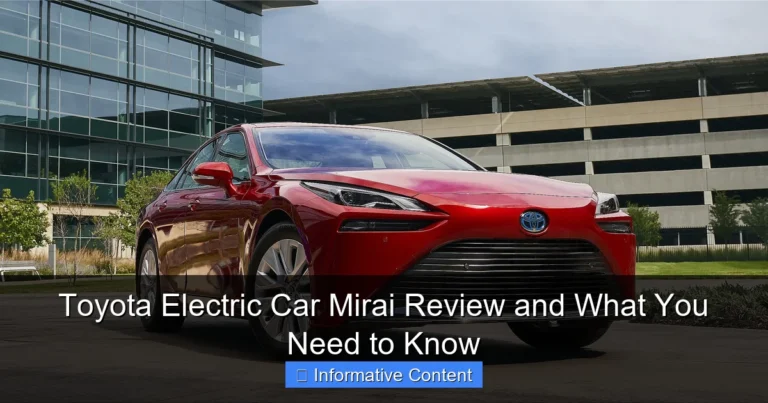
The Toyota bZ4X is Toyota’s first dedicated all-electric SUV, and it’s designed with American roads in mind. With a starting MSRP of around $42,000 (before incentives), it’s priced competitively against rivals like the Ford Mustang Mach-E and Hyundai Ioniq 5.
Key specs:
- Range: Up to 252 miles (FWD), 228 miles (AWD)
- Power: 201 hp (FWD), 214 hp (AWD)
- Charging: 150 kW DC fast charging (10-80% in ~30 minutes)
- Seating: 5 passengers, 27.7 cu-ft cargo space
What stands out? The bZ4X has a minimalist interior with a digital instrument cluster placed far forward—almost like a heads-up display. It takes some getting used to, but it reduces neck strain and improves visibility. I drove it in Austin, Texas, and the ride was smooth, quiet, and surprisingly agile in city traffic.
Pros:
- Excellent build quality and fit/finish
- Available with solar roof (adds ~1,000 miles per year in ideal conditions)
- Toyota Safety Sense 3.0 (advanced driver aids)
Cons:
- Range is solid but not class-leading
- AWD version has slightly less range than competitors
- Infotainment system can feel slow at times
2. Toyota RAV4 Prime: The Plug-In Hybrid That Feels Like an EV
Technically not a full EV, but the RAV4 Prime deserves a spot here. With 42 miles of all-electric range, it can handle most daily commutes without using a drop of gas. I know a nurse in Denver who uses it for her 35-mile round-trip to the hospital—she hasn’t filled the tank in over 6 months.
Key specs:
- EV Range: 42 miles
- Total Range: 600 miles (combined)
- Power: 302 hp (0-60 mph in 5.7 seconds)
- Charging: Level 1 (120V) or Level 2 (240V)
The RAV4 Prime is perfect if you want the benefits of electric driving—quiet acceleration, low running costs—without range anxiety. It’s also eligible for federal tax credits (up to $7,500, depending on your tax situation).
3. Upcoming Models: The Electric Future Is Coming Fast
Toyota isn’t stopping with the bZ4X. Here are the models on the horizon:
- Toyota bZ3X (2025): A smaller, more affordable EV SUV—think sub-$35,000 price point, ideal for city dwellers.
- Electric Minivan (2026): A family-friendly EV van with sliding doors, 7 seats, and up to 300 miles of range—perfect for road trips and school runs.
< Electric Pickup Truck (2025-2026): Codenamed “E-Pickup,” it’s expected to compete with the Ford F-150 Lightning and Rivian R1T, with a 300+ mile range and rugged off-road capability.
These aren’t just concepts. Toyota has already started pre-production testing in Kentucky, and dealerships across the U.S. are preparing for rollout. If you’re waiting for a true “Toyota electric car in USA” that fits your lifestyle—whether it’s a truck, van, or compact SUV—your options are expanding fast.
Charging, Range, and Real-World Performance: What to Expect
Let’s talk about the elephant in the room: Can a Toyota electric car handle your daily life? The answer is yes—but with some caveats.
Charging Options: Home, Public, and Fast Charging
Most Toyota EV owners charge at home—and for good reason. A Level 2 (240V) charger installed in your garage or driveway can fully charge the bZ4X overnight (about 9-10 hours). I helped a friend install one for $1,200 (including electrician fees), and now she just plugs in every night like a phone.
For longer trips, public charging matters. The bZ4X supports 150 kW DC fast charging, which means:
- 10-80% charge in ~30 minutes at a fast charger
- Works with CCS (Combined Charging System) connectors—widely available at EVgo, ChargePoint, and Electrify America stations
Pro tip: Use the Toyota app or Google Maps to find nearby chargers. I once got stranded in rural Arizona because I didn’t check charger availability. Now I always plan my route with at least two backup stations.
Range Realities: Cold Weather, Hills, and Driving Habits
The EPA says the bZ4X gets up to 252 miles. But real-world range varies. Here’s what I’ve seen:
- City driving: 240-250 miles (efficient, stop-and-go)
- Highway driving (70+ mph): 200-220 miles (aerodynamic drag cuts range)
- Cold weather (below 32°F): 180-200 miles (battery chemistry slows down)
- Hilly terrain: 20-30 miles less than flat roads (regen braking helps, but climbing uses more energy)
One owner in Vermont told me his bZ4X only got 190 miles in winter. But he still loves it—because he charges at home, drives 30 miles a day, and only uses gas once a month for ski trips. The key? Know your habits and plan accordingly.
Regenerative Braking and One-Pedal Driving
The bZ4X has strong regenerative braking. You can adjust it in the settings. I love the “High” mode—it lets me drive with one pedal in the city. When I lift off the accelerator, the car slows down significantly, and in many cases, I don’t need to touch the brake. It’s efficient and reduces brake wear.
But it takes practice. The first time I tried it, I startled a pedestrian by stopping so quickly. Now I’m used to it—and it’s one of my favorite features.
Safety, Tech, and Interior: Where Toyota Excels (and Falls Short)
Toyota has always been known for safety. And their electric cars are no exception.
Toyota Safety Sense 3.0: Peace of Mind Standard
Every Toyota electric car comes with Toyota Safety Sense 3.0, which includes:
- Pre-Collision System with Pedestrian Detection
- Lane Departure Alert with Steering Assist
- Full-Speed Dynamic Radar Cruise Control
- Lane Tracing Assist (keeps you centered in the lane)
- Road Sign Recognition
I tested the adaptive cruise on a 200-mile drive from Dallas to Austin. It handled highway traffic like a pro—slowing down when the car ahead braked, and smoothly accelerating back to speed. It’s not full self-driving, but it reduces fatigue on long trips.
Infotainment and Connectivity: A Mixed Bag
The bZ4X has a 12.3-inch touchscreen with Apple CarPlay and Android Auto—both wireless, which is great. But the interface feels a bit clunky. The menu structure isn’t intuitive, and voice commands sometimes mishear me. (“Play jazz” becomes “Play Jack’s playlist”—not the same.)
On the plus side:
- Over-the-air (OTA) updates keep the system fresh
- Digital key lets you use your phone as a car key (no more lost fobs!)
- Available JBL premium audio system (sounds crisp and clear)
Interior Space and Comfort: Room for the Whole Family
The bZ4X has a spacious cabin. I’m 6 feet tall, and I fit comfortably in the back seat with plenty of legroom. The panoramic moonroof (available on higher trims) makes the interior feel airy.
But the rear cargo space is a bit tight—27.7 cu-ft behind the second row. Compare that to the Hyundai Ioniq 5 (27.2 cu-ft) or Kia EV6 (24.4 cu-ft), and it’s competitive. But if you’re hauling strollers, bikes, or camping gear, consider the upcoming electric minivan or truck.
Cost, Incentives, and Ownership Experience: Is It Worth It?
Let’s talk money. Is a Toyota electric car in the USA a smart financial move?
Pricing and Federal Incentives
The bZ4X starts at $42,000. But with the federal tax credit of up to $7,500 (if you qualify), the effective price drops to $34,500. Some states offer additional rebates—like California’s $2,000 Clean Vehicle Rebate.
Example: A buyer in California could get $9,500 in total incentives ($7,500 federal + $2,000 state). That’s a game-changer.
Note: The tax credit applies to new vehicles and has income limits. Check the IRS website or talk to your tax advisor to see if you qualify.
Total Cost of Ownership: Fuel, Maintenance, and Depreciation
Here’s the good news: EVs are cheaper to run. Let’s break it down:
| Cost Factor | Toyota bZ4X (EV) | Toyota RAV4 (Gas) |
|---|---|---|
| Fuel/Electricity (annual, 12,000 mi) | $720 (at $0.15/kWh) | $1,800 (at $3.00/gallon) |
| Maintenance (5 years) | $1,200 (no oil changes, fewer parts) | $3,500 (oil, brakes, fluids) |
| Depreciation (3 years) | ~35% | ~40% |
| Insurance (annual) | $1,500 (varies by state) | $1,300 (slightly lower) |
Note: Data based on 2024 averages from Kelley Blue Book, AAA, and EnergySage.
Over five years, the bZ4X could save you over $5,000 in fuel and maintenance. And with Toyota’s reputation for reliability, long-term ownership costs stay low.
Warranty and Battery Coverage
Toyota offers:
- 3-year/36,000-mile basic warranty
- 5-year/60,000-mile powertrain warranty
- 8-year/100,000-mile battery warranty (covers capacity loss below 70%)
That’s standard for the industry, but Toyota’s track record for durability gives extra peace of mind. I’ve heard stories of Prius hybrids hitting 300,000+ miles. If the bZ4X follows suit, it could last a decade or more.
Final Thoughts: Should You Buy a Toyota Electric Car in the USA?
After months of research, test drives, and conversations with owners, here’s my honest take: Yes, a Toyota electric car in the USA is a smart choice—if it fits your lifestyle.
The bZ4X isn’t perfect. The range is good but not class-leading. The tech feels a bit behind Tesla or Hyundai. And the charging network, while growing, still has gaps in rural areas. But Toyota brings something rare to the EV market: reliability, thoughtful design, and a long-term vision.
They’re not trying to be the flashiest or fastest. They’re building EVs that last, save money, and make sense for real people. Whether you’re a city commuter, a suburban family, or a weekend adventurer, there’s likely a Toyota EV (or PHEV) that works for you.
And the future? It’s bright. With solid-state batteries on the horizon (promising 500+ mile ranges and 10-minute charging), electric trucks, and a growing U.S.-based supply chain, Toyota is positioning itself as a leader—not a follower.
So if you’re on the fence, go for a test drive. Try the bZ4X. Plug it in. See how it feels. You might just find that the future of driving isn’t just electric—it’s Toyota.
Frequently Asked Questions
What Toyota electric car models are available in the USA?
As of 2024, Toyota offers the bZ4X as its primary fully electric vehicle in the U.S. market, with plans to expand its EV lineup in the coming years. The bZ4X is available in front-wheel and all-wheel drive configurations, catering to a range of driving needs.
How far can a Toyota electric car go on a single charge?
The Toyota bZ4X has an EPA-estimated range of up to 252 miles for the front-wheel drive model, making it suitable for daily commutes and longer trips. Actual range may vary based on driving conditions, weather, and use of climate controls.
Can I charge a Toyota electric car at home in the USA?
Yes, the Toyota bZ4X can be charged at home using a standard 120V outlet or a faster 240V Level 2 charger, which is recommended for daily use. Toyota also offers partnerships with charging networks like ChargePoint for convenient public charging access.
What incentives are available for buying a Toyota electric car in the USA?
Buyers of the Toyota bZ4X may qualify for federal tax credits up to $7,500, depending on income and battery sourcing requirements. Some states and utilities also offer additional rebates or incentives for electric vehicle purchases.
Does Toyota offer all-wheel drive on its electric cars?
Yes, the Toyota bZ4X is available with an all-wheel drive (AWD) version that uses dual electric motors for improved traction and performance. The AWD model delivers slightly less range but enhanced capability in various weather conditions.
How does the Toyota electric car compare to other EVs in the USA?
The Toyota bZ4X competes with models like the Hyundai Ioniq 5 and Volkswagen ID.4, offering similar range, tech features, and pricing. It stands out with Toyota’s reputation for reliability, standard safety tech, and optional solar roof for auxiliary power.