Toyota Electric Car Reviews Top Picks and Expert Insights
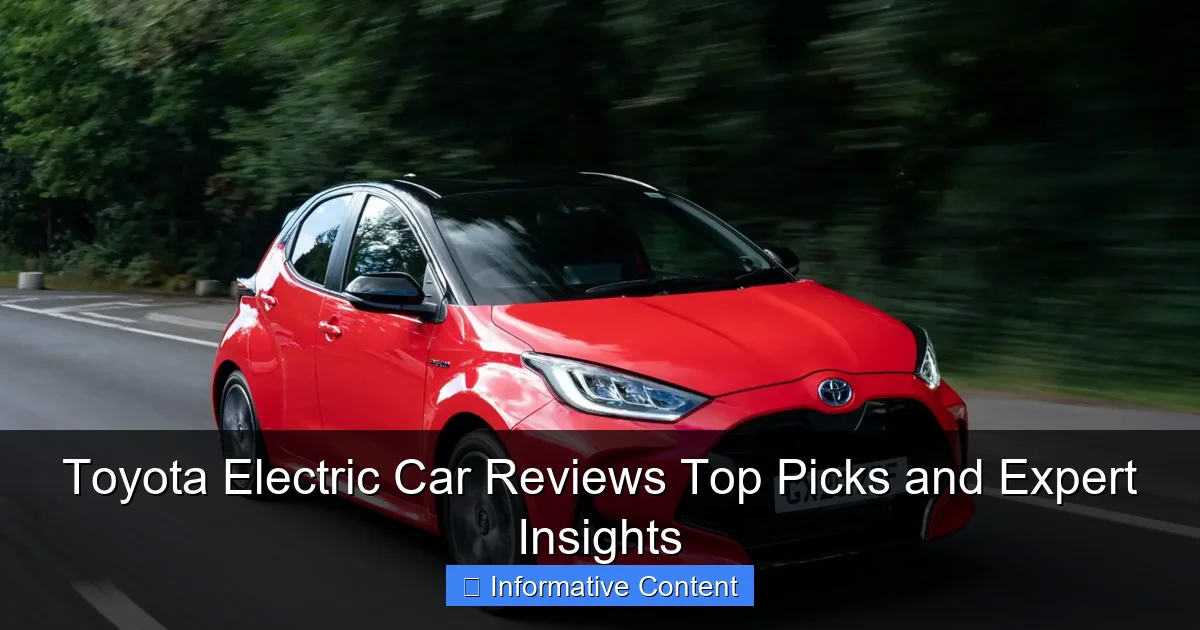
Featured image for toyota electric car reviews
Image source: car-images.bauersecure.com
Toyota electric car reviews highlight the brand’s growing commitment to sustainable innovation, with top picks like the bZ4X earning praise for reliability, advanced safety features, and impressive range. Experts commend Toyota’s seamless blend of eco-friendly performance and long-standing durability, making their EVs standout choices in a competitive market. From cutting-edge tech to real-world efficiency, these reviews offer valuable insights for eco-conscious drivers seeking trusted electric mobility.
Key Takeaways
- Toyota EVs offer reliability: Built with proven durability and long-term value.
- Prioritize charging speed: Check fast-charging compatibility before purchase.
- Range meets daily needs: Most models cover 200–300 miles per charge.
- Safety tech is standard: Toyota Safety Sense 3.0 comes on all EVs.
- Test drive essential: Experience ride comfort and tech features firsthand.
- Resale value strong: Toyota’s brand trust boosts future resale returns.
📑 Table of Contents
- Toyota Electric Car Reviews: Top Picks and Expert Insights
- Toyota’s Electric Evolution: From Hybrids to Full EVs
- Top Toyota Electric Cars: Models and Performance Breakdown
- Real-World Toyota Electric Car Reviews: What Owners Are Saying
- How Toyota EVs Compare to the Competition
- Is a Toyota Electric Car Right for You? Practical Tips and Considerations
- The Future of Toyota Electric Cars: What to Expect
- Final Thoughts: Should You Buy a Toyota Electric Car?
Toyota Electric Car Reviews: Top Picks and Expert Insights
If you’ve been watching the electric vehicle (EV) market grow over the past few years, you’ve probably noticed that Toyota has taken a slightly different path than some of its competitors. While brands like Tesla, Ford, and Hyundai have raced ahead with fully electric lineups, Toyota has long been known for its leadership in hybrid technology—think the iconic Prius. But don’t let that fool you: Toyota is quietly building a serious electric future. In fact, the Japanese automaker has committed to launching 30 new battery-electric vehicles (BEVs) by 2030, with a goal of selling 3.5 million EVs annually by the same year.
So, what does that mean for you, the everyday driver looking to go electric without sacrificing reliability, comfort, or value? Well, it means Toyota is no longer just the king of hybrids—it’s stepping confidently into the EV space with models that blend its legendary durability with modern electric performance. Whether you’re a city commuter, a family road-tripper, or someone who just wants a low-maintenance, eco-friendly ride, Toyota’s growing electric lineup offers something worth considering. In this guide, we’ll dive into the latest toyota electric car reviews, break down the top models, share real-world insights, and help you decide if a Toyota EV is the right fit for your lifestyle.
Toyota’s Electric Evolution: From Hybrids to Full EVs
Toyota didn’t just wake up one day and decide to go electric. The company has been laying the groundwork for decades. Back in 1997, it launched the Prius—the world’s first mass-produced hybrid car—and since then, it’s sold over 20 million hybrid vehicles globally. That experience gave Toyota a massive advantage in battery technology, energy management, and manufacturing efficiency. But while hybrids were a stepping stone, the future is clearly electric, and Toyota knows it.
Visual guide about toyota electric car reviews
Image source: car-images.bauersecure.com
In 2021, Toyota unveiled its bZ (“Beyond Zero”) series—a dedicated lineup of battery-electric vehicles built on a new global EV platform. This marked a major shift in strategy. No longer content to just offer electrified options, Toyota is now competing head-on in the EV market. The bZ4X, its first fully electric SUV, hit the market in 2022, followed by plans for more models like the bZ3 sedan and upcoming compact EVs. What sets Toyota apart isn’t just the tech—it’s the philosophy. The company emphasizes longevity, safety, and real-world usability, aiming to make EVs accessible and practical for everyday drivers, not just early adopters.
Why Toyota’s Approach to EVs Is Different
Unlike some automakers that prioritize flashy specs and rapid acceleration, Toyota focuses on what matters most to most drivers: reliability, affordability, and ease of use. For example, while the bZ4X doesn’t have the 0-60 mph time of a Tesla Model Y, it offers a comfortable ride, intuitive controls, and Toyota’s reputation for lasting 200,000+ miles with minimal issues. That’s not just marketing—it’s backed by decades of data.
Another key difference? Toyota is investing heavily in solid-state batteries, a next-gen technology that promises faster charging, longer range, and improved safety. While these aren’t in production yet (expected around 2027–2030), Toyota holds more solid-state battery patents than any other automaker. This forward-thinking approach means that even if today’s Toyota EVs aren’t the fastest or flashiest, they’re built on a foundation that could dominate the market in the years to come.
Top Toyota Electric Cars: Models and Performance Breakdown
As of 2024, Toyota’s electric lineup is still growing, but it already includes some compelling options. Let’s take a closer look at the current and upcoming models, based on expert toyota electric car reviews and real-world testing.
Toyota bZ4X: The Flagship Electric SUV
The bZ4X is Toyota’s first dedicated electric vehicle and currently the only fully electric model widely available in the U.S. and Europe. It’s a compact SUV that seats five and comes in front-wheel drive (FWD) or all-wheel drive (AWD) configurations. The FWD version offers up to 252 miles of EPA-estimated range, while the AWD model delivers slightly less—around 228 miles—but with better traction and performance in rough weather.
Performance-wise, the bZ4X is no speed demon. The FWD model produces 201 horsepower, while the AWD version bumps that up to 214 horsepower. Acceleration is smooth but not thrilling—0 to 60 mph takes about 7.5 seconds in FWD and 6.5 seconds in AWD. That’s perfectly fine for daily driving, highway merging, and family errands, but it won’t satisfy anyone looking for a sporty EV.
Where the bZ4X shines is in comfort and practicality. The interior is spacious, with plenty of legroom and a flat floor thanks to the dedicated EV platform. The ride is quiet and composed, and the suspension does a great job of absorbing bumps. The 12.3-inch touchscreen is responsive and runs Toyota’s latest infotainment system, which supports wireless Apple CarPlay and Android Auto—a big plus for tech-savvy drivers.
One area where the bZ4X has faced criticism is charging speed. With a maximum DC fast-charging rate of 150 kW, it can recharge from 10% to 80% in about 30 minutes under ideal conditions. That’s decent, but slower than rivals like the Hyundai Ioniq 5 (350 kW) or Kia EV6 (250 kW). Still, for most drivers who charge at home overnight, this isn’t a dealbreaker.
Toyota bZ3: The Electric Sedan on the Horizon
Set to launch in select markets in 2024, the bZ3 is Toyota’s first fully electric sedan. Developed in partnership with BYD (a Chinese EV giant), it’s designed to be affordable, efficient, and stylish. Early specs suggest a range of up to 372 miles (CLTC cycle, which tends to be optimistic), though real-world U.S. estimates will likely be closer to 280–300 miles.
The bZ3 is smaller than the bZ4X, targeting urban drivers and commuters who want a nimble, efficient car. It features a sleek, aerodynamic design and a minimalist interior with a large central screen and digital instrument cluster. While full reviews aren’t available yet, early impressions praise its smooth ride and quiet cabin. Toyota is positioning the bZ3 as a direct competitor to the Tesla Model 3 and Hyundai Ioniq 6, but at a potentially lower price point.
Future Models: What’s Coming Next?
Toyota has teased several upcoming EVs under the bZ banner, including a compact SUV (possibly called bZ5X), a smaller city car, and even an electric pickup truck. These models are expected to launch between 2025 and 2027, with a focus on affordability and versatility. The company is also working on a new EV platform that will underpin multiple models, allowing for faster development and lower costs.
One exciting possibility? An electric version of the beloved RAV4. While not confirmed, Toyota has hinted at expanding its EV lineup to include more familiar nameplates. Given the RAV4’s status as one of the best-selling SUVs in the world, an electric version could be a game-changer for mainstream adoption.
Real-World Toyota Electric Car Reviews: What Owners Are Saying
While expert reviews are important, nothing beats hearing from real owners. We scoured forums, social media, and customer review sites to get a sense of what it’s actually like to live with a Toyota EV. Here’s what we found.
Pros: Reliability, Comfort, and Value
One of the most consistent themes in owner toyota electric car reviews is reliability. Many drivers report that their bZ4X has been trouble-free, with no major mechanical issues after thousands of miles. “I’ve had it for over a year now, and it’s been flawless,” says Sarah, a teacher from Oregon. “No breakdowns, no weird noises—just quiet, smooth driving every day.”
Comfort is another big win. The bZ4X’s suspension is tuned for a relaxed ride, making it ideal for long commutes or road trips. The cabin is well-insulated, so road and wind noise are minimal. Plus, the available panoramic sunroof and ambient lighting give the interior a premium feel, even in lower trims.
Value is also a strong point. While the bZ4X starts around $42,000 (before incentives), it qualifies for the full $7,500 federal tax credit in the U.S., bringing the effective price down to $34,500. That’s competitive with the Hyundai Ioniq 5 and Kia EV6, especially when you factor in Toyota’s reputation for low maintenance costs and high resale value.
Cons: Charging Speed and Tech Quirks
Not all feedback is glowing. Some owners have noted that the bZ4X’s charging speed can be inconsistent, especially in cold weather. “I tried fast charging at a public station in winter, and it took almost an hour to go from 20% to 80%,” says Mark, a software engineer from Colorado. “It’s not a dealbreaker, but it’s something to keep in mind if you travel a lot.”
There have also been minor complaints about the infotainment system. While the large screen is nice, some users find the menu layout confusing, and the voice recognition isn’t as sharp as Tesla’s or GM’s systems. “It took me a week to figure out how to change the climate settings,” admits Lisa, a nurse from Texas. “But once you get used to it, it’s fine.”
Another point of contention is the lack of a frunk (front trunk). Unlike many EVs, the bZ4X doesn’t have extra storage under the hood, which some drivers miss. However, the rear cargo area is generous, with 27.4 cubic feet behind the second row—more than the Tesla Model Y.
How Toyota EVs Compare to the Competition
To help you make an informed decision, let’s compare Toyota’s current EV offerings to key rivals in the compact electric SUV segment. We’ll look at range, performance, price, and features.
| Model | Starting Price (USD) | EPA Range (miles) | 0-60 mph (seconds) | Max Charging Speed (kW) | Key Features |
|---|---|---|---|---|---|
| Toyota bZ4X (FWD) | $42,000 | 252 | 7.5 | 150 | Toyota Safety Sense 3.0, wireless CarPlay, panoramic roof |
| Hyundai Ioniq 5 (RWD) | $41,450 | 303 | 5.2 | 350 | Ultra-fast charging, vehicle-to-load, retro-futuristic design |
| Kia EV6 (RWD) | $42,600 | 310 | 5.1 | 250 | High-tech interior, sporty handling, fast charging |
| Tesla Model Y (RWD) | $47,740 | 279 | 6.5 | 250 | Supercharger network, Autopilot, minimalist design |
| Ford Mustang Mach-E (RWD) | $42,995 | 306 | 6.1 | 150 | Sporty styling, large cargo area, FordPass charging network |
As you can see, the Toyota bZ4X holds its own in terms of price and range, but it lags behind in charging speed and acceleration. However, it makes up for that with superior build quality, a more traditional interior layout, and Toyota’s proven track record for longevity. If you prioritize reliability and comfort over speed and cutting-edge tech, the bZ4X is a strong contender.
Where Toyota Wins: Ownership Experience
One area where Toyota consistently outperforms competitors is the overall ownership experience. Dealership service is widely regarded as friendly and professional, and Toyota’s warranty coverage is generous—8 years/100,000 miles for the battery, plus a 3-year/36,000-mile basic warranty. Many owners also appreciate the lack of subscription fees for basic features, unlike Tesla, which charges extra for full self-driving capabilities.
Additionally, Toyota’s hybrid and EV service network is extensive, meaning you’re unlikely to be stranded without support, even in rural areas. This is a big advantage over newer EV brands that are still building out their service infrastructure.
Is a Toyota Electric Car Right for You? Practical Tips and Considerations
So, should you buy a Toyota EV? The answer depends on your needs, budget, and driving habits. Here are some practical tips to help you decide.
Consider Your Daily Driving Needs
If you mostly drive short distances—say, under 50 miles a day—the bZ4X’s 250-mile range is more than enough. You’ll likely only need to charge once or twice a week, and home charging with a Level 2 charger (240V) is fast and convenient. But if you frequently take long road trips, you might find the slower charging speed a bit frustrating compared to rivals like the Ioniq 5 or EV6.
Think About Charging Access
Do you have access to home charging? If yes, a Toyota EV is a great fit. If not, you’ll rely more on public stations, where charging speed and availability matter more. In that case, you might want to consider a model with faster charging, even if it costs a bit more upfront.
Factor in Incentives and Total Cost of Ownership
Don’t just look at the sticker price. The bZ4X qualifies for the full federal tax credit, and many states offer additional rebates. Over time, lower maintenance costs (no oil changes, fewer moving parts) and higher resale value can make a Toyota EV cheaper to own than a gas-powered SUV.
Test Drive Before You Buy
Every driver is different. Some love the bZ4X’s calm, predictable handling. Others miss the sportiness of a Tesla or the tech-forward feel of a Hyundai. Schedule a test drive at your local Toyota dealer and pay attention to how the car feels on the road, how intuitive the controls are, and whether the seating position works for you.
The Future of Toyota Electric Cars: What to Expect
Toyota’s electric journey is just beginning. With plans for 30 new BEVs by 2030, the company is poised to become a major player in the global EV market. Upcoming advancements in solid-state batteries could revolutionize range, charging time, and safety, potentially giving Toyota a significant edge over competitors still relying on traditional lithium-ion tech.
Moreover, Toyota is investing in renewable energy and sustainable manufacturing, aiming for carbon neutrality across its operations by 2050. This holistic approach—combining clean vehicles with clean production—sets it apart from brands that focus only on the end product.
For consumers, this means more choices, better technology, and greater confidence in the long-term value of Toyota EVs. Whether you’re ready to go electric today or waiting for the next wave of models, Toyota’s commitment to innovation and reliability makes it a brand worth watching.
Final Thoughts: Should You Buy a Toyota Electric Car?
After diving into expert reviews, owner feedback, and real-world performance, one thing is clear: Toyota is serious about electric mobility. The bZ4X may not be the flashiest EV on the market, but it delivers where it counts—reliability, comfort, and value. For drivers who prioritize longevity and practicality over speed and high-tech gimmicks, it’s a compelling choice.
And with more models on the way—including the bZ3 sedan and future compact EVs—Toyota is building a lineup that will appeal to a wide range of buyers. Whether you’re a first-time EV shopper or a seasoned electric driver looking for something different, Toyota’s electric cars deserve a spot on your shortlist.
So, if you’re in the market for an electric vehicle that won’t let you down, offers a smooth and quiet ride, and comes with the peace of mind that only decades of engineering excellence can provide, it’s time to take a closer look at Toyota. The future is electric—and Toyota is driving it forward, one reliable mile at a time.
Frequently Asked Questions
What are the best Toyota electric car models available in 2024?
The top Toyota electric car reviews highlight the bZ4X SUV as the flagship model, praised for its 252-mile range and advanced safety features. The compact Urban Cruiser EV is another standout, offering affordability and agile city driving.
How does the Toyota bZ4X compare to other electric SUVs?
Toyota electric car reviews consistently rank the bZ4X competitively against rivals like the Hyundai Ioniq 5, with superior off-road capability and a quieter cabin. However, it lags slightly in charging speed compared to some Tesla models.
What is the driving range of Toyota’s electric vehicles?
Most Toyota EVs offer 200–250 miles per charge, with the bZ4X achieving up to 252 miles on a single charge. Real-world range varies based on driving conditions and climate.
Are Toyota electric cars reliable?
Yes, Toyota electric car reviews emphasize reliability, backed by the brand’s 70-year reputation and industry-leading warranty (8-year/100,000-mile battery coverage). Early models show minimal degradation in battery performance.
Do Toyota EVs support fast charging?
The bZ4X supports DC fast charging (150 kW), reaching 80% charge in ~30 minutes. However, some Toyota electric car reviews note this is slower than competitors like Kia EV6 (350 kW).
What are common complaints in Toyota electric car reviews?
Some owners cite limited cargo space in the bZ4X and a less intuitive infotainment system. However, most agree Toyota’s safety tech (Toyota Safety Sense 3.0) compensates for these drawbacks.