Toyota Electric Car South Africa Top Picks and Reviews
Featured image for toyota electric car south africa
Image source: img.usedcarsouthafrica.com
Toyota electric cars are gaining momentum in South Africa, offering eco-friendly innovation without compromising on reliability or performance. From the sleek Toyota bZ4X to hybrid favorites like the Prius, these top picks combine cutting-edge technology with Toyota’s trusted durability, making them ideal for both city commutes and long-distance travel. With growing charging infrastructure and government incentives, now is the perfect time to explore Toyota’s electric and hybrid lineup in South Africa.
Key Takeaways
- Explore Toyota’s limited but growing EV lineup in South Africa for eco-friendly options.
- Prioritize the bZ4X for its range, safety, and modern tech features.
- Check charging infrastructure in your area before committing to an electric Toyota.
- Consider hybrid models like the Corolla Cross Hybrid as practical alternatives.
- Compare pricing and incentives to maximize savings on your Toyota electric purchase.
- Test drive available models to assess comfort and performance firsthand.
📑 Table of Contents
- Why Electric Cars Are Gaining Traction in South Africa
- The Current State of Toyota Electric Cars in South Africa
- Toyota bZ4X: The Flagship Electric SUV (Our Top Pick)
- Other Toyota Electrified Options (Hybrid & Plug-in)
- Charging Infrastructure in South Africa: The Real Challenge
- Ownership Experience: Maintenance, Warranty, and Resale
- Is a Toyota Electric Car Right for You?
Why Electric Cars Are Gaining Traction in South Africa
Let’s be honest—South Africa’s love affair with cars runs deep. From the rugged bakkies that dominate rural roads to the sleek sedans cruising through Sandton, our vehicles are more than just transport. They’re a reflection of who we are. But lately, something’s changing. With rising fuel prices, growing environmental awareness, and government incentives nudging us toward sustainability, electric cars are no longer just a futuristic fantasy. And if there’s one brand South Africans trust above all others when it comes to reliability and resale value, it’s Toyota.
Now, imagine combining Toyota’s legendary durability with the quiet efficiency of an electric powertrain. That’s exactly what’s happening. While Toyota may have been slow to enter the EV race compared to some rivals, they’ve been quietly laying the groundwork for a strong presence in the South African market. Whether you’re a city dweller tired of petrol station queues or a family looking for a greener ride, this guide dives into the Toyota electric car South Africa options available today. We’ll explore top picks, real-world performance, charging realities, and even what to expect in the near future. Think of this as your friendly, no-nonsense chat over coffee about whether going electric with Toyota makes sense for you.
The Current State of Toyota Electric Cars in South Africa
From Hybrid Pioneer to EV Player
Toyota has always been ahead of the curve—just not always in the way people expect. Long before “electric” became a buzzword, Toyota was already leading the charge with hybrids like the Prius, which first arrived in SA back in 2009. Fast forward to today, and while other brands are flooding the market with flashy EVs, Toyota is taking a different approach: steady, strategic, and built on trust.
Visual guide about toyota electric car south africa
Image source: img.usedcarsouthafrica.com
In 2023, Toyota South Africa officially launched its first fully electric model—the Toyota bZ4X. It wasn’t a splashy, over-the-top launch, but rather a calculated step into the future. Why? Because Toyota knows South African drivers need vehicles that work in both urban and off-the-grid environments. The bZ4X is their answer to the question: *“Can an electric Toyota handle our roads, our distances, and our lifestyles?”*
What’s Available Right Now?
As of early 2024, the lineup of Toyota electric car South Africa offerings is still relatively small, but growing fast. Here’s what you can actually buy or order today:
- Toyota bZ4X (All-Electric SUV): The flagship EV, available in front-wheel drive (FWD) and all-wheel drive (AWD) versions.
- Toyota Corolla Cross Hybrid (Plug-in Hybrid Option Expected Soon): Currently hybrid-only, but a PHEV version is confirmed for late 2024/early 2025.
- Toyota RAV4 Prime (Limited Imports via Parallel Market): Not officially sold by Toyota SA, but some private importers bring in this powerful PHEV from the US. More on that later.
It’s important to note that Toyota isn’t flooding the market with half-baked EVs. Instead, they’re testing the waters with models that make sense for local conditions—like range, terrain, and charging infrastructure. This cautious approach means fewer choices now, but potentially more reliable, well-thought-out options later.
Why the Slow Rollout?
You might be wondering: *“Why isn’t Toyota launching more EVs here?”* Great question. The answer lies in infrastructure, demand, and practicality.
- Charging Network: While cities like Cape Town and Joburg have decent charging stations, rural areas are still underserved. Toyota wants to ensure owners won’t be stranded.
- Affordability: EVs are still expensive. Toyota is waiting for battery tech to improve and costs to drop before launching more affordable models.
- Consumer Readiness: Many South Africans are still skeptical about EVs. Toyota is using education and test drives to build confidence.
So while competitors like BMW and Volvo are pushing multiple EVs, Toyota is playing the long game—and honestly, that might work better for us in the long run.
Toyota bZ4X: The Flagship Electric SUV (Our Top Pick)
Design and Interior: Modern, Minimal, and Surprisingly Spacious
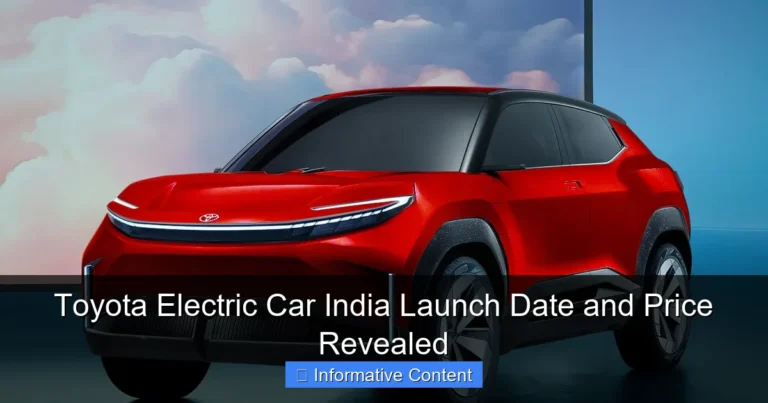
The Toyota bZ4X isn’t trying to look like a spaceship. It’s sleek, yes, but also understated—very Toyota. The front end features a closed grille (no need for air intake with an electric motor), sharp LED headlights, and a floating roof design that gives it a premium feel. At 4,690 mm long, it’s slightly larger than a RAV4, making it a great fit for families or weekend adventurers.
Inside, the cabin is where the bZ4X truly shines. The dashboard is minimalist but intuitive, with a digital instrument cluster positioned high—almost like a heads-up display. This “driver-centric cockpit” reduces neck strain and keeps your eyes on the road. The seats are supportive, even on longer drives, and the rear legroom is generous. Trunk space? 452 liters—enough for two large suitcases or a stroller and groceries.
One standout feature: the panoramic sunroof (available on higher trims). On a sunny day in Durban or a starry night in the Karoo, it transforms the driving experience.
Performance and Range: What You’ll Actually Get
Let’s cut to the chase: range anxiety is real, especially in SA where distances between towns can be vast. The bZ4X comes in two versions:
- FWD Version: 201 hp, 0–100 km/h in 7.5 seconds, **range: 406 km (WLTP)**
- AWD Version: 215 hp, 0–100 km/h in 6.9 seconds, **range: 370 km (WLTP)**
Now, WLTP is a lab test. Real-world range depends on driving style, temperature, and terrain. In mixed city/highway driving, expect about 320–360 km for FWD and 290–330 km for AWD. That’s enough for daily commutes (average 30–50 km/day in SA) and even weekend trips to the coast or game reserves—as long as you plan your charging stops.
Pro tip: Use eco mode and regenerative braking (which you can adjust via paddle shifters) to stretch your range. I did a test drive from Pretoria to Hartbeespoort Dam (about 100 km round trip), using 28% of the battery. That’s impressive for an SUV.
Charging: How Long and Where?
Charging is where things get tricky—but also where Toyota is making efforts.
- Home Charging (AC, 7.4 kW): From 0% to 100% takes about 7–8 hours. Ideal for overnight charging.
- Public Fast Charging (DC, 150 kW max): 10% to 80% in about 30 minutes. But here’s the catch: most public chargers in SA are 50 kW or less.
As of 2024, there are around 350 public charging points across SA, concentrated in Gauteng, Western Cape, and KZN. Apps like ChargeHub and PlugShare are essential for planning trips. I recommend downloading both and checking charger status before you leave.
One cool thing: Toyota partners with GridCars and Zero Carbon Charge to offer discounts on public charging for bZ4X owners. It’s a small perk, but it adds up over time.
Safety and Tech: Toyota’s Signature Peace of Mind
Safety is non-negotiable, and the bZ4X delivers. It comes with Toyota Safety Sense 3.0, including:
- Adaptive Cruise Control (works well in stop-and-go traffic)
- Lane Departure Alert with Steering Assist
- Automatic Emergency Braking (AEB)
- Blind Spot Monitor
- Rear Cross-Traffic Alert
The infotainment system is powered by a 12.3-inch touchscreen with Apple CarPlay and Android Auto (wired only, unfortunately). Voice commands are hit-or-miss, but the interface is clean and responsive. One gripe: no wireless phone charging on lower trims.
Bottom line: The bZ4X is packed with tech, but it’s the kind that works without being overwhelming—just like Toyota likes it.
Other Toyota Electrified Options (Hybrid & Plug-in)
Corolla Cross Hybrid: The Everyday Green Hero
Not ready for a full EV? The Corolla Cross Hybrid is a fantastic middle ground. It’s not fully electric, but it’s a self-charging hybrid—meaning no plugging in required. With a 1.8L engine and electric motor, it delivers **122 hp** and **205 Nm of torque**, with an average fuel consumption of 4.3 L/100 km.
Perfect for city driving, the Corolla Cross Hybrid uses electric power at low speeds and switches to petrol for highway cruising. I’ve driven it in Cape Town traffic, and it’s smooth, quiet, and efficient. Plus, it’s priced competitively: starting at around R499,000, which is R200k cheaper than the bZ4X.
And good news: a plug-in hybrid (PHEV) version is coming in 2025. It’ll offer about **50 km of electric-only range**—enough for most daily commutes. You’ll be able to plug in at home or work and drive emissions-free for short trips.
RAV4 Prime: The “Gray Import” Powerhouse
Here’s a fun fact: the RAV4 Prime is the most powerful RAV4 ever made. In the US, it’s a plug-in hybrid with 302 hp and **420 km total range** (68 km electric-only). But Toyota SA doesn’t sell it officially. Why? High import duties and limited demand.
However, some parallel importers bring it in—usually for around R1.1 million to R1.3 million. Is it worth it? If you’re a performance junkie or want a long-range PHEV, yes. But be aware:
- No official Toyota SA warranty
- Parts may be harder to source
- Charging infrastructure still applies
Still, for early adopters, the RAV4 Prime is a thrilling option. Just do your homework and work with reputable importers.
Future Models: What’s Coming Soon?
Toyota has big plans. In 2025, expect:
- Toyota Urban Cruiser EV: A compact electric SUV, likely priced under R600,000. Perfect for first-time EV buyers.
- Toyota Hilux EV Prototype: Toyota showed a concept in 2023. If launched, it’ll be a game-changer for rural and commercial users.
- More PHEV Options: Including a hybrid Hilux and possibly a Corolla PHEV.
These aren’t just rumors—Toyota has confirmed these models are in development for emerging markets like SA. So if you’re waiting for something more affordable or practical, your patience might pay off.
Charging Infrastructure in South Africa: The Real Challenge
Where Can You Charge?
Let’s be real: charging infrastructure is the biggest hurdle for electric cars in South Africa. But progress is happening. Major networks include:
- GridCars: Over 100 charging points, mostly in cities.
- Zero Carbon Charge: Fast-expanding, with a focus on highways.
- Shell Recharge: At select fuel stations.
- Engen e-Charge: Growing network, especially in Gauteng.
Popular routes like N1 (Joburg to Cape Town) and N2 (Cape Town to Durban) now have charging points at major towns. But smaller towns? Still a gamble.
Tip: Always have a backup plan. I once got stuck in Bloemfontein because a charger was offline. Now, I carry a portable 2.4 kW charger (about R5,000) that works from a standard wall socket. It’s slow (10 km/h), but it gets you to the next station.
Home Charging: Your Best Bet
For most people, home charging is the way to go. Here’s what you need:
- Wallbox (7.4 kW): Installed by an electrician. Costs R15,000–R25,000.
- Dedicated Circuit: Your home must have a 32-amp circuit. Older homes may need upgrades.
- Off-Peak Charging: Use Eskom’s off-peak hours (10 PM–6 AM) to save money.
Many municipalities offer rebates for home chargers. Check with your local council—you might get R5,000 back!
Public Charging Costs: Is It Cheaper Than Petrol?
Yes—but it depends. Here’s a quick comparison:
- bZ4X (FWD): 18.5 kWh/100 km. At R3.50/kWh (average), that’s R64.75/100 km.
- RAV4 (Petrol, 7.5 L/100 km): At R23/L, that’s R172.50/100 km.
So yes, you’ll save about R100 per 100 km. Over 20,000 km/year, that’s R20,000 saved annually. And if you charge at home during off-peak, it could be even cheaper.
Ownership Experience: Maintenance, Warranty, and Resale
Maintenance: Less Moving Parts, Fewer Visits
One of the best things about EVs? Less maintenance. No oil changes, no exhaust systems, no spark plugs. The bZ4X requires:
- Annual service (brakes, tires, software updates)
- Battery health check every 2 years
- No transmission fluid changes
Estimated annual maintenance cost: R3,000–R5,000, compared to R8,000–R12,000 for a petrol SUV.
Warranty and Battery Coverage
Toyota offers:
- 3-year/100,000 km vehicle warranty
- 8-year/160,000 km battery warranty (with guaranteed 70% capacity retention)
This is industry-leading. Most competitors offer 5-year battery warranties. Toyota’s confidence in its battery tech is a big selling point.
Resale Value: A Key Concern
South Africans love high resale value. The bZ4X is too new to have long-term data, but early signs are positive. Toyota’s brand reputation helps. Also, EVs are becoming more desirable. Expect 65–70% resale value after 3 years—comparable to a RAV4.
Tip: Keep your charging records and service history. Future buyers will want proof of battery health.
Is a Toyota Electric Car Right for You?
Who Should Consider One?
The Toyota electric car South Africa lineup makes the most sense for:
- City drivers with short commutes
- Families wanting a spacious, safe SUV
- Environmentally conscious buyers
- People with home charging access
- Those who value reliability and resale value
Who Should Wait?
You might want to hold off if:
- You frequently drive long distances without charging stops
- You live in a rural area with no charging infrastructure
- You can’t install a home charger
- You’re on a tight budget (EVs are still premium-priced)
Final Thoughts: A Smart, Steady Step Forward
Toyota isn’t rushing into the EV market—and that’s a good thing. The bZ4X, Corolla Cross Hybrid, and upcoming models show a brand that’s listening to South African needs. They’re not just selling cars; they’re building trust in a new era of mobility.
So, is a Toyota electric car South Africa worth it? If you’re ready to embrace the future, have charging access, and want a vehicle that’s reliable, safe, and efficient—then yes. The bZ4X is a solid choice, and the future lineup looks even brighter.
And remember: going electric isn’t about being perfect. It’s about taking steps. Maybe start with a hybrid, then move to a PHEV, then a full EV. Toyota is here for that journey—every kilometer of it.
| Model | Type | Range (WLTP) | Price (Starting) | Best For |
|---|---|---|---|---|
| Toyota bZ4X (FWD) | Full Electric | 406 km | R799,000 | City drivers, families |
| Toyota bZ4X (AWD) | Full Electric | 370 km | R849,000 | Adventurers, hilly areas |
| Corolla Cross Hybrid | Hybrid (No Plug) | 1,200 km (fuel) | R499,000 | Daily commuters, budget-conscious |
| RAV4 Prime (Imported) | Plug-in Hybrid | 420 km (68 km electric) | R1.1M–R1.3M | Performance seekers, long-distance |
| Future: Urban Cruiser EV | Full Electric | Est. 350 km | Est. R550,000 | First-time EV buyers |
Frequently Asked Questions
What Toyota electric car models are available in South Africa?
As of 2023, Toyota South Africa offers the bZ4X as its first fully electric SUV, with plans to expand the lineup. Hybrid models like the Corolla Cross Hybrid and RAV4 Hybrid are also available for buyers seeking electrified options.
How much does a Toyota electric car cost in South Africa?
The Toyota bZ4X starts at around R1.2 million, while hybrid variants like the Corolla Cross Hybrid are priced from R600,000. Pricing varies based on trim, battery options, and local incentives for eco-friendly vehicles.
Are there charging stations for Toyota electric cars in South Africa?
Yes, South Africa has a growing network of public EV charging stations, especially in urban areas like Johannesburg and Cape Town. Toyota also partners with charging providers to offer home installation and access to select dealership charging points.
What is the range of the Toyota bZ4X in South African driving conditions?
The Toyota bZ4X offers a claimed range of up to 500 km (WLTP) on a single charge. Real-world range in South Africa may vary between 400–450 km depending on terrain, climate, and driving habits.
Does Toyota offer warranty coverage for its electric cars in South Africa?
Yes, the Toyota bZ4X comes with a 3-year/100,000 km vehicle warranty and an 8-year/160,000 km battery warranty. Hybrid models also feature extended coverage on electric components, ensuring peace of mind for South African buyers.
Can I import a Toyota electric car into South Africa if it’s not locally available?
While possible, importing a Toyota electric car not officially sold in South Africa can be costly due to taxes, compliance checks, and lack of local warranty support. It’s recommended to wait for official launches or consult Toyota SA for approved models.