Exploring the Type of Electric Car Models Nissan Offers Today
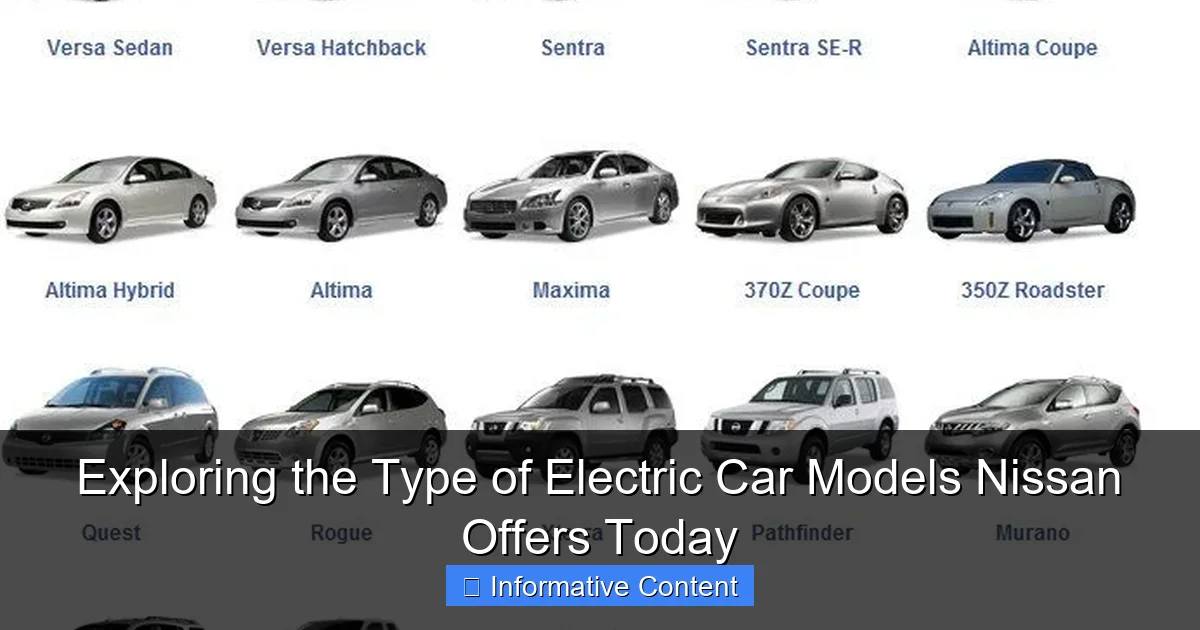
Featured image for type of electric car models nissan
Image source: i.pinimg.com
Nissan offers a diverse range of electric car models today, with the Ariya and LEAF leading the charge as its flagship EVs. The LEAF remains a pioneer in affordable, practical electric mobility, while the Ariya delivers a bold step forward with its crossover design, longer range, and advanced tech. Together, these models showcase Nissan’s commitment to accessible, innovative, and stylish electric driving for a wide range of consumers.
Key Takeaways
- Nissan offers two main EV models: the compact Leaf and the versatile Ariya SUV.
- Leaf suits city drivers: ideal for short commutes with reliable range and affordability.
- Ariya targets long-distance travel: features extended range and fast-charging capabilities.
- Both models support e-Pedal: enables one-pedal driving for smoother, efficient stops.
- Advanced tech is standard: includes ProPILOT Assist for semi-autonomous driving.
- Charging flexibility matters: use home, public, or fast-charging networks for convenience.
📑 Table of Contents
- Exploring the Type of Electric Car Models Nissan Offers Today
- The Evolution of Nissan’s Electric Vehicle Strategy
- Nissan’s Fully Electric Models: The Pure EV Lineup
- Electrified Options: Plug-In Hybrids and Mild Hybrids
- Charging, Range, and Real-World Performance
- Technology, Safety, and User Experience
- Comparing Nissan’s Electric Car Models: A Quick Reference
- Is a Nissan Electric Car Right for You?
Exploring the Type of Electric Car Models Nissan Offers Today
Let’s be honest—choosing an electric car isn’t just about going green anymore. It’s about smart driving, cutting-edge tech, and finding a vehicle that fits your lifestyle like a glove. And when it comes to brands that have truly embraced the electric revolution, Nissan stands out. You might remember them as the company that brought us the first mass-market electric car—the Nissan LEAF—back in 2010. That bold move wasn’t just ahead of its time; it helped shape the entire EV landscape we see today.
Fast forward to now, and Nissan continues to innovate, offering a growing lineup of electric and electrified vehicles designed for real-world drivers. Whether you’re a city commuter, a weekend adventurer, or someone who just wants lower fuel costs and fewer trips to the gas station, Nissan has something to offer. But with so many options out there, it’s easy to feel overwhelmed. What types of electric car models does Nissan actually offer? Are they all fully electric, or do they include hybrids too? And how do they stack up in terms of range, performance, and value?
In this guide, we’ll take a deep dive into the current Nissan electric vehicle (EV) lineup. We’ll explore the different types of electric car models Nissan offers today—from pure battery-electric vehicles to plug-in hybrids—and help you understand which one might be the best fit for your needs. No fluff, no sales pitch—just honest, practical insights to help you make an informed decision.
The Evolution of Nissan’s Electric Vehicle Strategy
Nissan didn’t just dip its toes into the electric waters—it dove in headfirst. When the Nissan LEAF launched over a decade ago, it was a game-changer. At a time when most EVs were either概念 cars or luxury novelties, the LEAF was affordable, practical, and available to the average driver. It proved that electric cars could be more than just a niche product—they could be mainstream.
Visual guide about type of electric car models nissan
Image source: carscoops.com
From Pioneering to Refining
The original LEAF had its quirks—limited range, slow charging, and a design that only a mother could love. But Nissan listened. With each new generation, the LEAF improved: better battery technology, faster charging, more range, and a sleeker look. By 2019, the LEAF Plus offered over 200 miles of range, making it a serious contender in the EV market.
But Nissan didn’t stop there. The company recognized that not everyone is ready to go fully electric. Some drivers worry about range anxiety. Others live in areas with limited charging infrastructure. So, Nissan expanded its strategy to include electrified options—vehicles that blend electric power with traditional engines to offer the best of both worlds.
A Broader Vision: Electrification for Everyone
Today, Nissan’s approach is about accessibility. Their goal isn’t just to sell electric cars—it’s to make electrified driving available to as many people as possible. That means offering a range of options: fully electric models for those ready to cut the cord, and hybrid or plug-in hybrid models for those who want to ease into the transition.
This inclusive strategy reflects a deeper understanding of real-world driving habits. Not everyone can install a home charger. Not everyone drives long distances daily. By offering different types of electric car models, Nissan ensures there’s a fit for nearly every lifestyle and budget.
Nissan’s Fully Electric Models: The Pure EV Lineup
If you’re ready to go all-in on electric, Nissan has two standout fully electric models: the Nissan LEAF and the Nissan Ariya. Both are 100% battery-powered, produce zero emissions, and are packed with modern tech. Let’s break them down.
The Nissan LEAF: The Original EV That Keeps Getting Better
The LEAF is the heart and soul of Nissan’s electric journey. It’s been around longer than most EVs on the road, and it’s only gotten better with age. The current model comes in two main versions: the standard LEAF and the LEAF Plus.
The standard LEAF offers around 149 miles of range on a full charge—perfect for city driving, school runs, and daily commutes. It’s compact, easy to park, and surprisingly spacious inside. With a starting price under $30,000 (before incentives), it’s one of the most affordable EVs on the market.
The LEAF Plus, on the other hand, steps things up with a larger battery and up to 215 miles of range. That extra juice makes it a solid choice for drivers who occasionally take longer trips or live in areas with fewer charging stations. It also supports faster charging—up to 100 kW on compatible DC fast chargers—so you can get back on the road quicker.
One thing I love about the LEAF is its simplicity. The interior is clean and intuitive, with a user-friendly infotainment system and plenty of standard safety features like automatic emergency braking and blind-spot monitoring. It’s not flashy, but it’s reliable—and that’s what matters for everyday driving.
The Nissan Ariya: A Bold Step into the Future
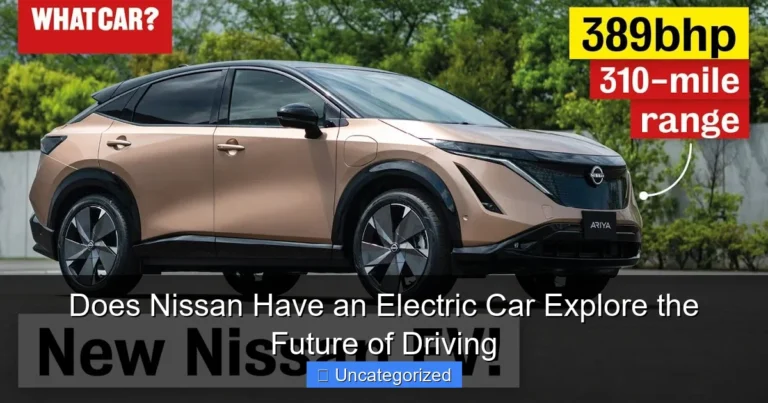
If the LEAF is the reliable workhorse, the Ariya is the stylish, high-tech SUV that turns heads. Launched in 2023, the Ariya represents Nissan’s vision for the next generation of electric vehicles. It’s sleek, spacious, and packed with innovation.
The Ariya comes in multiple configurations, including front-wheel drive and all-wheel drive versions. Range varies from about 216 miles to over 300 miles, depending on the battery and drivetrain. That puts it in direct competition with models like the Tesla Model Y and Ford Mustang Mach-E.
Inside, the Ariya feels premium. The dashboard features a dual-screen setup—a 12.3-inch display for the instrument cluster and another for the infotainment system. The cabin is quiet, thanks to excellent sound insulation, and the seats are comfortable even on long drives.
One standout feature is the e-4ORCE all-wheel-drive system, which uses dual electric motors to deliver smooth, responsive power. It’s not just about performance—it also improves stability and control, especially in wet or snowy conditions.
The Ariya isn’t cheap—it starts around $45,000—but for that price, you’re getting a lot: long range, fast charging (up to 130 kW), and a level of refinement that rivals luxury brands. It’s proof that Nissan isn’t just keeping up with the EV race—they’re helping lead it.
Electrified Options: Plug-In Hybrids and Mild Hybrids
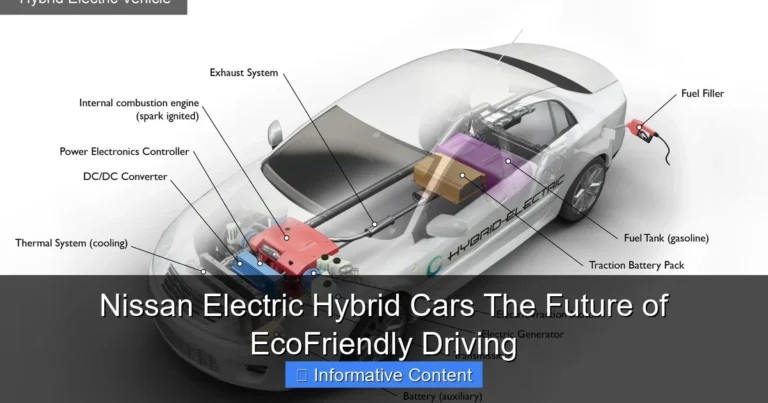
Not ready to go fully electric? No problem. Nissan offers several electrified models that blend electric power with gasoline engines. These vehicles give you the benefits of electric driving—like lower emissions and quieter operation—without the range concerns of a pure EV.
The Nissan Rogue Hybrid: Efficiency Meets Practicality
The Nissan Rogue is one of the brand’s best-selling SUVs, and the hybrid version brings even more efficiency to the table. It uses a mild hybrid system, meaning the electric motor assists the gasoline engine but can’t power the car on its own.
This setup improves fuel economy—up to 37 mpg combined—without requiring you to plug in. It’s a great option for drivers who want better mileage but aren’t ready to commit to charging at home or on the road.
The Rogue Hybrid also comes with Nissan’s ProPILOT Assist, a semi-autonomous driving feature that helps with steering, braking, and acceleration on highways. It’s not full self-driving, but it makes long drives less tiring.
The Nissan Pathfinder Hybrid: Power and Efficiency for Families
For larger families or those who need more space, the Pathfinder Hybrid offers a compelling mix of power and efficiency. Like the Rogue, it uses a mild hybrid system to boost fuel economy—up to 25 mpg combined, which is impressive for a three-row SUV.
The electric motor helps during acceleration, reducing strain on the gasoline engine and improving responsiveness. It also enables smoother start-stop functionality, which saves fuel in traffic.
Inside, the Pathfinder is roomy and well-equipped, with seating for up to eight and plenty of cargo space. It’s not as flashy as some competitors, but it’s practical, reliable, and perfect for road trips or daily school runs.
Why Choose a Hybrid Over a Full EV?
Hybrids are ideal if you:
- Don’t have access to home charging
- Frequently drive long distances
- Want to reduce emissions without going fully electric
- Prefer lower upfront costs compared to EVs
They’re not as green as full EVs, but they’re a smart stepping stone toward electrification. And with Nissan’s hybrid models, you still get the brand’s reputation for reliability and value.
Charging, Range, and Real-World Performance
One of the biggest concerns about electric cars is range and charging. How far can you really go? How long does it take to charge? And what happens when you’re away from home?
Understanding Range: What’s Realistic?
Range estimates from manufacturers are based on ideal conditions—flat roads, moderate speeds, and mild weather. In the real world, factors like cold weather, highway driving, and use of climate control can reduce range by 20–30%.
For example, the Nissan LEAF Plus might advertise 215 miles, but in winter, you could see closer to 150–170 miles. The Ariya, with its larger battery and better thermal management, holds up better in cold climates—still losing some range, but not as drastically.
The key is to match your driving habits to the vehicle’s range. If you mostly drive under 50 miles a day, even the standard LEAF is more than enough. But if you regularly take 150-mile trips, the Ariya or LEAF Plus makes more sense.
Charging Options: Home, Work, and On the Go
Most EV owners charge at home using a Level 2 charger (240V). This takes about 7–8 hours for a full charge on the LEAF, and 10–12 hours on the Ariya. It’s convenient—just plug in overnight and wake up with a full battery.
Public charging is also improving. Nissan vehicles are compatible with most major networks, including Electrify America and ChargePoint. The LEAF supports CHAdeMO fast charging, which can add up to 80% charge in about 40–60 minutes. The Ariya uses the more modern CCS standard, which is faster and more widely available.
Tip: Use apps like PlugShare or A Better Routeplanner to find charging stations along your route. Many are now located at shopping centers, rest stops, and even workplaces.
Performance: How Do They Drive?
Electric cars are known for instant torque—that smooth, silent surge of power the moment you press the accelerator. Both the LEAF and Ariya deliver this in spades.
The LEAF feels nimble in the city, with quick acceleration from a stop. It’s not a sports car, but it’s fun to drive for an everyday vehicle. The Ariya, especially the e-4ORCE AWD version, feels even more responsive. The dual motors provide balanced power, and the low center of gravity (thanks to the floor-mounted battery) gives it excellent handling.
One thing to note: regenerative braking. Both models allow you to adjust how much the car slows down when you lift off the accelerator. In “B” mode or one-pedal driving, you can come to a complete stop without using the brake pedal—great for city driving and reducing brake wear.
Technology, Safety, and User Experience
Nissan has always focused on making technology accessible, and their EVs are no exception. From intuitive infotainment systems to advanced driver aids, these cars are designed to make your life easier.
Infotainment and Connectivity
The LEAF features an 8-inch touchscreen with Apple CarPlay and Android Auto—standard on most trims. It’s responsive and easy to use, though the graphics aren’t as sharp as some rivals. The Ariya steps it up with a stunning 12.3-inch display, wireless smartphone integration, and over-the-air software updates—just like a Tesla.
Both models come with NissanConnect, which lets you remotely check battery status, start climate control, and locate your car via a smartphone app. It’s a small convenience that makes a big difference, especially in extreme weather.
Safety Features: What’s Standard?
Safety is a top priority for Nissan. All current EV and hybrid models come with Nissan Safety Shield 360, a suite of six advanced driver assistance systems:
- Automatic Emergency Braking with Pedestrian Detection
- Blind Spot Warning
- Rear Cross Traffic Alert
- Lane Departure Warning
- High Beam Assist
- Rear Automatic Braking
The Ariya also offers ProPILOT Assist 2.0, which allows for hands-free driving on compatible highways—similar to GM’s Super Cruise. It uses cameras and sensors to keep the car centered and maintain a safe distance from other vehicles.
User Experience: What Owners Are Saying
From talking to real Nissan EV owners, a few themes stand out:
- Reliability: Many praise the LEAF for its durability—some have driven over 100,000 miles with minimal issues.
- Quiet Ride: The lack of engine noise is a big plus, especially on long drives.
- Charging Convenience: Home charging is a game-changer—no more gas stations.
- Range Anxiety: Still a concern for some, especially in rural areas with fewer chargers.
One owner told me, “I was nervous about switching to electric, but after six months with my LEAF, I can’t imagine going back. It’s cheaper to run, smoother to drive, and I feel good knowing I’m not polluting.”
Comparing Nissan’s Electric Car Models: A Quick Reference
To help you compare the different types of electric car models Nissan offers, here’s a quick overview of key specs and features:
| Model | Type | Range (EPA Est.) | Starting Price | Charging Speed (Max) | Key Features |
|---|---|---|---|---|---|
| Nissan LEAF | Fully Electric | 149 miles | $28,040 | 50 kW (CHAdeMO) | ProPILOT Assist, 8″ display, Safety Shield 360 |
| Nissan LEAF Plus | Fully Electric | 215 miles | $36,040 | 100 kW (CHAdeMO) | Longer range, faster charging, premium interior |
| Nissan Ariya | Fully Electric | 216–304 miles | $43,190 | 130 kW (CCS) | e-4ORCE AWD, 12.3″ display, ProPILOT 2.0 |
| Nissan Rogue Hybrid | Mild Hybrid | 37 mpg combined | $31,000 | N/A (No plug) | ProPILOT Assist, spacious interior, fuel-efficient |
| Nissan Pathfinder Hybrid | Mild Hybrid | 25 mpg combined | $38,000 | N/A (No plug) | Three rows, rugged design, family-friendly |
Note: Prices and specs are based on 2024 models and may vary by region and trim level. Always check with your local dealer for the most accurate information.
Is a Nissan Electric Car Right for You?
Choosing the right electric car isn’t just about specs—it’s about fit. Do you drive mostly in the city? Do you have a garage where you can install a charger? Are you ready to embrace a new way of driving?
If you’re looking for an affordable, reliable EV with a proven track record, the Nissan LEAF is a solid choice. It’s not the flashiest, but it gets the job done—and it’s helped thousands of drivers make the switch to electric.
If you want more range, style, and tech, the Ariya is worth the investment. It’s a true competitor in the premium EV space, offering luxury-level features at a more accessible price.
And if you’re not ready to go fully electric, the Rogue and Pathfinder hybrids offer a smart compromise—better fuel economy without the charging commitment.
Ultimately, Nissan’s strength lies in its variety. They offer different types of electric car models to suit different needs, budgets, and lifestyles. Whether you’re a first-time EV buyer or upgrading from a gas car, there’s likely a Nissan that fits.
So, what’s next? Take a test drive. Talk to owners. Explore incentives in your area—many states and utilities offer rebates for EV purchases. And remember: going electric isn’t just about saving money or helping the planet. It’s about enjoying a smoother, quieter, more connected driving experience.
Nissan has been in the EV game longer than most, and their experience shows. With a lineup that balances innovation, practicality, and value, they’re proving that the future of driving isn’t just electric—it’s accessible to everyone.
Frequently Asked Questions
What type of electric car models does Nissan currently offer?
Nissan currently offers two primary electric car models: the Nissan LEAF (a compact hatchback) and the Nissan ARIYA (a midsize SUV). Both models feature advanced battery technology and zero-emission driving, catering to different lifestyle needs.
Is the Nissan LEAF the only long-range electric car from Nissan?
No, while the Nissan LEAF remains a popular choice with up to 212 miles of range (LEAF SV Plus), the newer Nissan ARIYA offers up to 304 miles of range, making it Nissan’s longest-range electric car. The ARIYA also introduces e-4ORCE all-wheel drive for enhanced performance.
Which Nissan electric car model is best for families?
The Nissan ARIYA is ideal for families due to its spacious interior, SUV versatility, and available e-4ORCE all-wheel drive. With room for five passengers and ample cargo space, it outperforms the LEAF for larger households and road trips.
Are there any affordable electric car options from Nissan?
Yes, the Nissan LEAF is Nissan’s most affordable electric car, starting at a lower price point than the ARIYA. It’s a cost-effective entry into EV ownership, with federal tax credits potentially lowering the cost further.
What type of electric car charging does Nissan support?
All Nissan electric car models support both Level 2 AC charging (for home or public stations) and DC fast charging. The LEAF uses CHAdeMO fast charging, while the ARIYA features the newer CCS (Combo) standard for faster charging on the go.
Does Nissan plan to expand its electric car model lineup?
Yes, Nissan has announced plans to launch 19 new EV models by 2030, including a mix of sedans, SUVs, and trucks. The brand is investing heavily in electrification, so expect more type of electric car models from Nissan in the coming years.