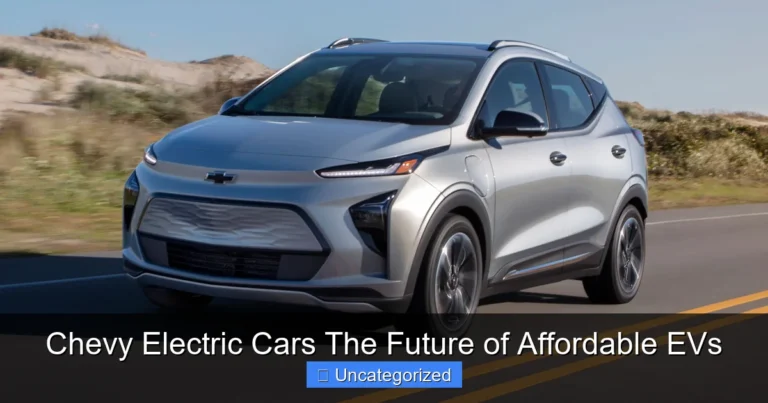
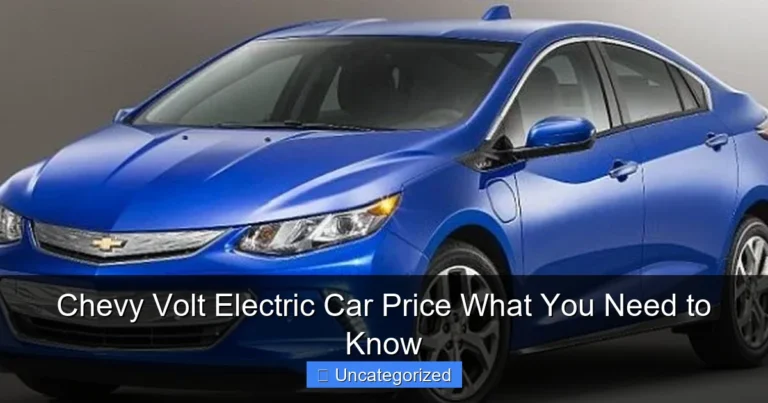
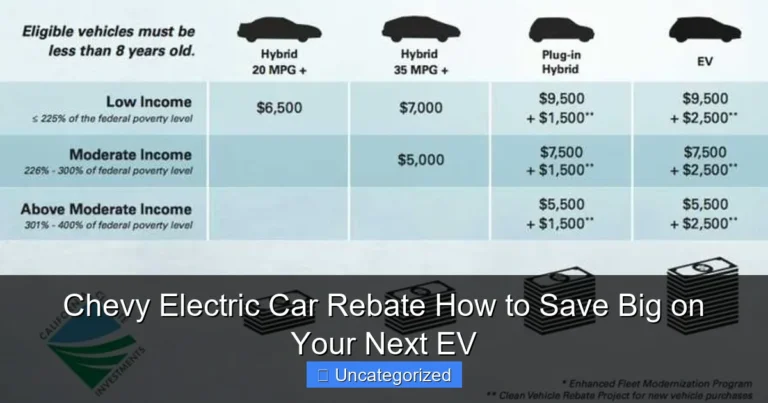
Used Chevy Bolt Electric Car A Smart Buy for Budget Savvy Drivers

Featured image for used chevy bolt electric car
Image source: c8.alamy.com
The used Chevy Bolt electric car delivers exceptional value for budget-savvy drivers, combining low ownership costs, a reliable 259-mile range, and proven EV performance at a fraction of the price of new models. With federal tax credits still applicable on select pre-owned units and minimal maintenance needs, it’s a smart, eco-friendly choice that maximizes savings without sacrificing modern features.
Key Takeaways
- Affordable pricing: Save significantly by choosing a used Chevy Bolt over a new EV.
- Proven reliability: Enjoy low maintenance costs with this well-tested electric powertrain.
- Strong range: Get 200+ miles per charge, ideal for daily commutes and errands.
- Tax credit eligible: Some used models qualify for federal or state EV incentives.
- Spacious interior: Maximize cargo and passenger room with its hatchback design.
- Tech-ready: Access modern infotainment and driver aids even in base trims.
📑 Table of Contents
- Why the Used Chevy Bolt Electric Car Is a Hidden Gem
- What Makes the Chevy Bolt a Great Used Electric Car
- Key Features and Tech You’ll Actually Use
- Real-World Performance and Driving Experience
- Things to Watch Out for When Buying a Used Chevy Bolt
- How the Used Chevy Bolt Compares to Other Budget EVs
- Final Thoughts: Is the Used Chevy Bolt Right for You?
Why the Used Chevy Bolt Electric Car Is a Hidden Gem
Let’s be real: buying a new car is exciting, but it’s also a major financial decision. For many of us, the idea of spending $30,000+ on a brand-new electric car feels overwhelming—especially when you’re trying to be smart with your budget. That’s where the used Chevy Bolt electric car comes in. It’s not just a practical choice; it’s a *smart* one. I remember when I was hunting for an affordable electric vehicle (EV) a few years ago. I wanted something reliable, efficient, and easy to live with—without breaking the bank. After test-driving several models, the Chevy Bolt stood out. And when I discovered how much more value I could get from a gently used one? Game changer.
The Bolt isn’t flashy like a Tesla, nor does it come with all the bells and whistles of a luxury EV. But here’s the thing: it doesn’t need to. For budget-savvy drivers who care more about range, reliability, and real-world usability than status symbols, the used Chevy Bolt is a standout. Whether you’re a first-time EV buyer or upgrading from an older gas-powered car, this little hatchback delivers where it counts. And with used models now available at significant discounts, it’s hard to ignore the value.
What Makes the Chevy Bolt a Great Used Electric Car
So, what exactly sets the used Chevy Bolt electric car apart from the crowd? Let’s break it down. First, it’s not just affordable—it’s *exceptionally* well-rounded. From its EPA-estimated range to its compact design, the Bolt hits a sweet spot for city dwellers, commuters, and eco-conscious drivers.

Visual guide about used chevy bolt electric car
Image source: c8.alamy.com
Affordable Entry into the EV World
One of the biggest hurdles to going electric is the price tag. New EVs often start above $35,000, and even with tax credits, that’s a big chunk of change. But a used Chevy Bolt? That’s a different story. Depending on the model year and condition, you can find a 2017–2023 Bolt for anywhere between $12,000 and $20,000. For example, a 2019 Bolt with 30,000 miles might run you $15,500, while a 2022 model with low mileage could be $19,000. That’s *half* the price of many new EVs—and you’re still getting a car that’s barely broken in.
Think of it this way: you’re getting a modern EV with advanced tech, a solid range, and low operating costs for less than the price of a used Honda Civic. And unlike older gas cars, you’ll save hundreds per year on fuel and maintenance.
Impressive Range for the Price
Range anxiety is real, especially if you’re new to EVs. But the Chevy Bolt delivers. The 2017–2019 models offer an EPA-estimated 238 miles per charge, while the 2020–2023 models bump that up to 259 miles. That’s more than enough for daily commutes, weekend errands, and even longer road trips (with a little planning).
I remember a friend who bought a used 2020 Bolt for her 60-mile daily commute. She charged it overnight at home and never once worried about running out of juice. “I used to spend $150 a month on gas,” she told me. “Now I spend $30 on electricity. And I haven’t had to change the oil in two years.”
Compared to other used EVs in its price range—like the Nissan Leaf or BMW i3—the Bolt offers significantly more range. That extra 20–30 miles can make a big difference, especially in cold weather when batteries drain faster.
Low Cost of Ownership
Owning a car isn’t just about the purchase price. You’ve got fuel, maintenance, insurance, and repairs to think about. The Chevy Bolt shines in all these areas. Electric motors have fewer moving parts than gas engines, which means fewer things can go wrong. No oil changes, no spark plugs, no exhaust systems. Just routine checks and tire rotations.
According to Consumer Reports, the Bolt has one of the lowest 5-year maintenance costs among all vehicles—electric or gas. Over five years, you’ll likely spend less than $1,000 on upkeep. And with electricity prices averaging $0.14 per kWh, a full charge costs around $8–$10. That’s less than $200 a year for most drivers.
Insurance is also surprisingly reasonable. While EVs can sometimes cost more to insure, the Bolt’s safety ratings and low theft rates help keep premiums in check. Many insurers even offer discounts for electric vehicles.
Key Features and Tech You’ll Actually Use
Let’s face it: some car features are just gimmicks. But the Chevy Bolt’s tech is refreshingly practical. It’s not trying to be a smartphone on wheels—it’s designed to make your life easier, not more complicated.
Intuitive Infotainment and Connectivity
The Bolt comes with a 10.2-inch touchscreen that’s crisp, responsive, and easy to use. It supports Apple CarPlay and Android Auto, so you can plug in your phone and access navigation, music, and messaging without fumbling with buttons. I love that the screen is mounted high on the dashboard—it’s right in your line of sight, so you don’t have to look down while driving.
One thing I didn’t expect? The voice recognition actually works. I’ve used cars where the system barely understands “call Mom,” but the Bolt’s system is surprisingly accurate. Just say “Navigate to Whole Foods” or “Play my road trip playlist,” and it does it.
The 4G LTE Wi-Fi hotspot is another nice touch. If you’ve got kids or work from the car, it’s a lifesaver. I’ve used it during long drives to stream movies for my nephews—no more “Are we there yet?” every five minutes.
Driver Assistance and Safety Tech
Even older Bolts come with a solid suite of safety features. Standard on most trims are forward collision alert, automatic emergency braking, lane keep assist, and rear park assist. Higher trims (like the 2020+ Premier) add blind-spot monitoring, rear cross-traffic alert, and adaptive cruise control.
I remember driving a 2021 Bolt on a rainy night when the lane keep assist saved me. I was tired and drifted slightly—the car gently nudged me back into my lane with a subtle steering correction. It wasn’t jarring; it was reassuring.
The Bolt also earned a Top Safety Pick rating from the IIHS in multiple model years. That’s a big deal, especially if you’ve got a family or just want peace of mind.
One-Pedal Driving and Regenerative Braking
If you’ve never driven an EV, one-pedal driving might sound odd. But once you try it, you’ll wonder how you ever lived without it. The Bolt has strong regenerative braking, which means lifting off the accelerator slows the car down—often enough to stop completely without touching the brake pedal.
This isn’t just fun; it’s efficient. It recaptures energy and puts it back into the battery. Plus, it reduces wear on your brake pads. I’ve driven Bolts in heavy city traffic and only used the actual brakes a handful of times. It’s like the car knows what you want before you do.
Pro tip: Use the “Low” mode for maximum regen in stop-and-go traffic. It’s smoother and more intuitive than “Normal” mode for city driving.
Real-World Performance and Driving Experience
Let’s talk about how the Chevy Bolt *feels* on the road. This isn’t a sports car, but it’s not a sluggish commuter either. It’s a fun, nimble little hatchback that’s a joy to drive—especially in urban environments.
Zippy Acceleration and Agile Handling
The Bolt’s electric motor delivers 200 horsepower and 266 lb-ft of torque—and it’s all available instantly. There’s no lag, no gear shifts, just smooth, silent acceleration. Zero to 60 mph takes about 6.5 seconds, which is quicker than most small SUVs and crossovers.
I remember merging onto the highway in a 2022 Bolt and being surprised at how effortlessly it accelerated. No downshifting, no engine roar—just a quiet, confident surge of power. It’s the kind of performance that makes you smile every time you press the pedal.
The steering is light but precise, and the suspension handles bumps and potholes well. It’s not a luxury ride, but it’s comfortable and predictable. And the low center of gravity (thanks to the floor-mounted battery) gives it great stability in corners.
City-Friendly Size and Maneuverability
One of the Bolt’s biggest strengths? Its size. At just over 163 inches long, it’s shorter than a Honda Civic hatchback. That makes it perfect for city driving, tight parking spots, and narrow streets. I’ve parked mine in garages with inches to spare and parallel parked on busy downtown blocks without breaking a sweat.
The tight turning radius (just 35.4 feet) is another bonus. Need to make a U-turn in a crowded neighborhood? No problem. The Bolt pivots on a dime.
And let’s talk visibility. The large windows and low beltline give you great sightlines in all directions. No blind spots, no guesswork. It’s one of the most confidence-inspiring small cars I’ve driven.
Charging: What to Expect
Charging is where many new EV owners get tripped up. But the Bolt is refreshingly simple. It comes with a Level 1 charger (the kind that plugs into a regular outlet), which adds about 4 miles of range per hour. That’s fine for overnight charging if you drive less than 30 miles a day.
But I’d recommend investing in a Level 2 charger (240 volts). It costs $500–$700 installed and gives you about 25 miles of range per hour. That means a full charge in 8–10 hours—plenty of time while you sleep.
For longer trips, the Bolt supports DC fast charging (up to 55 kW). You’ll find these at public stations (like ChargePoint or Electrify America). A 15-minute charge can add up to 100 miles of range. Not as fast as a Tesla, but still very usable.
Pro tip: Use apps like PlugShare or ChargeHub to find nearby stations. And always check for compatibility—some older fast chargers may not work with the Bolt’s CCS connector.
Things to Watch Out for When Buying a Used Chevy Bolt
Now, let’s get real. No car is perfect, and the Chevy Bolt has a few quirks. But most are easy to navigate if you know what to look for.
Battery Health and Degradation
Battery degradation is a concern with any used EV. Over time, lithium-ion batteries lose capacity, which means less range. But the Bolt’s battery is surprisingly resilient. Most owners report less than 5% degradation after 50,000 miles.
When buying a used Bolt, ask for the battery health report. Many dealerships can pull this from the car’s diagnostics. Look for a “state of health” (SOH) of 95% or higher. If it’s below 90%, walk away—or negotiate a lower price.
Also, check if the car was regularly charged to 100%. Deep discharges and full charges accelerate degradation. Ideally, the previous owner used the “Daily” charging limit (80–90%) for daily use.
Recall History: What You Need to Know
Chevy issued several recalls for early Bolts (2017–2019) related to battery fires. The issue was traced to manufacturing defects in the LG Chem cells. GM responded by replacing the entire battery pack in affected vehicles.
The good news? If you’re buying a used Bolt from 2020 or later, the battery was already upgraded. For earlier models, make sure the recall was completed. You can check this at NHTSA.gov using the VIN.
I’d also recommend a pre-purchase inspection by an EV-specialty mechanic. They can check for software updates, battery balance, and charging system health.
Trim Levels and What to Look For
The Bolt comes in two main trims: LT and Premier. The LT is well-equipped with keyless entry, heated mirrors, and a 6-speaker audio system. But the Premier adds niceties like leather seats, heated steering wheel, rear camera mirror, and wireless charging.
For most buyers, the LT is plenty. But if you live in a cold climate, the heated seats and steering wheel are worth the upgrade. I live in Colorado, and I can’t imagine winter driving without them.
Watch out for “Bolt EUV” models—they’re the slightly larger SUV version. They offer more rear legroom but cost a bit more. Decide which fits your needs better.
How the Used Chevy Bolt Compares to Other Budget EVs
Let’s put the Bolt in context. How does it stack up against other affordable used EVs?
Vs. Nissan Leaf
The Leaf is the Bolt’s biggest competitor. It’s cheaper, with used models often under $10,000. But here’s the catch: older Leafs (pre-2018) have only 107–150 miles of range. Even the 2018+ models max out at 150 miles.
The Bolt offers 80–100 more miles of range for a few thousand dollars more. That extra range is a game-changer for peace of mind and long-term usability.
Vs. Hyundai Kona Electric
The Kona Electric has a similar range (258 miles) and price point. But it’s a subcompact SUV, which means less cargo space and a stiffer ride. The Bolt’s hatchback design gives you more room for groceries, bikes, or camping gear.
The Kona also has a smaller infotainment screen and fewer tech features. If you value interior space and tech, the Bolt wins.
Vs. Tesla Model 3 (Used)
A used Model 3 might seem tempting—especially with Tesla’s charging network. But prices start around $22,000 for a 2017–2018 model, and you’ll pay more for insurance, repairs, and charging (if you use Superchargers).
The Bolt is simpler, more affordable to maintain, and doesn’t require a subscription for connectivity. For budget-focused drivers, it’s the smarter long-term choice.
Here’s a quick comparison table to help you decide:
| Model | Used Price Range (2020–2023) | Range (EPA) | Charging Speed (DC) | Key Advantage |
|---|---|---|---|---|
| Chevy Bolt | $14,000–$20,000 | 259 miles | 55 kW | Best value, hatchback utility |
| Nissan Leaf | $8,000–$14,000 | 150 miles | 50 kW | Lowest upfront cost |
| Hyundai Kona Electric | $15,000–$22,000 | 258 miles | 75 kW | Slightly faster charging |
| Tesla Model 3 | $20,000–$28,000 | 263 miles | 250 kW | Supercharger network |
Final Thoughts: Is the Used Chevy Bolt Right for You?
After driving, researching, and talking to dozens of Bolt owners, I can confidently say this: the used Chevy Bolt electric car is one of the best values in the EV market today. It’s not perfect—no car is. But for drivers who want affordability, reliability, and real-world usability, it’s hard to beat.
You’re getting a modern EV with strong range, low operating costs, and a host of smart features—all for thousands less than a new model. Whether you’re a city commuter, a parent shuttling kids to soccer practice, or an eco-conscious driver making the switch from gas, the Bolt fits seamlessly into your life.
And the best part? You’re not just saving money today. You’re investing in a car that will keep saving you money for years to come. Lower fuel bills. Minimal maintenance. Fewer trips to the mechanic. It all adds up.
So if you’re on the fence, take a test drive. Talk to a few owners. Check out a few listings. You might just find that the used Chevy Bolt is the smart, practical, *fun* choice you’ve been looking for. As one owner told me, “It’s not flashy. But it works. And that’s all I need.”
Frequently Asked Questions
What makes a used Chevy Bolt a smart buy for budget-conscious drivers?
The used Chevy Bolt offers excellent value with its affordable pricing, low maintenance costs, and impressive 259-mile range (2022+ models). Its reliability and federal tax credit eligibility (for some model years) make it a cost-effective EV choice.
How does the Chevy Bolt’s battery life hold up in used models?
Most used Chevy Bolts retain 80-90% of their original battery capacity after 50,000 miles. GM’s 8-year/100,000-mile battery warranty (transferable to second owners) provides peace of mind for long-term ownership.
What are common issues to check when buying a used Chevy Bolt?
Inspect for battery degradation (check the “Battery Range” screen), verify recall completion (especially 2017-2019 fire risk fixes), and test the infotainment system. Most mechanical components are highly reliable in this model.
Can I get a used Chevy Bolt with the federal tax credit?
Yes! The Inflation Reduction Act allows used EVs under $25,000 to qualify for a $4,000 tax credit. Many 2017-2020 Bolts fall within this price range while still offering 238+ miles of range.
How does the Chevy Bolt compare to other used electric cars in its price range?
The Bolt outperforms rivals like the Nissan Leaf and older Teslas with its superior range, standard fast charging, and roomy interior. Its compact size and 65 MPGe efficiency make it ideal for urban driving.
What should I look for in a certified pre-owned (CPO) Chevy Bolt?
CPO Bolts include extended battery warranties, multi-point inspections, and often new 120V chargers. Prioritize 2020+ models with the 7.2kW charger (faster Level 2 charging) and verify all recall work was completed.