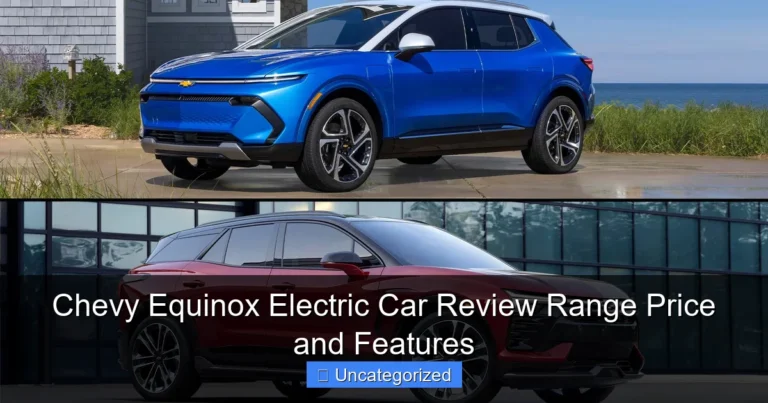
Top Used Chevy Electric Cars You Can Buy Today
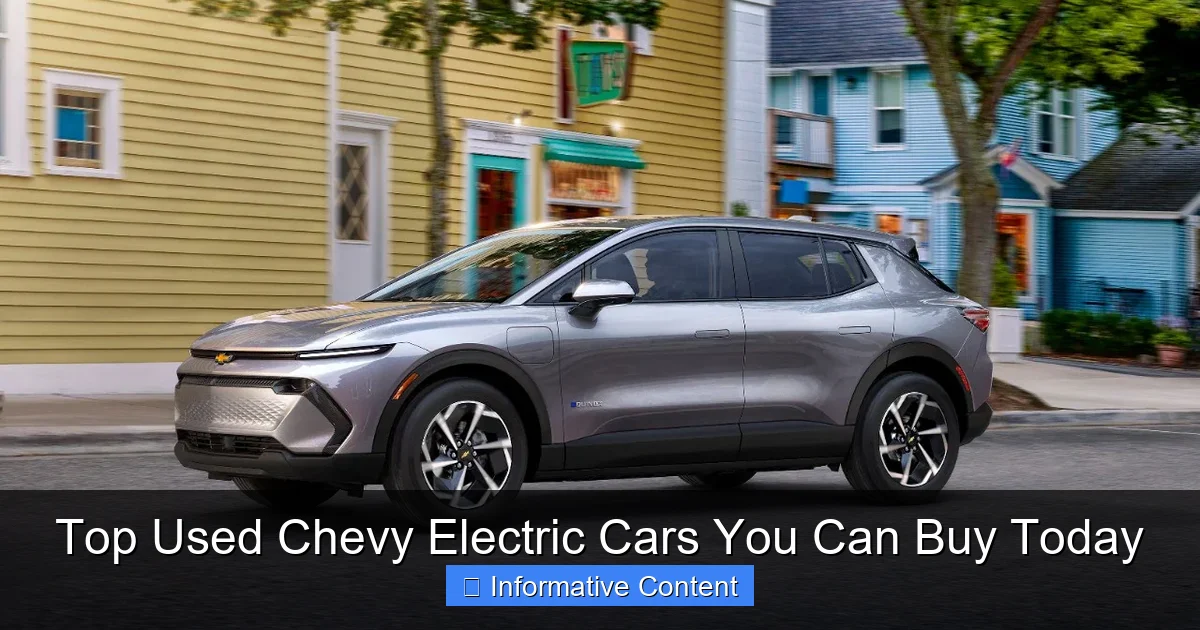
Featured image for used chevy electric cars
Image source: pictures.dealer.com
Used Chevy electric cars offer exceptional value, combining proven reliability with eco-friendly performance at a fraction of the new-car price. Models like the Chevy Bolt EV stand out for their long range, advanced tech, and low maintenance costs, making them smart picks in today’s used EV market. Whether you’re a first-time EV buyer or upgrading, these vehicles deliver performance and affordability without compromise.
Key Takeaways
- Chevy Bolt EV offers the best value with 259-mile range and low depreciation.
- Check battery health using free tools like Carfax or dealership diagnostics before buying.
- 2017–2019 Bolts are affordable but may need battery replacements—verify warranty coverage.
- Prioritize certified pre-owned for extended warranties and thorough inspections.
- Test drive in real-world conditions to assess range accuracy and charging performance.
- Compare charging networks near you to ensure convenient access for daily use.
📑 Table of Contents
- Why Consider a Used Chevy Electric Car?
- The Chevy Bolt EV: The Game-Changer for Used EVs
- The Chevy Bolt EUV: A Slightly Bigger, More Techy Sibling
- Chevy’s Early Electric Efforts: The Spark EV and Volt
- What to Look for When Buying a Used Chevy Electric Car
- Comparing Used Chevy Electric Cars: A Quick Guide
- Final Thoughts: Is a Used Chevy Electric Car Right for You?
Why Consider a Used Chevy Electric Car?
Let’s face it: electric cars are no longer the future—they’re the now. And if you’re like me, you’ve probably spent hours scrolling through listings, trying to figure out which used electric car gives you the best bang for your buck. Enter used Chevy electric cars. Chevrolet, a brand with over a century of automotive innovation, has stepped into the EV game with a mix of practicality, affordability, and tech-forward features. Whether you’re a first-time EV buyer or looking to downsize from a gas guzzler, a used Chevy EV could be the sweet spot between reliability and value.
I remember when I first considered switching to an electric car. I was overwhelmed by the options, worried about charging infrastructure, and skeptical about battery life. But after test-driving a used Chevy Bolt EV, I was hooked. The smooth acceleration, low maintenance, and surprisingly spacious interior made me wonder why I hadn’t made the switch sooner. That’s the magic of used Chevy electric cars—they deliver real-world benefits without the new car price tag.
The Chevy Bolt EV: The Game-Changer for Used EVs
Why the Bolt EV Stands Out
The Chevy Bolt EV is, hands down, one of the most popular used electric cars on the market—and for good reason. Launched in 2017, it was one of the first affordable, long-range EVs available nationwide. Unlike early EVs with 80-100 miles of range, the Bolt EV offered over 200 miles per charge, making it a game-changer for daily commutes and weekend trips. Even today, a used 2017–2021 Bolt EV typically delivers 238 miles of range (EPA-estimated), which is impressive for its price point.
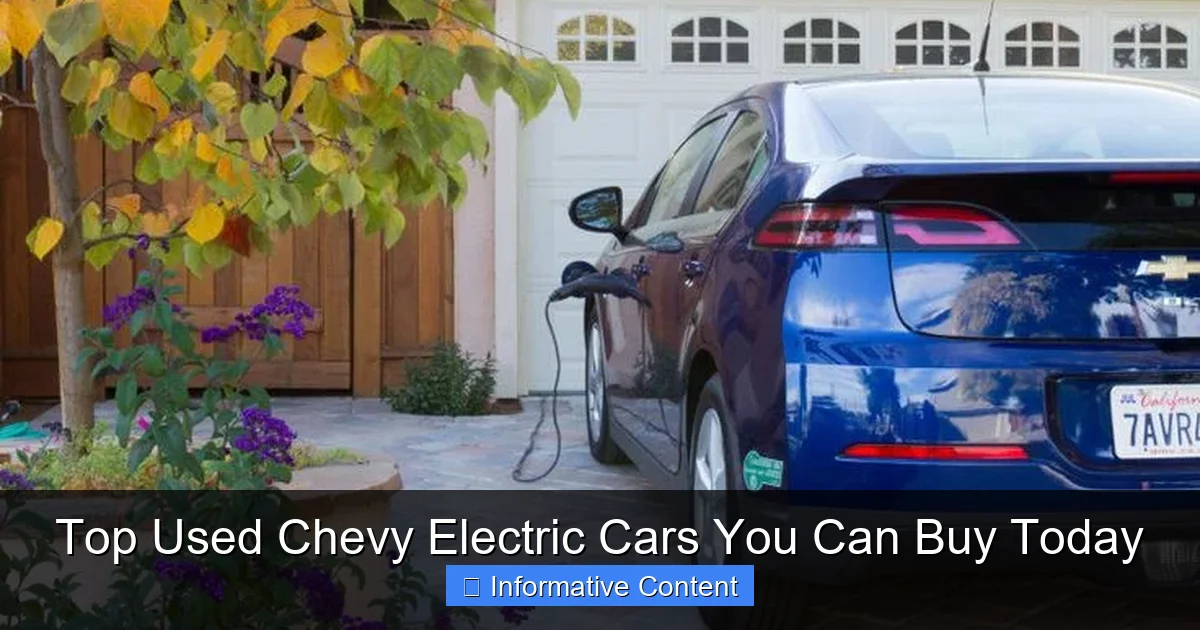
Visual guide about used chevy electric cars
Image source: i.pinimg.com
What makes the Bolt EV special is its practicality. It’s a hatchback with a surprisingly roomy interior, thanks to the flat floor and clever packaging. The cargo space (16.9 cubic feet behind the rear seats, 56.6 cubic feet with seats folded) is perfect for groceries, camping gear, or even moving a small apartment. Plus, the regenerative braking system lets you drive with one pedal—great for stop-and-go traffic.
One of my favorite things? The instant torque. The electric motor delivers 200 horsepower and 266 lb-ft of torque, so merging onto highways or passing slower cars feels effortless. And because it’s a used model, you’re not paying for the “new car premium.” A 2019 Bolt EV can be found for under $15,000 in many markets—less than half the original MSRP.
What to Watch Out For
No car is perfect, and the Bolt EV is no exception. The biggest concern? Battery recall. In 2021, Chevy issued a massive recall for 2017–2019 models due to a fire risk linked to faulty battery cells (from LG Chem). If you’re considering a pre-2020 model, make sure the recall has been completed. Chevy replaced the batteries in affected vehicles, so a properly serviced used Bolt EV is safe. Always ask the seller for proof of the recall work.
Other potential issues include:
- Charging speed: The Bolt EV maxes out at 55 kW DC fast charging, which is slower than newer EVs (like the Tesla Model 3 or Hyundai Ioniq 5). A 10–80% charge takes about 60–90 minutes at a public fast charger.
- Interior materials: The cabin feels a bit “plastic-heavy” compared to pricier EVs. But hey, it’s a budget-friendly car—not a luxury sedan.
- Rear visibility: The sloping roofline can make backing up tricky. Many owners install a backup camera (standard on newer models) or rely on parking sensors.
Pro tip: Look for a 2020 or newer Bolt EV. These models have the updated battery and slightly improved charging speed (up to 55 kW). The 2022 refresh (with a new front design and updated infotainment) is even better but pricier on the used market.
The Chevy Bolt EUV: A Slightly Bigger, More Techy Sibling
How the EUV Improves on the Original
If the Bolt EV feels a little cramped for your lifestyle, meet the Chevy Bolt EUV (Electric Utility Vehicle). Introduced in 2022, it’s essentially a stretched version of the Bolt EV with more rear legroom, a taller roofline, and extra tech. Think of it as the “family-friendly” Bolt. The EUV adds 6.3 inches in length, which translates to 39.1 inches of rear legroom—plenty for tall passengers or car seats.

Visual guide about used chevy electric cars
Image source: 4.bp.blogspot.com
One standout feature? Super Cruise. Available on higher trims, this hands-free driving system works on over 200,000 miles of compatible highways in the U.S. and Canada. It’s not quite full self-driving, but it’s a massive step up for highway commutes. I tried it on a road trip to the mountains, and it made the drive so much less tiring. The system uses a driver-facing camera to ensure you’re paying attention, so you can’t just nap at the wheel (sorry).
The EUV also gets a few other upgrades over the EV:
- Wireless Apple CarPlay/Android Auto: No more fumbling with cables.
- Heated steering wheel and rear seats: A must for cold climates.
- Improved infotainment: The 10.2-inch touchscreen is faster and more responsive.
Range is similar to the EV—247 miles for the EUV vs. 259 miles for the EV (EPA estimates). The slightly lower range is due to the EUV’s added weight and size.
Is the EUV Worth the Extra Cost?
The Bolt EUV was only sold new for two model years (2022–2023), so used prices are still relatively high. A 2022 EUV with 15,000 miles might cost $22,000–$25,000, while a comparable Bolt EV is closer to $15,000–$18,000. So, is the EUV worth the $5,000–$7,000 premium? It depends on your needs.
Ask yourself:
- Do you often have rear-seat passengers? The EUV’s legroom is a game-changer.
- Do you drive on highways a lot? Super Cruise could save you hours of stress.
- Do you care about the latest tech? The EUV’s wireless features and improved cabin are nice touches.
If you answered “yes” to most of these, the EUV is a smart upgrade. But if you’re on a tight budget or mostly drive in the city, the regular Bolt EV is still a fantastic choice.
Chevy’s Early Electric Efforts: The Spark EV and Volt
The Spark EV: Chevy’s First All-Electric Car
Before the Bolt, Chevy dipped its toes into the EV world with the Spark EV (2014–2016). This tiny hatchback had a 19 kWh battery and about 82 miles of range—enough for city driving but not much else. It was only sold in California and Oregon, so finding a used one outside those states can be tough. But if you do, it’s a quirky little car with instant torque and a surprisingly fun driving feel.
The Spark EV’s biggest flaw? Charging speed. It maxed out at 50 kW DC fast charging, but the small battery meant a full charge took only 20–30 minutes. The real issue was the range. 82 miles is fine for errands, but a road trip? Forget it. The Spark EV was discontinued in 2016, replaced by the Bolt EV. Today, used Spark EVs are rare and often priced under $10,000. They’re best suited for city dwellers or as a second car.
The Chevy Volt: The Best of Both Worlds (Mostly)
The Chevy Volt (2011–2019) wasn’t a full EV—it was a plug-in hybrid. But it deserves a mention because it was one of the most practical “electric-adjacent” cars of its time. The Volt could drive 53 miles on electricity alone (2016–2019 models), then switch to a gas-powered generator to extend the total range to 420 miles. This made it perfect for people who wanted the benefits of an EV (low operating costs, zero emissions for short trips) without range anxiety.
I drove a 2017 Volt for a month and loved it. My daily commute was 40 miles round-trip, so I rarely used gas. The electric-only mode was quiet and smooth, and the gas engine kicked in seamlessly for longer trips. The interior was nicer than the Bolt EV’s, with more premium materials and a quieter cabin. Plus, the Volt had a more traditional sedan-like driving position, which some people prefer.
But the Volt had downsides:
- Complexity: It had both an electric motor and a gas engine, which meant more potential maintenance points.
- Smaller cargo space: The battery and engine took up space, so the trunk was only 10.6 cubic feet.
- Discontinued: Chevy stopped making the Volt in 2019 to focus on the Bolt and future EVs. This means used Volts won’t get software updates or new features.
If you’re okay with a plug-in hybrid, a used Volt is a solid choice. Prices range from $12,000 (2012–2014 models) to $18,000 (2016–2019 models). Just remember: it’s not a full EV, so you’ll still need gas for long trips.
What to Look for When Buying a Used Chevy Electric Car
Check the Battery Health
The battery is the heart of any EV, so battery health is critical. Here’s how to check it:
- Ask for the “battery state of health” (SOH) report. Some dealerships and third-party shops can generate this using diagnostic tools. A healthy battery should show 90% or higher capacity retention.
- Test drive in cold weather (if possible). Cold temperatures can reduce range by 20–30%. If the car struggles in the cold, it might have battery degradation.
- Check the “guessometer”. The car’s range estimate should be close to the EPA rating (e.g., 238 miles for a 2019 Bolt EV). If it’s significantly lower, the battery may be worn.
Real example: A friend bought a 2017 Bolt EV with 40,000 miles. The seller claimed the battery was fine, but during a winter test drive, the range dropped to 160 miles. A battery health check revealed only 85% capacity. He negotiated $2,000 off the price—and Chevy covered the replacement under warranty.
Verify the Charging Setup
Not all EVs are equal when it comes to charging. Here’s what to check:
- Charging port type: Chevy EVs use the CCS (Combined Charging System) port for fast charging. Make sure your local stations support CCS (Tesla Superchargers won’t work unless you use an adapter).
- Home charging: If you plan to charge at home, check if the car includes a Level 2 charger (240V). Most do, but some older models only have a Level 1 (120V) charger, which is painfully slow.
- Charging cable condition: Look for frayed wires or bent pins. Replacing a cable can cost $200–$500.
Pro tip: Use apps like PlugShare or ChargePoint to find nearby chargers before buying. A car with 200+ miles of range is pointless if you can’t charge it.
Review the Service History
EVs have fewer moving parts than gas cars, but they still need maintenance. Ask for:
- Recall repairs: As mentioned, the Bolt EV battery recall is a big deal. Make sure it’s been addressed.
- Software updates: Chevy releases updates for infotainment and driver aids. An outdated car might lack features or have bugs.
- Brake system checks: EVs use regenerative braking, which reduces wear on the pads. But the physical brakes still need occasional inspection.
Comparing Used Chevy Electric Cars: A Quick Guide
To help you decide, here’s a side-by-side comparison of Chevy’s key used EVs:
| Model | Years | Range (EPA) | Fast Charging | Key Features | Used Price Range (2024) |
|---|---|---|---|---|---|
| Bolt EV | 2017–2023 | 238–259 miles | 55 kW (10–80% in 60–90 min) | One-pedal driving, hatchback space, affordable | $12,000–$20,000 |
| Bolt EUV | 2022–2023 | 247 miles | 55 kW (10–80% in 60–90 min) | Super Cruise (optional), wireless CarPlay, more space | $20,000–$28,000 |
| Spark EV | 2014–2016 | 82 miles | 50 kW (0–80% in 20–30 min) | Compact, city-friendly, rare | $5,000–$10,000 |
| Volt (PHEV) | 2011–2019 | 53 miles electric + 367 miles gas | No fast charging (Level 2 only) | Gas backup, sedan comfort, discontinued | $10,000–$18,000 |
Final Thoughts: Is a Used Chevy Electric Car Right for You?
Let’s wrap this up. If you’re looking for an affordable, practical EV with solid range and real-world usability, used Chevy electric cars are a fantastic choice. The Bolt EV is the standout—offering 200+ miles of range, a spacious interior, and a price that won’t break the bank. The Bolt EUV adds more space and tech for those willing to pay a bit more. And while the Spark EV and Volt are niche picks, they’re still great for specific needs.
My advice? Start with the Bolt EV. It’s the most well-rounded option, and the battery recall (now resolved) means you’re buying a safe, reliable car. Test drive a few, check the battery health, and make sure the charging setup works for your lifestyle. And remember: EVs aren’t just about saving money on gas. They’re about driving something that’s quieter, smoother, and better for the planet.
So, what are you waiting for? The perfect used Chevy electric car is out there—you just need to find it. Happy hunting!
Frequently Asked Questions
What are the best used Chevy electric cars available today?
The top used Chevy electric cars include the Bolt EV (2017–2023), praised for its 259-mile range and affordability, and the discontinued Spark EV, a compact city car. The Bolt EUV (2022–2023) is another great option, offering more space and tech features like Super Cruise.
How much does a used Chevy electric car cost?
Prices vary by model and year, but expect to pay $15,000–$25,000 for a used Bolt EV or Spark EV, with newer Bolt EUV models ranging from $25,000–$35,000. Battery health and mileage significantly impact pricing.
What is the range of a used Chevy Bolt EV?
Most used Chevy Bolt EVs (2017–2023) offer 238–259 miles of EPA-estimated range per charge. Battery degradation over time may reduce this slightly, so always check the vehicle’s battery health report.
Are used Chevy electric cars reliable?
Yes, the Bolt EV and Spark EV have strong reliability records, with minimal mechanical issues reported. However, some 2017–2019 Bolts were recalled for battery fire risks, so ensure the model you’re buying has had the necessary battery repairs.
Can I find a used Chevy electric car with fast charging?
The Bolt EV/EUV supports DC fast charging (adding 100 miles in 30 minutes), but older Spark EVs only offer Level 2 charging. Always verify the charging capabilities of the specific used Chevy electric car you’re considering.
Do used Chevy electric cars qualify for tax credits?
Federal tax credits for used EVs (up to $4,000) apply if the car is at least 2 years old, priced under $25,000, and sold by a dealer—check IRS guidelines. State/local incentives may also be available for used Chevy electric cars.