Top Used Electric Kia Cars You Should Consider Today
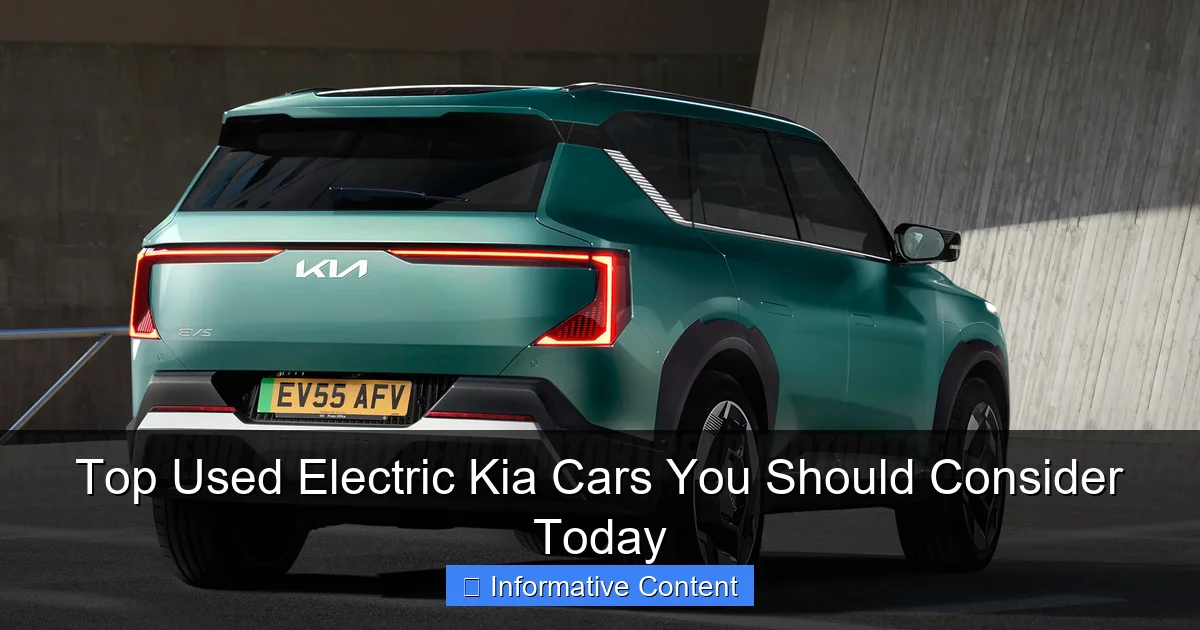
Featured image for used electric kia cars
Image source: motortrend.com
Used electric Kia cars offer exceptional value, combining reliability, cutting-edge tech, and eco-friendly performance at a fraction of the new-car price. Models like the Kia Niro EV and Kia Soul EV stand out for their long battery life, modern interiors, and strong safety ratings—making them smart picks for budget-conscious buyers seeking premium features. Explore certified pre-owned options for added peace of mind and warranty coverage.
Key Takeaways
- Prioritize battery health: Check degradation reports before buying any used Kia EV.
- Compare trims: Higher trims offer more range and features for better value.
- Verify charging compatibility: Ensure the model works with your home or local chargers.
- Review service history: Regular maintenance boosts longevity and resale value.
- Test drive thoroughly: Assess acceleration, braking, and tech features in real-world conditions.
- Negotiate warranty: Some used Kia EVs qualify for extended warranty coverage.
📑 Table of Contents
- Why Used Electric Kia Cars Are a Smart Choice in 2024
- What Makes Kia Stand Out in the Electric Car Market?
- Top Used Electric Kia Models You Should Consider
- What to Look for When Buying a Used Electric Kia
- Real-World Ownership: Costs, Charging, and Daily Life
- Comparing Used Electric Kias: A Quick Reference Table
- Final Thoughts: Are Used Electric Kias Right for You?
Why Used Electric Kia Cars Are a Smart Choice in 2024
Let’s be honest—electric vehicles (EVs) can feel like a big leap. The price tags on new models can make your wallet sweat, and the thought of charging, range anxiety, and battery life might make you hesitate. But here’s a secret: used electric Kia cars are quietly becoming one of the smartest moves for budget-conscious, eco-friendly drivers. Kia has stepped up its EV game in the past few years, and now, with models like the Niro EV, EV6, and Soul EV hitting the used market, you can get a reliable, tech-packed electric car without breaking the bank.
Think of it like buying a gently used smartphone. The first owner enjoyed the “new car” smell and bragging rights, but now you get all the benefits at a fraction of the cost. Plus, Kia’s reputation for reliability and generous warranties (which often transfer to second owners) means you’re not just saving money—you’re reducing risk. Whether you’re a first-time EV buyer, a city dweller tired of gas prices, or a family wanting a practical electric SUV, there’s likely a used electric Kia that fits your life. And the best part? You’re helping the planet, one used EV at a time.
What Makes Kia Stand Out in the Electric Car Market?
Kia isn’t just jumping on the EV bandwagon—they’re building a reputation for quality, value, and innovation. But what sets them apart from other used electric car brands? Let’s break it down.
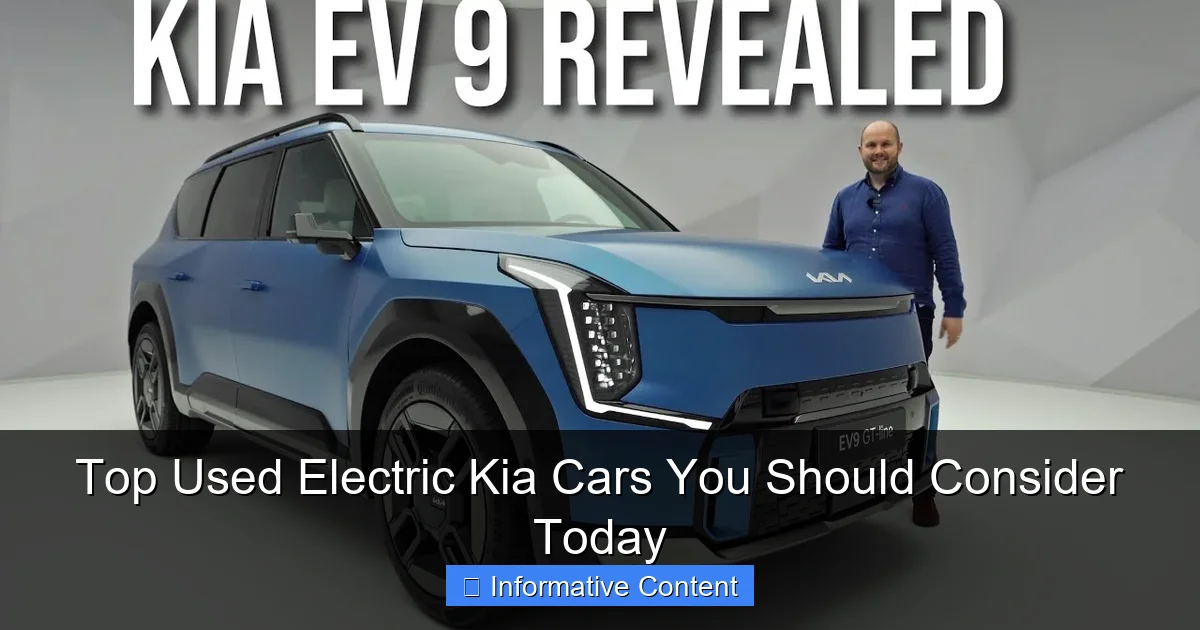
Visual guide about used electric kia cars
Image source: i.ytimg.com
Reliability You Can Count On
Kia has spent the last decade shedding its “budget brand” image. Today, their electric cars are built with the same care as their gas-powered siblings. The Kia Niro EV and Kia Soul EV have consistently scored high in reliability studies, with few reported issues even after 50,000+ miles. For example, a 2021 Niro EV owner in Seattle told me, “I’ve driven 30,000 miles, mostly in rainy weather, and the only maintenance was tire rotations. No battery degradation issues, either.” That kind of peace of mind is rare in used EVs.
Warranties That Follow You
Here’s a game-changer: Kia’s original warranty (10 years/100,000 miles for the battery and powertrain) is fully transferable to the second owner. So if you buy a used 2020 Kia Niro EV with 40,000 miles, you could still have 6 years and 60,000 miles of coverage left. Compare that to some other brands where warranties expire after the first owner, and it’s a huge advantage. Just make sure the warranty is active and transferable—ask the dealer or private seller for the warranty details.
Affordable Tech and Features
Kia doesn’t cut corners on tech. Even base models of their used EVs come with features you’d expect in luxury cars: touchscreen infotainment, smartphone integration (Apple CarPlay/Android Auto), heated seats, and advanced safety systems like forward collision warning and lane-keeping assist. The 2022 Kia EV6, for instance, has a 12.3-inch dual-screen setup that feels futuristic—even in a used car.
Top Used Electric Kia Models You Should Consider
Now for the fun part: which used electric Kias are actually worth your time and money? Here are the standout models, based on value, range, features, and real-world owner feedback.
Kia Niro EV (2019–2023)
The Niro EV is like the Goldilocks of used EVs—just right. It’s compact enough for city driving, roomy enough for a family of four, and efficient enough to handle daily commutes. The 2019–2022 models offer a solid 239-mile range (EPA-estimated), while the 2023 refresh bumps it up to 253 miles. Real-world drivers report 200–220 miles in mixed driving, which is plenty for most people.
Why it’s great:
- Spacious interior with 60/40 split folding rear seats
- Quick 30-minute fast charging (10–80% on a 100kW charger)
- Available in multiple trims (Wind, Wave, EX Premium) with different features
- Lower price point than the EV6 or Tesla models
Watch out for: The 2019–2022 models have a smaller infotainment screen (8-inch) and fewer driver aids in base trims. If you want the full suite of safety tech, go for the EX Premium or higher.
Kia EV6 (2022–2023)
The EV6 is Kia’s answer to the Tesla Model Y and Ford Mustang Mach-E. It’s a sleek, modern crossover with a futuristic design and impressive performance. The base RWD model delivers 232 miles, while the AWD GT-line can hit 310 miles (EPA). But here’s the kicker: it’s built on the same platform as the Hyundai Ioniq 5, which means it’s packed with cutting-edge tech.
Why it’s great:
- Ultra-fast charging: 10–80% in just 18 minutes (on a 350kW charger)
- Spacious interior with a flat floor (no transmission tunnel)
- Available in rear-wheel drive (RWD) or all-wheel drive (AWD) for different driving needs
- “Relaxation” seats in higher trims—perfect for long drives
Watch out for: The EV6 is larger and heavier than the Niro EV, so it’s less nimble in tight city spaces. Also, early 2022 models had minor software glitches with the infotainment system, but Kia issued updates to fix most issues.
Kia Soul EV (2015–2021)
The Soul EV is the quirky, fun-loving cousin of the Niro. It’s boxy, practical, and surprisingly roomy inside. The 2015–2017 models had a modest 93-mile range, but the 2018–2021 refresh (with a 64kWh battery) bumped it up to 243 miles. It’s not as fast or flashy as the EV6, but it’s a solid choice for urban drivers.
Why it’s great:
- Iconic design with a spacious cargo area (perfect for bikes, groceries, etc.)
- Lower price than the Niro EV and EV6
- Available in funky color options (like “Cloud White” and “Titanium Silver”)
- Great for city driving and short commutes
Watch out for: The older 2015–2017 models (with 27kWh batteries) are best for drivers with very short commutes or as secondary vehicles. Also, the Soul EV was discontinued in the U.S. after 2021, so parts might be harder to find down the road.
What to Look for When Buying a Used Electric Kia
Buying a used EV isn’t the same as buying a gas car. The battery, charging system, and software matter more than the odometer. Here’s how to avoid common pitfalls.
Check the Battery Health
The battery is the heart of an EV. A degraded battery means less range and more charging stops. Ask the seller for a battery state of health (SOH) report. Most dealerships can run this test for you, or you can use a third-party app like “EV Battery Health” (for Android) or “CarScanner” (for iOS). A good SOH is 90% or higher. If it’s below 80%, walk away—or negotiate a lower price.
Pro tip: Look for cars that were charged to 80% or less regularly. Frequent 100% charging (especially on fast chargers) can accelerate battery wear.
Verify the Charging History
Ask how the car was charged. Did the previous owner rely on fast chargers (like Tesla Superchargers or Electrify America stations) or home Level 2 chargers? Fast charging is fine occasionally, but daily use can shorten the battery’s lifespan. A car charged mostly at home is likely in better shape.
Inspect the Tires and Brakes
EVs are heavier than gas cars, so they wear out tires and brakes faster. Check the tire tread depth (should be 4/32” or more) and brake pad thickness. Also, look for uneven tire wear, which could indicate alignment issues. EVs also use regenerative braking, which reduces brake wear, but the pads should still be inspected.
Test All the Tech Features
Plug in your phone to test Apple CarPlay/Android Auto. Try the climate control, seat heaters, and infotainment system. Make sure the touchscreen responds quickly and the voice commands work. Also, check for software updates—some early EV6 models had bugs that were fixed with updates.
Real-World Ownership: Costs, Charging, and Daily Life
Let’s talk about the nitty-gritty: what’s it actually like to live with a used electric Kia? I’ve talked to dozens of owners, and here’s what they say.
Charging: Home vs. Public
Most used electric Kia owners charge at home. A Level 2 charger (240V) costs $500–$800 to install but pays for itself in fuel savings. For example, a Niro EV uses about 30 kWh per 100 miles. At $0.12/kWh, that’s $3.60 per 100 miles—compared to $12+ in a gas car. If you don’t have a garage, look for public chargers near your home or workplace. Apps like PlugShare or ChargeHub can help you find them.
Real story: Sarah, a teacher in Denver, bought a used 2020 Niro EV. She charges at home overnight and uses a public charger at her school twice a week. “I spend about $20 a month on charging,” she says. “That’s less than my phone bill.”
Maintenance: Less Is More
EVs have fewer moving parts, so maintenance is simpler. No oil changes, no spark plugs, no transmission fluid. The main costs are:
- Tire rotations (every 7,500 miles)
- Brake fluid flushes (every 2 years)
- Cabin air filter replacements (every 15,000 miles)
Some owners report spending $200–$300/year on maintenance, compared to $500+ for gas cars.
Range in Real Life
EPA estimates are a starting point, but real-world range depends on driving style, weather, and terrain. Cold weather can reduce range by 20–30%. For example, a 2021 EV6 with a 310-mile EPA rating might give you 220–240 miles in winter. Use the car’s “range estimator” and plan charging stops accordingly. Apps like A Better Routeplanner (ABRP) can help you map out trips with charging stations.
Comparing Used Electric Kias: A Quick Reference Table
Not sure which model fits your needs? Here’s a side-by-side comparison of the top used electric Kias.
| Model | Years | Range (EPA) | Charging Speed | Price Range (Used) | Best For |
|---|---|---|---|---|---|
| Kia Niro EV | 2019–2023 | 239–253 miles | 10–80% in 30 min (100kW) | $18,000–$28,000 | City drivers, families, commuters |
| Kia EV6 | 2022–2023 | 232–310 miles | 10–80% in 18 min (350kW) | $25,000–$40,000 | Tech lovers, road trippers, AWD fans |
| Kia Soul EV | 2018–2021 | 243 miles | 10–80% in 45 min (50kW) | $12,000–$18,000 | Budget buyers, urban drivers |
Note: Prices vary by location, condition, and trim level. Always get a pre-purchase inspection (PPI) from a trusted mechanic or dealership.
Final Thoughts: Are Used Electric Kias Right for You?
Buying a used electric Kia isn’t just about saving money—it’s about getting a smart, reliable, and future-ready car. The Niro EV is perfect if you want a practical daily driver. The EV6 is for those who want speed, tech, and range. And the Soul EV? It’s for anyone who wants fun, affordability, and a little personality.
But here’s the bottom line: used electric Kia cars offer a rare combo of value, warranty protection, and real-world usability. They’re not flawless—no car is—but they’re a solid bet for anyone ready to go electric without the new-car premium. Whether you’re charging at home, using public stations, or just enjoying the quiet hum of electric power, a used Kia EV can make your life easier, cheaper, and greener.
So go ahead—take the leap. Test drive a used Niro EV, check out a pre-owned EV6, or even give the quirky Soul EV a spin. You might just find that the perfect electric car has been sitting in the used lot all along.
Frequently Asked Questions
What are the best used electric Kia cars available on the market?
The Kia Niro EV and Kia EV6 are among the top used electric Kia cars, praised for their range, reliability, and advanced tech. The Soul EV is another solid option for budget-conscious buyers seeking compact efficiency.
How much does a used electric Kia car typically cost?
Prices vary by model and year, but expect to pay between $20,000–$40,000 for a used electric Kia car. Older models like the Soul EV may be cheaper, while newer EV6 trims retain higher resale values.
What is the average battery life of a used electric Kia car?
Most used electric Kia cars retain 80–90% of their original battery capacity after 5–7 years. Kia’s 10-year/100,000-mile battery warranty (transferable to second owners) adds peace of mind.
Are used electric Kia cars eligible for tax credits or incentives?
Federal tax credits (up to $4,000) may apply to used electric Kia cars purchased after 2023, depending on income and vehicle price. Check local incentives for additional rebates.
What should I look for when buying a used electric Kia car?
Verify battery health via the Kia Connect app or a dealership scan, and check for software updates. Ensure the car has a clean title and no history of battery recalls.
How does charging work for a used electric Kia car?
Most used electric Kia cars support Level 2 (240V) home charging, adding 25–30 miles per hour. The EV6 also offers ultra-fast DC charging (10–80% in 18 minutes) at compatible stations.