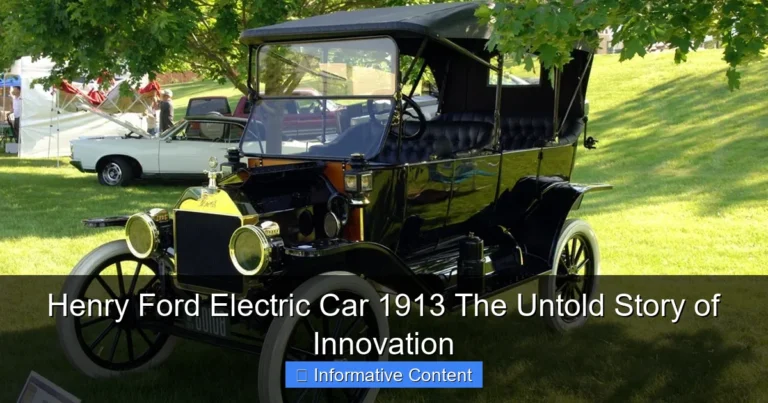
Vintage Ford Electric Car A Classic Ride Goes Green

Featured image for vintage ford electric car
Image source: publicdomainpictures.net
Vintage Ford electric cars are revolutionizing classic car culture by merging timeless design with eco-friendly innovation. These meticulously restored models, powered by modern electric drivetrains, deliver zero-emission performance without sacrificing the iconic style and charm of mid-century American automobiles. A bold step into the future, they prove sustainability and nostalgia can drive side by side.
Key Takeaways
- Retrofit your classic Ford: Modern EV kits make conversions simple and efficient.
- Reduce emissions stylishly: Drive a vintage car with zero tailpipe emissions.
- Boost performance: Electric motors deliver instant torque and smoother acceleration.
- Preserve heritage: Maintain classic design while embracing sustainable technology.
- Lower maintenance costs: Fewer moving parts mean less upkeep than gas engines.
- Charge anywhere: Use standard outlets or install a Level 2 charger for convenience.
📑 Table of Contents
- The Timeless Appeal of the Vintage Ford Electric Car
- Why Go Electric with a Vintage Ford?
- Popular Vintage Ford Models for Electric Conversion
- How to Convert a Vintage Ford to Electric: A Step-by-Step Guide
- Challenges and Considerations
- Real-World Examples and Inspiration
- The Future of Vintage Ford Electric Cars
The Timeless Appeal of the Vintage Ford Electric Car
Imagine cruising down a tree-lined boulevard in a beautifully restored vintage Ford electric car, the sun glinting off its chrome trim while the only sound is the soft hum of an electric motor. It’s not a scene from a sci-fi movie—it’s the exciting reality for classic car lovers embracing the green revolution. There’s something undeniably special about the fusion of old-school charm and modern electric power. The vintage Ford, a symbol of American automotive innovation, is now getting a second life with clean, quiet, and efficient electric drivetrains.
For many of us, Ford’s classic models—like the 1957 Thunderbird, the 1965 Mustang, or the 1932 Model B—evoke nostalgia, craftsmanship, and the open road. These cars were built in an era when driving was an experience, not just a commute. Now, thanks to a growing wave of retrofitting companies and DIY enthusiasts, these beloved classics are being transformed into eco-friendly electric vehicles. This isn’t about replacing the past—it’s about reimagining it. In this post, we’ll explore how the vintage Ford electric car is making a comeback, why it matters, and how you can get involved in this exciting movement—whether you’re a seasoned restorer or just starting to dream of your first classic ride.
Why Go Electric with a Vintage Ford?
Environmental Benefits and Sustainability
Let’s face it—gasoline isn’t getting any cleaner, and emissions regulations are tightening. Converting a vintage Ford to electric isn’t just a cool project; it’s a responsible choice. Traditional internal combustion engines (ICE) from the 1950s to 1970s were built for power, not efficiency. They guzzle fuel, emit high levels of CO2, and require constant maintenance. By contrast, a vintage Ford electric car produces zero tailpipe emissions. That means cleaner air, reduced noise pollution, and a smaller carbon footprint—especially if you charge it using solar or wind energy.

Visual guide about vintage ford electric car
Image source: publicdomainpictures.net
Think of it this way: you’re not just saving gas; you’re preserving the car for future generations without contributing to environmental harm. One study from the U.S. Department of Energy shows that electric vehicles, even when powered by the current grid, reduce greenhouse gas emissions by 60–70% compared to gasoline cars. And as the grid gets greener, that number only improves. For eco-conscious classic car fans, this is a win-win.
Lower Maintenance and Running Costs
One of the biggest surprises for new electric car owners is how little they need to maintain. No oil changes. No spark plugs. No exhaust systems. No carburetors clogging up in the summer heat. The electric motor in a vintage Ford electric car has far fewer moving parts than a gas engine. That means fewer things to break, fewer trips to the mechanic, and lower long-term costs.
For example, a typical vintage Ford might need an oil change every 3,000 miles, tune-ups every 10,000 miles, and regular carburetor adjustments. An electric conversion eliminates most of that. You’ll still need to check brakes, tires, and suspension—but the drivetrain is practically maintenance-free. Plus, regenerative braking (a feature in most modern EV conversions) helps extend brake life, saving you even more.
Quiet, Smooth, and Modern Driving Experience
There’s a common misconception that going electric means losing the “feel” of a classic car. But that’s not true. A vintage Ford electric car keeps the original steering, suspension, and body—so it still *feels* like a classic. But now, it’s smoother, quieter, and more responsive. There’s no engine vibration, no gear shifting, and no loud exhaust. Just instant torque and a serene ride.
One owner, Sarah from Oregon, told me, “I kept my 1967 Mustang’s original seats and steering wheel, but now it’s like gliding on air. My neighbors don’t even know I’ve left the driveway until I’m halfway down the street.” That’s the magic of electric conversion—preserving the soul of the car while upgrading the heart.
Popular Vintage Ford Models for Electric Conversion
Ford Mustang (1964–1973)
The first-generation Mustang is one of the most popular candidates for electric conversion. Its iconic design, widespread availability, and strong aftermarket support make it ideal for retrofitting. Companies like EV West and Electric GT offer full conversion kits tailored to the Mustang, including custom battery enclosures, motor mounts, and modern dash upgrades.
Pro tip: The Mustang’s engine bay is spacious, which makes it easier to fit a large battery pack. Most conversions aim for 100–150 miles of range, which is plenty for weekend drives and car shows. Some owners even add modern touches like digital gauges or Apple CarPlay—without compromising the classic look.
Ford Thunderbird (1955–1966)
The Thunderbird was Ford’s answer to the luxury sports car, and it remains a favorite among collectors. Its smooth lines and roomy interior make it perfect for a comfortable, long-range electric conversion. The T-Bird’s rear-wheel drive and independent suspension (on later models) work well with electric drivetrains.
One unique advantage: the Thunderbird’s large trunk and under-floor space can house a significant portion of the battery pack, helping with weight distribution. A well-balanced vintage Ford electric car like this handles better than a gas-powered version with a heavy engine up front.
Ford Model A & Model B (1928–1934)
These pre-war Fords are the ultimate in vintage charm. Their simple mechanical design makes them surprisingly easy to convert, even for beginners. With no complex electronics or fuel injection, the transition to electric is more straightforward.
Many owners choose to keep the original body and interior while hiding the electric components. For example, the battery pack can be mounted in the former fuel tank space or under the floorboards. The result? A silent, zero-emission ride that still turns heads at classic car meets.
Ford F-100 & F-150 (1953–1979)
Classic Ford trucks are gaining traction in the EV conversion world. The F-100, in particular, offers a rugged platform with ample space for batteries and motors. These trucks are great for those who want utility *and* sustainability. Imagine a 1960 F-100 with a 100-mile range, perfect for running errands or hauling gear—without the gas smell.
Some builders even add modern features like power steering, AC, and regenerative braking. The result is a vintage Ford electric car that’s both nostalgic and practical.
Ford Falcon (1960–1970)
Originally built for the Australian and North American markets, the Falcon is lightweight and nimble—ideal for electric conversion. Its compact engine bay can accommodate a mid-drive motor, and the rear trunk is perfect for battery storage.
Because Falcons are less common than Mustangs, they often stand out at events. One builder in Texas converted his 1965 Falcon to run on a Tesla Model S motor—achieving 0–60 mph in under 5 seconds. Now *that’s* a sleeper car.
How to Convert a Vintage Ford to Electric: A Step-by-Step Guide
Step 1: Choose the Right Conversion Kit
Your first decision is whether to go DIY or buy a complete kit. For most first-timers, a kit is the safest bet. Reputable companies like Electric Classic Cars (UK), EV Source (USA), and Zelectric Motors offer plug-and-play solutions tailored to specific Ford models.
Look for kits that include:
- A high-efficiency AC or DC electric motor (150–300 hp is typical)
- Custom battery pack (lithium-ion preferred for range and lifespan)
- Motor controller and DC-DC converter
- Charging port and cable
- Wiring harness and cooling system
Most kits range from $15,000 to $30,000, depending on range and performance. That’s a big investment, but it’s often less than restoring a gas car to show-quality condition.
Step 2: Remove the Gasoline System
Start by safely draining and removing the engine, fuel tank, exhaust, and related components. This is labor-intensive but straightforward. Use a lift or jack stands, and take photos as you go—so you can reference original mounting points.
Tip: Keep the original engine and transmission in case you ever want to revert. Many owners store them in a climate-controlled garage.
Step 3: Install the Battery Pack
The battery is the heaviest part, so placement is critical. Most builders mount it low in the car—under the floor, in the trunk, or in the engine bay (if space allows). The goal is to keep the center of gravity low for better handling.
Use custom enclosures to protect the batteries from moisture and vibration. Some owners even add cooling fans or liquid cooling systems for extreme climates.
Step 4: Mount the Motor and Drivetrain
The electric motor can be mounted in the engine bay or connected directly to the transmission (in a “direct drive” setup). For rear-wheel drive Fords, a transaxle or custom adapter plate is often used.
Make sure the motor is aligned properly to avoid vibration. Use vibration dampers and flexible couplings where needed.
Step 5: Connect the Electronics and Test
This is where many DIYers get stuck. The motor controller, battery management system (BMS), and charging system all need to communicate safely. Follow the kit’s wiring diagram carefully. Use high-quality connectors and fuses.
Before powering up, double-check all connections. Use a multimeter to test voltage and continuity. Once everything looks good, do a low-voltage test first—then gradually increase power.
Step 6: Add Modern Touches (Optional)
Want a modern twist? Consider:
- Digital speedometer and battery gauge
- Bluetooth audio system (hidden behind original radio)
- Heated seats or AC (powered by the EV’s high-voltage system)
- Regenerative braking (recovers energy when slowing down)
These upgrades don’t detract from the vintage feel—they enhance usability.
Challenges and Considerations
Cost vs. Value
Let’s be honest: converting a vintage Ford to electric isn’t cheap. A full conversion can cost $20,000–$50,000, depending on the car and level of customization. That’s more than some people pay for a fully restored gas car.
But consider the long-term value. Electric classics are rare, and their appeal is growing. At auctions, electric-converted Mustangs and Thunderbirds are fetching premium prices. Plus, you’re future-proofing the car against gas bans and rising fuel costs.
Range and Charging Infrastructure
Most vintage Ford electric car conversions offer 80–150 miles of range. That’s fine for local drives, but not ideal for road trips. And unlike gas cars, you can’t just “fill up” at any gas station.
Solution? Plan your trips around Level 2 chargers (240V) or use DC fast chargers if your system supports them. Some owners install a portable charging unit in the trunk for emergencies. Apps like PlugShare can help locate nearby stations.
Weight Distribution and Handling
Electric cars are heavier than gas cars—especially with large battery packs. Poor weight distribution can ruin handling. That’s why battery placement is so important.
Tip: Aim for a 50/50 front-rear weight balance. Use a scale under each wheel to check. If the car feels nose-heavy, move some batteries to the rear.
Legal and Safety Compliance
Not all states treat EV conversions the same. Some require inspections, emissions testing (even though EVs have none), or special registration. Check your local DMV rules before starting.
Safety is also critical. Use certified components, proper insulation, and a high-voltage disconnect switch. Consider getting the car inspected by a certified EV technician before driving it publicly.
Real-World Examples and Inspiration
Let’s look at a few standout vintage Ford electric car conversions that prove this trend is more than a fad.
“ElectraBird” – 1957 Thunderbird by Zelectric Motors
This stunning T-Bird features a 120-mile range, 200-hp electric motor, and a custom battery pack hidden in the trunk. The interior keeps the original leather and chrome, but now includes a digital battery monitor and wireless charging. It’s won multiple awards at car shows across California.
“Green Stang” – 1965 Mustang by EV West
Built for a tech entrepreneur, this Mustang runs on a Tesla Model 3 drivetrain. It hits 60 mph in 4.2 seconds and has a 150-mile range. The best part? The original steering wheel and gauges are still there—just with modern sensors behind the scenes.
“Silent A” – 1930 Model A by DIY Builder
A retired mechanic converted his Model A using a forklift motor and recycled Nissan Leaf batteries. It’s not fast, but it’s reliable and silent. He drives it to farmers’ markets every weekend—drawing crowds wherever he goes.
Data Table: Comparison of Popular Vintage Ford Electric Conversions
| Model | Year | Range (miles) | Top Speed (mph) | Motor Power (hp) | Conversion Cost | Builder |
|---|---|---|---|---|---|---|
| Mustang | 1965 | 150 | 110 | 250 | $32,000 | EV West |
| Thunderbird | 1957 | 120 | 100 | 200 | $28,000 | Zelectric Motors |
| Model A | 1930 | 80 | 65 | 150 | $18,000 | DIY |
| F-100 | 1960 | 100 | 90 | 220 | $25,000 | Electric GT |
| Falcon | 1965 | 130 | 120 | 300 | $35,000 | Custom Build |
Note: Costs include labor and parts. DIY builds may be lower but require significant time and skill.
The Future of Vintage Ford Electric Cars
The vintage Ford electric car movement is more than a trend—it’s a cultural shift. As cities ban gas cars and younger generations embrace sustainability, classic cars are evolving. We’re seeing more manufacturers offer factory-backed electric conversions, more charging stations in historic districts, and more car clubs dedicated to EV restorations.
Imagine a world where every classic car show features silent, emission-free Fords gliding through the crowd. Where kids grow up learning about both automotive history and clean energy. That future is already here.
For you, the reader, this could be more than a dream. Whether you buy a pre-converted model, join a local EV conversion workshop, or start your own project in the garage, you’re part of something bigger. You’re keeping history alive—while helping build a cleaner, quieter, and more sustainable future.
So go ahead. Dust off that old Ford. Plug it in. And take it for a spin. The road ahead is electric—and it’s never looked this good.
Frequently Asked Questions
What is a vintage Ford electric car?
A vintage Ford electric car refers to classic Ford models, such as the Model T or 1950s trucks, that have been retrofitted with modern electric drivetrains. These conversions blend nostalgic design with eco-friendly performance, offering the best of both worlds.
Can you convert a classic Ford into an electric car?
Yes, many companies and DIY enthusiasts specialize in converting vintage Ford vehicles into electric cars. These conversions replace the original engine with an electric motor and battery pack while preserving the car’s iconic aesthetic.
How much does a vintage Ford electric car conversion cost?
The cost typically ranges from $20,000 to $50,000, depending on the model, battery capacity, and labor. High-end conversions with advanced tech or rare models can exceed $70,000.
What are the benefits of driving a vintage Ford electric car?
You get a unique, head-turning classic with zero emissions and lower maintenance costs. Electric motors also provide smoother acceleration and quieter operation than original combustion engines.
Where can I find vintage Ford electric car conversion kits?
Companies like Electric GT, Zelectric Motors, and EV West offer specialized kits and services for vintage Ford electric car conversions. Online marketplaces and forums also share DIY solutions and community support.
How long do the batteries last in a vintage Ford electric car?
Most modern lithium-ion batteries in these conversions last 10–15 years or 100,000–150,000 miles. Battery life depends on usage, charging habits, and the quality of the battery pack installed.