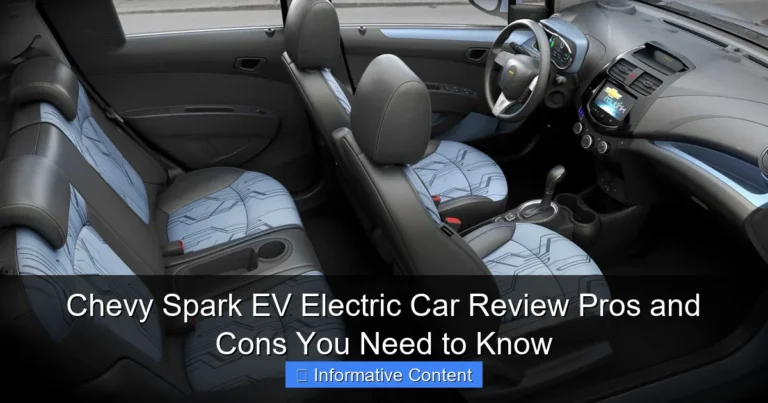
What Is Chevy Electric Car A Complete Guide to GM EVs

Featured image for what is chevy electric car
Chevy electric cars are General Motors’ innovative lineup of battery-powered vehicles, led by models like the Chevy Bolt EV and EUV, designed to deliver zero-emission driving with impressive range and smart technology. These EVs combine affordability, practicality, and GM’s Ultium platform advancements, making them a compelling choice for eco-conscious drivers seeking reliable performance and modern features. From daily commutes to road trips, Chevy’s electric vehicles offer a seamless transition to sustainable mobility without sacrificing style or capability.
Key Takeaways
- Chevy EVs offer zero-emission driving with advanced battery technology for longer range.
- Affordable pricing with tax incentives makes Chevy electric cars budget-friendly long-term.
- Fast-charging capability widely available across GM’s expanding charging network.
- Regenerative braking boosts efficiency by recovering energy during deceleration.
- Seamless smartphone integration via myChevrolet app for remote control and monitoring.
- Built-in safety tech standard including driver assists and crash avoidance features.
📑 Table of Contents
- The Rise of Chevy Electric Cars: A New Era in Mobility
- The Evolution of Chevy Electric Cars: From Concept to Reality
- Key Features and Technologies in Chevy Electric Cars
- Chevy Electric Car Models: A Detailed Breakdown
- Charging and Ownership: What to Know Before Buying a Chevy EV
- Future of Chevy Electric Cars: What’s Next?
- Data Table: Chevy Electric Car Comparison (2024–2025)
- Conclusion: Why Chevy Electric Cars Are Worth Your Attention
The Rise of Chevy Electric Cars: A New Era in Mobility
Electric vehicles (EVs) are no longer the niche products they once were. As the world pivots toward sustainable transportation, Chevy electric cars are emerging as key players in the global shift to zero-emission mobility. General Motors (GM), Chevy’s parent company, has committed to an all-electric future, with plans to phase out internal combustion engines by 2035. This bold vision places Chevy at the forefront of innovation, offering consumers affordable, practical, and technologically advanced electric vehicles that blend American automotive heritage with modern green technology.
From the groundbreaking Chevy Bolt EV to the futuristic Silverado EV, GM’s lineup of Chevy electric cars is designed to meet the diverse needs of today’s drivers. Whether you’re a city commuter, a long-haul truck driver, or a tech-savvy family looking for a reliable SUV, Chevy has an EV solution. This guide dives deep into what makes Chevy electric vehicles stand out, exploring their history, technology, models, charging infrastructure, and what the future holds for GM’s electrification strategy. By the end, you’ll have a comprehensive understanding of why Chevy is shaping the future of electric mobility in America and beyond.
The Evolution of Chevy Electric Cars: From Concept to Reality
A Legacy of Innovation
Chevy’s journey into electric vehicles began long before the modern EV boom. In fact, GM launched the EV1 in the mid-1990s—one of the first mass-produced electric cars in the modern era. Though the EV1 was discontinued in 2003 due to limited infrastructure and market readiness, it laid the groundwork for future innovation. GM learned critical lessons about battery technology, consumer adoption, and vehicle design that would later inform the development of today’s Chevy electric cars.
The real breakthrough came in 2016 with the launch of the Chevy Bolt EV. Unlike earlier attempts, the Bolt was built from the ground up as an electric vehicle, not a retrofitted gas car. It offered over 200 miles of range at a competitive price point, making it one of the most accessible EVs on the market. This success signaled GM’s renewed commitment to electrification and set the stage for a broader EV portfolio.
GM’s Ultium Platform: The Engine of the Electric Revolution
The true game-changer for Chevy electric cars is GM’s Ultium platform, a flexible, scalable EV architecture introduced in 2020. This platform is the backbone of all future GM EVs, including Chevy models. The Ultium system uses large-format pouch-style battery cells that can be arranged in different configurations—vertically or horizontally—allowing for a wide range of vehicle types, from compact hatchbacks to full-size pickup trucks.
- Modular Design: Enables battery packs from 50 kWh to over 200 kWh, supporting ranges up to 450+ miles.
- Fast Charging: Supports DC fast charging at up to 350 kW, adding up to 100 miles in 10 minutes.
- Vehicle-to-Everything (V2X): Allows EVs to power homes, tools, or other vehicles during outages.
This platform isn’t just about power—it’s about flexibility. By standardizing components across brands (Chevy, GMC, Cadillac, Buick), GM reduces costs, speeds up development, and improves reliability. For example, the same Ultium battery pack powers the Chevy Silverado EV and the Cadillac Lyriq, but each vehicle is uniquely tuned for its market segment.
From Bolt to Beyond: The Expanding Chevy EV Lineup
While the Bolt EV and EUV (Electric Utility Vehicle) were the first modern Chevy electric cars to hit the market, GM’s vision extends far beyond compact EVs. The company is rolling out a full spectrum of electric vehicles across segments:
- Chevy Bolt EV/EUV: Compact, affordable, and efficient—ideal for urban driving.
- Chevy Blazer EV: A midsize electric SUV with bold styling and up to 320 miles of range.
- Chevy Equinox EV: A budget-friendly electric SUV targeting mainstream buyers (starting around $30,000).
- Chevy Silverado EV: A full-size electric pickup truck with 450-mile range and 10,000+ lbs towing capacity.
- Chevy Silverado EV RST: The high-performance version with 754 horsepower and 0–60 mph in under 4.5 seconds.
Each model leverages the Ultium platform but is tailored to different lifestyles and needs. For instance, the Equinox EV is designed for first-time EV buyers seeking affordability, while the Silverado EV targets contractors and outdoor enthusiasts who need power and versatility.
Key Features and Technologies in Chevy Electric Cars
Advanced Battery and Powertrain Systems
At the heart of every Chevy electric car is a high-efficiency electric motor and a lithium-ion battery pack built on the Ultium platform. These batteries use nickel, cobalt, manganese, and aluminum (NCMA) chemistry, which balances energy density, longevity, and cost. GM has also invested heavily in reducing cobalt content—a controversial material due to ethical sourcing concerns—making their batteries more sustainable.
Chevy EVs feature regenerative braking systems that capture energy during deceleration, feeding it back into the battery. Drivers can adjust the level of regeneration via paddle shifters or drive modes, allowing for one-pedal driving—a feature that maximizes efficiency and reduces brake wear. For example, the Bolt EV can come to a complete stop using only the accelerator pedal, a favorite among city drivers.
Infotainment and Connectivity: The MyChevrolet App
All Chevy electric cars come equipped with the latest version of Chevrolet Infotainment 3+, featuring a 10.2-inch touchscreen, wireless Apple CarPlay and Android Auto, and over-the-air (OTA) software updates. But the real magic happens through the MyChevrolet app, which transforms your smartphone into a remote control for your EV.
- Remote Start/Stop: Precondition the cabin while still plugged in to save battery.
- Battery Monitoring: Check charge level, estimated range, and charging status in real time.
- Charging Station Locator: Find nearby public chargers, view availability, and pay directly through the app.
- Energy Usage Reports: Track your driving habits and energy consumption to optimize efficiency.
For instance, if you’re heading to a ski trip, you can use the app to preheat the cabin while the car is still charging at home. This not only improves comfort but also preserves battery range for the road.
Safety and Driver Assistance: Super Cruise and Beyond
Chevy electric cars are equipped with Chevy Safety Assist, a suite of standard driver assistance features that includes:
- Forward Collision Alert with Automatic Emergency Braking
- Lane Keep Assist with Lane Departure Warning
- Following Distance Indicator
- IntelliBeam Auto High Beams
- Adaptive Cruise Control (available on higher trims)
Higher-end models, like the Silverado EV RST, offer Super Cruise—GM’s hands-free driving technology. Using LiDAR map data, real-time sensors, and driver attention monitoring, Super Cruise allows drivers to take their hands off the wheel on over 400,000 miles of compatible highways in the U.S. and Canada. It’s not full autonomy, but it’s a major step toward reducing driver fatigue on long trips.
Vehicle-to-Everything (V2X) Capabilities
One of the most exciting features of newer Chevy electric cars is V2X (Vehicle-to-Everything) technology. The Silverado EV, for example, can:
- Power your home: During a blackout, it can supply up to 10.2 kW of power—enough to run essential appliances for up to 21 days.
- Charge other EVs: Share energy with another EV using a bidirectional charging cable.
- Power worksites: Run tools, lights, or equipment at remote job sites.
This transforms the EV from a simple mode of transport into a mobile energy hub—ideal for emergencies, off-grid living, or sustainable energy management.
Chevy Electric Car Models: A Detailed Breakdown
Chevy Bolt EV and EUV: The Pioneers
Launched in 2016 (Bolt EV) and 2021 (Bolt EUV), these models were Chevy’s first mass-market electric vehicles. The Bolt EV is a compact hatchback with 259 miles of range, while the EUV is a slightly larger SUV version with 247 miles. Both are powered by a 65 kWh battery and a 200-hp electric motor.
Why it stands out:
- Affordable MSRP (starting at $26,500 after federal tax credit)
- DC fast charging adds 100 miles in 30 minutes
- Available Super Cruise on EUV Premier trim
- Spacious interior for its class
Best for: City drivers, first-time EV owners, budget-conscious buyers.
Chevy Blazer EV: The Stylish Midsize SUV
Set to launch in 2024, the Blazer EV is Chevy’s answer to the Tesla Model Y and Ford Mustang Mach-E. It comes in multiple trims, including the sporty RS and the off-road-ready SS (with 557 hp and 0–60 mph in under 4 seconds).
Key specs:
- Up to 320 miles of range (depending on trim)
- Available dual-motor AWD
- 11.5-inch curved infotainment screen
- Hands-free Super Cruise available
Best for: Families, tech enthusiasts, and drivers who want a mix of performance and practicality.
Chevy Equinox EV: The Affordable Electric SUV
With a starting price of around $30,000, the Equinox EV is GM’s most affordable electric SUV yet. It targets the mainstream market, offering a balance of range, features, and value.
Key specs:
- Up to 300 miles of range (2LT and 3LT trims)
- Standard 11.5-inch infotainment screen
- Available heated seats, wireless charging, and panoramic sunroof
- DC fast charging capable
Best for: Budget-conscious families, commuters, and first-time EV buyers.
Chevy Silverado EV: The Electric Workhorse
The Silverado EV is not just another electric pickup—it’s a game-changer. Built on the Ultium platform, it offers:
- 450 miles of range (WT trim) and 400 miles (RST trim)
- 754 horsepower and 785 lb-ft of torque (RST)
- 10,000+ lbs towing capacity
- Multi-Flex Midgate: Expands cargo space from 5’ to 10’ by folding the rear wall
The Work Truck (WT) version is aimed at commercial fleets, while the RST is a luxury-performance model with a $94,500 starting price. Both support V2X and Super Cruise.
Best for: Contractors, outdoor adventurers, and anyone who needs a powerful, versatile EV truck.
Charging and Ownership: What to Know Before Buying a Chevy EV
Home Charging: Level 1 vs. Level 2
Charging a Chevy electric car at home is straightforward. All models come with a standard Level 1 charger (120V), which adds about 4 miles of range per hour. For faster charging, a Level 2 charger (240V) is recommended.
- Level 1: 8–20 hours to fully charge a Bolt EV (ideal for overnight charging)
- Level 2: 7–10 hours for a Bolt EV, 10–14 hours for a Silverado EV (depending on battery size)
Tip: Install a Level 2 charger (cost: $500–$1,200) with a 50-amp circuit. Many states offer rebates—check with your local utility company.
Public Charging: GM’s Network and Partnerships
GM has partnered with EVgo, Blink, and ChargePoint to provide access to over 100,000 public charging stations across North America. Chevy EVs support both CCS (Combined Charging System) and, in the future, Tesla’s NACS (North American Charging Standard).
Key benefits:
- DC fast charging adds 100–200 miles in 15–30 minutes
- Free charging for 3 years on select models (e.g., Silverado EV)
- Real-time charger availability via the MyChevrolet app
Maintenance and Ownership Costs
One of the biggest advantages of Chevy electric cars is lower maintenance. With no oil changes, spark plugs, or exhaust systems, EVs require far less upkeep. Typical savings:
- 50% lower maintenance costs over 5 years (Consumer Reports)
- Lower electricity costs vs. gasoline (average $0.12/kWh vs. $3.50/gallon)
- Federal tax credit of up to $7,500 (check eligibility)
Tip: Schedule annual battery health checks and keep software updated for optimal performance.
Future of Chevy Electric Cars: What’s Next?
GM’s 2035 Vision and Beyond
GM has pledged to be carbon neutral by 2040 and to end production of ICE vehicles by 2035. This means every new Chevy sold will eventually be electric. The company plans to launch 30 new EV models globally by 2025, with at least 10 under the Chevy brand.
Upcoming models include:
- Chevy Equinox EV (2024): The affordable SUV hitting dealerships soon.
- Chevy Blazer EV (2024): A stylish, tech-packed SUV.
- Chevy Silverado EV RST (2024): The high-performance pickup.
- Chevy Bolt EV/EUV (2025+): A next-gen redesign with longer range and updated tech.
Solid-State Batteries and Autonomous Driving
GM is investing in solid-state battery technology through its Ultium Cells joint venture. These batteries promise higher energy density, faster charging, and improved safety. Expect first applications by 2027.
On the autonomy front, GM’s Cruise subsidiary is developing robotaxis, but Chevy EVs will continue to feature Super Cruise as the flagship driver assistance system, with plans to expand to 950,000 miles of compatible roads by 2025.
Expanding Charging Infrastructure
GM is building 40,000 public chargers by 2026 through its Ultium Charge 360 network. These will include fast chargers at shopping centers, workplaces, and along highways—making EV ownership more convenient than ever.
Data Table: Chevy Electric Car Comparison (2024–2025)
| Model | Starting Price | Range (EPA) | Horsepower | Charging (DC Fast) | Key Feature |
|---|---|---|---|---|---|
| Chevy Bolt EV | $26,500 | 259 miles | 200 hp | 100 miles in 30 min | Affordable, compact |
| Chevy Bolt EUV | $28,800 | 247 miles | 200 hp | 100 miles in 30 min | Available Super Cruise |
| Chevy Equinox EV | $30,000 | 300 miles | 290 hp (AWD) | 150 miles in 10 min | Best value SUV |
| Chevy Blazer EV | $44,995 | 320 miles | 557 hp (SS) | 100 miles in 10 min | Sporty design, Super Cruise |
| Chevy Silverado EV WT | $39,900 | 450 miles | 510 hp | 100 miles in 10 min | Work truck, V2X |
| Chevy Silverado EV RST | $94,500 | 400 miles | 754 hp | 100 miles in 10 min | High performance, luxury |
Conclusion: Why Chevy Electric Cars Are Worth Your Attention
The era of the Chevy electric car is here—and it’s more exciting than ever. From the affordable Bolt to the powerful Silverado EV, GM is delivering electric vehicles that are practical, innovative, and accessible. With the Ultium platform driving performance, range, and flexibility, Chevy is not just keeping pace with Tesla and Ford—it’s setting new benchmarks in affordability, utility, and technology.
Whether you’re looking to reduce your carbon footprint, save on fuel and maintenance, or experience cutting-edge features like Super Cruise and V2X, a Chevy electric car offers a compelling package. As charging infrastructure expands and battery technology improves, the barriers to EV ownership continue to fall. Now is the perfect time to consider joining the electric revolution—and Chevy is leading the charge.
Ready to go electric? Visit your local Chevy dealer to test drive a Bolt, Equinox EV, or Silverado EV today and see how far Chevy has come.
Frequently Asked Questions
What is a Chevy electric car and how does it work?
A Chevy electric car is a battery-powered vehicle produced by General Motors (GM) that runs entirely on electricity, using an electric motor instead of an internal combustion engine. These vehicles charge via standard or fast-charging stations and offer instant torque for smooth, quiet acceleration.
What are the most popular Chevy electric car models available today?
The most popular Chevy electric car models include the Chevrolet Bolt EV and Bolt EUV, both known for their affordability, long range, and compact design. The upcoming Chevrolet Silverado EV and Blazer EV expand GM’s EV lineup with truck and SUV options.
How far can a Chevy electric car go on a single charge?
Depending on the model, a Chevy electric car can travel between 247 miles (Bolt EV) and up to 400+ miles (Silverado EV) on a full charge. Real-world range varies based on driving habits, weather, and terrain.
What is the charging time for a Chevy electric car?
Using a Level 2 charger, most Chevy electric cars can fully charge overnight (7–10 hours), while DC fast charging can replenish up to 100 miles of range in about 30 minutes. Charging speed depends on battery size and station capability.
Is a Chevy electric car eligible for federal tax credits?
Yes, select Chevy electric car models may qualify for federal tax credits under current U.S. EV incentive programs, though eligibility depends on factors like battery sourcing and manufacturer sales caps. Check the latest IRS guidelines for updated details.
What technology features come standard in Chevy electric vehicles?
Chevy EVs include advanced tech like GM’s Super Cruise hands-free driving, wireless Apple CarPlay/Android Auto, over-the-air updates, and a digital driver display. Safety features such as forward collision alert and lane-keep assist are also standard.