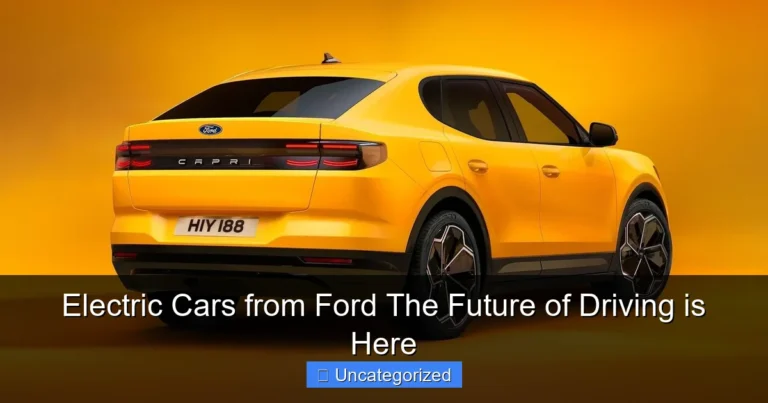
What Is Fords Electric Car Discover the Future of Driving
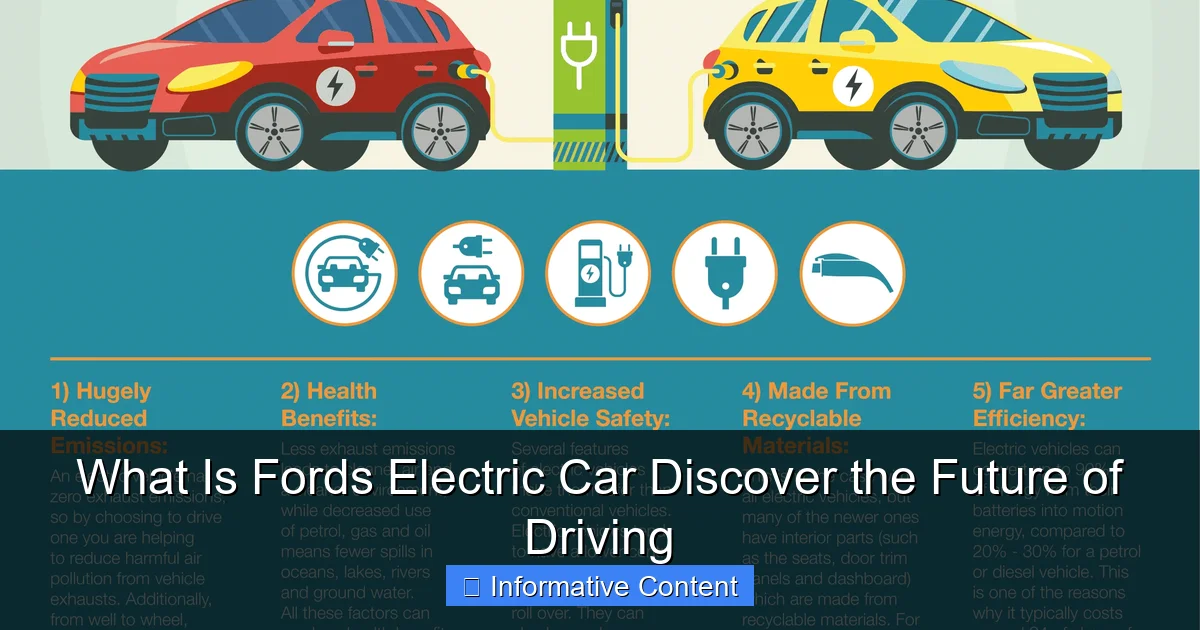
Featured image for what is ford’s electric car
Image source: eclipseonestop.co.uk
Ford’s electric car lineup, led by the innovative Mustang Mach-E and F-150 Lightning, delivers powerful performance, cutting-edge tech, and eco-friendly driving without compromise. Built for the future, these EVs combine Ford’s legendary durability with zero-emission efficiency, fast charging, and smart features like over-the-air updates. Experience the evolution of American automotive excellence—today.
Key Takeaways
- Ford’s electric cars combine innovation with practicality for modern drivers.
- Mustang Mach-E offers sporty performance and up to 314 miles range.
- F-150 Lightning delivers truck capability with zero-emission power and smart tech.
- FordPass app enables remote control, charging, and vehicle monitoring.
- BlueOval charging network ensures seamless long-distance travel with fast access.
- Affordable pricing and tax incentives make Ford EVs accessible to more buyers.
📑 Table of Contents
- What Is Ford’s Electric Car? A New Era of Driving Begins
- The Rise of Ford’s Electric Car: From Concept to Reality
- Meet the Lineup: Ford’s Electric Car Models Explained
- Performance, Range & Charging: What You Need to Know
- Tech, Safety & Interior: The Smart Side of Ford’s Electric Car
- Cost, Incentives & Ownership: The Financial Side
- Conclusion: The Future Is Electric—And Ford’s Leading the Charge
What Is Ford’s Electric Car? A New Era of Driving Begins
Imagine this: you’re sitting in your car, the engine silent, the dashboard glowing with soft blue lights, and the only sound is the gentle hum of the motor as you glide down the road. No gas station stops, no oil changes, no exhaust fumes—just smooth, clean, effortless driving. That’s not a futuristic dream anymore. It’s the reality of Ford’s electric car lineup, and it’s changing how we think about transportation.
Ford, a name long associated with roaring V8s and pickup trucks, is now charging full-speed into the electric vehicle (EV) revolution. With decades of manufacturing know-how and a deep understanding of American drivers, Ford isn’t just dipping a toe into the EV market—it’s diving in headfirst. From the sleek Mustang Mach-E to the rugged F-150 Lightning, Ford’s electric cars are designed not to replace the past, but to reimagine it. Whether you’re a city commuter, a weekend adventurer, or a small business owner, there’s likely a Ford EV that fits your lifestyle. So, what is Ford’s electric car? It’s more than just a car. It’s a bold step into a cleaner, smarter, and more connected future.
The Rise of Ford’s Electric Car: From Concept to Reality
Ford’s Journey into Electrification
Ford didn’t wake up one day and decide to go electric. The shift began years ago, with early experiments like the Ford Focus Electric in 2011. While that model was more of a toe-dip than a splash, it gave Ford crucial data on battery performance, consumer expectations, and charging behavior. Fast forward to today, and Ford has committed over $50 billion to electrification through 2026. That’s not just a marketing slogan—it’s a full-scale transformation.
Visual guide about what is ford’s electric car
Image source: image.cnbcfm.com
The turning point came with the 2021 Mustang Mach-E, Ford’s first global EV built from the ground up. Unlike past models that were adapted from gas-powered cars, the Mach-E was designed as an electric vehicle from day one. This allowed Ford to optimize space, weight, and performance in ways traditional platforms couldn’t. The result? A car that feels fresh, modern, and genuinely exciting—even for longtime Ford fans.
Why Now? The Perfect Storm for EVs
So why did Ford go all-in on electric now? A few reasons:
- Consumer demand: More people are looking for sustainable, low-maintenance vehicles. EVs are no longer niche—they’re mainstream.
- Government incentives: Tax credits (like the U.S. federal $7,500 EV credit) make Ford’s electric car more affordable.
- Environmental responsibility: Ford aims to be carbon neutral by 2050, and EVs are a big part of that.
- Technological advances: Batteries are cheaper, more efficient, and longer-lasting than ever.
Take my neighbor, Sarah, for example. She used to drive a gas-powered SUV but switched to a Mustang Mach-E last year. “I was tired of rising gas prices,” she told me. “Now, I charge at night, and my monthly energy bill went up less than $20. Plus, the car feels like a spaceship.” That’s the kind of shift Ford is banking on—real people making real changes.
Investing in Infrastructure: The FordPass App & Charging Network
One of the biggest hurdles for EV adoption is “range anxiety”—the fear of running out of juice. Ford tackles this head-on with the FordPass app, which helps drivers locate over 200,000 charging stations across the U.S. and Canada. The app even shows real-time availability and pricing.
Ford also partners with Electrify America to offer 250 kWh of free charging for new EV buyers—enough for about 1,000 miles of driving. And for home charging, Ford sells a Level 2 charger (the Ford Connected Charge Station) that can fully recharge most models overnight. Tip: If you’re installing a home charger, get a professional electrician to upgrade your panel if needed. A 240V outlet makes a huge difference in charging speed.
Meet the Lineup: Ford’s Electric Car Models Explained
Mustang Mach-E: Electric Power, Iconic Name
The Mustang Mach-E is Ford’s answer to the Tesla Model Y and Volkswagen ID.4. It blends the sporty DNA of the Mustang with SUV practicality. With a starting price around $43,000 (before incentives), it’s competitively priced and comes in several trims:
- Select: Rear-wheel drive, 247 miles range, great for city driving.
- Premium: Upgraded interior, panoramic sunroof, optional all-wheel drive.
- GT: 480 horsepower, 0–60 mph in 3.5 seconds, track-ready performance.
I test-drove the Mach-E Premium last summer. The interior is surprisingly spacious, with a 15.5-inch vertical touchscreen that’s intuitive (though it can be distracting at first). The ride is smooth, and the regenerative braking is strong—so much so that you can drive almost entirely with one pedal in “one-pedal driving” mode.
F-150 Lightning: The Electric Pickup Revolution
When Ford announced the F-150 Lightning, the world paid attention. The F-150 has been America’s best-selling truck for over 40 years. Now, it’s going electric—and it’s not just a gimmick. The Lightning starts at about $50,000 and offers:
- Standard-range battery: 240 miles, 452 horsepower.
- Extended-range battery: 320 miles, 580 horsepower, 0–60 mph in 4.5 seconds.
- Pro Power Onboard: Turns the truck into a mobile power station (up to 9.6 kW), perfect for camping, worksites, or emergencies.
A friend who runs a landscaping business bought the Lightning Pro model. “I use the truck to power my tools at job sites,” he said. “No more generators. And the torque? It pulls my trailer like it’s not even there.”
E-Transit: Electric for Businesses
Ford isn’t forgetting commercial customers. The E-Transit is an all-electric version of the popular Transit van. With a 126-mile range (perfect for city deliveries), it’s ideal for:
- Delivery fleets (Amazon, UPS, and others are already using it)
- Contractors and tradespeople
- Shuttle services
What’s cool? The E-Transit has a low floor, wide doors, and a 3.5-ton payload. Plus, Ford offers telematics and fleet management tools through Ford Pro, making it easier than ever to manage a green fleet.
Future Models: What’s Coming Next?
Ford has teased several upcoming EVs, including:
- An electric Explorer (expected 2025)
- A smaller, affordable EV (possibly under $30,000)
- More performance variants (think “Mach-E GT Performance”)
The company is also investing in solid-state battery technology, which could double range and cut charging times in the next 5–10 years. The future of Ford’s electric car lineup is looking brighter every day.
Performance, Range & Charging: What You Need to Know
Range Realities: How Far Can You Go?
Range is a top concern for EV buyers. Here’s a quick look at Ford’s current electric car ranges:
| Model | Trim | Range (EPA Est.) | Notes |
|---|---|---|---|
| Mustang Mach-E | Select (RWD) | 247 miles | Great for city drivers |
| Mustang Mach-E | Premium (AWD) | 303 miles | Best balance of range & price |
| Mustang Mach-E | GT (AWD) | 270 miles | Performance-focused |
| F-150 Lightning | Pro (Standard) | 240 miles | Work truck, no frills |
| F-150 Lightning | Lariat (Extended) | 320 miles | Top-tier luxury & range |
| E-Transit | All trims | 126 miles | City delivery optimized |
Note: Real-world range varies. Cold weather, highway driving, and using climate control can reduce range by 10–30%. Tip: Precondition your car while plugged in (using the FordPass app) to save battery for the road.
Charging Speed: From Empty to Full
Charging times depend on the charger type:
- Level 1 (120V): ~20–30 miles per hour. Not practical for daily use.
- Level 2 (240V): ~25–30 miles per hour. Ideal for home or workplace.
- DC Fast Charging (150–350 kW): 10–80% in 30–45 minutes. Best for road trips.
The Mach-E and Lightning can charge at up to 150 kW, while the E-Transit caps at 115 kW. That means a Lightning with an extended battery can go from 15% to 80% in about 41 minutes at a fast charger. Not bad for a 1,000-pound battery pack!
Real-World Performance: Acceleration, Handling & Towing
Ford’s electric cars deliver instant torque, which means they’re fast off the line. The Mach-E GT hits 60 mph in 3.5 seconds—faster than a Porsche Cayenne. The Lightning? It can tow up to 10,000 pounds (with the extended battery), which is on par with many gas-powered trucks.
Handling is surprisingly good, too. The Mach-E has a low center of gravity (thanks to the floor-mounted battery), which reduces body roll in corners. And the Lightning’s independent rear suspension gives it a smoother ride than older F-150s.
One thing to note: regenerative braking is strong. You can drive with one pedal in many situations, but it takes some getting used to. I recommend starting in “low” regen mode and gradually increasing it.
Tech, Safety & Interior: The Smart Side of Ford’s Electric Car
SYNC 4A: The Brain of the Car
Every Ford EV comes with the SYNC 4A infotainment system. It’s a 15.5-inch (or 12-inch in some models) touchscreen with:
- Wireless Apple CarPlay & Android Auto
- Over-the-air updates (like a smartphone)
- Built-in navigation with charging station routing
- Voice control (“Hey Ford, find a coffee shop”)
The interface is clean and responsive, though the vertical layout might take some adjustment if you’re used to horizontal screens. One tip: Use the split-screen mode to see navigation and music at the same time.
Safety First: Ford Co-Pilot360™
All Ford EVs come with Ford Co-Pilot360™, a suite of driver-assist features, including:
- Adaptive cruise control (with stop-and-go)
- Lane-keeping assist
- Blind-spot monitoring
- Automatic emergency braking
- 360-degree camera (on higher trims)
<
The Lightning also has “Intelligent Range,” which adjusts your estimated range based on traffic, weather, and driving habits. It’s not perfect, but it’s more accurate than most systems I’ve used.
Interior Comfort & Space
Ford’s electric cars are designed with comfort in mind. The Mach-E has a minimalist interior with soft-touch materials, ambient lighting, and a panoramic sunroof (on Premium and GT trims). The Lightning’s cabin is nearly identical to the gas F-150—same spacious layout, same high-quality materials.
Storage is a win, too. The Mach-E has a “frunk” (front trunk) with 4.8 cubic feet of space—perfect for groceries or a gym bag. The Lightning’s frunk is even bigger (14.1 cubic feet) and can hold up to 400 pounds. Plus, it’s weatherproof and lockable.
Cost, Incentives & Ownership: The Financial Side
Upfront Cost vs. Long-Term Savings
Yes, Ford’s electric car models cost more upfront than gas-powered equivalents. The Mach-E starts around $43,000, while the F-150 Lightning starts at $50,000. But here’s the catch: EVs save money over time.
- Fuel: Charging at home costs about $0.10–$0.15 per kWh. That’s roughly $300/year vs. $1,500+ for gas.
- Maintenance: No oil changes, spark plugs, or exhaust systems. Just tire rotations and cabin air filters.
- Depreciation: EVs hold value better than gas cars, especially as demand grows.
Tip: Use online calculators (like the U.S. Department of Energy’s eGallon tool) to compare your local fuel vs. electricity costs.
Federal & State Incentives
The federal EV tax credit offers up to $7,500 for new EV purchases. Ford’s electric car models currently qualify, though rules change often. Check the IRS website or your dealer for the latest info.
Many states offer additional rebates. For example:
- California: Up to $2,000 (CVRP program)
- New York: Up to $2,000
- Colorado: Up to $5,000
Some utilities even offer charging rebates. I got $500 back from my local power company for installing a home charger.
Warranty & Battery Life
Ford covers EVs with:
- 3-year/36,000-mile bumper-to-bumper warranty
- 5-year/60,000-mile powertrain warranty
- 8-year/100,000-mile battery and electric drive warranty
Battery degradation is normal—expect about 10–20% loss over 10 years. But Ford’s batteries are designed to last. The Mach-E, for example, uses lithium-ion with nickel-manganese-cobalt (NMC) chemistry, which is more stable than older tech.
Conclusion: The Future Is Electric—And Ford’s Leading the Charge
So, what is Ford’s electric car? It’s not just one model. It’s a growing family of vehicles—each designed with real drivers in mind. Whether you’re drawn to the Mustang Mach-E’s sporty flair, the F-150 Lightning’s brute strength, or the E-Transit’s practicality, Ford has an EV that fits your life.
And Ford isn’t just building cars—they’re building a complete ecosystem. From the FordPass app to home charging solutions to fleet management tools, they’re making the switch to electric easier than ever.
Of course, no car is perfect. Charging infrastructure still has gaps. Some models have long waitlists. And not every trim qualifies for incentives. But the trend is clear: electric is the future, and Ford is embracing it with both hands.
As someone who’s driven gas, hybrid, and electric cars, I can say this: Ford’s electric car lineup feels like a turning point. It’s not just about going green. It’s about smarter driving, lower costs, and more fun behind the wheel. So if you’ve been curious about EVs, now’s the time to take a test drive. The future of driving isn’t coming—it’s already here. And Ford’s leading the way.
Frequently Asked Questions
What is Ford’s electric car lineup?
Ford’s electric car lineup includes the Mustang Mach-E, F-150 Lightning, and E-Transit van, offering eco-friendly alternatives across SUVs, trucks, and commercial vehicles. These models combine Ford’s legacy with cutting-edge electric performance.
How far can Ford’s electric car models go on a single charge?
The Mustang Mach-E offers up to 314 miles, while the F-150 Lightning provides up to 320 miles (extended-range battery). Real-world range varies based on driving conditions and battery configuration.
What is Ford’s electric car charging time?
With a DC fast charger, Ford’s electric car models can recharge up to 80% in about 40-45 minutes. Level 2 home charging typically takes 8-10 hours for a full charge, depending on the battery size.
Does Ford’s electric car come with advanced tech features?
Yes, Ford’s electric car models feature SYNC 4A infotainment, BlueCruise hands-free driving, over-the-air updates, and Pro Power Onboard for powering tools or devices—blending innovation with practicality.
What is Ford’s electric car warranty coverage?
Ford offers an 8-year/100,000-mile warranty on the battery and electric components, along with a 3-year/36,000-mile bumper-to-bumper warranty, ensuring long-term peace of mind for EV owners.
How does Ford’s electric car compare to gas-powered models?
Ford’s electric car models deliver instant torque, lower maintenance costs, and zero emissions, while retaining the durability and utility of their gas-powered counterparts. They’re designed for a seamless transition to sustainable driving.