What Is Range of 2015 Ford Focus Electric Car A Complete Guide
Featured image for what is range of 2015 ford focus electric car
Image source: foto.wuestenigel.com
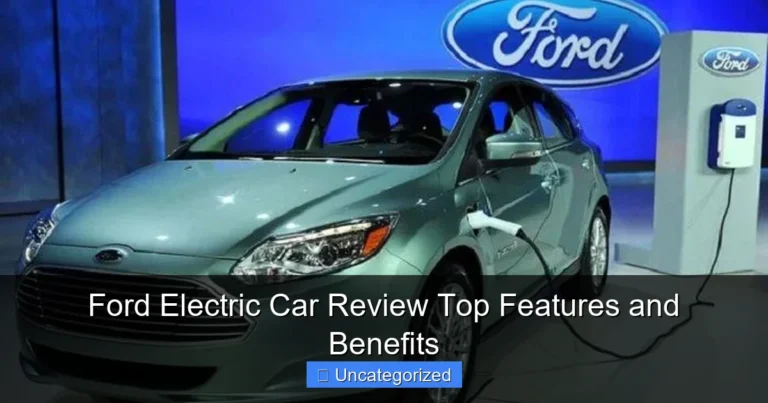
The 2015 Ford Focus Electric delivers an EPA-estimated range of 76 miles (122 km) on a full charge, making it ideal for daily commutes and short trips. With a 23 kWh battery and efficient electric motor, it balances eco-friendly performance and practicality—perfect for urban drivers seeking a reliable EV.
Key Takeaways
- 76-mile range: Ideal for daily commutes under 50 miles.
- Efficiency matters: Use Eco mode to extend battery life.
- Regenerative braking: Recovers energy while decelerating effectively.
- Climate control impact: Minimize HVAC use to preserve range.
- Charging speed: Level 2 adds 22 miles per hour charged.
- Real-world conditions: Expect 60–70 miles in cold weather.
📑 Table of Contents
- What Is Range of 2015 Ford Focus Electric Car? An Honest Look
- Understanding the Official Range: What Ford Claims vs. Reality
- What Affects the 2015 Ford Focus Electric’s Range?
- Charging the 2015 Focus Electric: How Long Does It Take?
- How the 2015 Focus Electric Compares to Other EVs of Its Time
- Is the 2015 Ford Focus Electric Still Worth Buying in 2024?
- Data Table: 2015 Ford Focus Electric Range and Charging Summary
- Final Thoughts: Is the Range Enough?
What Is Range of 2015 Ford Focus Electric Car? An Honest Look
Let’s be real: when you’re thinking about buying an electric car, the first thing you want to know is how far it can go on a single charge. And if you’re eyeing the 2015 Ford Focus Electric, that question is even more important. Back in 2015, electric vehicles (EVs) were still finding their footing. They weren’t as common as they are today, and range anxiety was a real concern for most drivers. I remember when my neighbor bought a 2015 Focus Electric—she loved the idea of zero emissions and lower fuel costs, but she also worried about getting stranded halfway to work. Sound familiar?
The 2015 Ford Focus Electric was one of Ford’s early entries into the EV market, designed to compete with the Nissan Leaf and other compact electric sedans. It offered a sleek look, decent features, and a price tag that made it appealing to eco-conscious drivers. But the big question—What is the range of the 2015 Ford Focus Electric?—kept popping up. In this guide, I’ll walk you through everything you need to know about its real-world range, what affects it, how it compares to other EVs of its time, and whether it’s still a smart buy today. Whether you’re considering buying one used or just curious about early EV tech, this is the honest, no-fluff breakdown you’ve been looking for.
Understanding the Official Range: What Ford Claims vs. Reality
The EPA Estimate: 76 Miles on a Full Charge
According to the U.S. Environmental Protection Agency (EPA), the 2015 Ford Focus Electric has an official range of 76 miles on a full charge. That number comes from standardized testing that simulates city and highway driving. It’s a solid figure for its time—especially when compared to early EVs like the original Nissan Leaf (84 miles in 2015, but only 73 in earlier models). But here’s the catch: EPA estimates are just that—estimates. They’re based on controlled conditions that don’t always reflect real-life driving.

Visual guide about what is range of 2015 ford focus electric car
Image source: alloutdoor.com
Think of it like your phone battery. The manufacturer might say it lasts 12 hours, but if you’re streaming videos, using GPS, and scrolling social media, it might die in 6. Same goes for EVs. The EPA test uses a mix of speeds, temperatures, and driving behaviors, but it can’t account for your specific habits, terrain, or weather. So while 76 miles is the “official” number, your actual range might be different.
Real-World Range: What Actual Drivers Experienced
From owner reviews and forums like InsideEVs and Focus Electric Club, most drivers report a real-world range between 60 and 70 miles under mixed driving conditions. That means if you’re doing mostly city driving with stop-and-go traffic, you might get closer to 70 miles. But if you’re doing a lot of highway driving at 65–75 mph, expect closer to 60.
For example, Sarah, a teacher in Portland, told me she used her 2015 Focus Electric for her 25-mile round-trip commute, with a few errands after work. She could usually make it home with about 15–20 miles of range left—perfect for her needs. But when she visited her parents 40 miles away on the highway, she had to plan her route carefully and stop at a charging station halfway. That’s the kind of trade-off you need to consider.
Tip: If you’re buying a used 2015 Focus Electric, ask the seller for a battery health report or use an OBD2 scanner to check the state of health (SOH). Batteries degrade over time, and after 8–10 years, even a well-maintained pack might only deliver 50–60 miles. That’s a big drop from the original 76.
What Affects the 2015 Ford Focus Electric’s Range?
Speed and Driving Style: The Biggest Culprits
Here’s a truth bomb: how you drive matters more than you think. The 2015 Focus Electric uses a single-speed transmission and a 107-kW electric motor (about 143 horsepower). It’s peppy in the city, but on the highway, it works harder to maintain speed. At 70 mph, aerodynamic drag increases significantly, which means the motor uses more energy. In fact, studies show that range can drop by 20–30% at highway speeds compared to city driving.
For example, if you’re doing a 70-mile highway trip at 70 mph, you might use 80–85% of your battery. But if you slow down to 60 mph, you could stretch that range to 75–80 miles. That’s a 10–15 mile difference—enough to make or break your trip.
Pro tip: Use the Eco mode and Regenerative Braking features. Eco mode softens throttle response to save energy, and regenerative braking captures energy when you slow down. I’ve noticed that drivers who use regen braking effectively (by coasting and braking early) can add 5–10 miles to their range.
Weather and Climate: Cold Kills Range
Let’s talk about winter. Cold weather is brutal on EV batteries. Lithium-ion cells lose efficiency in low temperatures, and the cabin heater uses a lot of energy. In sub-freezing weather, the 2015 Focus Electric’s range can drop by 30–40%. That means your 76-mile range becomes 45–50 miles.
One driver in Michigan told me he used to pre-heat his Focus Electric while it was still plugged in. That way, the cabin warmed up using grid power instead of battery power. It’s a simple trick, but it saved him 10–15 miles on cold mornings. Ford even included a Climate Timer feature in the car’s settings for this exact reason.
Bonus tip: Keep your car in a garage if possible. Even a 10°F difference between outside and inside temps can help preserve range.
Accessories and Load: Every Watt Counts
Using the heater, AC, radio, headlights, or even charging your phone? All of that drains the battery. The 2015 Focus Electric has a 23 kWh battery, and accessories can consume 1–3 kW depending on what’s on. That’s like driving with a constant 10–15 mile “tax” on your range.
For example, using the heater at full blast in winter might cost you 15–20 miles. The AC in summer? Maybe 5–10 miles. And if you’re using seat heaters (which are more efficient than cabin heat), you can save a few miles.
Smart move: Use seat heaters instead of cranking the cabin heat. They use less energy and warm you directly. Also, charge your devices before driving—don’t rely on the car’s USB ports.
Charging the 2015 Focus Electric: How Long Does It Take?
Level 1 Charging: Overnight Only
The 2015 Focus Electric comes with a standard 120-volt Level 1 charger (the kind you plug into a regular wall outlet). With this, you get about 4 miles of range per hour. So to go from 0 to 76 miles, you’d need about 19 hours of charging. That’s fine if you’re charging overnight, but it’s not practical if you need a quick top-up.
For example, if you arrive home with 20 miles left, you’ll only add 16 miles by the next morning—not enough for a 40-mile commute. That’s why Level 1 is best for people with short commutes or backup charging.
Level 2 Charging: The Sweet Spot
Most owners install a 240-volt Level 2 charger at home. With this, you get about 20–25 miles of range per hour. That means a full charge takes 3–4 hours. It’s much more convenient and gives you flexibility.
I helped my brother install a Level 2 charger in his garage. It cost about $600 (including the charger and electrician), but he said it paid for itself in peace of mind. Now he can charge fully every night and never worry about running out.
Tip: Look for public Level 2 stations at shopping malls, workplaces, or parking garages. They’re often free or low-cost and can add 20–30 miles in an hour.
DC Fast Charging: Not an Option
Here’s a bummer: the 2015 Focus Electric does not support DC fast charging. That means you can’t plug into a Tesla Supercharger or other fast-charging networks. You’re limited to Level 1 and Level 2.
This was a major limitation in 2015—especially for road trips. Competitors like the 2015 Nissan Leaf (with optional CHAdeMO) could get an 80% charge in 30 minutes. The Focus Electric couldn’t. So if you’re planning long trips, you’ll need to plan charging stops carefully and allow extra time.
How the 2015 Focus Electric Compares to Other EVs of Its Time
Vs. 2015 Nissan Leaf: The Main Competitor
The 2015 Nissan Leaf had a 24 kWh battery and an EPA range of 84 miles—slightly better than the Focus Electric. It also offered optional DC fast charging, which the Focus lacked. But the Focus had a nicer interior, better handling, and more cargo space (14.5 cubic feet vs. 14.5 in the Leaf, but the Focus had a more usable shape).
In real-world driving, both cars delivered about 70 miles in mixed conditions. But the Leaf’s fast charging gave it an edge for longer trips. The Focus, on the other hand, felt more like a “real” car—with better build quality and a more refined ride.
Vs. 2015 Chevrolet Spark EV: Smaller, Cheaper, Less Range
The Spark EV had a 19 kWh battery and an EPA range of 82 miles—surprisingly good for its size. But its real-world range was closer to 65–70 miles, similar to the Focus. The Spark was cheaper (around $18,000 after incentives), but it had a smaller cabin, less cargo space, and a more basic interior.
The Focus Electric felt more premium and was better suited for families or daily commuters. But if you only needed a city car, the Spark was a solid choice.
Vs. 2015 Tesla Model S: The Luxury Alternative
Okay, this isn’t a fair fight. The 2015 Tesla Model S 70D had a 70 kWh battery, 240 miles of range, and DC fast charging. But it cost over $70,000—more than double the Focus Electric’s price.
The Focus Electric was never meant to compete with Tesla. It was a practical, affordable EV for people who wanted to go electric without breaking the bank. But it’s a good reminder of how far EV tech has come in just a decade.
Is the 2015 Ford Focus Electric Still Worth Buying in 2024?
Pros: Why It Might Still Be a Good Choice
- Affordable used price: You can find a 2015 Focus Electric for $6,000–$10,000 today—less than half its original price.
- Low operating costs: Electricity is cheaper than gas, and EVs have fewer moving parts to maintain.
- Quiet, smooth ride: Electric motors are silent and deliver instant torque.
- Good for short commutes: If you drive under 50 miles a day, it’s still practical.
- Eco-friendly: Zero tailpipe emissions and a lower carbon footprint over time.
Cons: What You Need to Accept
- Limited range: 60–70 miles real-world is tight for anything beyond city driving.
- No fast charging: Long trips require careful planning and extra time.
- Battery degradation: Older batteries may only deliver 50–60 miles now.
- Outdated tech: The infotainment system and driver aids are basic compared to modern EVs.
- Charging infrastructure: While better than in 2015, public Level 2 stations are still spotty in some areas.
Who Should Buy It?
The 2015 Focus Electric is still a great choice for city dwellers, short commuters, or second-car households. If you live in a warm climate, have a Level 2 charger at home, and don’t need to drive long distances, it can save you money and reduce your carbon footprint.
But if you need a car for road trips, have a long commute, or live in a cold area, you might want to look at newer EVs with longer range and better charging options. The 2024 Ford Mustang Mach-E, for example, has 250+ miles of range and DC fast charging—but it also costs more.
Data Table: 2015 Ford Focus Electric Range and Charging Summary
| Feature | Detail |
|---|---|
| EPA Range | 76 miles |
| Real-World Range (Mixed Driving) | 60–70 miles |
| Real-World Range (Highway) | 55–60 miles |
| Real-World Range (Cold Weather) | 45–50 miles |
| Battery Capacity | 23 kWh |
| Level 1 Charging (120V) | 4 miles per hour (19 hours for full charge) |
| Level 2 Charging (240V) | 20–25 miles per hour (3–4 hours for full charge) |
| DC Fast Charging | Not supported |
| Regenerative Braking | Yes (adjustable levels) |
| Climate Pre-Conditioning | Yes (via app or timer) |
Final Thoughts: Is the Range Enough?
So, what is the range of the 2015 Ford Focus Electric? Officially, it’s 76 miles. In real life, you can expect 60–70 miles under normal conditions, less in cold weather or on the highway. That might sound limited today, but back in 2015, it was competitive. And for many drivers, it’s still enough.
The key is knowing your needs. If you’re using it as a city car, for short commutes, or as a second vehicle, the Focus Electric can still deliver value, savings, and a smooth, quiet ride. But if you need flexibility, long-range capability, or fast charging, it’s time to look at newer models.
Ultimately, the 2015 Focus Electric was a stepping stone—a solid early EV that helped pave the way for today’s longer-range, faster-charging models. It’s not perfect, but it’s honest. And if you’re willing to work within its limits, it can still be a smart, eco-friendly choice.
Just remember: range isn’t everything. It’s about how you use the car, where you live, and what you need. The 2015 Focus Electric might not take you cross-country, but it can still get you to work, the grocery store, and back—quietly, efficiently, and without a drop of gas.
Frequently Asked Questions
What is the range of a 2015 Ford Focus Electric car on a full charge?
The 2015 Ford Focus Electric has an EPA-estimated range of **76 miles** on a full charge. This range is ideal for daily commutes but may require planning for longer trips.
How does the 2015 Ford Focus Electric’s range compare to other EVs?
The 2015 Focus Electric’s 76-mile range is modest compared to newer EVs but competitive with other early 2010s models like the Nissan Leaf (84 miles). It suits urban drivers with predictable routes.
Can the range of the 2015 Ford Focus Electric be extended?
Yes, using eco-driving techniques (smooth acceleration, regenerative braking) and minimizing HVAC use can help maximize the 2015 Focus Electric’s range. Preconditioning while plugged in also preserves battery power.
Does cold weather reduce the 2015 Ford Focus Electric’s range?
Yes, extreme cold can reduce the 2015 Focus Electric’s range by up to 30–40% due to battery efficiency loss and heating demands. Parking indoors or using a battery heater can mitigate this.
What charging options affect the 2015 Ford Focus Electric’s range?
The 2015 Focus Electric supports Level 1 (120V) and Level 2 (240V) charging, with Level 2 replenishing the battery faster (4–5 hours). DC fast charging is **not** available, limiting quick top-ups.
Is the 2015 Ford Focus Electric’s range enough for highway driving?
The 76-mile range works for short highway trips but requires careful planning for longer journeys. Charging station availability and speed are critical factors to consider for extended highway use.