What Is Regenerative Braking?: Benefits, How It Works
If you’ve ever driven an electric or hybrid vehicle and felt the car slow down the moment you lifted off the accelerator, you’ve experienced regenerative braking. I’ve spent years testing EVs on city streets, mountain grades, and closed courses, and I can tell you what is regenerative braking? It’s a smart energy-recovery system that turns your car’s motion back into usable electricity. In this guide, I’ll break it down clearly, share real-world tips, and help you decide how to get the most from it every day.
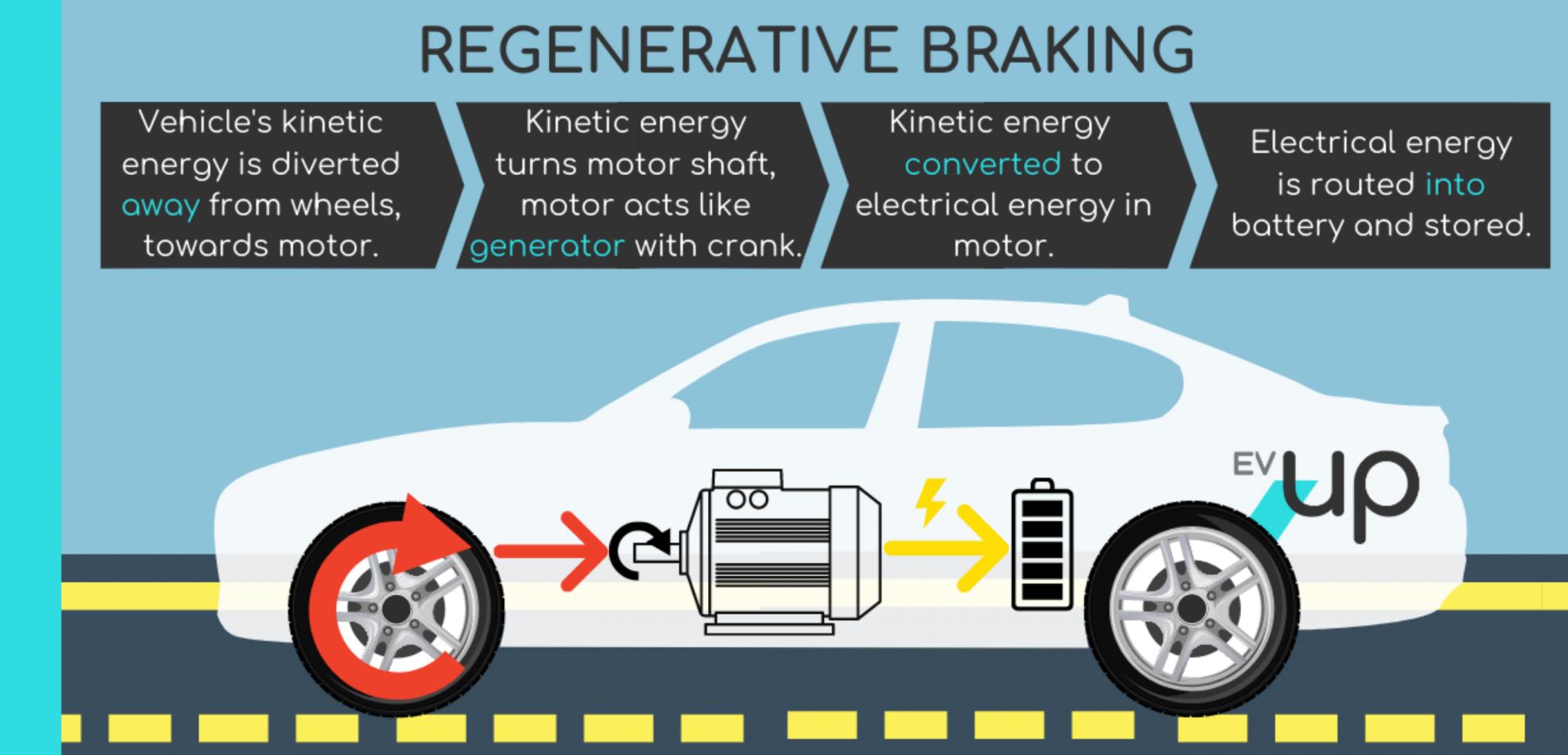
Source: www.evup.com.au
How Regenerative Braking Works
Regenerative braking captures energy that would otherwise be lost as heat during braking. In a traditional car, pressing the brake pedal turns kinetic energy into heat via friction pads. In an EV or hybrid, the electric motor flips roles and becomes a generator. As the wheels turn the motor, it produces electricity that flows back into the battery, while the resistance from generation creates the slowing force.
What happens step by step:
- You lift off the accelerator. The powertrain controller commands the motor to generate electricity instead of consuming it.
- The motor resists wheel rotation. This resistance creates a gentle or strong deceleration, depending on settings and battery conditions.
- Electricity flows to the battery. Power electronics manage voltage and current to charge efficiently and safely.
- Friction brakes assist as needed. At low speeds, or when more stopping power is required, the hydraulic brakes blend in seamlessly.
Key point: The system constantly balances battery temperature, state of charge, traction, and requested deceleration. If the battery is full or cold, you’ll get more friction braking and less regen. That’s why braking feel can vary day to day.
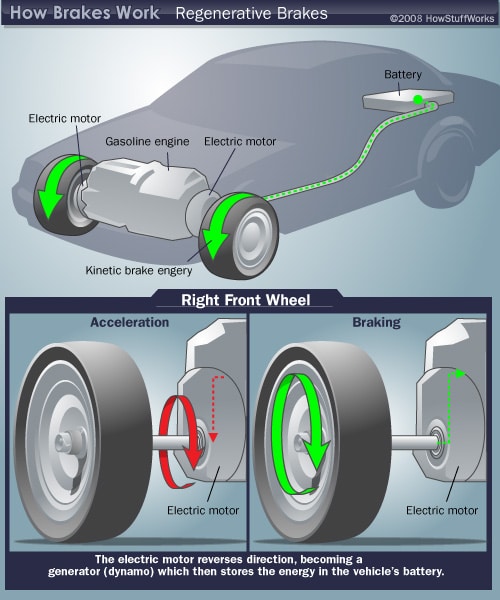
Source: thebrakereport.com
Benefits You’ll Notice (And Some Trade-Offs)
Why drivers love regenerative braking:
– More range and efficiency. City traffic becomes an opportunity to recapture energy. Independent lab tests and fleet data commonly show 10–30% efficiency gains in urban driving.
– Reduced brake wear. Pads and rotors last longer because the motor does much of the slowing.
– Smoother control. When tuned well, regen gives a predictable deceleration that feels natural once you adapt.
– One-pedal driving. In many EVs, you can modulate speed using the accelerator alone, pressing the brake mainly for hard or emergency stops.
Trade-offs to understand:
- Effectiveness varies. Cold batteries, full batteries, or very high speeds reduce regen capacity.
- Learning curve. New EV drivers sometimes brake a bit late until they adapt to deceleration strength.
- Brake blending feel. Some vehicles blend regen and friction so well you don’t notice; others feel inconsistent at low speeds.
From my test loops, the biggest real-life gains came in stop-and-go routes and downhill segments where regen offset much of the energy used climbing up.
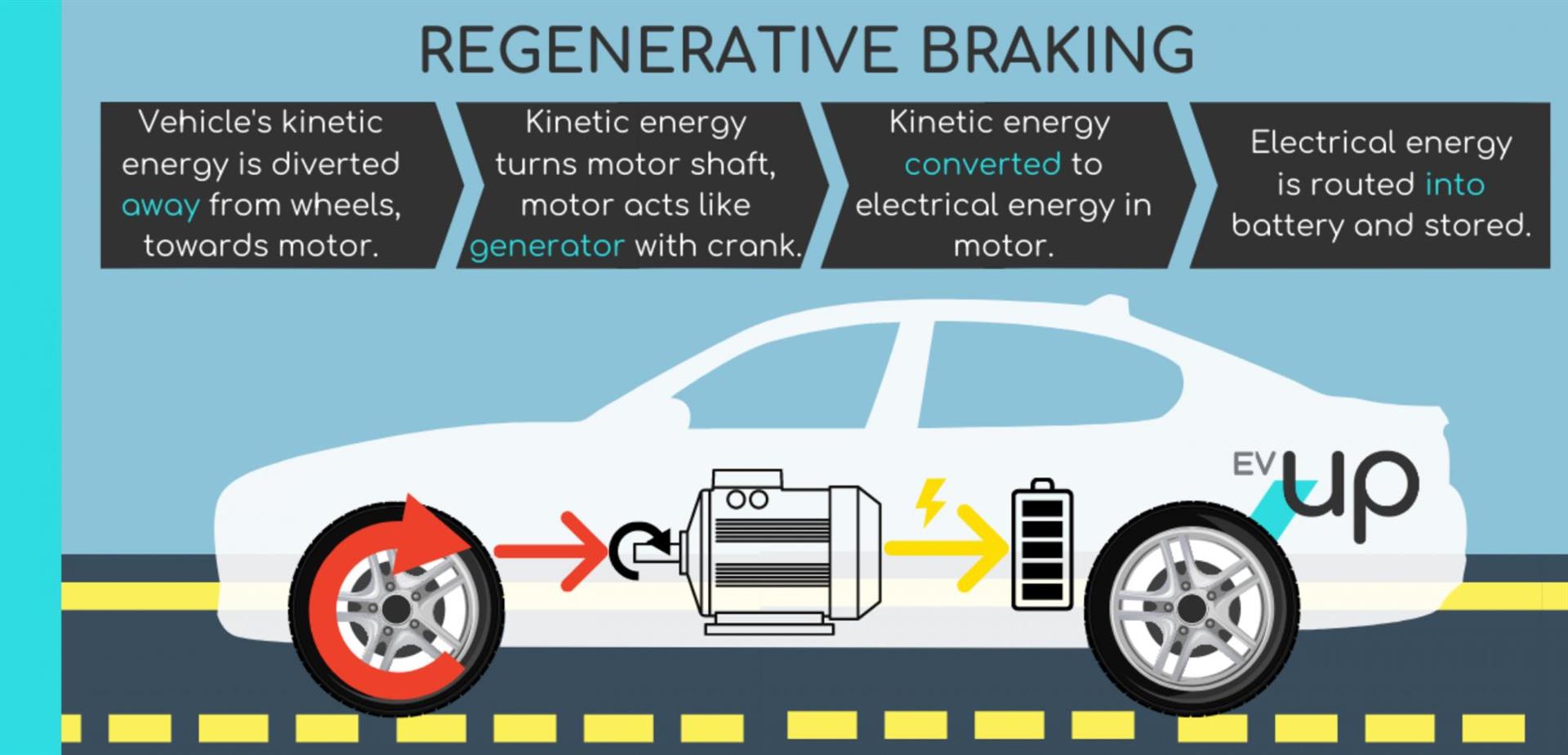
Source: widricktruck.com
Types Of Regenerative Braking Systems
Automakers implement regen differently depending on powertrain design and use case.
Common architectures:
- Motor-based regen in EVs. The drive motor(s) perform regeneration directly through the inverter.
- Hybrid parallel systems. Gas engine and electric motor share the driveline; regen happens when the motor is connected to the wheels.
- Blended braking systems. Brake-by-wire blends motor regen with hydraulic braking to meet the exact deceleration requested.
- Adjustable regen levels. Paddle shifters or touchscreen menus let you choose stronger or lighter deceleration.
- Predictive or map-based regen. Some cars use navigation data, traffic, or radar to adjust regen automatically before turns or slower traffic.
Practical tip: If your car offers multiple regen levels, try the middle setting for a week. Most drivers find it best for comfort and efficiency without jerky stops.
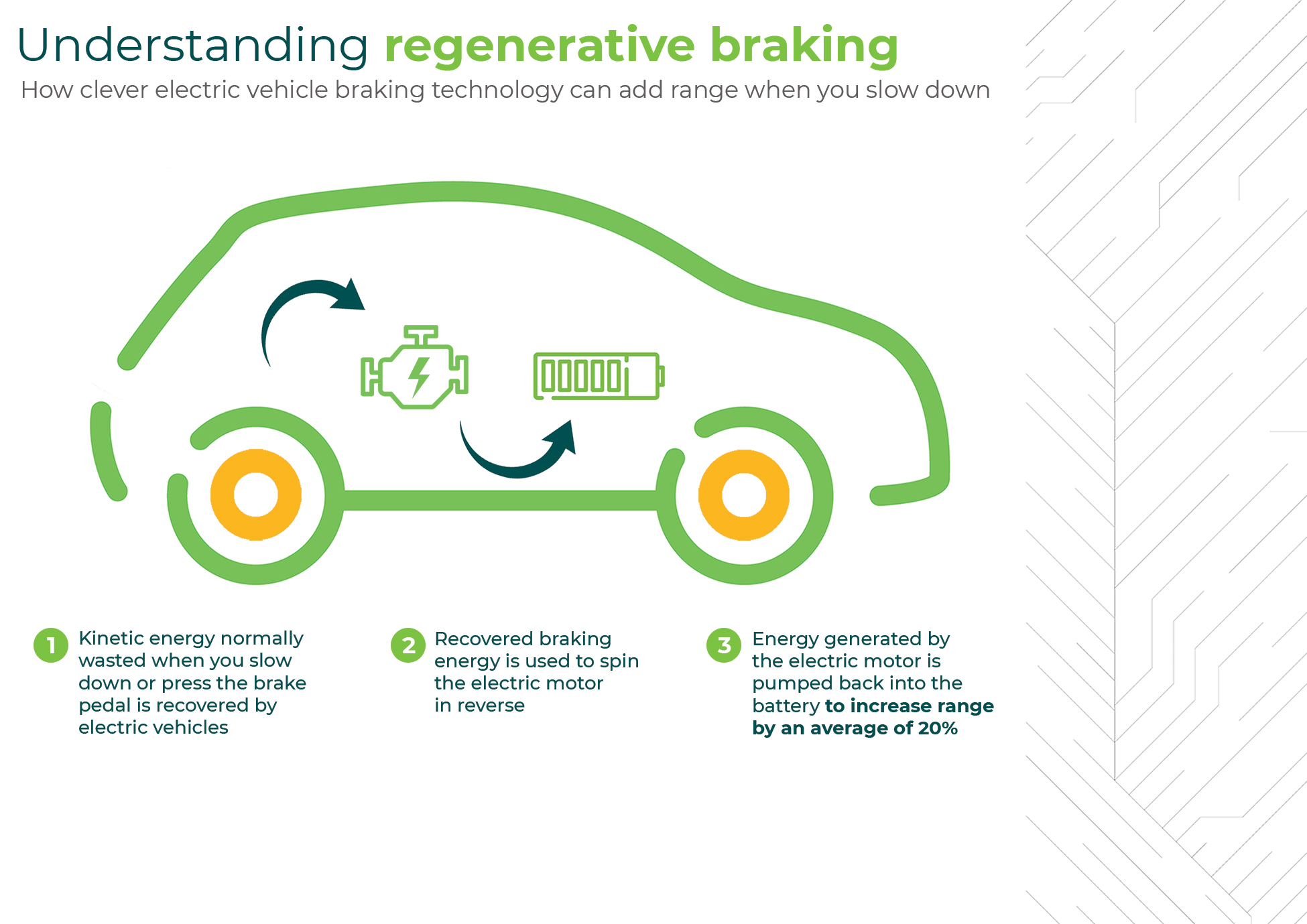
Source: www.gridserve.com
The Physics: Why Regen Works (And Its Limits)
Kinetic energy grows with the square of speed, which means there’s a lot of recoverable energy when slowing from highway pace. The motor-generator captures a portion of that energy and converts it to electrical energy, minus losses in the motor, inverter, wiring, and battery.
Why energy recovery isn’t 100%:
- Conversion losses. Every energy handoff wastes a little heat.
- Battery charge limits. If the battery can’t accept more power, regen is capped or reduced.
- Low-speed behavior. At very low speeds, motor torque control becomes less effective, so friction brakes finish the stop.
A helpful analogy: Think of the car as a cyclist with a dynamo hub. Pedaling creates momentum. When coasting downhill with the dynamo engaged, the light turns on and you slow slightly, harvesting energy. It’s the same principle, scaled up with modern electronics.
Real-World Driving: How To Maximize Regenerative Braking
After thousands of miles evaluating regen on different cars, these habits consistently improved efficiency and comfort:
- Look far ahead. Smooth lift-offs earlier let regen do more work and reduce friction-brake usage.
- Use one-pedal driving when available. It standardizes your deceleration and cuts wasted energy from late, hard stops.
- Learn your car’s regen indicators. Power meters or energy flow animations show when you’re charging, helping you fine-tune timing.
- Watch battery state of charge and temperature. Near 100% charge or in extreme cold, expect weaker regen. Preconditioning can help in winter.
- Choose the right setting for conditions. Stronger regen in the city, lighter regen on slippery roads to avoid abrupt weight transfer.
Lesson learned: Aggressive regen can feel great solo, but passengers appreciate smoothness. Aim for consistent deceleration rather than on-off pulses.
Maintenance, Safety, And System Health
Regenerative braking reduces wear but doesn’t eliminate maintenance:
- Brake hardware still matters. Rotors can corrode if rarely used. Periodic firm stops help clean them.
- Brake fluid and inspections. Follow factory intervals; brake-by-wire systems still rely on hydraulic components.
- Tire grip is critical. Regen deceleration depends on traction. Good tires and proper pressures improve both safety and efficiency.
- Software updates. Automakers refine brake blending and regen maps. Keep your vehicle updated for better feel and performance.
Safety note: On slick surfaces, many vehicles reduce regen to protect stability. If your car feels different in rain or snow, that’s the system prioritizing grip.
Common Myths And Misconceptions
Let’s clarify a few frequent myths I hear during ride-alongs and clinics:
- Myth: Regen replaces brakes entirely. Reality: Friction brakes remain essential for emergency stops and low-speed hold.
- Myth: Stronger regen always equals better efficiency. Reality: It helps, but smooth anticipation and traffic flow matter just as much.
- Myth: Regen damages the battery. Reality: Properly managed, regen stays within safe charge limits. Thermal and charge controls protect the pack.
- Myth: You must drive slowly to benefit. Reality: You gain energy recovery whenever you decelerate, from city to highway exit ramps.
- Myth: All EVs feel the same. Reality: Tuning varies widely. Test-drive multiple models to find the braking feel you prefer.
Industry Trends And What’s Next
Regenerative braking is becoming smarter and more integrated:
- Predictive regen using cameras, radar, and maps adjusts deceleration before you need the brakes.
- Multi-motor torque vectoring blends regen with handling benefits, stabilizing the car during corner entry.
- Heat pump and thermal management improvements extend effective regen in cold climates.
- Heavier vehicles like SUVs and trucks benefit disproportionately thanks to higher kinetic energy, pushing further innovation in high-power inverters.
- Standardized driver options are emerging, letting you save custom regen profiles tied to drive modes.
Expect broader consistency in brake feel as brake-by-wire tech matures and more automakers adopt common best practices tested across large fleets.
Frequently Asked Questions Of What Is Regenerative Braking?
Does regenerative braking work at all speeds?
Yes, but it’s most effective at medium to higher speeds. At very low speeds, friction brakes usually complete the stop for smoothness and control.
Can regen fully recharge my battery on a drive?
No. It recovers a portion of energy you’ve already used. Think of it as stretching range, not replacing charging altogether.
Why does regen feel weaker when my battery is full or in cold weather?
Batteries accept less charge when full or cold. The car limits regen to protect the pack, so you’ll feel more reliance on friction brakes.
Is one-pedal driving safe for emergencies?
Yes, as long as you’re ready to press the brake pedal when needed. The hydraulic brakes provide full stopping power instantly.
Will using regen wear out my motor or inverter?
No under normal conditions. These components are designed for frequent regeneration, with thermal and power limits managed by the car’s control system.
Does regen work the same in hybrids and pure EVs?
The principle is the same, but hybrids often have more complex blending with engine braking and may have different deceleration feel.
Can I tow with strong regen?
Check your owner’s manual. Some vehicles adjust regen behavior when towing to maintain stability and prevent trailer oscillation.
Conclusion
Regenerative braking transforms everyday slowing into stored energy, boosting efficiency, reducing brake wear, and reshaping how we drive. Master the basics, anticipate traffic, choose the right regen level, and you’ll see real gains in comfort and range. Ready to go deeper? Test different settings on your next commute, compare your trip efficiency, and share what you learn with other drivers. Subscribe for more EV insights, or drop a comment with your questions—I read every one.