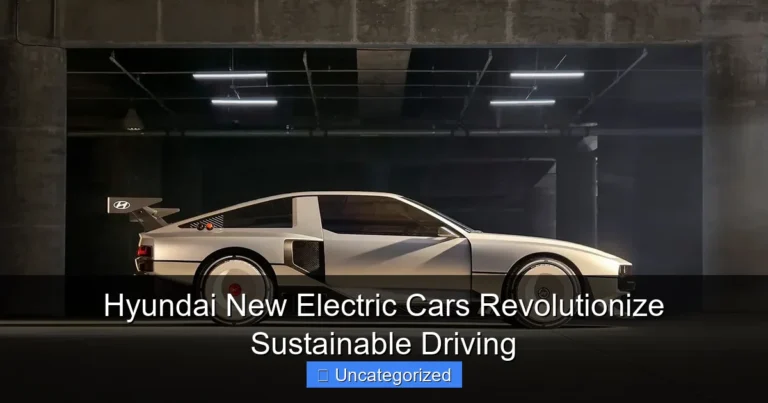
What Is the Name of Hyundais Electric Car Discover the Future
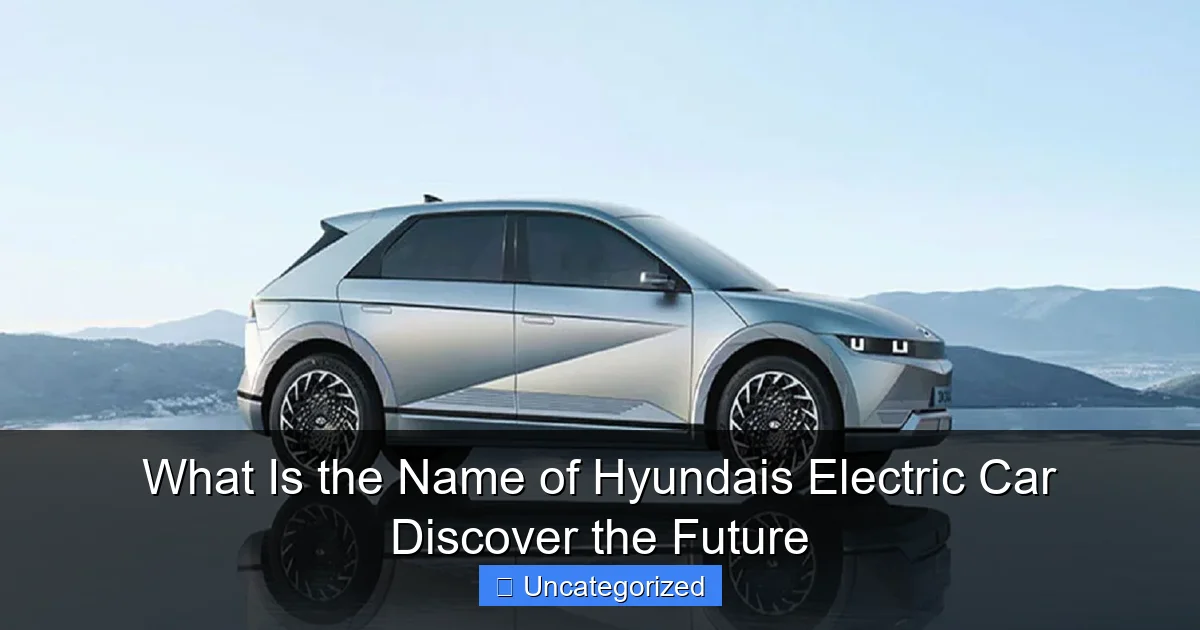
Featured image for what is the name of hyundai’s electric car
Image source: rewariyasat.com
Hyundai’s flagship electric car is the IONIQ 5, a cutting-edge EV that combines futuristic design with impressive performance and ultra-fast charging. Part of Hyundai’s dedicated IONIQ sub-brand, it leads the charge into a sustainable, tech-forward automotive future.
Key Takeaways
- Hyundai’s electric car line includes the Ioniq 5, Ioniq 6, and Kona Electric.
- Check model trims to compare range, features, and pricing effectively.
- Prioritize charging speed with 800V architecture in Ioniq models.
- Explore tax incentives available for Hyundai EV buyers in your region.
- Test drive first to experience regenerative braking and interior tech.
- Future models like the Ioniq 9 will expand Hyundai’s EV lineup soon.
📑 Table of Contents
- The Dawn of a New Era in Sustainable Mobility
- The Evolution of Hyundai’s Electric Vehicle Strategy
- Hyundai’s Current Electric Car Lineup: Models and Names
- Key Technologies Powering Hyundai’s Electric Vehicles
- Comparing Hyundai’s EVs: Performance, Range, and Pricing
- The Future of Hyundai Electric Vehicles: What’s Next?
- Conclusion: Embracing Hyundai’s Electric Future
The Dawn of a New Era in Sustainable Mobility
The automotive world is undergoing a seismic shift, and at the heart of this revolution stands Hyundai Motor Company—one of South Korea’s largest and most innovative automakers. As the global demand for cleaner, more efficient vehicles surges, Hyundai has responded with a bold commitment to electrification, launching a diverse lineup of electric vehicles (EVs) that blend performance, technology, and design. But for many curious car enthusiasts, potential buyers, and eco-conscious drivers, one fundamental question persists: What is the name of Hyundai’s electric car?
Hyundai’s electric vehicle portfolio is no longer limited to a single model. Instead, it now includes a growing family of EVs, each with a distinct identity, purpose, and technological edge. From sleek sedans to spacious SUVs and even futuristic concept cars, Hyundai is redefining what it means to drive electric. In this comprehensive guide, we’ll explore the full spectrum of Hyundai’s electric vehicles, uncovering their names, features, innovations, and what sets them apart in an increasingly competitive market. Whether you’re considering your first EV or upgrading from a traditional combustion engine, this article will help you navigate Hyundai’s electrifying future with confidence and clarity.
The Evolution of Hyundai’s Electric Vehicle Strategy
Hyundai’s journey into the world of electric mobility didn’t happen overnight. It’s the result of decades of research, investment, and a clear vision for a sustainable future. Unlike some automakers that entered the EV space reactively, Hyundai took a proactive and strategic approach, laying the groundwork early and building momentum over time.
From Early Concepts to Mass Production
Hyundai’s first foray into electric vehicles dates back to the 2000s with prototypes and limited-production models like the Hyundai BlueOn, a small electric hatchback introduced in 2010. Though primarily aimed at the Korean domestic market, the BlueOn showcased Hyundai’s early commitment to battery-electric technology. It featured a 16.4 kWh lithium-ion polymer battery and a range of approximately 140 km (87 miles), modest by today’s standards but groundbreaking for its time.
The real turning point came in 2016 with the launch of the Hyundai Ioniq—a dedicated sub-brand focused exclusively on electrified vehicles. This marked a pivotal moment: Hyundai wasn’t just adding an EV to its lineup; it was creating an entire ecosystem of eco-friendly mobility. The Ioniq brand initially included hybrid, plug-in hybrid, and fully electric variants, with the Ioniq Electric being the first pure EV under this umbrella.
The Birth of the Ioniq Brand: A Dedicated EV Lineup
Launched in 2020, the Ioniq brand was officially separated from the Hyundai marque to become a standalone sub-brand dedicated to battery-electric vehicles (BEVs). This strategic move signaled Hyundai’s long-term commitment to electrification and allowed for more focused innovation, design, and marketing. The name “Ioniq” itself is a portmanteau of “ion” and “unique,” symbolizing the flow of energy and the uniqueness of the brand’s vision.
Under the Ioniq banner, Hyundai introduced the Electric Global Modular Platform (E-GMP), a dedicated EV architecture designed from the ground up for high-performance, long-range, and ultra-fast charging. This platform underpins all new Ioniq models and represents a significant leap in engineering efficiency, enabling better weight distribution, larger battery capacity, and advanced driver-assistance systems (ADAS).
Pro Tip: If you’re shopping for a Hyundai EV, look for the “Ioniq” badge—it’s your assurance that the vehicle is built on the cutting-edge E-GMP platform and features the latest in EV technology.
Hyundai’s Current Electric Car Lineup: Models and Names
Now that we understand the strategic framework, let’s dive into the actual models—the vehicles that answer the question: What is the name of Hyundai’s electric car? Hyundai currently offers several electric vehicles, each tailored to different lifestyles, budgets, and driving needs.
1. Hyundai Ioniq 5: The Game-Changing Crossover
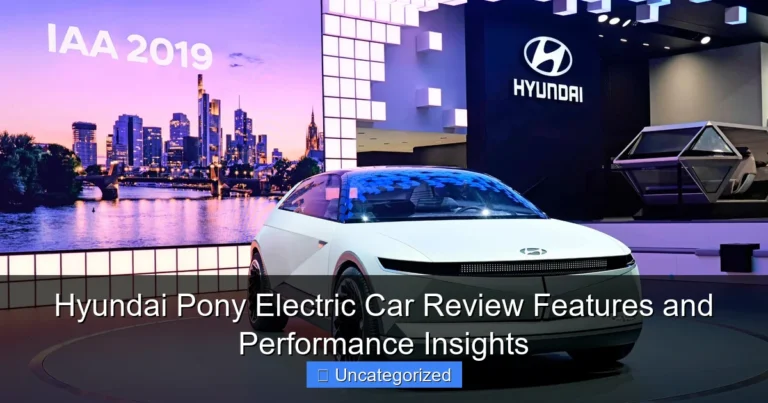
The Hyundai Ioniq 5 is arguably the most iconic and talked-about electric car from Hyundai. Launched in 2021, it’s a compact crossover SUV that blends retro-futuristic design with cutting-edge technology. Inspired by the 1974 Hyundai Pony concept, the Ioniq 5 features sharp lines, pixel-style LED lighting, and a spacious, lounge-like interior.
- Range: Up to 303 miles (488 km) on a single charge (Long Range RWD)
- Powertrain Options: Rear-wheel drive (RWD) or all-wheel drive (AWD)
- Charging: Supports 800V ultra-fast charging—10% to 80% in just 18 minutes
- Top Speed: 115 mph (185 km/h)
- 0-60 mph: As quick as 5.0 seconds (AWD model)
One of the Ioniq 5’s standout features is its Vehicle-to-Load (V2L) technology, which allows the car to power external devices—from laptops to camping gear—using its battery. This makes it a favorite among outdoor enthusiasts and remote workers.
2. Hyundai Ioniq 6: The Aerodynamic Electric Sedan
Following the success of the Ioniq 5, Hyundai unveiled the Ioniq 6 in 2022—a sleek, fastback electric sedan designed for efficiency and elegance. With a drag coefficient of just 0.21, the Ioniq 6 is one of the most aerodynamic production cars in the world, maximizing range and reducing wind noise.
- Range: Up to 361 miles (581 km) – the longest in Hyundai’s EV lineup
- Powertrain: RWD or AWD, with up to 320 horsepower (AWD model)
- Interior: Dual 12.3-inch curved displays, ambient lighting, and sustainable materials like recycled PET bottles
- Charging: 10% to 80% in 18 minutes (with 350 kW charger)
The Ioniq 6 appeals to drivers who prioritize style, efficiency, and long-distance comfort. It’s ideal for commuters, road-trippers, and anyone who values a refined driving experience.
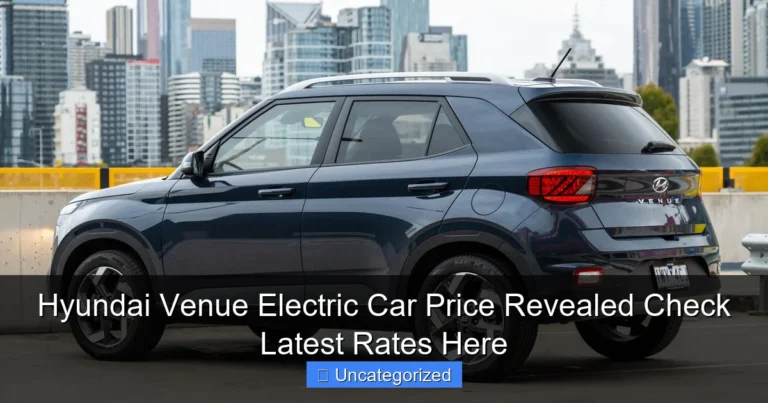
3. Hyundai Kona Electric: The Compact, Affordable EV
For those seeking a more budget-friendly and city-friendly option, the Hyundai Kona Electric remains a strong contender. Updated in 2023, the second-generation Kona Electric offers improved range, a more modern design, and enhanced technology—all while maintaining a competitive price point.
- Range: Up to 304 miles (490 km) – a significant upgrade from the first-gen model
- Battery: 64.8 kWh lithium-ion polymer
- Charging: 10% to 80% in 47 minutes (with 100 kW charger)
- Features: Hyundai SmartSense ADAS suite, digital key, over-the-air (OTA) updates
The Kona Electric is perfect for urban drivers, first-time EV buyers, or anyone who wants a reliable, no-frills electric SUV without breaking the bank.
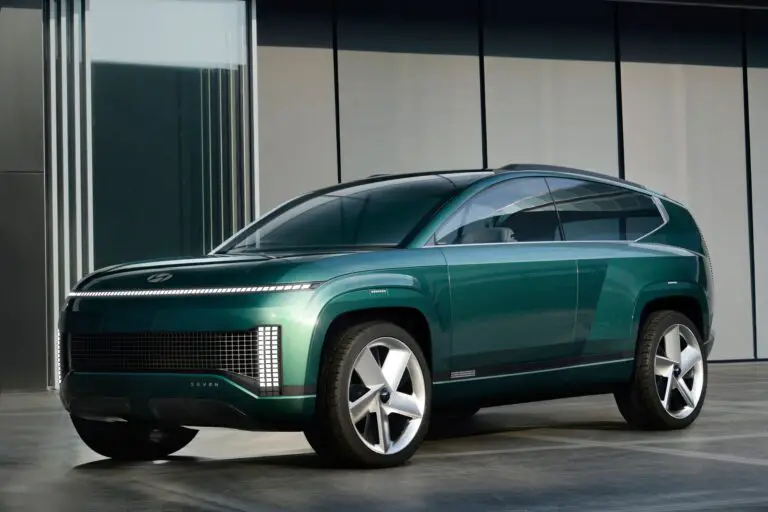
4. Hyundai Ioniq 9: The Upcoming Electric SUV (Expected 2025)
While not yet on the market, the Hyundai Ioniq 9 is already generating buzz. Slated for a 2025 launch, this three-row electric SUV will be Hyundai’s largest and most luxurious EV yet. Built on the E-GMP platform, the Ioniq 9 is expected to offer:
- Up to 300+ miles of range
- Spacious, premium interior with reclining second-row seats
- Advanced AI-powered infotainment and driver assistance
- Possibly a “living room” mode for relaxation during charging stops
With the Ioniq 9, Hyundai aims to compete directly with the Tesla Model X, Ford Mustang Mach-E, and Kia EV9—solidifying its presence in the luxury EV SUV segment.
Key Technologies Powering Hyundai’s Electric Vehicles
Hyundai’s electric cars aren’t just about names and specs—they’re powered by a suite of advanced technologies that set them apart from the competition. Understanding these innovations is crucial for appreciating the true value of Hyundai’s EVs.
E-GMP Platform: The Backbone of Hyundai’s EVs
The Electric Global Modular Platform (E-GMP) is Hyundai’s dedicated EV architecture, designed specifically for battery-electric vehicles. Unlike retrofitted platforms used by some competitors, E-GMP was built from scratch to maximize EV performance. Key advantages include:
- 800V Electrical Architecture: Enables ultra-fast charging (10–80% in 18 minutes) and reduces energy loss
- Flat Floor Design: Provides more interior space, better weight distribution, and improved handling
- Modular Battery System: Allows for different battery sizes and configurations depending on model needs
- Integrated Power Electronics: Reduces complexity and increases efficiency
Models like the Ioniq 5, Ioniq 6, and upcoming Ioniq 9 all use E-GMP, ensuring consistent performance and reliability across the lineup.
Vehicle-to-Load (V2L) and Vehicle-to-Grid (V2G) Capabilities
Hyundai’s EVs go beyond transportation—they’re mobile power stations. The Vehicle-to-Load (V2L) feature allows drivers to plug in appliances directly into the car using a standard adapter. For example:
- Power a laptop or TV during a camping trip
- Run a coffee machine at a remote worksite
- Charge another EV (in some configurations)
Future models may also support Vehicle-to-Grid (V2G), where the car can feed energy back into the power grid during peak demand, potentially earning owners credits or rebates. This turns EVs into active participants in the energy ecosystem.
Hyundai SmartSense: Advanced Safety and Driver Assistance
All Hyundai electric vehicles come equipped with Hyundai SmartSense, a comprehensive suite of safety and driver-assistance technologies. Key features include:
- Highway Driving Assist 2 (HDA2): Semi-autonomous driving on highways with lane centering and adaptive cruise control
- Remote Smart Parking Assist: Park or exit parking spaces using a smartphone app
- Blind-Spot View Monitor: Displays video feed of blind spots in the instrument cluster
- Forward Collision-Avoidance Assist (FCA): Detects vehicles, pedestrians, and cyclists
These features not only enhance safety but also reduce driver fatigue, especially on long journeys.
Comparing Hyundai’s EVs: Performance, Range, and Pricing
To help you decide which Hyundai electric car best fits your needs, here’s a detailed comparison of the current and upcoming models. This data table highlights key differences in range, performance, charging, and pricing (U.S. market estimates as of 2024).
| Model | Range (EPA est.) | Top Speed | 0-60 mph | Charging (10-80%) | Starting MSRP | Key Feature |
|---|---|---|---|---|---|---|
| Hyundai Ioniq 5 | 303 miles | 115 mph | 5.0 sec (AWD) | 18 min (350 kW) | $41,250 | V2L, Retro-Futuristic Design |
| Hyundai Ioniq 6 | 361 miles | 125 mph | 5.0 sec (AWD) | 18 min (350 kW) | $45,500 | 0.21 Drag Coefficient, Premium Interior |
| Hyundai Kona Electric | 304 miles | 105 mph | 7.9 sec (FWD) | 47 min (100 kW) | $32,675 | Affordable, Compact, City-Friendly |
| Hyundai Ioniq 9 (est.) | 300+ miles | 120 mph | 6.5 sec (AWD est.) | 20 min (est.) | $55,000 (est.) | Three-Row, Luxury, Spacious |
Note: Prices and specifications are subject to change. Always check Hyundai’s official website or local dealership for the most up-to-date information.
Pro Tip: Use Hyundai’s online configurator to build your ideal EV, compare trims, and estimate federal/state tax credits (up to $7,500 in the U.S. for eligible models).
The Future of Hyundai Electric Vehicles: What’s Next?
Hyundai isn’t resting on its laurels. With a clear roadmap toward carbon neutrality by 2045, the company is investing heavily in next-generation technologies and expanding its EV lineup globally.
Expansion of the Ioniq Brand
By 2030, Hyundai plans to launch 11 new EV models under the Ioniq brand, covering everything from compact city cars to full-size luxury SUVs and even electric pickup trucks. The Ioniq 9 is just the beginning. Future models may include:
- Ioniq 3: A compact electric hatchback for urban markets
- Ioniq 7: A high-performance electric coupe or GT
- Electric Pickup: Competing with the Ford F-150 Lightning and Tesla Cybertruck
Sustainable Materials and Circular Economy
Hyundai is committed to sustainability beyond the powertrain. The Ioniq 6, for example, uses recycled PET bottles for seat fabrics, bio-paint derived from corn, and recycled fishing nets for interior components. This focus on circular economy principles reduces environmental impact and appeals to eco-conscious consumers.
Autonomous Driving and AI Integration
Hyundai is partnering with tech firms like Motional (a joint venture with Aptiv) to develop Level 4 autonomous driving systems. Future Ioniq models may offer hands-free driving on highways, automated parking, and even AI-powered personal assistants that learn driver preferences over time.
Global Charging Network and Battery Innovation
Hyundai is investing in battery gigafactories in the U.S., South Korea, and Europe to ensure supply chain stability and reduce costs. The company is also exploring solid-state batteries, which promise higher energy density, faster charging, and improved safety—potentially doubling EV range in the next decade.
Additionally, Hyundai is expanding access to fast-charging networks through partnerships with Electrify America, ChargePoint, and others, making long-distance EV travel more convenient than ever.
Conclusion: Embracing Hyundai’s Electric Future
So, what is the name of Hyundai’s electric car? The answer is no longer singular—it’s a growing family of innovative, high-performance, and sustainable vehicles under the Ioniq brand and beyond. From the bold and versatile Ioniq 5 to the sleek and efficient Ioniq 6, and the practical Kona Electric, Hyundai offers an electric solution for nearly every driver.
What sets Hyundai apart is its holistic approach: a dedicated EV platform (E-GMP), cutting-edge technology (V2L, SmartSense), a commitment to sustainability, and a bold vision for the future. Whether you’re drawn to retro-futuristic design, long-range capability, or smart features, Hyundai’s electric lineup delivers on all fronts.
As the world transitions to cleaner energy, Hyundai is not just keeping pace—it’s leading the charge. With upcoming models like the Ioniq 9 and advancements in battery tech and autonomy, the future of Hyundai’s electric cars looks brighter than ever. Now is the perfect time to explore the options, test drive your favorite model, and become part of the electric revolution.
Your journey into the future starts with a name: Ioniq.
Frequently Asked Questions
What is the name of Hyundai’s electric car?
The primary name of Hyundai’s electric car lineup is the Hyundai Ioniq, which includes models like the Ioniq 5, Ioniq 6, and Ioniq 7. These vehicles are part of Hyundai’s dedicated EV sub-brand, designed to lead the future of sustainable mobility.
Which Hyundai electric car is the most popular?
The Hyundai Ioniq 5 is currently the most popular electric car from Hyundai, thanks to its futuristic design, 300+ mile range, and ultra-fast charging capabilities. It has earned multiple awards for innovation and performance in the EV market.
Does Hyundai have more than one electric car model?
Yes, Hyundai offers several electric car models under its Ioniq sub-brand, including the Ioniq 5 (SUV), Ioniq 6 (sedan), and the upcoming Ioniq 7 (large SUV). Each model combines cutting-edge technology with eco-friendly performance.
What is the name of Hyundai’s first dedicated EV platform?
Hyundai’s first dedicated EV platform is called E-GMP (Electric-Global Modular Platform), which underpins all Ioniq models like the Ioniq 5 and Ioniq 6. This platform enables faster charging, longer range, and improved battery efficiency.
Is the Hyundai Kona Electric part of the Ioniq series?
No, the Hyundai Kona Electric is a separate EV model, though it shares some tech with the Ioniq series. The Kona Electric is a compact SUV with a smaller price tag, while the Ioniq lineup focuses on premium, next-gen EV innovation.
What makes Hyundai’s electric car lineup unique?
Hyundai’s electric car lineup stands out for its bold design, ultra-fast 800V charging, and vehicle-to-load (V2L) technology. The Ioniq series also emphasizes sustainability, using eco-friendly materials like recycled plastics and plant-based yarns.