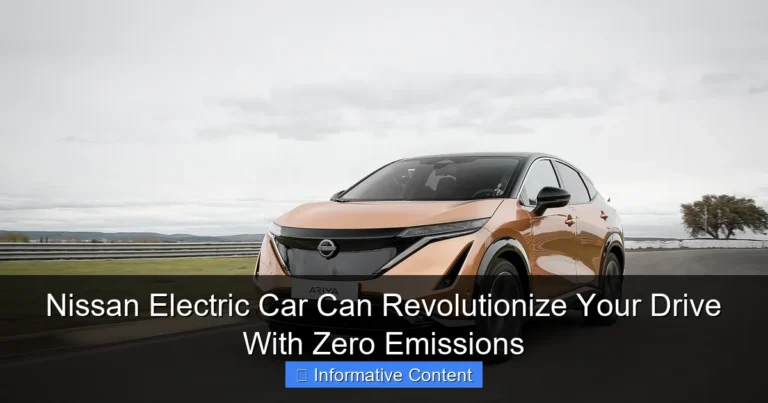
What Is the Range of a Nissan Leaf Electric Car Explained

Featured image for what is the range of a nissan leaf electric car
Image source: fulwoodfmc.net
The Nissan Leaf offers a practical electric driving range of 149 to 212 miles, depending on the model year and battery size. With its 40 kWh and 62 kWh battery options, the Leaf balances affordability and efficiency, making it a top choice for urban commuters and eco-conscious drivers seeking reliable daily range.
Key Takeaways
- Nissan Leaf range varies from 149 to 226 miles by model year and trim.
- Choose Leaf Plus models for maximum range and long-distance confidence.
- Real-world range drops in cold weather or hilly terrain—plan accordingly.
- Regenerative braking boosts efficiency and extends range in city driving.
- Use Eco mode and climate control wisely to preserve battery range daily.
- Charging speed depends on battery size and charger type—check specs.
📑 Table of Contents
Understanding the Nissan Leaf’s Range: An Overview
The Nissan Leaf has long been a pioneer in the electric vehicle (EV) market, offering an affordable, reliable, and practical solution for eco-conscious drivers. Since its debut in 2010, the Leaf has evolved significantly, with improvements in battery technology, efficiency, and, most importantly, driving range. But what exactly is the range of a Nissan Leaf electric car? This is a critical question for potential buyers, especially in a world where range anxiety remains a top concern for EV adoption. Whether you’re commuting daily, planning weekend road trips, or simply curious about EV capabilities, understanding the Nissan Leaf’s range is essential to making an informed decision.
Unlike traditional gasoline-powered vehicles, electric cars like the Leaf rely on battery capacity and energy efficiency to determine how far they can go on a single charge. The Leaf’s range varies depending on the model year, battery size, driving conditions, and even weather. Over the years, Nissan has released multiple versions of the Leaf, including the standard Leaf and the extended-range Leaf e+, each offering different capabilities. In this comprehensive guide, we’ll break down the real-world range of the Nissan Leaf, explore the factors that affect it, compare it with competitors, and provide practical tips to maximize your driving distance. By the end, you’ll have a clear picture of what to expect—and how to get the most out of your Nissan Leaf.
What Determines the Nissan Leaf’s Driving Range?
Battery Capacity and Model Variations
The most significant factor influencing the Nissan Leaf’s range is its battery capacity. Nissan has offered several battery options across different model years, which directly impacts how far the car can travel on a full charge. The original 2011–2017 Nissan Leaf came with a 24 kWh battery, offering an EPA-estimated range of around 84 miles. While this was groundbreaking at the time, it quickly became apparent that longer-range options were necessary to compete in the evolving EV market.

Visual guide about what is the range of a nissan leaf electric car
Image source: cristinacabal.com
In 2018, Nissan introduced the 40 kWh battery as the standard option, boosting the range to 150 miles (EPA estimate). This was a major leap, making the Leaf more suitable for suburban commuters and occasional highway trips. Then, in 2019, Nissan launched the Leaf e+ (also known as the Leaf Plus), equipped with a 62 kWh battery. This model delivers an EPA-rated range of up to 226 miles for the base SV Plus trim and 212 miles for the higher-end SL Plus trim—figures that put it on par with many mid-tier EVs.
It’s important to note that the 62 kWh battery is only available on the Leaf e+ models, which are priced slightly higher than the standard 40 kWh versions. However, for drivers who regularly travel over 150 miles or live in areas with limited fast-charging infrastructure, the e+ model is often worth the investment.
EPA vs. Real-World Range
While EPA (Environmental Protection Agency) ratings provide standardized estimates, real-world driving conditions often result in different range outcomes. The EPA tests are conducted under controlled conditions, including city, highway, and combined driving cycles. However, real-world factors like speed, terrain, climate, and driving style can significantly affect how far your Leaf will go.
For example, the EPA estimates the 40 kWh Leaf at 150 miles, but many owners report achieving 130–140 miles under mixed driving conditions. Similarly, the Leaf e+’s 226-mile EPA rating often translates to 190–210 miles in real-world use. These discrepancies are normal and expected. Highway driving at high speeds (65+ mph), for instance, consumes more energy than city driving due to increased aerodynamic drag. Conversely, stop-and-go city traffic allows for more regenerative braking, which can help recover some energy and improve efficiency.
Another factor is the use of climate control. Running the heater or air conditioning—especially in extreme temperatures—can reduce range by 10–30%. For instance, a Leaf e+ might only achieve 160 miles in sub-zero temperatures if the cabin heater is running continuously. Understanding these nuances helps set realistic expectations and allows drivers to plan accordingly.
Real-World Range by Model Year and Trim
2011–2017: The Early Years (24 kWh Battery)
The first-generation Nissan Leaf (2011–2017) featured a 24 kWh lithium-ion battery and an EPA-estimated range of 73–84 miles, depending on the model year and driving conditions. While this was sufficient for urban commuters, it limited the Leaf’s appeal for longer trips. Real-world range typically fell between 60–75 miles, especially in colder climates.
Despite its limited range, this version of the Leaf was instrumental in proving that EVs could be practical, reliable, and affordable. It also introduced key features like the NissanConnect EV app, which allowed owners to monitor battery status, schedule charging, and pre-heat or cool the cabin remotely—features that remain valuable today.
2018–2020: The 40 kWh Upgrade
The 2018 refresh brought a major upgrade: the 40 kWh battery pack. This increased the EPA-estimated range to 150 miles, a 75% improvement over the previous model. In real-world testing, drivers typically achieve 130–145 miles under normal conditions. This range makes the 40 kWh Leaf ideal for:
- Commuters traveling up to 50 miles round-trip
- Suburban families running errands and school drop-offs
- Weekend getaways within a 100-mile radius
For example, a driver in Austin, Texas, who commutes 30 miles daily (60 miles round-trip) could easily use a 40 kWh Leaf without needing to recharge during the workweek. With smart charging habits, this model is highly practical for many American households.
2019–Present: The Leaf e+ (62 kWh Battery)
The Leaf e+ (or Leaf Plus) represents Nissan’s response to the growing demand for longer-range EVs. With a 62 kWh battery, the e+ offers an EPA-estimated range of 212–226 miles, depending on the trim. In real-world conditions, most drivers report 190–210 miles of usable range.
This range opens up new possibilities. For instance:
- A driver in Denver could travel to Boulder (30 miles) and back without recharging, with plenty of range left for local driving.
- A road trip from San Diego to Los Angeles (120 miles) becomes feasible with just one charge, especially with access to fast chargers along the way.
- Commuters in cities like Seattle or Portland can easily cover their daily routes, even with occasional detours or weekend excursions.
The Leaf e+ also features improved fast-charging capability. Using a DC fast charger (100 kW), it can charge from 15% to 80% in about 45 minutes, making long-distance travel more practical. However, it’s worth noting that the e+ model is heavier due to the larger battery, which can slightly reduce efficiency compared to the lighter 40 kWh version.
Factors That Affect Nissan Leaf Range in Daily Driving
Weather and Temperature
Temperature is one of the most significant factors affecting EV range. Lithium-ion batteries perform best at around 70°F (21°C). In colder weather, battery chemistry slows down, reducing efficiency. In fact, studies show that EVs can lose 20–40% of their range in sub-freezing temperatures.
For example, a 40 kWh Leaf rated for 150 miles might only achieve 90–100 miles in winter if the heater is used frequently. To mitigate this, Nissan offers a heat pump option on newer models (available on the SL trim and standard on the e+). Heat pumps are more energy-efficient than resistive heaters, helping preserve battery life.
Conversely, extreme heat can also reduce range by increasing the load on the air conditioning system. However, the impact is generally less severe than in cold weather. Pre-cooling the cabin while plugged in (using the NissanConnect app) can help maintain efficiency on hot days.
Driving Style and Speed
How you drive has a major impact on range. Aggressive acceleration, rapid braking, and high-speed cruising all consume more energy. In contrast, smooth, steady driving with gentle acceleration and coasting can significantly extend range.
For example, driving at 70 mph on the highway can reduce range by up to 25% compared to 55 mph. This is due to increased aerodynamic drag at higher speeds. Using the Leaf’s Eco Mode and Brake Regeneration Mode (activated by the “B” gear setting) can help improve efficiency. Eco Mode reduces power output and softens acceleration, while the B mode increases regenerative braking, feeding energy back into the battery during deceleration.
Additionally, maintaining proper tire pressure is crucial. Under-inflated tires increase rolling resistance, which can reduce range by 3–5%. Nissan recommends checking tire pressure monthly and adjusting it according to the label on the driver’s side door jamb.
Terrain and Elevation Changes
Driving in hilly or mountainous areas can also affect range. Climbing steep grades requires more energy, while descending can recover some energy through regenerative braking. However, the net effect is often a reduction in overall range, especially if the route involves frequent elevation changes.
For instance, a trip through the Appalachian Mountains might reduce a Leaf e+’s range by 10–15% compared to flat terrain. Planning routes with elevation profiles in mind—and using regenerative braking effectively—can help minimize losses.
Comparing the Nissan Leaf Range to Competitors
Vs. Tesla Model 3 (Standard Range)
The Tesla Model 3 Standard Range (RWD) offers an EPA-estimated range of 272 miles, significantly more than the Leaf e+’s 226 miles. However, the Model 3 is also more expensive (starting around $40,000 vs. the Leaf e+’s $38,000 before incentives). While the Leaf lacks Tesla’s Supercharger network, it compensates with lower maintenance costs and a simpler, more user-friendly interface.
Vs. Chevrolet Bolt EV
The Chevrolet Bolt EV offers an EPA-rated range of 259 miles, making it a strong competitor to the Leaf e+. It also features a slightly more spacious interior and a lower starting price (around $27,000 after federal tax credit). However, the Bolt’s infotainment system has received mixed reviews, and its design is less modern than the Leaf’s.
Vs. Hyundai Kona Electric
The Hyundai Kona Electric provides 258 miles of range and a longer warranty (10 years/100,000 miles). It also has a more SUV-like design, appealing to drivers who want more cargo space. However, the Kona is slightly heavier, which can affect handling and efficiency in city driving.
Below is a comparison table of key range and pricing data:
| Model | Battery Size | EPA Range | Real-World Range (Est.) | Starting Price (Before Incentives) |
|---|---|---|---|---|
| Nissan Leaf (40 kWh) | 40 kWh | 150 miles | 130–145 miles | $28,040 |
| Nissan Leaf e+ (62 kWh) | 62 kWh | 226 miles (SV), 212 miles (SL) | 190–210 miles | $38,390 |
| Chevrolet Bolt EV | 65 kWh | 259 miles | 230–250 miles | $26,500 (after tax credit) |
| Hyundai Kona Electric | 64 kWh | 258 miles | 230–250 miles | $34,050 |
| Tesla Model 3 (RWD) | 60 kWh (est.) | 272 miles | 240–260 miles | $40,240 |
While the Leaf doesn’t top the charts in range, it remains a strong contender for buyers prioritizing value, reliability, and Nissan’s extensive service network.
Tips to Maximize Your Nissan Leaf’s Range
Optimize Charging Habits
To preserve battery health and maximize range, avoid charging the Leaf to 100% unless necessary for a long trip. Lithium-ion batteries degrade faster when kept at full charge for extended periods. Instead, aim to charge to 80% for daily use. Use the NissanConnect app to set a charging limit or schedule charging to finish just before you plan to drive.
Similarly, avoid letting the battery drop below 10–20% regularly. Deep discharges can stress the battery over time. Most drivers find that keeping the battery between 20% and 80% offers the best balance of range and longevity.
Use Regenerative Braking Effectively
The Leaf’s regenerative braking system is one of its standout features. By shifting to the “B” mode or using the e-Pedal (available on newer models), drivers can slow down and recharge the battery simultaneously. The e-Pedal allows for one-pedal driving—lifting off the accelerator brings the car to a complete stop, with energy recovered in the process.
This is especially useful in city driving, where frequent stops and starts occur. Over time, effective use of regenerative braking can add 5–10 miles of range per charge cycle.
Plan Routes with Charging in Mind
Use apps like PlugShare, A Better Routeplanner (ABRP), or Google Maps with EV mode to plan trips that include charging stops. These tools show nearby Level 2 and DC fast chargers, estimate charging time, and even predict battery levels at each destination.
For example, if you’re driving from Chicago to Indianapolis (180 miles), a 40 kWh Leaf might require a 20–30 minute fast charge en route. Planning this in advance ensures a stress-free journey.
Maintain the Vehicle
Regular maintenance helps maintain efficiency. This includes:
- Rotating tires every 7,500 miles
- Replacing cabin air filters annually
- Checking and cleaning charging ports
- Keeping the car clean (dirt and debris increase aerodynamic drag)
Additionally, software updates from Nissan can improve battery management and efficiency. Always ensure your Leaf is running the latest firmware.
Conclusion
The range of a Nissan Leaf electric car has evolved dramatically since its introduction, reflecting advancements in battery technology and growing consumer expectations. From the modest 84-mile range of the early models to the impressive 226-mile capability of the Leaf e+, Nissan has consistently improved its flagship EV to meet the needs of modern drivers. Whether you choose the affordable 40 kWh model for daily commuting or the longer-range e+ for greater flexibility, the Leaf offers a compelling mix of value, reliability, and eco-friendliness.
Understanding what affects range—such as temperature, driving style, terrain, and charging habits—empowers you to get the most out of your Leaf. By leveraging regenerative braking, optimizing charging, and planning trips wisely, you can confidently tackle both short errands and longer journeys. While competitors may offer slightly more range or faster charging, the Leaf stands out for its low total cost of ownership, user-friendly technology, and Nissan’s proven track record in the EV space.
Ultimately, the Nissan Leaf’s range is more than just a number—it’s a gateway to a cleaner, quieter, and more sustainable way of driving. As charging infrastructure continues to expand and battery technology improves, the Leaf’s relevance and appeal will only grow. For anyone considering an electric car, the Nissan Leaf remains a smart, practical, and forward-thinking choice.
Frequently Asked Questions
What is the range of a Nissan Leaf electric car on a full charge?
The Nissan Leaf offers a range of **149 miles** (30 kWh battery) to **212 miles** (62 kWh battery) per full charge, depending on the model year and battery size. Real-world range may vary based on driving habits, terrain, and climate conditions.
How does weather affect the Nissan Leaf’s range?
Cold or hot weather can reduce the Nissan Leaf’s range by 20-30% due to increased energy use for heating or cooling the cabin. Pre-conditioning the car while charging helps mitigate this impact.
Does the Nissan Leaf range decrease over time?
Yes, like all EVs, the Nissan Leaf’s range gradually diminishes as the battery ages—typically losing **5-10% capacity after 5 years**. Proper charging habits (avoiding 100% daily) can slow degradation.
Can I extend the Nissan Leaf’s range while driving?
Using regenerative braking (via the “B” mode or e-Pedal) and driving at steady speeds can help maximize the Nissan Leaf’s electric car range. Reducing HVAC usage and avoiding rapid acceleration also conserves battery.
What is the range difference between Nissan Leaf trim levels?
The base Nissan Leaf S (30 kWh) offers 149 miles, while higher trims like the Leaf SV/SL (62 kWh) provide up to 212 miles. Older models (pre-2018) have lower ranges (84-150 miles).
How does charging speed impact the Nissan Leaf’s usable range?
Level 1 (120V) charging adds ~4-5 miles per hour, while Level 2 (240V) adds 20-30 miles/hour—ideal for daily use. DC fast charging (available on 62 kWh models) restores 80% range in ~40 minutes.