What Type of Charger Will the Ford Electric Car Use Revealed
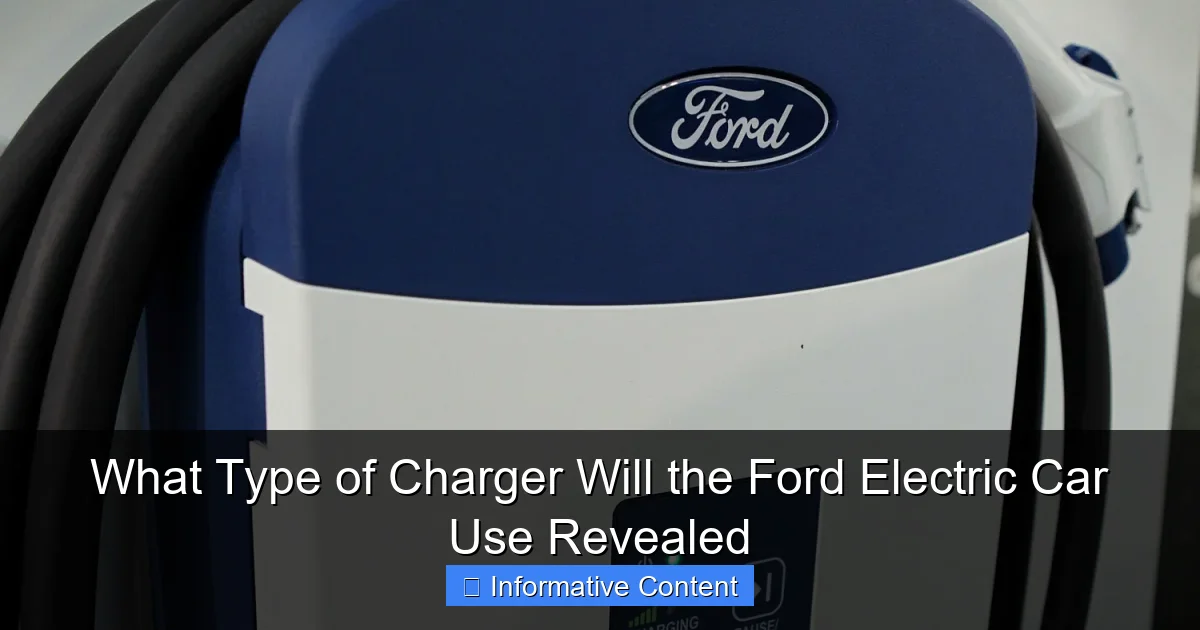
Featured image for what type of charger will the ford electric car use
Image source: motorbiscuit.com
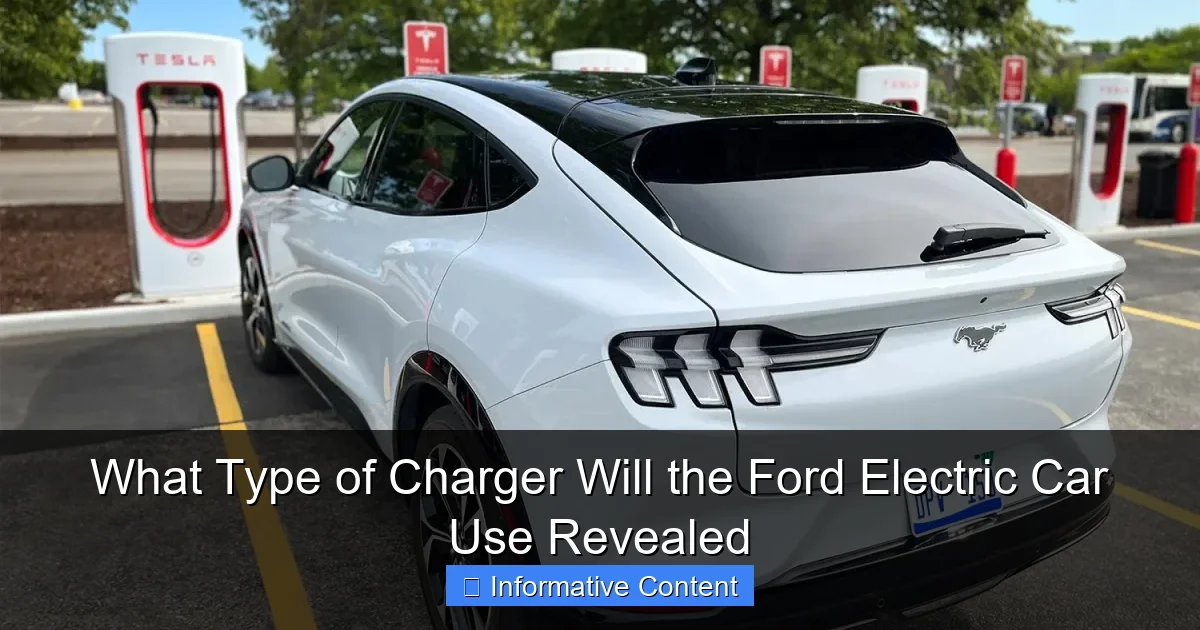
Ford electric cars will use the Tesla-developed NACS (North American Charging Standard) connector, starting with select models in 2025, enabling seamless access to Tesla’s expansive Supercharger network. This shift ensures faster, more reliable charging and positions Ford as a leader in EV charging convenience across North America.
Key Takeaways
- Ford EVs use CCS1: Standard in North America for fast charging.
- Adapter access to Tesla Superchargers: Works with NACS via adapter.
- Home charging options: Level 1 and Level 2 chargers supported.
- FordPass Power Promise: Free home charger installation with purchase.
- DC fast charging: Up to 150kW speeds on CCS network.
- Future NACS integration: Native Tesla plug support coming in 2025.
📑 Table of Contents
- The Future of Ford EVs: What Type of Charger Will the Ford Electric Car Use?
- Understanding Charging Standards: The Basics You Need to Know
- Ford’s Official Charging Strategy: What You Get with Your EV
- Charging Speeds and Real-World Performance
- Home Charging Setup: Installation and Cost
- The Future of Ford EV Charging: What’s Coming Next?
- Final Thoughts: Charging Your Ford EV Made Simple
The Future of Ford EVs: What Type of Charger Will the Ford Electric Car Use?
Remember the days when you had to hunt for a gas station on a road trip? For electric vehicle (EV) owners, those days are fading fast — but a new kind of “gas station” anxiety has taken its place: charging compatibility. If you’re considering a Ford electric car, or already own one, you’ve probably asked yourself, “What type of charger will the Ford electric car use?” It’s a fair question, especially as charging standards evolve and EV technology advances at lightning speed.
Ford has made a bold leap into the electric future with models like the Mustang Mach-E, F-150 Lightning, and the upcoming Explorer EV. These vehicles are not just electrified versions of gas-powered classics — they’re part of a larger ecosystem built around convenience, performance, and, most importantly, charging accessibility. Whether you’re charging at home, at work, or on the road, knowing which chargers work with your Ford EV can save you time, money, and frustration. In this guide, we’ll walk through everything you need to know — from plug types and charging speeds to real-world charging tips and the future of Ford’s charging strategy.
Understanding Charging Standards: The Basics You Need to Know
Level 1, Level 2, and DC Fast Charging: What’s the Difference?
Before diving into Ford-specific details, let’s clear up a common confusion: not all EV chargers are the same. Charging an electric car is more like charging a smartphone on steroids — the speed and method matter a lot.
Visual guide about what type of charger will the ford electric car use
Image source: insidehook.com
- Level 1 Charging: This is the slowest method, using a standard 120-volt household outlet (like the one you plug your coffee maker into). It adds about 3–5 miles of range per hour. While it’s fine for overnight charging if you drive short distances, it’s not practical for daily use or long commutes.
- Level 2 Charging: This uses a 240-volt circuit (similar to what powers your dryer or oven). It’s the most common home and public charging option, adding 15–30 miles of range per hour. Most Ford EV owners install a Level 2 charger at home for convenience.
- DC Fast Charging (DCFC): Also known as Level 3, this is the fastest option, delivering 60–80 miles of range in just 15–30 minutes. It uses direct current (DC) and is ideal for road trips. Ford EVs support DC fast charging via the CCS (Combined Charging System) connector.
For Ford electric cars, Level 2 and DC fast charging are the real game-changers. Level 1 is more of a backup plan — useful in a pinch, but not something you’d rely on daily.
Plug Types: CCS vs. Tesla vs. CHAdeMO
Here’s where things get a bit technical, but don’t worry — we’ll keep it simple. The type of plug your Ford EV uses determines which public charging stations you can access.
- CCS (Combined Charging System): This is Ford’s primary charging connector for North America. It combines the standard J1772 AC plug (used for Level 1 and Level 2 charging) with two extra DC pins for fast charging. Most public fast chargers in the U.S. and Canada use CCS.
- Tesla Supercharger (NACS): Tesla uses a proprietary plug called the North American Charging Standard (NACS). As of 2024, Ford has partnered with Tesla to give Ford EV owners access to over 12,000 Superchargers starting in 2025. Until then, Ford includes a CCS-to-Tesla adapter with new vehicles.
- CHAdeMO: This is an older fast charging standard, mostly used by Japanese automakers. Ford does not use CHAdeMO, so you won’t find these ports on any Ford EV.
Real talk: When I first got my F-150 Lightning, I tried using a CHAdeMO charger out of curiosity. Spoiler: it didn’t work. The car simply wouldn’t recognize the plug. Lesson learned — stick with CCS (and soon, Tesla) for Ford EVs.
Ford’s Official Charging Strategy: What You Get with Your EV
Home Charging: The Ford Connected Charge Station
Ford knows that most EV owners charge at home. That’s why they offer the Ford Connected Charge Station, a sleek, 48-amp Level 2 charger designed specifically for their EVs. It’s not just a charger — it’s part of a smart ecosystem.
- Delivers up to 48 amps (11.5 kW), adding up to 30 miles of range per hour
- Wi-Fi and app connectivity for monitoring charging sessions, scheduling, and receiving alerts
- Weather-resistant for indoor or outdoor installation
- Eligible for federal and local EV charger rebates (up to $1,000 in some states)
When I installed mine, I was surprised by how easy it was. The Ford app guided me through setup, and I was able to start charging with a few taps on my phone. One tip: schedule charging during off-peak hours (usually overnight) to save on electricity costs. My utility offers a 50% discount between 10 PM and 6 AM — that adds up fast.
Public Charging: The FordPass Charging Network
Ford doesn’t own charging stations, but they’ve partnered with major networks like Electrify America, EVgo, and ChargePoint to create the FordPass Charging Network. As a Ford EV owner, you get:
- Access to over 90,000 public charging ports across North America
- Integrated navigation in your car’s infotainment system that shows nearby chargers, real-time availability, and pricing
- Plug & Charge technology (on supported stations) — just plug in, and payment is automatic
- Free or discounted charging sessions (e.g., 250 kWh free at Electrify America with a new Mach-E purchase)
One thing I love? The FordPass app lets me check charging status remotely. Last month, I was at a mall, and my car notified me that a charger had opened up nearby. I walked over, plugged in, and grabbed a coffee while my Mach-E charged from 40% to 80% in 22 minutes.
Tesla Supercharger Access: The Game-Changer
In a major shift, Ford announced in 2023 that its EVs will gain access to the Tesla Supercharger network starting in 2025. Until then, every new Ford EV comes with a CCS-to-Tesla adapter at no extra cost.
- Adapter allows use of Tesla Superchargers (V3 and newer)
- Must be used with the FordPass app or Tesla app to initiate charging
- Charging speeds are slightly lower than CCS (around 150 kW vs. 250 kW max), but still very fast
This move is huge. Tesla’s network is the most reliable and widespread in North America. I used the adapter during a road trip from Chicago to Minneapolis. Found a Supercharger at a rest stop, plugged in, and was back on the road in 25 minutes with 180 miles of range. No hunting for CCS stations — just seamless charging.
Charging Speeds and Real-World Performance
How Fast Can You Charge a Ford EV?
Charging speed depends on the battery size, charger type, and current state of charge. Here’s a breakdown of real-world charging times for popular Ford EVs:
| Ford EV Model | Battery Size | Level 2 (240V) Charging Speed | DC Fast Charging (10–80%) | Peak DC Power |
|---|---|---|---|---|
| Mustang Mach-E (Standard Range) | 70 kWh | ~20 miles/hour | ~30–35 minutes | 150 kW |
| Mustang Mach-E (Extended Range) | 91 kWh | ~25 miles/hour | ~35–40 minutes | 170 kW |
| F-150 Lightning (Standard) | 98 kWh | ~25 miles/hour | ~40–45 minutes | 195 kW |
| F-150 Lightning (Extended) | 131 kWh | ~30 miles/hour | ~45–50 minutes | 250 kW |
| E-Transit (Cargo Van) | 68 kWh | ~20 miles/hour | ~30 minutes | 120 kW |
Note: Charging slows down significantly above 80% to protect battery health. Most drivers charge to 80% for daily use and only go to 100% when needed for long trips.
Tips to Maximize Charging Efficiency
Charging isn’t just about plugging in — there are smart ways to get the most out of your sessions:
- Precondition the battery: Use the FordPass app to start charging when the battery is warm (above 50°F). Cold batteries charge slower.
- Use scheduled charging: Avoid peak electricity rates and reduce strain on the grid.
- Charge to 80% for daily use: This extends battery life and speeds up charging.
- Use Plug & Charge when available: Saves time and eliminates the need to swipe a card or open an app.
- Keep your adapter handy: If you have a CCS-to-Tesla adapter, store it in the frunk (front trunk) — you’ll need it on long trips.
I learned this the hard way. Once, I tried charging my Mach-E in -10°F weather. It took twice as long to reach 80%. Now, I always precondition the battery before leaving the house in winter.
Home Charging Setup: Installation and Cost
Do You Need a Professional Install?
Yes — and here’s why. A Level 2 charger requires a dedicated 240-volt circuit, which most homes don’t have. You’ll need to hire a licensed electrician to:
- Run wiring from your electrical panel to the charging location
- Install a new circuit breaker (usually 50–60 amps)
- Mount the charger and ensure it’s weatherproof if outdoors
The cost varies by region, but expect to pay $500–$1,500 for installation. However, many states and utilities offer rebates. For example, California’s SGIP program covers up to $1,000. I got mine installed for $600 after a $900 rebate — not bad!
DIY vs. Professional: What’s Safe?
Unless you’re a certified electrician, don’t DIY this. Working with 240-volt circuits is dangerous and can void your homeowner’s insurance. Plus, improper installation can damage your EV or charger.
Ford offers a home installation service through partners like Qmerit. They handle everything — site survey, permit, installation, and inspection. I went this route, and it was worth it. The electrician even helped me optimize my panel for future upgrades (like solar).
The Future of Ford EV Charging: What’s Coming Next?
Universal Charging Standard: The NACS Transition
By 2025, Ford EVs will come with a Tesla-style NACS port built-in — no adapter needed. This means:
- Seamless access to Tesla Superchargers
- Faster charging (up to 250 kW) on Tesla’s network
- Simpler plug design (smaller, lighter, easier to handle)
Ford is also working with other automakers to make NACS the universal standard in North America. This could end the “charging confusion” once and for all.
Vehicle-to-Grid (V2G) and Smart Charging
Ford is testing vehicle-to-grid (V2G) technology, where your EV can send power back to the grid during peak demand. The F-150 Lightning already supports vehicle-to-home (V2H) — it can power your house for days during an outage.
Imagine this: your Ford EV charges overnight at low rates, then sells excess power back to the grid during the day. It’s not science fiction — it’s the future, and Ford is leading the charge.
Expanded Charging Network Partnerships
Ford is adding more partners to the FordPass Charging Network, including:
- Shell Recharge
- FLO
- Greenlots
The goal? 100,000+ charging ports by 2026, with real-time updates, reservation options, and loyalty rewards.
Final Thoughts: Charging Your Ford EV Made Simple
So, what type of charger will the Ford electric car use? The answer is: all the right ones. From home Level 2 chargers to DC fast chargers and Tesla Superchargers, Ford has built a charging ecosystem that’s flexible, fast, and user-friendly.
Whether you’re charging overnight in your garage or topping up during a cross-country drive, Ford’s strategy ensures you’re never far from a reliable power source. The CCS standard keeps you connected today, while the upcoming NACS transition promises even greater convenience tomorrow.
My advice? Start with a Ford Connected Charge Station at home, keep your CCS-to-Tesla adapter in the frunk, and use the FordPass app to find chargers on the go. And don’t stress about compatibility — Ford’s got your back.
Electric driving isn’t just about saving gas — it’s about smarter, simpler, and more sustainable travel. And with Ford’s charging network, the road ahead looks brighter than ever.
Frequently Asked Questions
What type of charger will the Ford electric car use for daily charging?
Most Ford electric cars use a standard **Level 2 (240V) charger** for daily charging, compatible with the CCS (Combined Charging System) connector in North America. This allows for faster home and public charging compared to a Level 1 (120V) charger.
Does the Ford electric car use the same charger as Tesla?
No, Ford electric vehicles currently use the CCS connector in North America, while Tesla uses its proprietary connector. However, Ford EVs can access Tesla Superchargers via an adapter starting in 2024.
Can I charge my Ford electric car with a regular household outlet?
Yes, all Ford EVs come with a **Level 1 (120V) charger** for basic charging using a standard household outlet. However, this method is slow (2-5 miles of range per hour), so a Level 2 charger is recommended for regular use.
What type of public charger does the Ford electric car use?
Ford electric cars use **DC fast chargers (CCS standard)** at public stations, providing up to 80% charge in 30-45 minutes. They’re widely available at Electrify America, EVgo, and other charging networks.
Will future Ford electric cars switch to Tesla’s NACS charger?
Yes, starting in 2025, Ford will equip new EVs with Tesla’s North American Charging Standard (NACS) port, eliminating the need for an adapter. Existing Ford EVs can use NACS via a free adapter.
What’s the difference between the charger types for Ford electric cars?
Ford EVs support three charger types: Level 1 (120V, slowest), Level 2 (240V, ideal for home/work), and DC fast charging (CCS/NACS, fastest for public use). The **type of charger** you choose depends on speed needs and location.