When Did Chevy Release Their First Electric Car A Look Back
Chevy released its first electric car, the EV1, in 1996, marking a bold entry into the EV market decades before mainstream adoption. This short-lived but groundbreaking model paved the way for modern Chevrolet EVs like the Bolt and Silverado EV.
Key Takeaways
- 1996 marked Chevy’s first EV: The EV1 debuted as their pioneering electric vehicle.
- EV1 was ahead of its time: Limited range and infrastructure led to its discontinuation.
- Chevy re-entered EVs in 2010: The Volt plug-in hybrid reignited their electric ambitions.
- Bolt EV launched in 2016: First affordable, long-range electric car from Chevy.
- 2020s bring full electrification: Chevy commits to an all-electric future with new models.
- Lessons from EV1 shaped strategy: Past failures informed current EV development and marketing.
📑 Table of Contents
- When Did Chevy Release Their First Electric Car? A Look Back
- The Birth of the EV1: Chevy’s First Electric Car (1996)
- The Rise and Fall of the EV1 Program (1996–2003)
- The Long Silence: Chevy’s EV Hiatus (2003–2010)
- The Bolt EV: Chevy’s Modern Electric Era (2017–Present)
- Chevy’s EV Legacy: Lessons Learned and the Road Ahead
When Did Chevy Release Their First Electric Car? A Look Back
Imagine it’s 1996. You’re driving down the highway, the radio playing a grunge hit, and suddenly a sleek, silent car glides past you. No engine roar, no exhaust fumes—just a futuristic hum. That was the Chevrolet EV1, the first modern electric car from a major automaker. It wasn’t just a prototype; it was a bold leap into the future of transportation. For many, it felt like the start of an electric revolution. Yet, despite its innovation, the EV1’s story is also one of unfulfilled potential. This car didn’t just spark conversations about electric mobility—it set the stage for the debates we still have today.
Chevrolet’s journey into electric vehicles (EVs) is a tale of early ambition, technological hurdles, shifting market forces, and a comeback decades later. If you’ve ever wondered, “When did Chevy release their first electric car?”, the answer isn’t as simple as a single date. It’s a story that spans over two decades, with twists, turns, and a surprising resurgence. Whether you’re a car enthusiast, an EV newbie, or just curious about how far we’ve come, this deep dive will take you through the milestones, the challenges, and the legacy of Chevy’s electric beginnings. So buckle up—we’re going on a nostalgic, informative ride through history.
The Birth of the EV1: Chevy’s First Electric Car (1996)
The Spark That Started It All
The Chevrolet EV1 didn’t just appear out of nowhere. It was born from a mix of environmental pressure and forward-thinking engineering. In the early 1990s, California passed the Zero Emission Vehicle (ZEV) Mandate, requiring automakers to produce a certain percentage of vehicles with no tailpipe emissions. GM, Chevy’s parent company, took this challenge seriously—and saw an opportunity.

Visual guide about when did chevy release their first electric car
Image source: autocar.co.uk
The result? The EV1, unveiled in 1996 at the Los Angeles Auto Show. It was the first mass-produced electric car from a major U.S. automaker. No internal combustion engine, no gas tank—just a battery pack and electric motor. It was a radical departure from the norm, and it turned heads instantly. The EV1 was a two-seater, built on a custom platform, with a futuristic design that looked like it belonged in a sci-fi movie.
How It Worked (And Why It Was Revolutionary)
The EV1 came in two generations. The first (1996–1999) used lead-acid batteries and had a range of about 70–90 miles on a full charge. That might sound low today, but at the time, it was impressive. Charging took 12–15 hours using a 220-volt Level 2 charger—slow by today’s standards, but groundbreaking back then.
The second generation (1999–2003) upgraded to nickel-metal hydride (NiMH) batteries, boosting the range to 100–140 miles. That was enough for most daily commutes. The car could go from 0 to 60 mph in under 9 seconds, which was quick for an EV at the time. It also had regenerative braking—technology that’s now standard in most EVs—helping recapture energy during braking.
Fun fact: The EV1 had no traditional dashboard. Instead, it used a digital screen that displayed speed, battery level, and energy use. Drivers even had a “power mode” and “economy mode” to adjust performance based on their needs.
Who Could Get One? (And Why It Wasn’t Sold)
Here’s where things get tricky. The EV1 wasn’t sold to the public. Instead, it was leased only to customers in select U.S. cities—mainly California and Arizona. Why? GM wanted to control the fleet, monitor real-world performance, and avoid the risks of selling a new technology. Leasing also allowed them to reclaim the cars when the program ended.
Leasing terms were $399–$549 per month, which included insurance, maintenance, and charging equipment. That was steep for the time, but it covered everything—a precursor to today’s “EV-as-a-service” models.
Tip: If you ever get the chance, visit the Petersen Automotive Museum in Los Angeles. They have a preserved EV1 on display, and it’s a must-see for any EV fan.
The Rise and Fall of the EV1 Program (1996–2003)
The Hype: Early Adopters and Enthusiasts
The EV1 quickly gained a cult following. Drivers loved the quiet ride, smooth acceleration, and low maintenance. No oil changes, no spark plugs—just plug in and go. Many lessees formed tight-knit communities, sharing tips, organizing meetups, and even creating fan clubs.
Visual guide about when did chevy release their first electric car
Image source: electrek.co
One notable example was “EV1 Drivers Anonymous,” a group that met to discuss battery life, charging hacks, and road trips. They proved that EVs could be fun, practical, and community-driven—long before Tesla’s Supercharger network or modern EV forums.
But the hype wasn’t just grassroots. Celebrities like Tom Hanks and Ed Begley Jr. drove EV1s, bringing media attention. The car even appeared in movies and TV shows, cementing its image as the car of the future.
The Challenges: Range, Cost, and Infrastructure
Despite the excitement, the EV1 faced serious hurdles. The biggest? Range anxiety. Even with the upgraded batteries, 140 miles wasn’t enough for long road trips. Charging stations were rare, and public infrastructure was almost nonexistent.
Then there was the cost. The EV1 was expensive to build—each one reportedly cost GM over $80,000, while lease payments covered only a fraction. The batteries degraded over time, and replacements were costly. GM also faced pressure from oil companies and dealerships, who worried EVs would disrupt their business models.
Tip: If you’re considering an older EV today, always check the battery health. Degradation is inevitable, but proper care (like avoiding full charges and extreme temperatures) can extend its life.
The Shutdown: Why GM Pulled the Plug
In 2003, GM shocked the EV world by discontinuing the EV1 and recalling all leased vehicles. Most were crushed, sparking outrage among drivers and environmentalists. The decision was controversial, with conspiracy theories ranging from oil industry pressure to GM’s lack of faith in EVs.
The truth? GM cited high production costs, limited demand, and the ZEV mandate being relaxed. But the backlash was massive. The documentary “Who Killed the Electric Car?” (2006) explored the EV1’s demise, turning it into a symbol of corporate short-sightedness.
Fun fact: A few EV1s survived. Some were donated to museums, while others were saved by enthusiasts who bought them before the recall. One even ended up in a private collection in Europe.
The Long Silence: Chevy’s EV Hiatus (2003–2010)
Why Chevy Stepped Back
After the EV1, Chevy stayed out of the EV game for nearly a decade. Why? The company focused on hybrids and fuel-efficient gas cars instead. The Toyota Prius (2000) proved hybrids could work, and GM didn’t want to repeat the EV1’s financial risks.
Meanwhile, Tesla Motors (founded in 2003) began developing its Roadster, a high-performance EV based on the Lotus Elise. Tesla’s success—and the growing demand for EVs—forced GM to rethink its strategy.
The Volt: Chevy’s Comeback (2010)
In 2010, Chevy launched the Chevrolet Volt, a plug-in hybrid electric vehicle (PHEV). Unlike the EV1, the Volt had a gas-powered generator to extend its range. It could drive 25–40 miles on electricity alone, then switch to gas for longer trips.
The Volt was a compromise—part EV, part hybrid. It addressed range anxiety while keeping the benefits of electric driving. It won Motor Trend’s Car of the Year in 2011 and sold over 150,000 units in the U.S. alone.
Tip: If you’re new to EVs, a PHEV like the Volt can be a great bridge. You get electric driving for short trips, with the flexibility of gas for longer ones.
The Bolt EV: Chevy’s Modern Electric Era (2017–Present)
From Volt to Bolt: A Full EV Returns
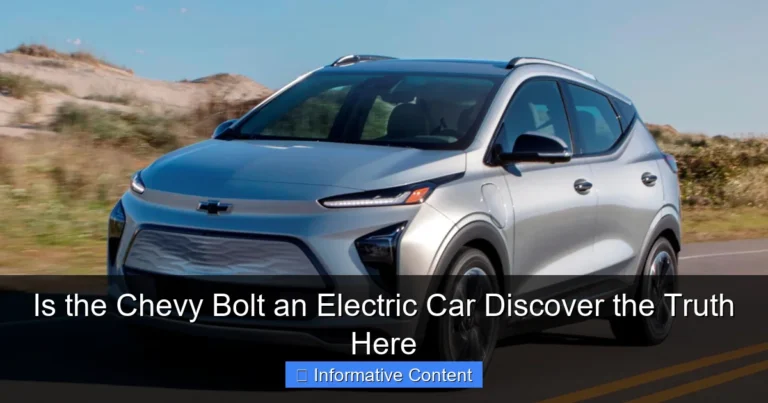
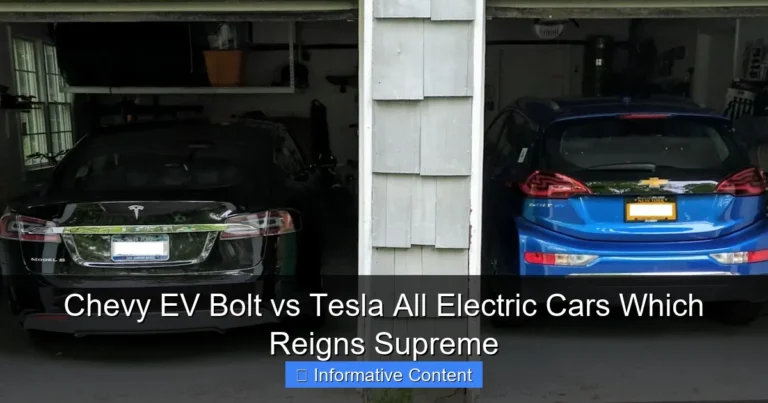
In 2017, Chevy launched the Bolt EV, its first all-electric car since the EV1. The Bolt was a game-changer: it had a 238-mile range (later upgraded to 259 miles), a $37,500 starting price, and no gas engine.
The Bolt proved that EVs could be affordable, practical, and fun. It won North American Car of the Year in 2017 and became a top seller in the U.S. EV market. Unlike the EV1, it was sold nationwide—not just leased—and came with a network of fast chargers.
Key Features and Improvements
- Range: 259 miles (EPA-estimated)—enough for most drivers.
- Charging: 100 miles in 30 minutes with DC fast charging.
- Tech: Regenerative braking, one-pedal driving, and a 10.2-inch touchscreen.
- Price: Competitive with gas cars, especially with tax incentives.
The Bolt also introduced Chevy to the world of over-the-air software updates—something Tesla had pioneered. Drivers could now get new features, performance tweaks, and bug fixes without visiting a dealer.
Bolt EUV and Beyond: Expanding the Lineup
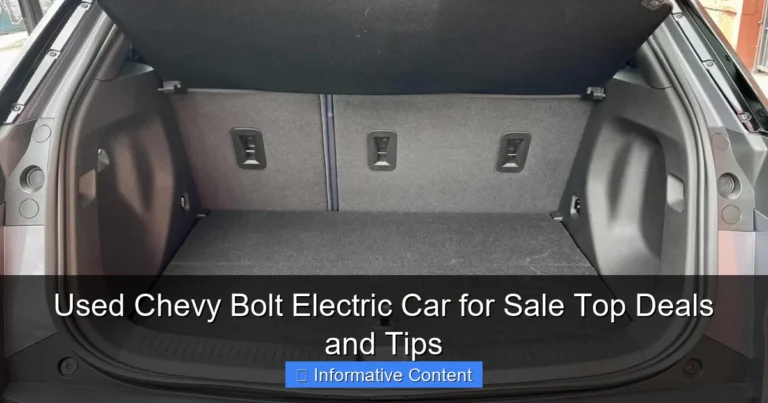
In 2022, Chevy added the Bolt EUV, a slightly larger, SUV-like version of the Bolt. It has more cargo space, available Super Cruise (GM’s hands-free driving system), and a sunroof option. Together, the Bolt EV and EUV have sold over 100,000 units in North America.
Chevy’s next big move? The Equinox EV (2024) and Blazer EV (2024), affordable electric SUVs with 300+ mile ranges. These mark Chevy’s shift from niche EVs to mainstream electric vehicles.
Chevy’s EV Legacy: Lessons Learned and the Road Ahead
What the EV1 Taught Chevy
The EV1 was ahead of its time, but it taught GM valuable lessons:
- Build for the market, not just the tech: The EV1 was innovative, but it didn’t solve real-world problems like range and charging.
- Listen to customers: The EV1’s lessees were passionate advocates. Chevy learned that community and feedback are crucial.
- Don’t give up: The Bolt and newer EVs show that persistence pays off.
Comparing Then and Now: A Data Snapshot
| Feature | Chevrolet EV1 (1996) | Chevrolet Bolt EV (2017) | Chevrolet Equinox EV (2024) |
|---|---|---|---|
| Range | 70–140 miles | 259 miles | 319 miles |
| Charging Time (0–100%) | 12–15 hours (Level 2) | 7 hours (Level 2), 30 min (DC Fast) | 7.5 hours (Level 2), 30 min (DC Fast) |
| Price (Starting) | Lease only ($399–$549/month) | $37,500 (before incentives) | $30,000 (after incentives) |
| Sales Model | Leased only | Available for purchase | Available for purchase |
| Top Speed | 80 mph | 90 mph | 110 mph |
The Future of Chevy EVs
Chevy isn’t stopping here. The company plans to launch 30 new EVs by 2025, including electric versions of the Silverado, Tahoe, and even the Corvette. The goal? To make EVs accessible to everyone—not just early adopters.
And with advancements in battery tech, charging infrastructure, and autonomous driving, the future looks bright. The EV1 may have been a short-lived experiment, but its spirit lives on in every Chevy EV today.
So, to answer the question: When did Chevy release their first electric car? The official date is 1996, with the EV1. But the real answer is more nuanced. It’s a story of innovation, setbacks, and resilience. Chevy’s first EV wasn’t just a car—it was a promise. A promise that one day, electric vehicles would be the norm. And today, that promise is finally coming true.
Frequently Asked Questions
When did Chevy release their first electric car?
Chevrolet released its first electric car, the EV1, in 1996 as a limited-production model. It was introduced in California and select markets to meet zero-emission vehicle mandates.
What was the name of Chevy’s first electric vehicle?
The first electric car from Chevrolet was the EV1, a groundbreaking two-seater designed specifically for electric propulsion. It debuted in 1996 and was only available through lease programs.
Why did Chevy stop producing the EV1 after launching it in 1996?
Despite its innovation, the EV1 was discontinued in 1999 due to low demand, high production costs, and regulatory changes. GM reclaimed and recycled most leased units, sparking controversy among early EV adopters.
How does the 1996 Chevy EV1 compare to modern electric cars?
The 1996 EV1 had a range of 70–140 miles, far below today’s models, but it pioneered regenerative braking and lightweight design. Modern Chevy EVs like the Bolt and Silverado EV build on its legacy with advanced tech and longer ranges.
Did the Chevy EV1 use a battery or gasoline engine?
The EV1 was purely battery-electric, with no gasoline engine. Early models used lead-acid batteries, while later versions featured more efficient nickel-metal hydride (NiMH) systems.
When did Chevy re-enter the electric car market after the EV1?
After the EV1’s discontinuation, Chevy returned to the EV market in 2010 with the Volt plug-in hybrid and later the all-electric Bolt EV in 2016. These models marked GM’s renewed commitment to electrification.