When Did Ford Start to Create Electric Cars A Look Back
Featured image for when did ford start to create electric cars
Image source: cdn05.zipify.com
Ford began its electric car journey in the early 2000s with the Ranger EV, marking its first serious step into electrification. Though the program was short-lived, it laid the groundwork for Ford’s renewed EV focus with models like the Mustang Mach-E and F-150 Lightning. This pivot reflects Ford’s long-term commitment to an all-electric future.
Key Takeaways
- Ford began electric car research in the early 2000s with hybrid prototypes.
- The 2011 Focus Electric marked Ford’s first modern all-electric production car.
- Ford invested $11B by 2022 to expand its EV lineup and infrastructure.
- Mustang Mach-E (2020) signaled Ford’s bold push into performance EVs.
- F-150 Lightning (2022) demonstrated Ford’s commitment to electrifying iconic models.
- Legacy automakers like Ford are now prioritizing EVs over traditional engines.
📑 Table of Contents
- When Did Ford Start to Create Electric Cars? A Look Back
- The Early Days: Ford’s First Flirtation with Electric Vehicles (1900s–1920s)
- The Long Hiatus: Ford’s Silence on EVs (1930s–1990s)
- The Turning Point: Ford’s Re-Entry into the EV Market (2000s–2010s)
- The Big Bet: Ford’s $50 Billion EV Revolution (2020s)
- Lessons from Ford’s EV Journey: What We Can Learn
- Data Table: Ford’s Major Electric Vehicles (1990s–2020s)
- Conclusion: From Niche to Necessity
When Did Ford Start to Create Electric Cars? A Look Back
Imagine this: It’s 1914, and you’re sipping coffee in a bustling Detroit diner, watching a brand-new Ford Model T roll past the window. At the same time, another car glides silently by—no engine roar, no exhaust fumes—just a smooth, electric hum. That wasn’t science fiction. Electric cars were once the darlings of early 20th-century motoring, and Ford was right in the middle of the action. Fast forward over a century, and we’re now living in the era of the electric vehicle (EV) revolution, with Ford once again at the forefront. But when did Ford truly start creating electric cars? And why did it take over 100 years for them to fully commit to electrification?
This isn’t just a story about batteries and motors. It’s about vision, timing, and the twists of history. From forgotten prototypes to billion-dollar investments, Ford’s journey with electric cars is a fascinating blend of innovation, hesitation, and a powerful comeback. Whether you’re a Ford fan, an EV enthusiast, or just curious about how one of America’s biggest automakers is reinventing itself, this deep dive will walk you through the key moments that shaped Ford’s electric evolution. And don’t worry—we’ll keep it real, with no hype, just honest insights and a few fun facts along the way.
The Early Days: Ford’s First Flirtation with Electric Vehicles (1900s–1920s)
The Electric Car Craze of the Early 1900s
Believe it or not, electric cars weren’t a 21st-century invention. In fact, in the early 1900s, they were more popular than gasoline-powered vehicles in some cities. Why? They were quiet, easy to operate (no hand-cranking!), and didn’t require messy gear shifting. In 1900, nearly one-third of all vehicles on U.S. roads were electric. Even Henry Ford’s wife, Clara Ford, drove a Detroit Electric car—a fact that always makes me smile. It’s like the Fords were living in an EV household while Henry built gas-powered machines for the masses.

Visual guide about when did ford start to create electric cars
Image source: i.pinimg.com
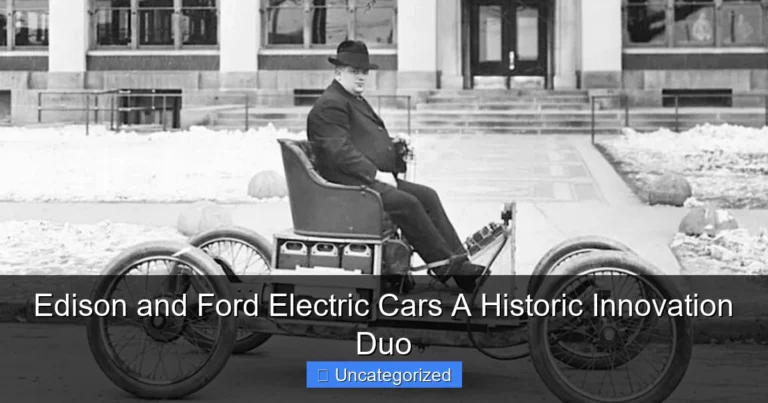
Back then, Ford wasn’t building electric cars directly, but the company was deeply connected to the electric vehicle ecosystem. In 1914, Ford partnered with Edison Electric (yes, that Edison) to develop a low-cost electric car. The idea was simple: Edison would supply the batteries, and Ford would build the vehicle. They even created a prototype—a modified Model T with an electric motor. But the project never went beyond the testing phase. Why? The batteries were heavy, expensive, and couldn’t match the range of gasoline cars. Plus, the Model T was already a runaway success. Why fix what wasn’t broken?
The Rise of Gasoline and the Electric Car’s Decline
Here’s a fun fact: The electric car’s fall wasn’t due to poor technology—it was due to better gasoline engines. Charles Kettering invented the electric starter in 1912, which eliminated the need to hand-crank gasoline cars. Suddenly, gas vehicles became easier and safer to operate. Combine that with the discovery of cheap oil and the expansion of road networks, and gasoline cars became the obvious choice for most Americans.
Ford capitalized on this shift with the Model T, which rolled off the assembly line in 1908. The Model T was affordable, reliable, and built for the growing road system. Electric cars, by contrast, were limited by battery range and charging infrastructure. By the 1920s, the electric car market had all but disappeared. Ford, focused on mass production and affordability, didn’t look back. For decades, electric vehicles became a niche curiosity—something you’d see in museums, not on the highway.
The Long Hiatus: Ford’s Silence on EVs (1930s–1990s)
Why Ford (and Most Automakers) Ignored Electric Cars
Between the 1930s and 1990s, Ford—like most major automakers—focused almost entirely on internal combustion engines (ICE). Why? A few reasons:
- Profitability: ICE vehicles were cheaper to build and more profitable. Ford’s expertise was in mass production, not battery tech.
- Infrastructure: Gas stations were everywhere. Charging stations? Almost nonexistent.
- Consumer demand: People loved the freedom of long-range travel. EVs couldn’t deliver that—yet.
- Regulation: There were no emissions laws pushing automakers toward electrification.
During this time, Ford experimented with a few alternative technologies, like steam engines and gas turbines, but never seriously invested in electric vehicles. The idea of an all-electric Ford seemed as distant as flying cars.
The 1990s: A Glimmer of Interest (But No Real Action)
The 1990s brought a brief spark of interest in EVs, thanks to new environmental regulations. The California Air Resources Board (CARB) introduced the Zero Emission Vehicle (ZEV) mandate in 1990, requiring automakers to sell a certain percentage of electric cars. Ford responded with the Ford Ecostar in 1993.
The Ecostar was a small delivery van powered by sodium-sulfur batteries. It had a range of about 100 miles and was used by utility companies in California and Arizona. It was quiet, efficient, and—get this—actually worked. But Ford only built about 100 units. Why? The sodium-sulfur batteries were expensive, had safety concerns (they operated at high temperatures), and the market wasn’t ready. Ford quietly pulled the plug in 1996. The Ecostar became a footnote in Ford’s history—a “what if” moment.
Still, the Ecostar proved that Ford could build an electric vehicle. The technology existed. The problem was scale, cost, and consumer adoption. Ford wasn’t ready to go all-in. And honestly, neither was the world.
The Turning Point: Ford’s Re-Entry into the EV Market (2000s–2010s)
The Escape Hybrid: Ford’s First Mass-Produced Electric Vehicle
Fast forward to 2004. Gas prices were rising, and climate change was becoming a global concern. Ford made a bold move: the Ford Escape Hybrid. This wasn’t a full electric car—it was a hybrid, combining a gasoline engine with an electric motor. But it was Ford’s first mass-produced vehicle with electric power.
The Escape Hybrid was a smart compromise. It offered better fuel economy (around 30–35 mpg) without the range anxiety of a full EV. It used regenerative braking to recharge the battery and could run in electric-only mode at low speeds. It was a hit with eco-conscious drivers and helped Ford meet tightening fuel economy standards.
But here’s the thing: The Escape Hybrid was more of a “green halo” product than a true EV commitment. Ford didn’t invest heavily in battery development or charging infrastructure. The hybrid was a step in the right direction, but it wasn’t the revolution many hoped for.
The Focus Electric: Ford’s First Full Electric Car in Decades
In 2011, Ford finally took the leap. The Ford Focus Electric hit the market—the company’s first all-electric passenger car in over 80 years. It was based on the popular gasoline Focus but powered by a 23 kWh lithium-ion battery.
Key specs:
- Range: ~76 miles (later upgraded to 100 miles)
- Charging time: 3–4 hours with a 240V charger
- Top speed: 84 mph
The Focus Electric was quiet, smooth, and packed with tech (like the MyFord Touch system). But it had serious limitations. The range was low by modern standards, and Ford only sold it in a few states (mainly California and New York) to meet ZEV requirements. It was more of a compliance car than a market-driven product.
Still, the Focus Electric was important. It proved Ford could build a modern EV. It also gave Ford real-world data on battery performance, charging behavior, and customer feedback. In hindsight, it was a necessary learning phase—one that set the stage for bigger things.
The Big Bet: Ford’s $50 Billion EV Revolution (2020s)
The Mustang Mach-E: A Game-Changer
Then came 2020. Ford shocked the world by launching the Mustang Mach-E—a fully electric SUV that bore the iconic Mustang name. This wasn’t a compliance car. This was a statement. Ford was all in.
The Mach-E was a bold move. It combined the performance and style of a Mustang with the practicality of an SUV. It had up to 300 miles of range, a high-tech interior, and a starting price competitive with Tesla’s Model Y. But more importantly, it was designed from the ground up as an EV, not a converted gasoline car.
The Mach-E was a hit. It won multiple awards, including MotorTrend SUV of the Year, and sold over 27,000 units in its first year. It also signaled a cultural shift at Ford. The Mustang name—once synonymous with V8 engines—was now being used for an electric SUV. That’s how serious Ford was about electrification.
The F-150 Lightning: Electrifying America’s Favorite Truck
If the Mach-E was a statement, the F-150 Lightning was a revolution. In 2021, Ford unveiled the electric version of the best-selling vehicle in the U.S. for over 40 years. The F-150 Lightning wasn’t just a truck with a battery—it was a reimagining of what a pickup could be.
Key features:
- Range: Up to 320 miles
- Power: 580 horsepower, 775 lb-ft torque (faster 0–60 mph than the Raptor!)
- Frunk: A 14.1 cu-ft front trunk (great for tools, groceries, or camping gear)
- Pro Power Onboard: Turns the truck into a mobile generator (up to 9.6 kW)
The Lightning was a hit with both truck lovers and EV skeptics. It proved that electric trucks could be powerful, practical, and fun. Ford received over 200,000 reservations in the first few weeks. Production quickly ramped up, with Ford investing $22 billion in EV development by 2025.
But it wasn’t all smooth sailing. Early models faced supply chain issues, software bugs, and charging infrastructure challenges. Still, Ford listened to customer feedback and made improvements. The Lightning is now seen as one of the most important EVs of the decade.
Ford’s EV Strategy: Beyond Cars
Ford isn’t just electrifying cars. The company is transforming its entire business model. Key moves include:
- BlueOval City: A $5.6 billion EV and battery plant in Tennessee (opening in 2025)
- BlueOval SK: A joint venture with SK On to build battery plants in Kentucky and Tennessee
- Ford Pro: A commercial EV division offering electric vans (E-Transit) and fleet solutions
- Over-the-air updates: Software updates for performance, safety, and features (like Tesla)
Ford’s goal? To sell 2 million EVs annually by 2026. That’s a massive shift for a company built on gasoline engines. But Ford isn’t just chasing volume—it’s building a new identity. One that’s electric, digital, and customer-focused.
Lessons from Ford’s EV Journey: What We Can Learn
1. Timing Is Everything
Ford’s early attempts at EVs (like the Ecostar and Focus Electric) failed because the market wasn’t ready. Batteries were too expensive, charging was too slow, and consumers weren’t convinced. But in the 2020s, everything changed. Battery costs dropped, charging networks expanded, and climate awareness grew. Ford timed its big bet perfectly. Lesson: Wait for the right moment, then go all in.
2. Start Small, Scale Fast
Ford didn’t jump straight to the Mach-E and Lightning. It started with hybrids (Escape), then compliance EVs (Focus Electric), and finally built its own EV platforms. This step-by-step approach reduced risk and built expertise. Lesson: Use early models as learning tools, not profit centers.
3. Leverage Brand Strength
Ford didn’t create a new brand for EVs. It used its most iconic names—Mustang and F-150—to build trust and excitement. The Mach-E and Lightning feel like Ford vehicles, not science experiments. Lesson: Use your brand’s heritage to sell innovation.
4. Listen to Customers
Ford’s EV strategy evolved based on real-world feedback. The Lightning’s frunk, power outlet, and towing features came from truck owners’ needs. The Mach-E’s interior updates were driven by early reviews. Lesson: Build what people actually want, not what you think they need.
5. Invest in the Ecosystem
Ford isn’t just selling EVs—it’s building charging stations (BlueOval Charge Network), offering financing, and creating fleet solutions. This end-to-end approach makes EV ownership easier. Lesson: The car is just the start. The real value is in the ecosystem.
Data Table: Ford’s Major Electric Vehicles (1990s–2020s)
| Vehicle | Year | Type | Range (miles) | Key Feature |
|---|---|---|---|---|
| Ford Ecostar | 1993–1996 | Electric Van | ~100 | Sodium-sulfur battery |
| Ford Escape Hybrid | 2004–2012 | Hybrid SUV | 30–35 mpg | First mass-produced hybrid |
| Ford Focus Electric | 2011–2018 | Electric Car | 76–100 | Lithium-ion battery |
| Ford Mustang Mach-E | 2020–present | Electric SUV | 247–305 | GT performance model |
| Ford F-150 Lightning | 2021–present | Electric Truck | 240–320 | Pro Power Onboard |
| Ford E-Transit | 2021–present | Electric Van | ~126 | Commercial fleet focus |
Conclusion: From Niche to Necessity
So, when did Ford start to create electric cars? The answer is both simple and complex. Ford’s first electric experiments began over a century ago, with the 1914 Edison-Ford prototype. But it wasn’t until the 2020s that Ford truly committed to EVs at scale. The journey wasn’t linear—it was marked by false starts, missed opportunities, and, finally, a powerful comeback.
What’s clear is that Ford’s EV story isn’t just about technology. It’s about adaptation. A company built on gasoline engines is now betting its future on batteries. It’s a risky move, but one that makes sense. The world is changing. Climate concerns, government regulations, and shifting consumer tastes are pushing automakers toward electrification. Ford isn’t just following the trend—it’s trying to lead it.
And here’s the best part: Ford’s EVs aren’t just eco-friendly versions of old cars. They’re better. The Mach-E is faster and more fun than most SUVs. The Lightning is more capable than any gas truck. And the E-Transit is a game-changer for delivery fleets. This isn’t about sacrifice—it’s about progress.
So, the next time you see a Mustang Mach-E or an F-150 Lightning on the road, remember: You’re not just looking at a car. You’re looking at over 100 years of history, innovation, and reinvention. And Ford? It’s just getting started.
Frequently Asked Questions
When did Ford start to create electric cars?
Ford began experimenting with electric vehicles (EVs) as early as the 1910s, with prototypes like the 1914 Detroit Electric. However, mass production of modern Ford electric cars didn’t begin until the 21st century, starting with the Ranger EV in 1998.
What was Ford’s first mass-produced electric car?
The 1998 Ford Ranger EV marked Ford’s first modern mass-produced electric car, built to comply with California’s zero-emission vehicle mandate. It was available for fleet customers and later offered to the public in limited quantities.
Did Ford create electric cars before Tesla?
Yes, Ford’s electric car history predates Tesla’s founding (2003) with early experiments in the 1910s and the Ranger EV in 1998. However, Ford’s major push into consumer-focused EVs, like the Mustang Mach-E (2020), came after Tesla’s rise.
Why did Ford stop producing the Ranger EV, and when did they return to electric cars?
Ford discontinued the Ranger EV in 2003 due to low demand and battery limitations. The company re-entered the EV market aggressively in 2012 with the Focus Electric, followed by the Mach-E and F-150 Lightning in the 2020s.
How did Ford’s electric car strategy evolve in the 2020s?
In the 2020s, Ford pivoted to a dedicated EV strategy, launching the Mustang Mach-E (2020) and F-150 Lightning (2021). This marked a shift from compliance-driven models to consumer-focused, high-performance electric vehicles.
When did Ford start creating electric cars for the mass market?
Ford’s true mass-market EV era began in 2020 with the Mustang Mach-E, its first globally available, non-fleet electric car. This was followed by the F-150 Lightning, signaling Ford’s commitment to electrifying its best-selling models.