Where Are MG Electric Cars Made Discover the Global Manufacturing Hubs
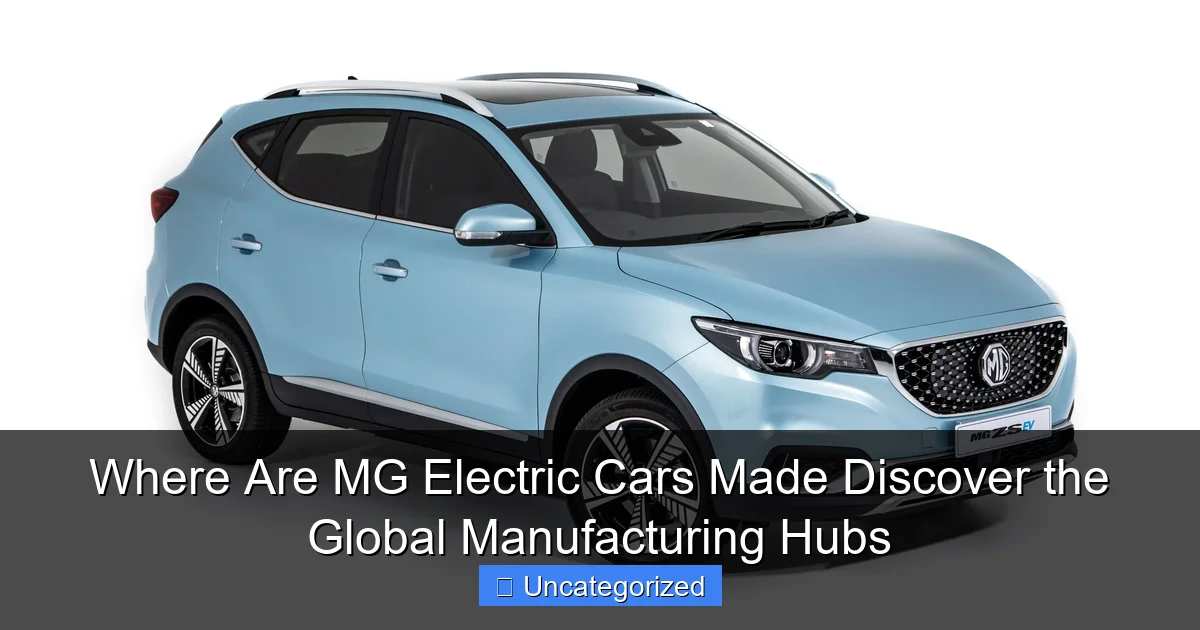
Featured image for where are mg electric cars made
Image source: images.carexpert.com.au
MG electric cars are primarily manufactured in China, where SAIC Motor, MG’s parent company, operates state-of-the-art production facilities in cities like Shanghai and Nanjing. Select models are also assembled in Thailand and India, supporting MG’s expanding global footprint and commitment to delivering affordable, high-quality electric vehicles to international markets.
Key Takeaways
- MG electric cars are made in China by SAIC Motor, a global manufacturing leader.
- UK design meets Chinese production for a blend of innovation and affordability.
- India is a key hub for MG’s EV production, targeting emerging markets.
- European expansion underway with localized assembly to meet regional demand.
- Global supply chains ensure quality while keeping prices competitive worldwide.
- SAIC’s tech drives MG’s EVs, leveraging advanced R&D for cutting-edge models.
- Local production reduces costs and speeds up delivery in major markets.
📑 Table of Contents
- Where Are MG Electric Cars Made? Discover the Global Manufacturing Hubs
- The Evolution of MG: From British Roots to Global EV Powerhouse
- China: The Heart of MG Electric Car Production
- India: MG’s Strategic Manufacturing Hub in South Asia
- Thailand: Southeast Asia’s EV Export Gateway
- Global Supply Chain and Future Manufacturing Plans
- Data Table: MG Electric Car Manufacturing Hubs
- Conclusion: A Truly Global EV Brand
Where Are MG Electric Cars Made? Discover the Global Manufacturing Hubs
When it comes to electric vehicles (EVs), few brands have made as significant a global splash in recent years as MG (Morris Garages). Once a British icon known for its classic sports cars, MG has undergone a dramatic transformation since its acquisition by SAIC Motor Corporation Limited, a state-owned Chinese automotive giant. Today, MG is at the forefront of the electric revolution, producing some of the most affordable and technologically advanced EVs on the market. But with a brand history spanning continents and a parent company headquartered in Shanghai, a pressing question emerges: Where are MG electric cars made?
The answer is far from simple. Unlike traditional automakers that manufacture vehicles in a single location, MG has adopted a globalized production strategy that leverages the strengths of multiple countries. From state-of-the-art Chinese factories to strategic partnerships in India and Thailand, MG’s electric cars are built across a network of international hubs. This global footprint allows MG to meet diverse market demands, reduce costs, and accelerate delivery times—all while maintaining high quality standards. Whether you’re eyeing the MG ZS EV in the UK, the MG4 in Australia, or the upcoming MG Cyberster in Europe, understanding where these vehicles are manufactured offers valuable insight into their design, performance, and supply chain reliability.
The Evolution of MG: From British Roots to Global EV Powerhouse
From Oxford to Shanghai: A Historical Shift
Founded in 1924 in Abingdon, England, MG began as a manufacturer of sporty roadsters that captured the spirit of British motoring. For decades, the brand symbolized craftsmanship, heritage, and performance. However, by the late 20th century, MG faced financial turmoil and was eventually acquired by Nanjing Automobile in 2005. Two years later, SAIC Motor took full control, marking a pivotal turning point in the brand’s history. While the MG nameplate remained, the company’s strategic direction shifted dramatically toward modernization, electrification, and global expansion.
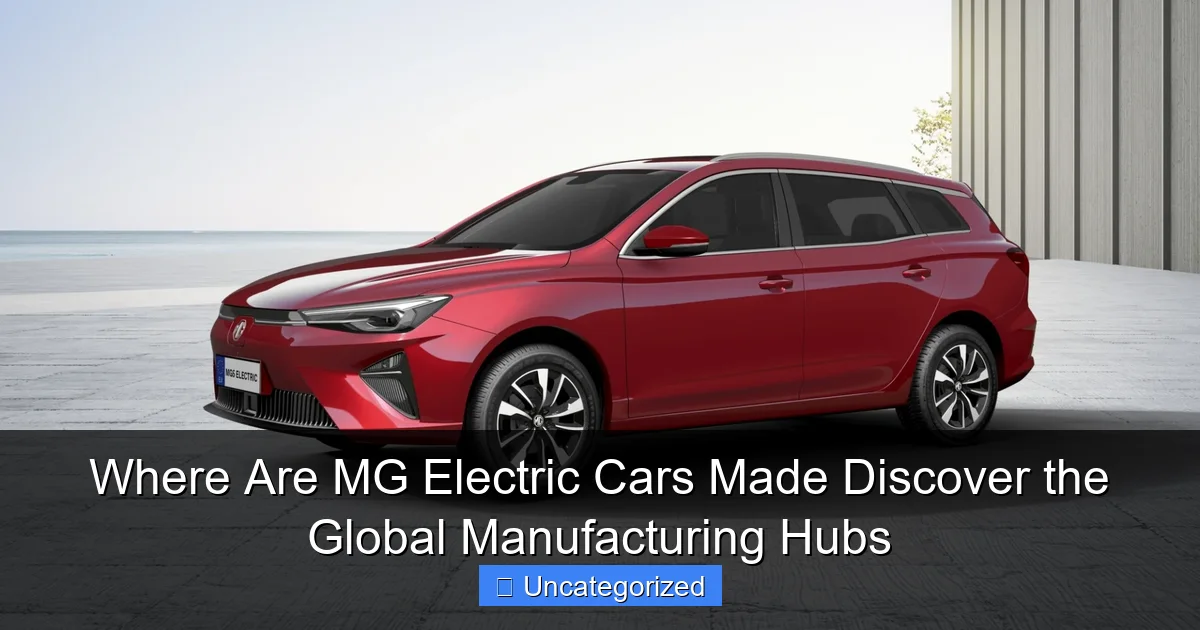
Visual guide about where are mg electric cars made
Image source: news.mgmotor.eu
Under SAIC’s leadership, MG was repositioned not as a nostalgic relic but as a forward-thinking EV brand. The company invested heavily in R&D, particularly in electric powertrains, battery technology, and smart connectivity. This transformation wasn’t just about changing the logo—it was about redefining the entire manufacturing and distribution model. The shift from a British-centric brand to a globally integrated EV manufacturer required new factories, supply chains, and engineering centers across Asia, Europe, and beyond.
SAIC’s Role in MG’s Electric Transformation
SAIC Motor, one of the largest automakers in China, plays a crucial role in MG’s electric vehicle production. As the parent company, SAIC provides MG with access to cutting-edge EV platforms like the Nebula Architecture, which underpins models such as the MG4 and MG5. These modular platforms are designed for scalability, allowing MG to produce a range of EVs—from compact hatchbacks to SUVs—using shared components and manufacturing processes.
Moreover, SAIC’s vast supply chain network, including partnerships with battery giants like CATL and Huawei’s intelligent driving systems, enables MG to offer high-tech features at competitive prices. This vertical integration means that while MG vehicles are branded and marketed internationally, their core technology and production infrastructure are deeply rooted in SAIC’s ecosystem. In essence, MG is not just selling EVs—it’s leveraging SAIC’s global manufacturing muscle to do so.
China: The Heart of MG Electric Car Production
Primary Manufacturing Facilities in China
China is the epicenter of MG’s electric vehicle production. The majority of MG EVs sold worldwide—including the MG ZS EV, MG4, and MG5—are manufactured in SAIC-owned factories across China. The most significant production hub is the SAIC Nanjing Automobile Plant in Nanjing, Jiangsu Province, which has been upgraded to support EV-specific production lines. This facility produces not only MG-branded vehicles but also serves as a base for exporting EVs to Europe, the Middle East, and Southeast Asia.
Another key location is the SAIC Shanghai Lingang Plant, a sprawling, highly automated factory that specializes in NEVs (New Energy Vehicles). Opened in 2020, the Lingang plant is designed to produce up to 300,000 EVs annually and features advanced robotics, AI-driven quality control, and energy-efficient operations. Here, the MG4—MG’s first global EV built on the Nebula platform—rolls off the line with precision and speed. The plant’s proximity to Shanghai’s port also facilitates efficient export logistics.
Localization and Export Strategy
While most MG EVs are built in China, the company employs a localization strategy to meet regional regulations and consumer preferences. For example, the battery chemistry, charging compatibility, and software interfaces are often customized for different markets. Vehicles exported to Europe are equipped with CCS2 charging ports and comply with Euro NCAP safety standards, while those shipped to Australia feature Type 2 (Mennekes) connectors and right-hand drive configurations.
Additionally, MG uses China’s “China+1” export model, where vehicles are assembled in China but shipped in CKD (Completely Knocked Down) kits for final assembly in regional hubs. This reduces import tariffs and allows for faster market entry. For instance, MG ships CKD kits to its plant in Thailand for final assembly of the MG ZS EV, which is then sold locally and exported to neighboring countries.
Tip: If you’re buying an MG EV in Europe or Australia, check the VIN (Vehicle Identification Number). A VIN starting with “LSV” or “LSG” typically indicates a vehicle built in China, while “TMB” suggests Thai assembly. This can help you trace the car’s origin and verify its build quality.
India: MG’s Strategic Manufacturing Hub in South Asia
The Halol Plant: India’s EV Production Powerhouse
India has emerged as a critical manufacturing hub for MG, particularly for the South Asian and Middle Eastern markets. The MG Halol Plant in Gujarat, India, is one of the brand’s most advanced facilities outside China. Acquired from General Motors in 2017, the plant underwent a $300 million overhaul to become MG’s first fully dedicated EV manufacturing site in India.
The Halol plant currently produces the MG ZS EV and MG Hector (a plug-in hybrid), with plans to expand to other models. What sets this facility apart is its high degree of localization. Over 75% of the components used in Indian-made MG EVs are sourced locally, including batteries from Tata AutoComp and interiors from Indian suppliers. This not only reduces production costs but also strengthens MG’s position in India’s growing EV market.
Local Sourcing and Market Adaptation
MG’s success in India is built on more than just manufacturing—it’s about adapting to local needs. The Indian MG ZS EV, for example, features a slightly smaller battery (50.3 kWh) compared to the European version (72.6 kWh) to balance range and affordability. It also includes features like sunroof, ventilated seats, and a premium audio system—popular among Indian consumers.
Moreover, MG India has invested in local R&D through its Advanced Technology Centre in Gurugram, focusing on battery thermal management, AI-powered infotainment, and India-specific road condition simulations. This localized innovation ensures that MG EVs perform optimally in India’s diverse climates—from the heat of Rajasthan to the monsoon rains of Kerala.
Practical Example: When MG launched the ZS EV in India, it partnered with Delta Electronics to install over 1,000 fast chargers across 50 cities. This infrastructure push, combined with locally assembled vehicles, helped MG capture 20% of India’s EV SUV market within two years.
Thailand: Southeast Asia’s EV Export Gateway
MG’s Rayong Plant and Regional Expansion
Thailand is another key node in MG’s global manufacturing network. The MG Rayong Plant in Eastern Economic Corridor (EEC) is a joint venture between SAIC and Thai conglomerate CP Group. Opened in 2019, the plant has a capacity of 100,000 vehicles per year and serves as MG’s primary production base for Southeast Asia.
The Rayong facility produces the MG ZS EV, MG5 EV, and MG HS Plug-in Hybrid, all of which are tailored for ASEAN markets. Thailand’s strategic location, free-trade agreements, and government incentives for EV production make it an ideal export hub. Vehicles built here are shipped to Indonesia, Malaysia, Vietnam, and even Australia.
Thailand’s EV Ecosystem and Incentives
Thailand’s government has launched an ambitious “EV 3.5” initiative to become a regional EV manufacturing leader. This includes tax breaks for EV producers, import duty exemptions on key components, and subsidies for buyers. MG has fully leveraged these incentives, investing in a local battery pack assembly line at Rayong to further reduce costs.
The plant also features Thai workforce training programs in EV technology, robotics, and quality assurance, creating a skilled labor pool for future expansion. With plans to launch the MG4 in Thailand by 2024, the Rayong plant is set to become even more critical to MG’s global strategy.
Tip: If you’re in Southeast Asia, look for the “Made in Thailand” label on MG EVs. These vehicles often have better after-sales support and faster spare parts availability due to regional service centers.
Global Supply Chain and Future Manufacturing Plans
CKD Assembly and Regional Partnerships
Beyond full-scale factories, MG uses CKD (Completely Knocked Down) assembly in several countries to reduce import costs and meet local content requirements. For example:
- Indonesia: PT GAIKINDO assembles MG ZS EV kits at its Bekasi plant.
- Egypt: MG partners with El Nasr Automotive to assemble EVs for the Middle East and North Africa.
- Brazil: A new CKD facility is planned in São Paulo for South American markets.
<
This decentralized model allows MG to enter new markets quickly while building local economic partnerships. It also mitigates risks from global trade tensions or shipping disruptions.
Future Expansion: Europe and Beyond
MG has announced plans to establish a European manufacturing presence by 2026, likely in Eastern Europe (e.g., Slovakia or Hungary). This would mark a significant shift, reducing reliance on Chinese exports and aligning with EU “local content” rules for subsidies. The European plant would likely focus on the MG4 and upcoming MG Cyberster, both of which are designed with European consumers in mind.
Additionally, MG is exploring battery gigafactories in Thailand and India to secure long-term supply chain stability. With SAIC’s joint venture with CATL, MG aims to produce lithium iron phosphate (LFP) batteries locally—offering safer, longer-lasting, and more affordable power sources for future models.
Data Table: MG Electric Car Manufacturing Hubs
| Country | Facility | Models Produced | Annual Capacity | Primary Markets | Key Features |
|---|---|---|---|---|---|
| China | SAIC Shanghai Lingang Plant | MG4, MG5, MG ZS EV (base models) | 300,000 | Global (export hub) | Fully automated, AI quality control, Nebula platform |
| China | SAIC Nanjing Plant | MG ZS EV, MG HS PHEV | 200,000 | Europe, Middle East, Australia | CKD export kits, Euro NCAP compliance |
| India | MG Halol Plant (Gujarat) | MG ZS EV, MG Hector PHEV | 100,000 | India, Middle East | 75% local sourcing, Indian R&D center |
| Thailand | MG Rayong Plant (EEC) | MG ZS EV, MG5 EV, MG HS PHEV | 100,000 | ASEAN, Australia | EV 3.5 incentives, battery pack assembly |
| Indonesia | PT GAIKINDO (CKD) | MG ZS EV (assembled) | 15,000 | Indonesia | Local content compliance |
This table highlights MG’s strategic use of regional hubs to balance cost, efficiency, and market responsiveness. Each facility is optimized for its target region, ensuring that MG EVs meet local regulations, consumer preferences, and economic conditions.
Conclusion: A Truly Global EV Brand
So, where are MG electric cars made? The answer is clear: everywhere. From the high-tech factories of Shanghai to the localized assembly lines in India and Thailand, MG has built a truly global manufacturing network that reflects the brand’s ambition to become a leader in the electric mobility revolution. This decentralized approach allows MG to deliver affordable, high-quality EVs to diverse markets while adapting to local needs and regulations.
What sets MG apart isn’t just its global footprint—it’s the integration of SAIC’s technological resources, strategic localization, and forward-thinking supply chain management. Whether you’re driving an MG4 in Berlin, an MG ZS EV in Mumbai, or an MG5 in Bangkok, you’re experiencing a vehicle built with global expertise and regional insight. As MG continues to expand into Europe and explore new gigafactories, its manufacturing strategy will only grow more sophisticated.
For consumers, this means greater choice, faster delivery, and more reliable service. For the industry, it’s a model of how traditional brands can reinvent themselves in the age of electrification. As MG’s slogan says, “Drive the Future”—and with its global manufacturing hubs, the future is already on the road.
Frequently Asked Questions
Where are MG electric cars made globally?
MG electric cars are primarily manufactured in China by SAIC Motor, the parent company of MG. Additional production hubs include India and Thailand, catering to regional markets with localized assembly.
Are MG EVs made in the UK?
No, MG electric vehicles (EVs) are no longer made in the UK. While MG originated as a British brand, current production is centered in China and other global facilities under SAIC ownership.
Which country makes the MG ZS EV?
The MG ZS EV is produced in China (at SAIC’s plants) and India (via MG Motor India’s Halol facility). Some units for European markets are shipped from China, while Indian-assembled versions serve local demand.
Where are MG electric cars made for the European market?
MG EVs for Europe are primarily imported from SAIC’s factories in China, including the MG4 and Marvel R. However, select models may be assembled in Thailand for ASEAN regions before distribution.
Does MG manufacture EVs in India?
Yes, MG Motor India produces electric cars like the ZS EV at its Halol plant in Gujarat. This facility serves the Indian market and nearby regions, reducing import dependency.
Why are MG electric cars made in China?
MG’s parent company, SAIC Motor, is a Chinese state-owned automaker that acquired the brand. Manufacturing in China leverages SAIC’s EV expertise, supply chain efficiency, and cost advantages for global distribution.