Where to Charge Kia Electric Car Top Spots and Tips
Featured image for where to charge kia electric car
Image source: electriccarwiki.com
Charge your Kia electric car at over 40,000 public stations across the U.S., including fast-charging networks like Electrify America and EVgo. For the best experience, use the Kia Access app to locate nearby stations, check real-time availability, and even start charging remotely—maximizing convenience and minimizing downtime.
Key Takeaways
- Use Kia’s charging map: Locate nearby stations with real-time availability and compatibility.
- Prioritize DC fast chargers: Cut charging time significantly on long trips.
- Plan ahead with apps: Check PlugShare or ChargePoint for reliable spots.
- Home charging is essential: Install a Level 2 charger for daily convenience.
- Leverage free charging perks: Some dealerships offer complimentary charging for owners.
📑 Table of Contents
- Where to Charge Kia Electric Car: Top Spots and Tips
- Home Charging: The Foundation of EV Ownership
- Public Charging Stations: Where to Find Them
- Workplace and Public Parking Charging
- Road Trips and Long-Distance Charging
- Hidden Gems and Lesser-Known Charging Spots
- Comparing Charging Options: A Quick Reference Table
- Final Thoughts: Charging Your Kia EV Made Easy
Where to Charge Kia Electric Car: Top Spots and Tips
Imagine this: you’re cruising in your sleek Kia EV, the sun shining, and the open road calling. Suddenly, your battery dips below 20%. Panic? Not if you know where to charge your Kia electric car. Whether you’re a daily commuter or a weekend road-tripper, finding reliable charging stations is key to enjoying your electric journey without stress. The good news? Charging your Kia EV is easier than ever, thanks to a growing network of public stations, home setups, and smart tech tools. But where do you start? And how do you avoid the dreaded “low battery” anxiety?
This guide will walk you through the best spots to charge your Kia electric car, from home setups to public fast chargers, and even those hidden gems at shopping centers. We’ll share practical tips, real-life examples, and a few tricks to make charging as smooth as your EV’s acceleration. Whether you drive a Kia Niro EV, EV6, or Soul EV, this is your go-to resource for staying powered up—no guesswork, no stress.
Home Charging: The Foundation of EV Ownership
Level 1 vs. Level 2 Chargers
When it comes to charging your Kia electric car at home, you’ve got two main options: Level 1 (standard household outlet) and Level 2 (240-volt charger). Let’s break down the pros and cons of each.
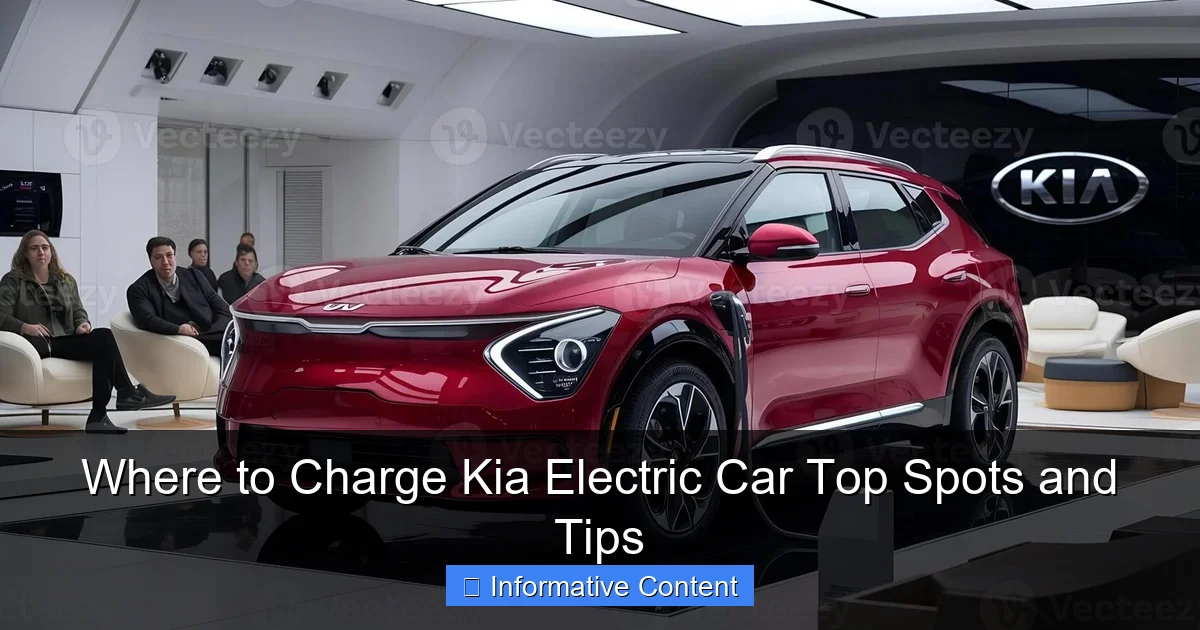
Visual guide about where to charge kia electric car
Image source: static.vecteezy.com
- Level 1 Charging: This is the simplest option—just plug your Kia into a regular 120-volt outlet. It’s free (if you already have the cord), but it’s also slow. A full charge can take 24–48 hours, depending on your model. Great for overnight top-ups if you drive short distances daily.
- Level 2 Charging: This is the gold standard. A 240-volt charger (like a dryer outlet) can fully charge your Kia in 4–8 hours, depending on the battery size. It’s a one-time investment (typically $500–$1,200 for the unit and installation), but it’s worth it if you drive more than 30–40 miles daily.
Real-life tip: My neighbor, Sarah, drives a Kia Niro EV. She installed a Level 2 charger and now charges overnight while she sleeps. “It’s like having a gas station in my garage,” she jokes. “I wake up to a full battery every day.”
Installation Tips and Costs
Installing a Level 2 charger isn’t just about buying the unit. Here’s what to consider:
- Electrical panel capacity: Your home’s electrical panel must handle the extra load. Most Level 2 chargers need a 40-amp breaker. If your panel is old or near capacity, you may need an upgrade (cost: $1,000–$3,000).
- Location: Install the charger near your parking spot. Running a long cable across the driveway is a tripping hazard.
- Permits: Some cities require permits for EV charger installations. Check local regulations before you start.
Pro tip: Many states and utility companies offer rebates for EV charger installations. For example, California’s EV Charger Incentive Program covers up to $1,000 of the cost. Always check for incentives before buying.
Public Charging Stations: Where to Find Them
Charging Networks (Electrify America, ChargePoint, etc.)
When you’re away from home, public charging stations are your lifeline. The U.S. has over 50,000 public EV chargers, but not all are created equal. Here are the top networks for Kia EV owners:
- Electrify America: With over 800 stations and 3,500+ chargers, this is the largest fast-charging network in the U.S. Kia EVs (like the EV6) can use their 150–350 kW DC fast chargers, adding 60–80 miles of range in 10–15 minutes.
- ChargePoint: This network has 200,000+ ports globally, but most are Level 2 (slower). Great for longer stops (e.g., shopping or dining). Many stations are free or low-cost.
- EVgo: Specializes in fast charging, with 1,000+ stations. Their 50–350 kW chargers work well for Kia EVs, especially on road trips.
Real-life example: On a recent trip to Chicago, I used the PlugShare app to find a ChargePoint station at a Whole Foods. While I grabbed groceries, my Kia EV6 gained 40 miles of range—perfect for the next leg of my journey.
Apps and Tools for Finding Chargers
Don’t rely on guesswork. Use these tools to find the best spots to charge your Kia electric car:
- PlugShare: The most comprehensive app, with user reviews, photos, and real-time availability. Filter by charger type (Level 2, DC fast, Tesla adapters).
- Kia Charge: Kia’s official app integrates with Electrify America, ChargePoint, and others. It shows nearby stations, pricing, and even lets you pay directly from the app.
- Google Maps: Type “EV charging stations near me,” and it’ll show options with ratings and wait times.
Pro tip: Always check user reviews. A station might look great on paper but have broken connectors or high fees. One reviewer warned: “The Electrify America charger at this rest stop is always crowded—arrive early!”
Workplace and Public Parking Charging
Workplace Charging Programs
Many employers now offer free or low-cost EV charging as a perk. If your workplace has chargers, you’re in luck—just plug in while you work. Here’s how to make the most of it:
- Ask HR: Not all companies advertise EV charging. Check with your HR department or facilities manager.
- Reserve a spot: Some workplaces use apps (like ChargeHub) to reserve charging spots. Avoid the morning rush by booking ahead.
- Share with colleagues: If chargers are limited, coordinate with coworkers to take turns.
Real-life tip: My friend Mark works at a tech company with 10 Level 2 chargers. “I charge for free every day,” he says. “It’s saved me hundreds in charging costs.”
Shopping Centers, Malls, and Public Lots
Retailers and cities are adding EV chargers to attract eco-conscious customers. Here are some hotspots:
- Walmart: Over 1,000 stores have EV chargers (mostly ChargePoint). While you shop, your Kia gains 10–20 miles per hour.
- IKEA: Many U.S. locations have free Level 2 chargers. Pair your charge with a meatball lunch!
- City parking garages: Cities like San Francisco and Seattle offer discounted EV parking with charging.
Pro tip: Always check the charger’s status before parking. Some stations are reserved for specific times (e.g., “Charging only 9 AM–5 PM”).
Road Trips and Long-Distance Charging
Planning Charging Stops
Long trips in your Kia EV? Plan like a pro. Here’s how:
- Use route planners: Tools like A Better Routeplanner (ABRP) or PlugShare’s trip planner map out charging stops based on your battery range.
- Prioritize DC fast chargers: For long distances, skip Level 2 stations. Focus on Electrify America, EVgo, or Tesla Superchargers (with an adapter).
- Factor in charging time: DC fast chargers can take 20–40 minutes. Use this time for a meal, stretch, or sightseeing.
Real-life example: Last summer, I drove my Kia EV6 from Denver to Moab, Utah. Using ABRP, I planned stops at Electrify America stations in Grand Junction and Moab. Total charging time: 1.5 hours, spread over two breaks. The views made the wait worthwhile!
Dealing with Range Anxiety
Range anxiety is real, but it’s manageable. Tips:
- Charge to 80%: Batteries charge fastest up to 80%. Save 100% for the last leg of your trip.
- Use eco mode: Kia EVs have an “Eco” driving mode that extends range by reducing power output.
- Keep a backup plan: Always have a secondary charging station in mind, in case the first one is busy or broken.
Pro tip: Download offline maps of charging stations. Rural areas may have spotty cell service, so having a backup is crucial.
Hidden Gems and Lesser-Known Charging Spots
Rest Stops, Hotels, and Airports
Beyond the obvious spots, here are some underrated places to charge your Kia electric car:
- Rest areas: Many state-run rest stops have free Level 2 chargers. A quick break can add 30–50 miles.
- Hotels: Brands like Marriott, Hilton, and Hyatt offer EV charging for guests. Call ahead to confirm availability.
- Airports: Major airports (LAX, JFK, etc.) have EV chargers in long-term parking. Great if you’re traveling and don’t want to return to a dead battery.
Real-life tip: During a flight delay at JFK, I charged my Kia Soul EV at the airport’s Level 2 station. By the time I boarded, it had gained 20 miles—enough to get home without stress.
Community Charging and Peer Networks
Some homeowners rent out their personal EV chargers through apps like EVmatch or Share&Charge. It’s a win-win: you get a charging spot, and the owner earns extra cash.
- Cost: Typically $1–$5 per hour, cheaper than public stations.
- Locations: Often in residential neighborhoods, perfect for overnight charging.
Pro tip: Always read reviews before booking. One user warned: “The charger was great, but the host’s driveway was tight—park carefully!”
Comparing Charging Options: A Quick Reference Table
| Charging Type | Speed (Miles per Hour) | Cost (Average) | Best For |
|---|---|---|---|
| Level 1 (120V) | 3–5 | Free (uses home electricity) | Overnight charging, short commutes |
| Level 2 (240V) | 10–30 | $0.10–$0.30/kWh (home), $0.25–$0.50/kWh (public) | Daily charging, shopping, workplace |
| DC Fast Charger | 100–200+ | $0.30–$0.60/kWh (or flat fee per session) | Road trips, long-distance travel |
Final Thoughts: Charging Your Kia EV Made Easy
Charging your Kia electric car doesn’t have to be complicated. With a mix of home charging, public stations, and smart planning, you can keep your battery full without breaking a sweat. Remember: start with a Level 2 charger at home, use apps like PlugShare and Kia Charge to find public stations, and plan ahead for road trips. And don’t forget those hidden gems—rest stops, hotels, and peer networks can save the day when you’re in a pinch.
The key is to treat charging like refueling a gas car: routine, predictable, and stress-free. As EV infrastructure grows, charging will only get easier. So plug in, relax, and enjoy the ride. Your Kia EV is ready to take you wherever life leads—just make sure you know where to charge it along the way.
Frequently Asked Questions
Where can I charge my Kia electric car at home?
You can charge your Kia electric car at home using a standard 120V outlet (Level 1) or by installing a 240V Level 2 charger for faster charging. A Level 2 charger typically adds 20-30 miles of range per hour, making it ideal for overnight charging.
Are there public charging stations specifically for Kia electric cars?
Kia electric cars use standard CCS or Type 2 connectors, so they’re compatible with most public charging stations, including networks like ChargePoint, Electrify America, and EVgo. Use apps like PlugShare to locate nearby stations optimized for Kia EVs.
Can I use Tesla Superchargers to charge my Kia electric car?
Yes, but only with an adapter. Tesla Superchargers use a proprietary connector, but Kia EVs can access them via a CCS-to-Tesla adapter. Note that charging speeds may vary depending on the station and your car’s compatibility.
What’s the fastest way to charge a Kia electric car on a road trip?
For long trips, use DC fast chargers (Level 3), available at many highway rest stops and shopping centers. These can replenish up to 80% of your battery in 30-40 minutes, depending on your Kia model and charger speed.
Where to charge Kia electric car for free?
Some workplaces, malls, and hotels offer free charging as an incentive. Check PlugShare or ChargeHub for free stations near you, and take advantage of Kia’s included charging credits at select networks like Electrify America.
How do I find Kia-friendly charging stations while traveling?
Use the Kia Connect app or in-car navigation system, which highlights compatible charging stations along your route. Alternatively, third-party apps like A Better Routeplanner (ABRP) provide real-time data on station availability and charging speeds.