Who Builds Ford Electric Cars and How They Do It
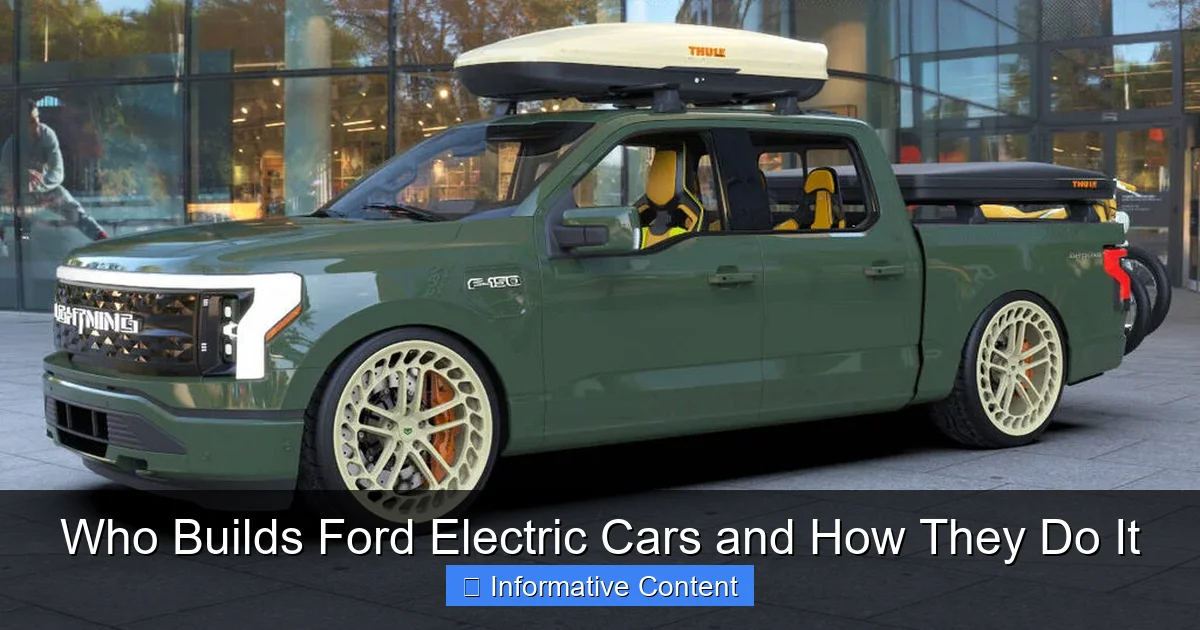
Featured image for who builds ford electric cars
Image source: i.gaw.to
Ford electric cars are built by a dedicated team of engineers, technicians, and assembly line workers at Ford’s U.S. manufacturing plants, including the historic Rouge Electric Vehicle Center in Michigan. These facilities leverage advanced automation, sustainable practices, and Ford’s decades of automotive expertise to produce EVs like the Mustang Mach-E and F-150 Lightning with precision and scale.
Key Takeaways
- Ford’s U.S. plants build most electric models like the F-150 Lightning.
- SK On partnership supplies batteries from Georgia and Tennessee facilities.
- Michigan leads in EV production with dedicated Rouge Electric Vehicle Center.
- Mexico plays a key role in building the Mustang Mach-E for global markets.
- BlueOval City will centralize future EV and battery production by 2026.
📑 Table of Contents
- Who Builds Ford Electric Cars and How They Do It
- The Ford EV Revolution: From Legacy to Innovation
- The People Behind the Machines: Who Builds Ford EVs?
- How Ford Builds Electric Cars: The Manufacturing Process
- Challenges Ford Faces in the EV Race
- The Future of Ford EVs: What’s Next?
- Data Snapshot: Ford’s EV Production and Sales
- Conclusion: Ford’s Electric Journey Is Just Beginning
Who Builds Ford Electric Cars and How They Do It
Imagine this: You’re driving down a quiet suburban road, the hum of your car barely breaking the morning silence. No engine roar, no exhaust fumes—just smooth, instant acceleration and a dashboard that feels more like a smartphone than a speedometer. You’re behind the wheel of a Ford electric vehicle (EV), and it hits you: this isn’t the Ford of your grandpa’s era. This is Ford, reimagined for the electric age. But who’s behind this transformation? Who builds Ford electric cars, and how do they do it differently from the gas-guzzlers of the past?
The answer is more complex than you might think. Ford’s journey into the EV world isn’t just about swapping engines for batteries. It’s a complete overhaul of how cars are designed, built, and delivered. From repurposed factories to new partnerships, from software engineers to battery chemists, the people and processes behind Ford’s EVs are as innovative as the vehicles themselves. In this post, we’ll pull back the curtain to show you exactly who builds Ford electric cars and how they’re making the shift from combustion to electrons—without losing the soul of the Blue Oval.
The Ford EV Revolution: From Legacy to Innovation
Why Ford Decided to Go Electric
Let’s be honest: Ford didn’t wake up one day and decide to go electric just because it was trendy. The shift started years ago, driven by a mix of market pressure, environmental regulations, and a growing realization that the future of mobility is electric. In 2021, Ford announced its “Ford+” plan, a bold strategy to invest $50 billion in EVs by 2026. That’s not just a number—it’s a promise to transform the company.
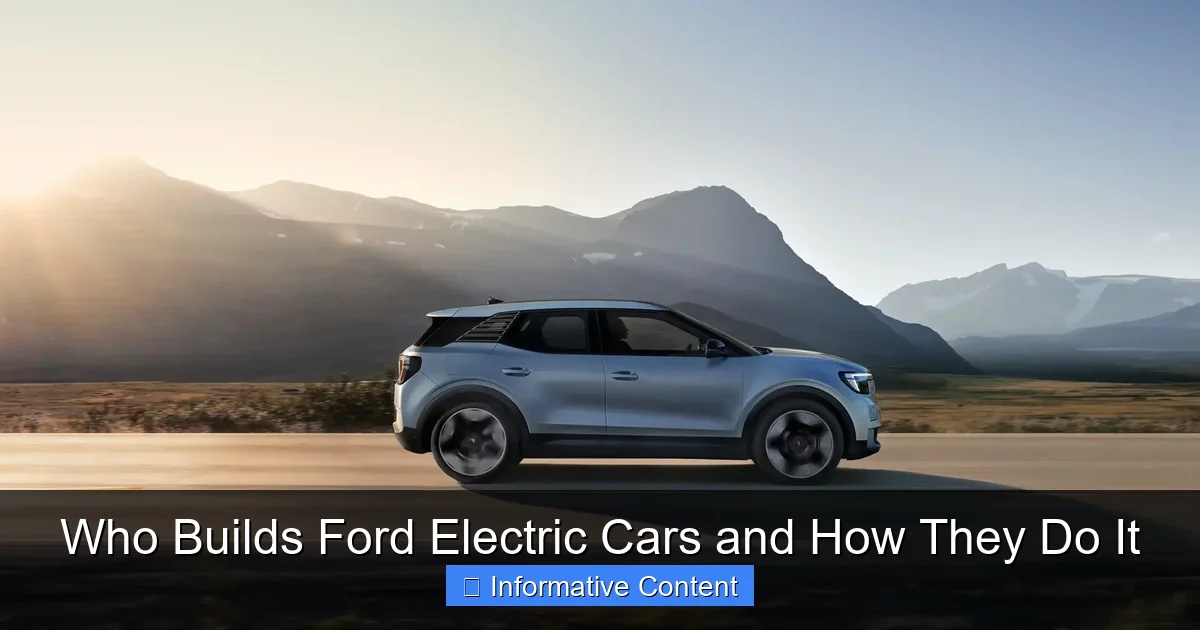
Visual guide about who builds ford electric cars
Image source: i.bstr.es
But here’s the thing: Ford isn’t starting from scratch. It’s using its century-old expertise in manufacturing, supply chains, and customer relationships as a foundation. Think of it like a master chef opening a new restaurant—same skills, different cuisine. The goal? To build EVs that aren’t just eco-friendly but also reliable, affordable, and unmistakably Ford.
Key Milestones in Ford’s EV Timeline
- 2011: Ford launches the Focus Electric—its first mass-market EV (though it was more of a compliance car).
- 2020: The Mustang Mach-E debuts, proving Ford could build a fun, desirable EV.
- 2021: The F-150 Lightning arrives, electrifying America’s best-selling vehicle.
- 2022: Ford announces the creation of Ford Model e, a separate division focused on EVs and software.
- 2023: The E-Transit electric van hits the market, targeting commercial fleets.
These milestones show a clear pattern: Ford is betting big on EVs, not just as a side project but as the core of its future. And the people building them? They’re not just assembly line workers—they’re part of a new kind of automotive team.
The People Behind the Machines: Who Builds Ford EVs?
The Ford Model e Division: The EV Brain Trust
Here’s a fun fact: Ford doesn’t just have a “team” working on EVs. In 2022, it created a whole new division called Ford Model e, separate from its traditional vehicle development arm. Think of it as the startup within the giant. This team includes:
- Software engineers: Building the brains of the car (think: infotainment, driver assistance, over-the-air updates).
- Battery scientists: Developing next-gen battery chemistries and thermal management systems.
- UX designers: Designing intuitive interfaces and digital experiences.
- Supply chain experts: Sourcing rare materials like lithium, cobalt, and nickel ethically and efficiently.
The Model e team works in Silicon Valley-style offices, not just in Detroit. They’re encouraged to move fast, fail fast, and innovate—something that’s harder in a 120-year-old company. It’s a deliberate attempt to avoid the “this is how we’ve always done it” trap.
The Factory Workers: Where the Magic Happens
While the Model e team designs the future, the real magic happens on the factory floor. Ford’s EV assembly lines are staffed by a mix of veterans and new hires, many of whom had to retrain for the shift from gas to electric. For example:
- At the Cuautitlán Assembly Plant in Mexico (where the Mach-E is built), workers went through weeks of training on high-voltage systems, battery handling, and EV-specific safety protocols.
- At the Dearborn Truck Plant in Michigan (home of the F-150 Lightning), union workers had to adapt to new processes like installing battery packs instead of engines.
One worker told me, “It’s like learning to cook with a new set of ingredients. The kitchen’s the same, but everything else feels different.” That’s the reality: Ford’s EV builders aren’t just following old blueprints—they’re writing new ones.
Partnerships and Collaborators
Ford isn’t going it alone. To speed up innovation, it’s teamed up with:
- SK On: A South Korean battery maker. Together, they’re building three battery plants in the U.S. (part of the BlueOval SK joint venture).
- Redwood Materials: A recycling startup founded by Tesla’s former CTO. They’ll help Ford recycle old EV batteries into new ones.
- Qualcomm: Providing the Snapdragon chip for Ford’s next-gen infotainment systems.
These partnerships show Ford’s willingness to collaborate with outsiders—a big shift for a company that once prided itself on doing everything in-house.
How Ford Builds Electric Cars: The Manufacturing Process
Step 1: Designing for Electrification
Building an EV isn’t just about removing the engine and adding a battery. It starts with a clean-sheet design. For example, the Mach-E and F-150 Lightning were designed from the ground up as EVs, not converted gas models. That means:
- Lower center of gravity: Batteries are placed under the floor, improving handling.
- More interior space: No transmission tunnel or engine bay frees up room for passengers and cargo.
- Aerodynamic shapes: EVs prioritize efficiency, so every curve is optimized for low drag.
Ford’s design teams use advanced simulations to test everything from battery cooling to crash safety before a single car is built. It’s like digital prototyping on steroids.
Step 2: Battery Production
Batteries are the heart of any EV, and Ford is building its own. Through its BlueOval SK joint venture, Ford is investing $11.4 billion in three U.S. battery plants (in Kentucky and Tennessee). Here’s what happens inside:
- Cell manufacturing: Raw materials (lithium, nickel, etc.) are turned into battery cells.
- Module assembly: Cells are grouped into modules with cooling systems and sensors.
- Pack assembly: Modules are combined into large battery packs, which are then shipped to vehicle plants.
One key innovation? Ford is switching to lithium iron phosphate (LFP) batteries for some models (like the base F-150 Lightning). LFP is cheaper, safer, and lasts longer than traditional nickel-based batteries—though it has slightly less range. It’s a smart compromise for cost-conscious buyers.
Step 3: Assembly Line Integration
Once the battery arrives at the vehicle plant, it’s time to build the car. Ford’s EV assembly lines are similar to traditional ones but with critical differences:
- High-voltage safety: Workers wear special gloves and use insulated tools when handling batteries.
- Software integration: Every EV gets a unique software “build” during assembly, with features tailored to the buyer’s order.
- Final charging: Each car is fully charged and tested before leaving the factory.
For example, at the F-150 Lightning plant, a team of robots lifts the battery pack into the chassis with millimeter precision. It’s a far cry from the days of dropping engines into engine bays!
Challenges Ford Faces in the EV Race
Supply Chain Hurdles
Building EVs isn’t just about technology—it’s about materials. Ford needs tons of lithium, cobalt, and nickel, and sourcing them is tricky. Here’s the problem:
- Geopolitical risks: Much of the world’s lithium comes from China, and cobalt from the Democratic Republic of Congo. Ford is working to diversify its supply chain (e.g., partnering with mines in Canada and Australia).
- Recycling gaps: While Ford is investing in battery recycling, the infrastructure isn’t fully there yet. Most EVs on the road today won’t need battery replacements for a decade.
Ford’s solution? A mix of long-term contracts with suppliers, investments in mining, and partnerships with recyclers. It’s a slow process, but essential for scaling up EV production.
Balancing Cost and Innovation
EVs are expensive to build, and Ford is under pressure to keep prices competitive. For example:
- The base F-150 Lightning starts at $49,995, but the battery alone costs thousands.
- Ford has had to delay some models (like the Explorer EV) to focus on high-margin vehicles.
To cut costs, Ford is using platform sharing—building multiple EVs on the same basic architecture (like the Mach-E and upcoming Lincoln EV). It’s a smart way to save money without sacrificing variety.
Workforce Retraining
Switching from gas to electric requires a new set of skills. Ford has invested heavily in retraining programs, like:
- Ford EV University: An online platform where workers can learn about high-voltage systems, battery safety, and more.
- Apprenticeships: New hires work alongside experienced EV technicians to learn the ropes.
It’s a win-win: workers gain valuable skills, and Ford builds a future-ready workforce.
The Future of Ford EVs: What’s Next?
New Models in the Pipeline
Ford isn’t done yet. By 2025, it plans to launch several new EVs, including:
- Explorer EV: A family SUV with up to 300 miles of range.
- Lincoln Aviator EV: A luxury SUV based on the same platform as the Mach-E.
- Electric Transit Custom: A smaller van for European markets.
These models will use Ford’s next-generation EV platform, which promises longer range, faster charging, and more affordable pricing.
Investing in Charging Infrastructure
Building EVs is only half the battle—drivers need places to charge them. Ford is tackling this in two ways:
- BlueOval Charge Network: A partnership with charging providers (like Electrify America) to give Ford EV owners access to 10,000+ fast chargers.
- Home charging solutions: Ford offers a free 240V home charger with every EV purchase (a smart move to ease range anxiety).
Software and Connectivity
Ford knows that EVs are as much about software as hardware. Its new Ford OS will power everything from navigation to driver assistance, with regular over-the-air updates. Think of it like a smartphone—always improving, never outdated.
Data Snapshot: Ford’s EV Production and Sales
| Model | Production Start | 2023 Sales (U.S.) | Key Factory | Range (EPA est.) |
|---|---|---|---|---|
| Mustang Mach-E | 2020 | 39,458 | Cuautitlán, Mexico | 224–314 miles |
| F-150 Lightning | 2022 | 24,165 | Dearborn, Michigan | 240–320 miles |
| E-Transit | 2022 | 6,515 | Kansas City, Missouri | 126 miles |
Conclusion: Ford’s Electric Journey Is Just Beginning
So, who builds Ford electric cars? It’s a mix of old and new: legacy factory workers learning new tricks, Silicon Valley-style software teams, battery scientists in labs, and partners around the globe. And how do they do it? By combining Ford’s century of manufacturing excellence with a willingness to innovate, collaborate, and adapt.
Ford’s EV journey hasn’t been perfect. Supply chain hiccups, price pressures, and the sheer scale of the transition have caused delays and frustrations. But the company is betting big—not just on EVs, but on the people who build them. From retraining programs to cutting-edge battery plants, Ford is investing in the future.
The takeaway? Ford isn’t just building electric cars. It’s building an electric future. And if it can pull it off, we’ll all be along for the ride—quietly, efficiently, and with a smile on our faces.
Frequently Asked Questions
Who builds Ford electric cars in the United States?
Ford electric cars, including the Mustang Mach-E and F-150 Lightning, are primarily built at Ford’s U.S. plants like the Rouge Electric Vehicle Center in Michigan and the Cuautitlán Assembly Plant in Mexico. These facilities were retooled specifically for EV production to meet growing demand.
Where does Ford manufacture its electric vehicles globally?
Ford builds electric cars at multiple global locations, including Michigan and Cuautitlán (Mexico), with future EVs planned for Tennessee via the BlueOval City campus. The company is investing heavily to expand its EV manufacturing footprint worldwide.
Are Ford electric cars made in China?
While Ford designs and engineers its EVs in the U.S., some models like the Mustang Mach-E are also assembled in China through a joint venture with Changan Ford. This helps serve the local market and reduce production costs.
Who builds Ford electric cars and handles their battery production?
Ford builds its electric cars and partners with SK Innovation to supply batteries, with plans to produce its own in-house batteries at BlueOval SK plants in Kentucky and Tennessee. This vertical integration ensures supply chain control for key EV components.
What role does Ford’s Rouge Center play in building electric vehicles?
The Rouge Electric Vehicle Center in Michigan is Ford’s flagship EV production hub, where the F-150 Lightning is assembled. This facility was retrofitted to support advanced EV manufacturing and carbon-neutral operations.
How does Ford ensure quality control in its electric car production?
Ford uses advanced robotics, AI-driven inspection systems, and rigorous testing protocols at its EV plants to maintain quality. Each vehicle undergoes multiple checks for battery performance, software integration, and build integrity.