Who Makes Batteries for Ford Electric Cars Revealed
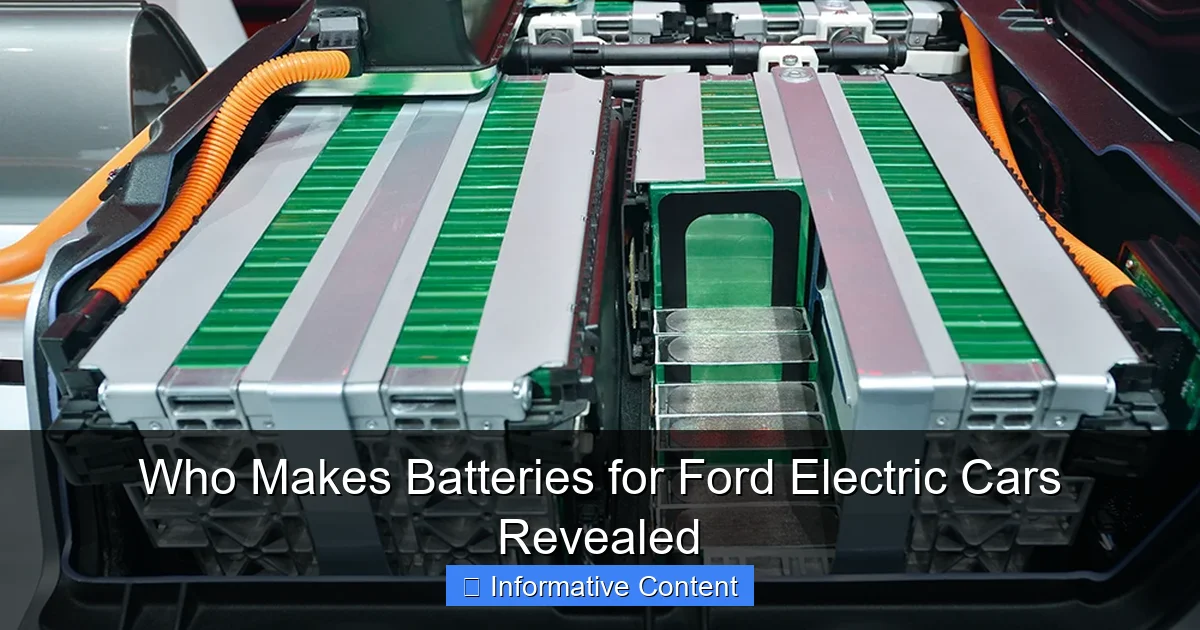
Featured image for who makes batteries for ford electric cars
Image source: news.mit.edu
Ford electric car batteries are primarily manufactured by SK Innovation and LG Energy Solution, two leading global battery suppliers powering the automaker’s EV lineup, including the Mustang Mach-E and F-150 Lightning. Ford is also investing in domestic production through BlueOval SK, a joint venture with SK Innovation, to secure supply chain control and scale U.S.-based battery manufacturing for future models.
Key Takeaways
- Ford partners with SK Innovation: Primary battery supplier for U.S.-made EVs like the F-150 Lightning.
- LG Energy Solution involved: Supplies cells for select Ford EVs, diversifying supply chain.
- CATL collaboration announced: LFP battery tech for future Ford EVs to cut costs.
- BlueOval SK joint venture: Ford and SK build U.S. battery plants for domestic production.
- Local sourcing prioritized: Batteries produced in U.S. and Europe to reduce reliance on imports.
- Solid-state R&D underway: Ford invests in next-gen batteries via Factorial Energy partnership.
📑 Table of Contents
- The Electric Revolution: Ford’s Battery Partnerships Unveiled
- Ford’s Battery Strategy: A Blend of Innovation and Collaboration
- CATL and the LFP Revolution: A Game-Changer for Ford
- BlueOval SK: Ford’s Joint Venture for Domestic Battery Production
- Other Battery Suppliers: Diversifying Ford’s Portfolio
- What This Means for Ford EV Owners: A Practical Guide
- Battery Comparison Table: Ford’s Key Suppliers
- Conclusion: Ford’s Battery Future Is Bright
The Electric Revolution: Ford’s Battery Partnerships Unveiled
Remember when electric cars were just a futuristic dream? Well, that dream is now our reality. And if you’re anything like me, you’ve probably found yourself wondering, “Who makes batteries for Ford electric cars?” After all, the battery is the heart of any EV – it’s what powers our daily commutes, weekend getaways, and everything in between. I’ve been on my own journey with Ford’s electric lineup, from the sleek Mustang Mach-E to the rugged F-150 Lightning, and one thing kept popping up: the battery. Who makes it? How does it work? And most importantly, is it reliable?
Let’s face it: the battery isn’t just another component. It’s the lifeline of your electric vehicle. A bad battery can mean range anxiety, slow charging, or even a breakdown. But Ford, a company steeped in automotive history, isn’t taking any chances. They’ve partnered with some of the biggest names in the battery world to ensure their EVs are not just powerful but also dependable. Whether you’re a first-time EV buyer or a seasoned enthusiast, understanding these partnerships can help you make smarter choices. So, let’s dive into the world of Ford’s battery suppliers and uncover the secrets behind their electric success.
Ford’s Battery Strategy: A Blend of Innovation and Collaboration
When Ford decided to go electric, they didn’t just slap a battery into an existing car and call it a day. No, they took a more strategic approach. Instead of reinventing the wheel (or the battery, in this case), Ford chose to collaborate with industry leaders to leverage their expertise. This partnership-driven strategy ensures Ford’s EVs are not only cutting-edge but also cost-effective and scalable.
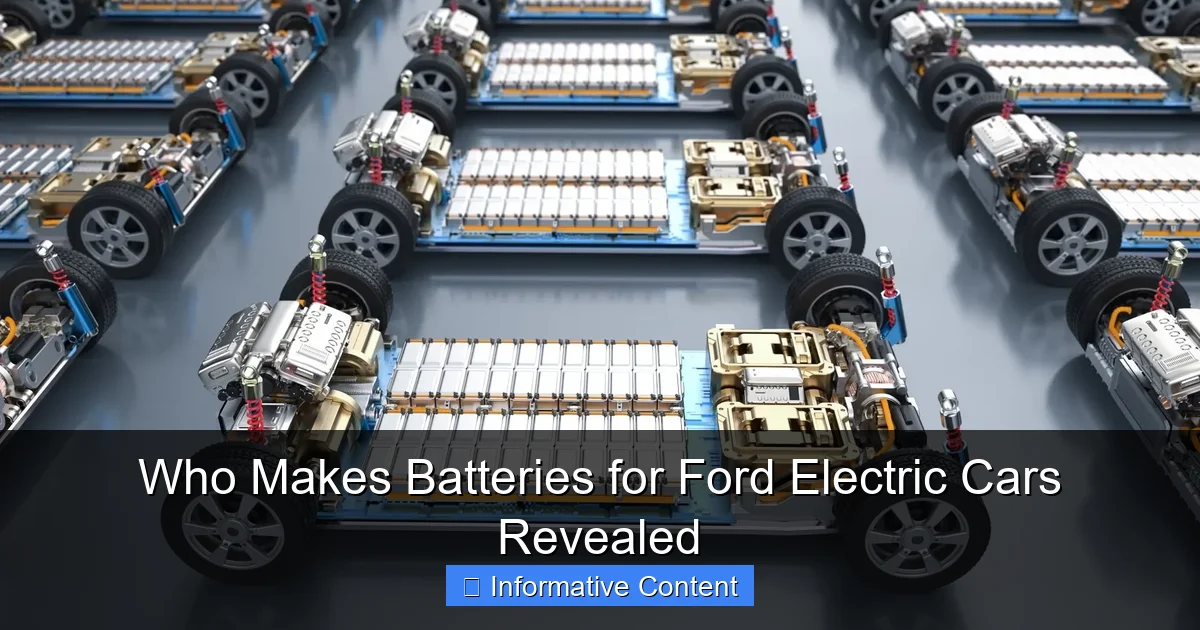
Visual guide about who makes batteries for ford electric cars
Image source: thecooldown.com
Why Ford Chose Partnerships Over In-House Production
You might wonder, “Why doesn’t Ford make their own batteries?” It’s a valid question. After all, Tesla has its Gigafactories, and GM is building its own battery plants. But Ford’s approach is different – and for good reason. Building a battery factory from scratch is insanely expensive. We’re talking billions of dollars and years of development. By partnering with established battery manufacturers, Ford can:
- Save time and money: Instead of starting from zero, they tap into existing technology and production lines.
- Focus on what they do best: Designing and building great cars, not batteries.
- Reduce risk: If a battery tech fails, they’re not stuck with a massive investment.
It’s like cooking a gourmet meal. You don’t have to grow the ingredients yourself – you just need to know the best suppliers. Ford’s strategy is similar: they source the best batteries while focusing on the car itself.
The Role of SK Innovation: Powering Ford’s Early EVs
One of Ford’s first major battery partners was SK Innovation, a South Korean company known for its high-quality lithium-ion batteries. SK Innovation supplies the batteries for the Mustang Mach-E, Ford’s first all-electric SUV. These batteries are built in SK’s factories in Georgia, USA, which is a win for local jobs and supply chain efficiency.
But here’s the kicker: SK Innovation’s batteries use a special chemistry called NCM (Nickel-Cobalt-Manganese). This gives the Mach-E a great balance of range, performance, and longevity. For example, the Mach-E’s Extended Range battery delivers up to 314 miles on a single charge – not bad for a first attempt!
However, SK Innovation isn’t perfect. Some early Mach-E owners reported issues with battery degradation after just a few years. Ford addressed this with software updates and warranty extensions, but it’s a reminder that even the best batteries can have hiccups.
CATL and the LFP Revolution: A Game-Changer for Ford
While SK Innovation powers Ford’s early EVs, a new player has entered the scene: Contemporary Amperex Technology Co. Limited (CATL). If you haven’t heard of them, you will. CATL is the world’s largest battery manufacturer, supplying everyone from Tesla to BMW. And now, they’re teaming up with Ford to bring a revolutionary battery tech to the US: LFP (Lithium Iron Phosphate).
What Are LFP Batteries, and Why Do They Matter?
You’ve probably heard of lithium-ion batteries, but LFP is a specific type. Unlike the NCM batteries in the Mach-E, LFP batteries use iron and phosphate instead of nickel and cobalt. This might sound like a downgrade, but it’s actually a major upgrade in many ways:
- Cheaper: LFP batteries cost 10-20% less to produce. This could mean lower prices for Ford EVs.
- Longer lifespan: LFP batteries can last 10-15 years with minimal degradation – perfect for long-term owners.
- Safer: They’re less likely to catch fire or overheat, which is a big plus for safety-conscious buyers.
- Eco-friendly: No cobalt means fewer ethical concerns about mining.
Ford’s first LFP-powered car will be the 2024 Ford F-150 Lightning, with plans to expand LFP batteries to other models. This move could make Ford EVs more affordable and accessible to a wider audience.
How Ford and CATL Are Making LFP Work in the US
Here’s the challenge: LFP batteries have a lower energy density than NCM batteries, which means they’re heavier and provide less range per pound. But Ford and CATL have a clever solution: CTP (Cell-to-Pack) technology.
Traditional batteries have multiple layers – cells, modules, and packs. CTP skips the modules, packing the cells directly into the battery pack. This reduces weight and increases space efficiency. For the F-150 Lightning, this means more range without adding bulk.
But there’s a catch: CATL’s LFP batteries are made in China. Ford plans to license the technology and build LFP batteries in the US, creating jobs and reducing reliance on overseas supply chains. It’s a smart move that could pay off big in the long run.
BlueOval SK: Ford’s Joint Venture for Domestic Battery Production
While partnerships with SK Innovation and CATL are crucial, Ford isn’t putting all its eggs in one basket. In 2021, they announced a joint venture called BlueOval SK, a 50-50 partnership with SK Innovation. This isn’t just another supplier deal – it’s a $11.4 billion investment in American battery manufacturing.
What Is BlueOval SK, and Why Is It Important?
BlueOval SK is building two massive battery plants in the US: one in Glendale, Kentucky, and another in Stanton, Tennessee. Together, these plants will produce enough batteries to power 1 million EVs per year. Here’s why this matters:
- Local jobs: The Kentucky plant alone will create 5,000 new jobs.
- Reduced shipping costs: Batteries will be made close to Ford’s assembly plants, cutting transportation costs.
- Supply chain security: Less reliance on overseas factories means fewer disruptions.
The Tennessee plant will also include a Ford assembly plant for the next-gen F-Series EVs, creating a one-stop shop for battery and car production. It’s like having a bakery and a café right next to each other – everything’s fresh, efficient, and cost-effective.
How BlueOval SK Batteries Compare to Others
BlueOval SK will produce NCM 9 batteries, which are the next generation of SK Innovation’s tech. These batteries use 9 parts nickel, 0.5 parts cobalt, and 0.5 parts manganese, making them:
- Higher energy density: More range per battery pack.
- Less cobalt: Lower cost and fewer ethical concerns.
- Faster charging: Up to 80% charge in 20 minutes.
Early tests show these batteries could give Ford EVs a range boost of 10-15% compared to current models. For example, the F-150 Lightning might go from 320 miles to over 350 miles on a single charge.
Other Battery Suppliers: Diversifying Ford’s Portfolio
Ford’s battery strategy isn’t just about SK Innovation, CATL, and BlueOval SK. They’re also exploring other partnerships to ensure a diverse and resilient supply chain.
LG Energy Solution: A Backup Plan for the Mach-E
While SK Innovation supplies most Mach-E batteries, LG Energy Solution (a spin-off of LG Chem) is also a supplier. LG’s batteries are used in some Mach-E models, particularly in Europe. Why the dual sourcing?
- Redundancy: If SK has a production issue, LG can step in.
- Competition: Multiple suppliers keep prices competitive.
- Regional needs: LG’s European factories can supply local markets more efficiently.
LG’s batteries use a similar NCM chemistry to SK’s, so performance is comparable. But LG has had its own issues – some early Mach-E models with LG batteries had charging problems. Ford resolved these with software updates, but it’s a reminder that battery quality can vary.
Solid-State Batteries: The Future of Ford EVs?
While lithium-ion batteries dominate today, Ford is investing in solid-state batteries for the future. Unlike liquid electrolyte batteries, solid-state batteries use a solid material, which could:
- Double the range: Up to 600 miles on a single charge.
- Reduce charging time: 10-15 minutes for a full charge.
- Improve safety: No risk of leaks or fires.
Ford has invested in QuantumScape, a California-based startup developing solid-state tech. If successful, this could revolutionize Ford’s EVs by the end of the decade. But for now, solid-state batteries are still in the lab – don’t expect them in your Ford anytime soon.
What This Means for Ford EV Owners: A Practical Guide
Now that we’ve covered who makes Ford’s batteries, let’s talk about what this means for you – the driver. Whether you own a Mach-E, F-150 Lightning, or are considering buying one, here’s how Ford’s battery partnerships affect your experience.
Tips for Maximizing Battery Life
All batteries degrade over time, but you can slow the process. Here’s how:
- Keep your charge between 20% and 80%: Avoid full charges or draining to zero.
- Use Level 2 charging at home: Fast DC chargers are great for trips, but Level 2 is gentler on the battery.
- Park in the shade: Heat is a battery’s worst enemy. A garage or carport helps.
- Update your software: Ford’s updates often include battery management improvements.
For LFP batteries (like those in the 2024 Lightning), you can charge to 100% daily – they’re more resilient!
Understanding Warranties and Support
Ford’s battery warranty is 8 years or 100,000 miles (160,000 km), whichever comes first. This covers defects and excessive degradation (below 70% capacity). But remember:
- Not all degradation is covered: Normal wear and tear isn’t included.
- Check for recalls: Ford has issued battery-related recalls for some models. Sign up for alerts at Ford.com.
If you’re buying used, ask about the battery’s health. Tools like FordPass can show you the battery’s state of health (SOH).
Battery Replacement: Costs and Options
Replacing a Ford EV battery is expensive – $15,000 to $20,000 – but it’s rare. Most batteries last the life of the car. If you do need a replacement:
- Warranty claim: Covered if under warranty.
- Third-party options: Some shops offer refurbished batteries for half the price.
- Recycling: Ford’s BlueOval Battery Recycling program can reuse 95% of old batteries.
Battery Comparison Table: Ford’s Key Suppliers
| Supplier | Battery Type | Ford Models | Range (miles) | Key Features |
|---|---|---|---|---|
| SK Innovation | NCM | Mustang Mach-E, F-150 Lightning (early models) | 226-314 | High energy density, proven reliability |
| CATL | LFP | 2024 F-150 Lightning, future models | 240-300 (estimated) | Cheaper, longer lifespan, safer |
| BlueOval SK | NCM 9 | Next-gen F-Series, Mach-E (future) | 350+ (estimated) | High range, fast charging, domestic production |
| LG Energy Solution | NCM | Mustang Mach-E (Europe) | 220-300 | Backup supplier, similar to SK |
Conclusion: Ford’s Battery Future Is Bright
So, who makes batteries for Ford electric cars? The answer is a mix of global giants (SK Innovation, CATL), domestic partnerships (BlueOval SK), and future tech (QuantumScape). This diversified strategy isn’t just about powering cars – it’s about building a sustainable, affordable, and innovative EV future.
For you, the driver, this means more choices, better performance, and peace of mind. Whether you’re drawn to the Mach-E’s sleek design, the F-150 Lightning’s rugged power, or the promise of next-gen batteries, Ford’s partnerships have you covered. And as battery tech evolves, Ford’s commitment to quality and innovation ensures their EVs will only get better.
So, the next time someone asks, “Who makes Ford’s batteries?” you can say, “A team of world-class partners – and the future is looking bright.” Happy driving!
Frequently Asked Questions
Who makes batteries for Ford electric cars?
Ford electric car batteries are primarily manufactured by SK Innovation (now SK On), a South Korean battery supplier. The two companies have partnered to produce batteries for models like the F-150 Lightning and Mustang Mach-E.
Are Ford electric car batteries made in the USA?
While Ford sources some battery components globally, key production occurs in the U.S. through joint ventures. The BlueOval SK battery plants (a Ford-SK On partnership) are being built in Kentucky and Tennessee to localize manufacturing.
What type of batteries does Ford use in its electric vehicles?
Ford uses lithium-ion battery packs in most of its EVs, including the Mach-E and E-Transit. These batteries are supplied by SK On and feature nickel-manganese-cobalt (NMC) chemistry for optimal energy density and performance.
Is SK On the only supplier of Ford electric car batteries?
SK On is Ford’s main battery supplier, but the automaker is diversifying. Ford recently partnered with LG Energy Solution and CATL to secure additional supply and explore lithium-iron-phosphate (LFP) batteries for future models.
Where are Ford’s electric car battery factories located?
Ford’s BlueOval SK battery plants are under construction in Glendale, Kentucky, and Stanton, Tennessee. These facilities will produce batteries for upcoming Ford and Lincoln EVs, reducing reliance on overseas supply chains.
Does Ford plan to make its own electric car batteries?
Ford isn’t making batteries alone but is investing heavily in joint ventures like BlueOval SK. The company aims to control 40% of its battery production in-house by 2030 while partnering with experts like SK On for core technology.