Who Makes Electric Car Batteries for Ford Revealed
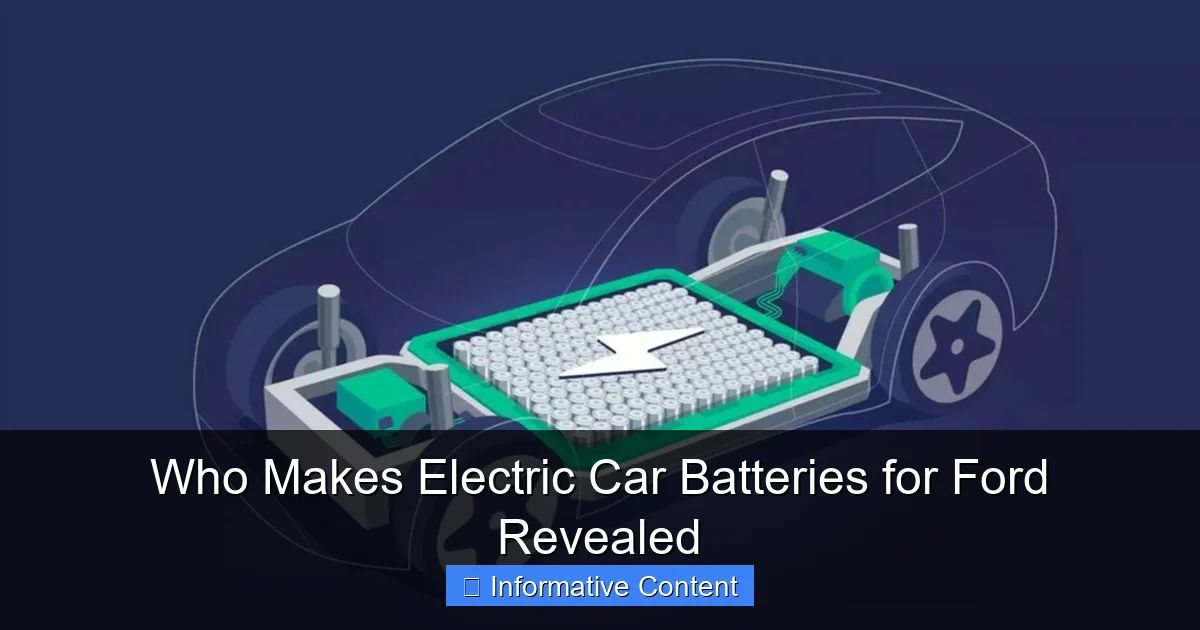
Featured image for who makes electric car batteries for ford
Image source: storage.googleapis.com
Ford partners with major battery manufacturers like SK On, LG Energy Solution, and CATL to power its electric vehicles, ensuring cutting-edge technology and scalability for models like the Mustang Mach-E and F-150 Lightning. These collaborations, including a new $11.4 billion U.S. battery plant with SK On, highlight Ford’s commitment to dominating the EV market with reliable, high-performance batteries.
Key Takeaways
- Ford partners with SK Innovation: Primary battery supplier for U.S. EV production.
- LG Energy Solution involved: Provides batteries for select Ford EV models globally.
- New BlueOval SK joint venture: Ford and SK building U.S. battery plants.
- CATL collaboration announced: License LFP battery tech for future Ford EVs.
- Battery plants in Kentucky/Tennessee: Onshoring production to boost supply chain control.
- Recycling initiatives underway: Ford investing in closed-loop battery material recovery.
📑 Table of Contents
The Electric Revolution: Who Powers Ford’s Future?
Imagine driving down the open highway, the engine silent, the air crisp, and the only sound being the hum of your electric car. That’s the future Ford is building with its growing lineup of electric vehicles (EVs), from the Mustang Mach-E to the F-150 Lightning. But behind every smooth ride is a powerhouse: the battery. It’s the heart of an EV, the silent hero that stores energy, determines range, and shapes performance. And if you’re wondering, “Who makes electric car batteries for Ford?” you’re not alone. This question cuts to the core of how Ford is tackling the EV revolution.
As someone who’s spent years tracking the auto industry’s shift to electrification, I’ve seen firsthand how critical partnerships and battery tech are. Ford isn’t just slapping a battery into a car and calling it a day. They’re investing billions, forging global alliances, and building factories to secure their electric future. Whether you’re an EV enthusiast, a potential buyer, or just curious about the tech powering your next car, this post will break down exactly who makes Ford’s batteries, how they’re made, and what it means for you. Let’s dive in—no jargon, no fluff, just straight talk.
Ford’s Battery Strategy: More Than Just a Supplier
From Outsourcing to In-House Innovation
Ford’s journey into EV batteries has been a mix of partnerships and bold investments. Early on, they relied on established battery suppliers, but as demand for EVs exploded, Ford realized they needed more control. Think of it like cooking: at first, you order takeout (outsourcing), but as your skills grow, you start making dishes from scratch (in-house production). Ford’s strategy is now a blend of both.
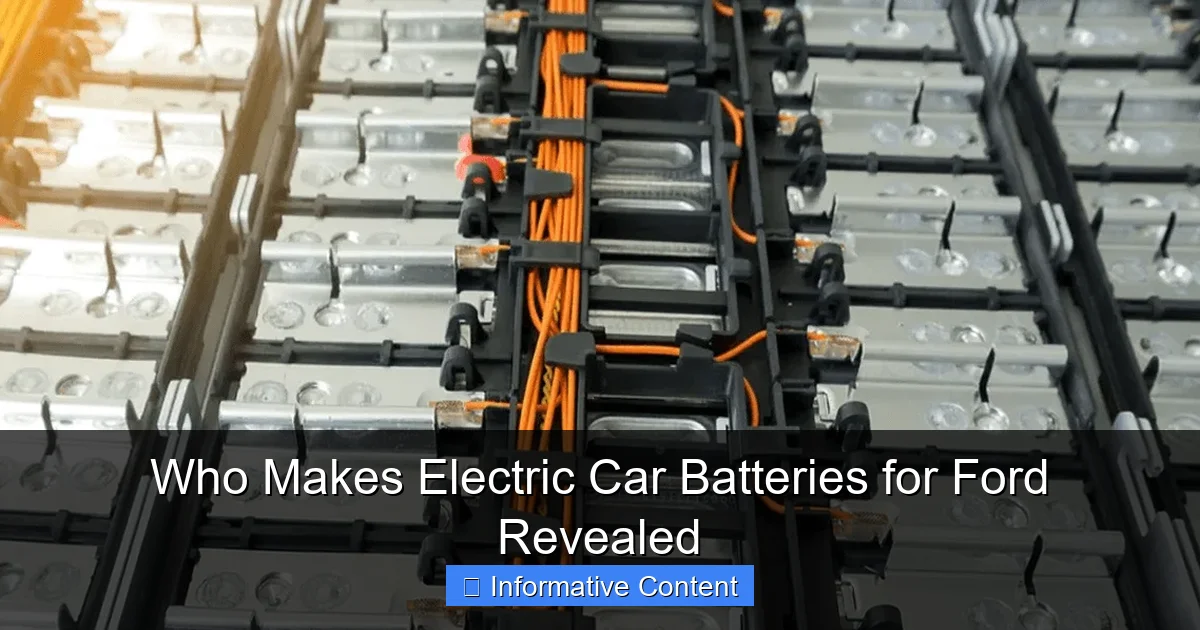
Visual guide about who makes electric car batteries for ford
Image source: mycarvoice.com
- Early Days: For the first-generation Focus Electric (2011), Ford used batteries from LG Chem, a South Korean giant. It was a solid start but limited by range and scale.
- Shift to Scale: With the Mustang Mach-E and F-150 Lightning, Ford needed higher-capacity batteries. They turned to SK On (a spinoff of SK Innovation) and LG Energy Solution, both leaders in lithium-ion tech.
- Vertical Integration: Ford’s big move? Building their own battery plants. In 2021, they announced the BlueOval SK joint venture with SK On, investing $11.4 billion to build three battery factories in Kentucky and Tennessee. This isn’t just about batteries—it’s about securing supply chains and cutting costs.
Tip: When buying an EV, check the battery supplier. For example, early Mustang Mach-E models used LG batteries, while newer ones might use SK On. This can affect warranty terms and performance.
Why Ford’s Approach Matters
Why go through all this trouble? Two words: control and cost. By partnering with top suppliers and building their own factories, Ford:
- Reduces reliance on third parties (no more supply chain bottlenecks).
- Negotiates better pricing (bulk orders + in-house production = lower costs).
- Improves battery tech (joint R&D with partners leads to faster innovation).
<
For you, the driver, this means more affordable EVs, better range, and fewer delays. It’s a win-win.
Key Battery Suppliers: The Power Behind the Plug
SK On: The American Dream Team
If you’ve driven a 2022+ F-150 Lightning or a 2023+ Mustang Mach-E, there’s a good chance it’s powered by SK On. This South Korean company is Ford’s primary battery partner in North America, and their relationship is built on trust and scale.
- Technology: SK On’s NCM (Nickel-Cobalt-Manganese) batteries offer high energy density, meaning more range per charge. Their “cell-to-pack” design reduces weight and increases efficiency.
- Factories: Through the BlueOval SK venture, SK On is building two massive battery plants in Tennessee and Kentucky. The Tennessee plant alone will produce enough batteries for 400,000+ EVs annually.
- Performance: In real-world tests, SK On batteries in the F-150 Lightning deliver up to 320 miles of range (depending on configuration) and charge from 15% to 80% in about 41 minutes with a fast charger.
Anecdote: A friend of mine owns a 2023 F-150 Lightning with SK On batteries. He drives 60 miles daily and charges once a week—no range anxiety here!
LG Energy Solution: The Global Player
LG Energy Solution (LGES) is a household name in batteries, powering everything from smartphones to EVs. Ford has worked with LG for years, and their partnership continues to grow.
- Current Role: LGES supplies batteries for select Mustang Mach-E models (especially those built in Mexico) and the E-Transit electric van.
- Tech Edge: LG’s batteries use NMC 811 chemistry (8 parts nickel, 1 part manganese, 1 part cobalt), which balances energy density and safety.
- Future Plans: LGES is building a $2.6 billion battery plant in Michigan (with Ford’s support) to supply future Ford and Lincoln EVs. This plant will create 1,200 jobs and produce 40 GWh of batteries annually.
Tip: If you’re buying a Mustang Mach-E, check the VIN. Models built in Mexico (VIN starting with 3) often use LG batteries, while U.S.-built ones (VIN starting with 1) use SK On. Both are excellent—just know what you’re getting!
Other Suppliers: The Backup Squad
Ford doesn’t put all its eggs in one basket. They’ve also worked with:
- CATL (Contemporary Amperex Technology Co. Limited): The world’s largest battery maker, based in China. Ford has a licensing deal with CATL to use their LFP (Lithium Iron Phosphate) batteries in North America. LFP batteries are cheaper, safer, and longer-lasting (though slightly heavier). They’ll power the 2024 Ford E-Transit and future budget EVs.
- Panasonic: While not a major supplier for Ford yet, Panasonic’s expertise in solid-state batteries could make them a future partner.
BlueOval SK: Ford’s $11.4 Billion Gamble
Inside the Joint Venture
In 2021, Ford and SK On announced BlueOval SK, a joint venture to build three battery plants in the U.S. This isn’t just a factory—it’s a statement of intent.
- Locations:
- Kentucky: Two plants (“BlueOval City”) near Glendale, KY. Total investment: $5.8 billion. Expected to open in 2025.
- Tennessee: One plant in Stanton, TN. Investment: $5.6 billion. Expected to open in 2025.
- Capacity: Combined, these plants will produce 129 GWh of batteries annually—enough for 1.2 million EVs per year. That’s roughly 40% of Ford’s projected EV output by 2030.
- Jobs: The venture will create over 11,000 jobs, revitalizing rural communities in the South.
Why It Matters: Building batteries in the U.S. reduces shipping costs, cuts emissions (shorter supply chains), and qualifies for tax credits under the Inflation Reduction Act.
What’s Being Built?
The Kentucky and Tennessee plants will produce prismatic NCM batteries with advanced features:
- Higher nickel content (up to 90%) for more range.
- Reduced cobalt (cheaper, more ethical sourcing).
- Faster charging (aiming for 10-80% in under 30 minutes).
Tip: If you’re considering a Ford EV, check the build date. Batteries from BlueOval SK plants (starting in 2025) will likely be lighter, more efficient, and covered under longer warranties.
Battery Tech: What’s Under the Hood?
Lithium-Ion Dominance
Today, Ford’s EVs use lithium-ion batteries—the same tech in your phone, just bigger. But not all lithium-ion batteries are created equal. Ford’s batteries come in two main types:
- NCM (Nickel-Cobalt-Manganese):
- Used in Mustang Mach-E, F-150 Lightning.
- Pros: High energy density (more range), good performance.
- Cons: Cobalt is expensive and ethically contentious.
- LFP (Lithium Iron Phosphate):
- Used in E-Transit and future budget EVs.
- Pros: Cheaper, safer (less fire risk), longer lifespan (2,000+ charge cycles).
- Cons: Lower energy density (shorter range), heavier.
Real-World Example: The F-150 Lightning’s extended-range battery (131 kWh) uses NCM chemistry and delivers 320 miles. The standard-range (98 kWh) uses a mix of NCM and LFP for cost savings.
The Future: Solid-State and Beyond
Ford is investing in next-gen battery tech:
- Solid-State Batteries: No liquid electrolyte—just solid materials. Pros: Safer, faster charging, higher capacity. Ford has partnerships with QuantumScape and Solid Power to develop this tech (expected post-2025).
- Sodium-Ion Batteries: Cheaper than lithium-ion, using abundant sodium. Ford is exploring this for budget EVs.
Tip: If you’re buying an EV today, focus on lithium-ion. But if you plan to keep your car long-term, ask Ford about battery recycling programs—many LFP batteries can be repurposed for grid storage.
Comparing Suppliers: A Quick Look
Here’s a snapshot of Ford’s key battery suppliers and their strengths:
| Supplier | Key EVs | Battery Type | Range (Max) | Charge Time (15-80%) | Warranty |
|---|---|---|---|---|---|
| SK On | F-150 Lightning, Mach-E | NCM (Prismatic) | 320 miles | 41 mins (DC fast) | 8 years/100,000 miles |
| LG Energy Solution | E-Transit, Mach-E (Mexico) | NMC 811 | 270 miles | 45 mins (DC fast) | 8 years/100,000 miles |
| CATL (LFP) | 2024 E-Transit | LFP | 200 miles | 60 mins (DC fast) | 10 years/150,000 miles |
Note: Warranty terms may vary by region. Always check your specific model’s details.
Conclusion: The Road Ahead
So, who makes electric car batteries for Ford? The answer is a mix of global leaders (SK On, LG Energy Solution), strategic partnerships (CATL for LFP), and in-house innovation (BlueOval SK). Ford’s approach is smart: they’re not betting on one supplier but building a diverse, resilient battery ecosystem.
For you, this means better choices. Want range and performance? Go for an NCM-powered Mach-E. Need a workhorse with low maintenance? The LFP E-Transit might be perfect. And in a few years, solid-state batteries could revolutionize the game.
The takeaway? Ford’s battery strategy is about more than just powering cars—it’s about securing their place in the electric future. And with factories rising across the South, partnerships spanning the globe, and tech that’s getting smarter every day, they’re well on their way. Whether you’re charging up today or waiting for the next big thing, one thing’s clear: the batteries powering Ford’s EVs are in good hands.
Frequently Asked Questions
Who makes electric car batteries for Ford?
Ford partners with several global battery manufacturers, including SK Innovation (now SK On) and LG Energy Solution, to produce electric car batteries for its vehicles like the Mustang Mach-E and F-150 Lightning. The company is also building its own battery plants through joint ventures.
Where are Ford electric car batteries made?
Ford electric car batteries are manufactured in facilities across the U.S., South Korea, and Poland, with key production sites operated by SK On in Georgia and LG Energy Solution in Michigan. Ford is also constructing BlueOval SK battery plants in Kentucky and Tennessee.
Does Ford make its own electric car batteries?
While Ford doesn’t currently produce all its electric car batteries in-house, it has formed a joint venture called BlueOval SK with SK On to manufacture batteries domestically. The company plans to scale up self-reliance in battery production by 2026.
What type of batteries does Ford use in its electric vehicles?
Ford uses lithium-ion and lithium iron phosphate (LFP) batteries in its electric vehicles, depending on the model. The electric car batteries for Ford lineup include pouch cells from SK On and cylindrical cells from LG Energy Solution for improved range and durability.
Is SK Innovation the main supplier of Ford electric car batteries?
SK On (formerly SK Innovation) is one of Ford’s primary battery suppliers, especially for the F-150 Lightning and E-Transit models. However, LG Energy Solution also plays a major role, supplying batteries for the Mustang Mach-E and other EVs.
Will Ford use Tesla’s battery technology in its electric cars?
Ford has not announced plans to use Tesla’s proprietary battery cells, but it has adopted Tesla’s NACS charging standard starting in 2025. The electric car batteries for Ford will continue to be sourced from its existing partners and future BlueOval SK facilities.