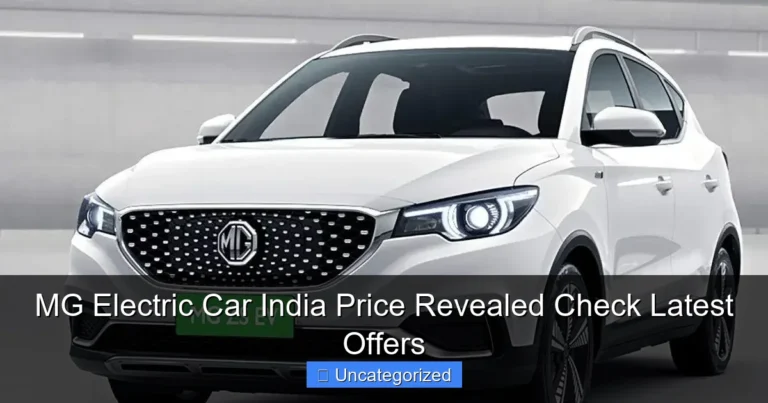
Who Makes MG Electric Cars Discover the Innovative Manufacturer Behind the Brand
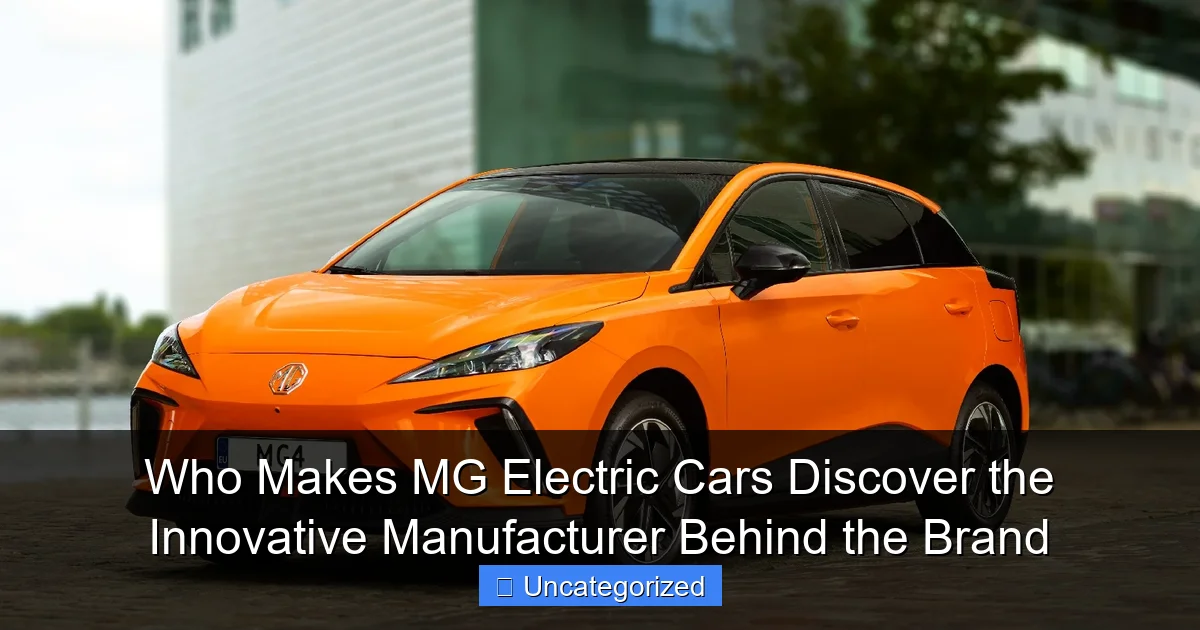
Featured image for who makes mg electric cars
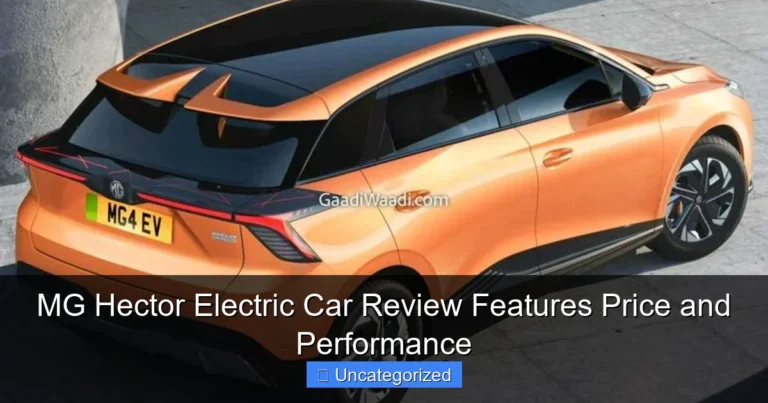
Image source: motoringworld.in
MG electric cars are manufactured by SAIC Motor, a state-owned Chinese automotive giant that acquired the historic British brand in 2007. Combining British design heritage with cutting-edge Chinese EV technology, SAIC has transformed MG into a forward-thinking electric vehicle brand, producing popular models like the MG4 and MG ZS EV for global markets.
Key Takeaways
- MG electric cars are made by SAIC Motor, a leading Chinese automaker.
- SAIC’s global R&D drives MG’s cutting-edge electric vehicle technology.
- MG EVs blend affordability with advanced features for mass-market appeal.
- Manufactured in China and exported to over 20 countries worldwide.
- SAIC’s legacy ensures MG’s quality and innovation in EV production.
- MG focuses on sustainable mobility with expanding EV lineups.
📑 Table of Contents
- Who Makes MG Electric Cars? Discover the Innovative Manufacturer Behind the Brand
- The Evolution of MG: From British Icon to Global EV Player
- SAIC Motors: The Powerhouse Behind MG Electric Cars
- MG Electric Car Models: A Closer Look at the Lineup
- How SAIC’s Global Strategy Powers MG’s Success
- Why MG Electric Cars Stand Out in a Crowded Market
- Conclusion: The Future of MG is Electric—and Global
Who Makes MG Electric Cars? Discover the Innovative Manufacturer Behind the Brand
When you think of iconic British automotive heritage, the MG badge is likely one of the first to come to mind. With a legacy dating back to the 1920s, the brand has long been associated with sporty roadsters, affordable performance, and British engineering. Fast forward to the 21st century, and MG has undergone a dramatic transformation—one that has positioned it at the forefront of the electric vehicle (EV) revolution. But who makes MG electric cars today? The answer may surprise you. While MG was once a purely British marque, the modern electric models are the product of a global automotive powerhouse with deep roots in China. Understanding this evolution reveals not just a change in ownership, but a strategic shift toward innovation, sustainability, and mass-market electrification.
Today, MG electric cars—such as the MG4 EV, MG ZS EV, and MG5 Electric—are gaining traction across Europe, Australia, Southeast Asia, and beyond. These vehicles are praised for their value, range, and modern tech, but their success hinges on more than just clever marketing. The real story lies behind the scenes: a manufacturer with the resources, scale, and vision to redefine what MG stands for in the age of electric mobility. In this deep dive, we’ll uncover who makes MG electric cars, explore the technological and industrial capabilities behind the brand, and examine how this once-iconic British nameplate has been revitalized for a new era of sustainable transportation.
The Evolution of MG: From British Icon to Global EV Player
A Legacy of British Innovation
Founded in 1924 by Cecil Kimber, MG (Morris Garages) began as a performance-focused offshoot of Morris Motors, producing sporty roadsters that quickly gained popularity among British motorists. The brand became synonymous with affordable sports cars, with models like the MGB and MGB GT achieving cult status in the 1960s and 70s. Over the decades, MG changed hands multiple times—passing through British Leyland, BMW, and Phoenix Venture Holdings—before facing a near-death experience in the early 2000s. The last true British-built MG, the MG TF, rolled off the line in 2011, marking the end of an era.
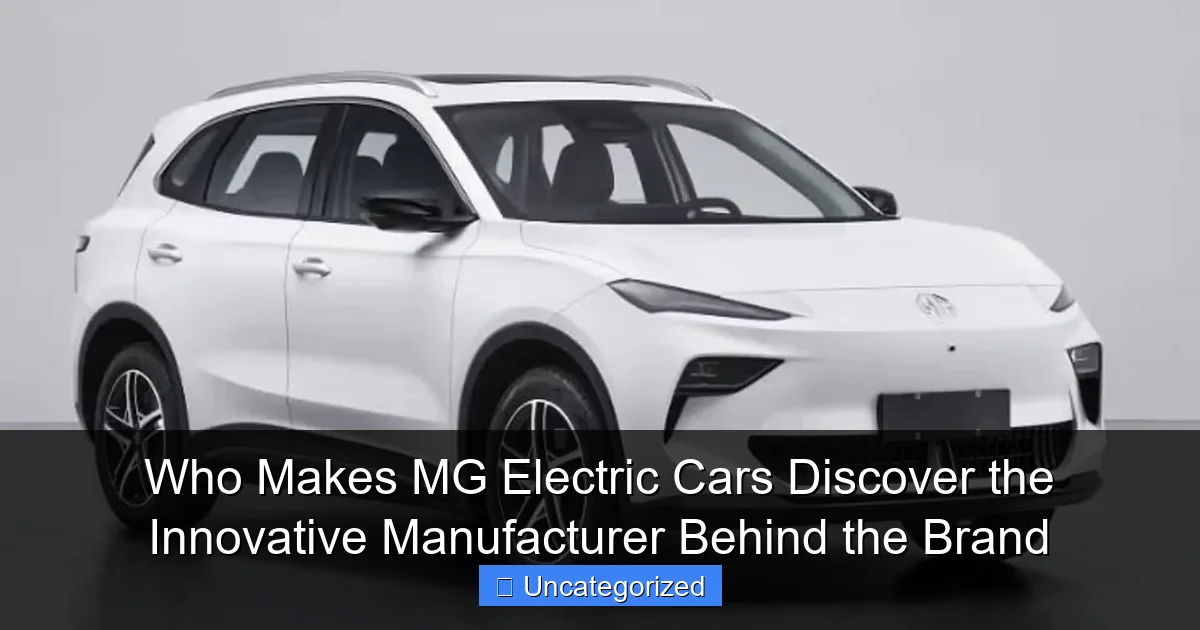
Visual guide about who makes mg electric cars
Image source: res.cloudinary.com
The Chinese Takeover: SAIC Motors Steps In
In 2005, Nanjing Automobile (NAC) acquired the MG brand, but it was the merger with Shanghai Automotive Industry Corporation (SAIC Motors) in 2007 that truly reshaped MG’s future. SAIC, one of China’s largest automakers and a state-owned enterprise, saw MG as a strategic asset to expand its global footprint. Unlike previous owners, SAIC didn’t just preserve the MG name—it invested heavily in modernizing the brand, shifting its focus from combustion engines to electric mobility. The acquisition wasn’t about nostalgia; it was about leveraging a recognizable badge to enter Western and emerging markets with a fresh, tech-forward lineup.
Rebirth as an Electric-First Brand
Under SAIC’s leadership, MG underwent a complete transformation. The Longbridge plant in the UK—once a symbol of MG’s British roots—was repurposed as an R&D and design center, while mass production shifted to SAIC’s state-of-the-art factories in China. The brand’s new mission: to deliver affordable, reliable, and technologically advanced electric vehicles to a global audience. This pivot wasn’t just a business decision—it aligned with China’s aggressive push toward electrification and SAIC’s goal of becoming a leader in the global EV market. Today, MG’s electric models are built on platforms co-developed by SAIC, with engineering teams in China, the UK, and India collaborating on design, safety, and software.
SAIC Motors: The Powerhouse Behind MG Electric Cars
Who is SAIC Motors?
SAIC Motor Corporation Limited (Shanghai Automotive Industry Corporation) is China’s largest automaker by production volume and one of the world’s top 10 automotive groups. Founded in 1955 and headquartered in Shanghai, SAIC operates through joint ventures with global giants like Volkswagen and General Motors, while also owning domestic brands such as Roewe, Maxus, and, of course, MG. In 2023, SAIC produced over 5 million vehicles, with a significant portion being electric or hybrid models. The company is also a major player in autonomous driving, battery technology, and connected car systems.
Global Manufacturing and Supply Chain
SAIC’s ability to produce high-quality, cost-effective EVs stems from its vertically integrated supply chain and massive production scale. Key factories for MG electric cars include:
- SAIC Ningde Plant (Fujian): Specializes in EV platforms and battery integration. The MG ZS EV and MG5 Electric are assembled here.
- SAIC Nanjing Plant (Jiangsu): Focuses on compact EVs like the MG4, using modular platforms shared with other SAIC brands.
- SAIC UK Technical Centre (Longbridge, Birmingham): Handles design, engineering, and software development for European-market models.
- SAIC Indonesia Plant (Bekasi): Produces right-hand drive EVs for ASEAN markets, including the MG Hector EV.
<
This global footprint allows MG to tailor vehicles to regional needs while maintaining economies of scale. For example, the MG4 EV sold in Europe has a slightly different suspension tuning and infotainment system compared to its Asian counterpart, thanks to local R&D input.
Technological Innovations and R&D
SAIC invests over 5% of its annual revenue into R&D—a figure that exceeds many Western automakers. Key innovations powering MG electric cars include:
- Modular Scalable Platform (MSP): A flexible EV architecture that underpins the MG4 and future models, enabling rapid development and cost savings.
- Silicon-Carbon Battery Technology: Used in the MG5 Electric, these batteries offer 10% more energy density than standard lithium-ion cells, extending range and reducing charge times.
- i-Smart Connectivity Suite: A proprietary infotainment system with voice control, over-the-air updates, and AI-driven driver assistance.
- Autonomous Driving Features: MG’s Pilot Assist system (available on the ZS EV) includes adaptive cruise control, lane-keeping, and traffic jam assist—features typically found in premium EVs.
These technologies are developed at SAIC’s 12 global R&D centers, including the Advanced Technology Research Institute in Shanghai and the UK’s Longbridge Innovation Centre.
MG Electric Car Models: A Closer Look at the Lineup
MG4 EV: The Game-Changing Hatchback
Launched in 2022, the MG4 EV is SAIC’s answer to the Volkswagen ID.3 and Hyundai Kona Electric. Built on the MSP platform, it offers:
- Range: Up to 450 km (WLTP) with the 64 kWh battery.
- Performance: 0-100 km/h in 7.7 seconds (Standard), or 5.9 seconds (XPOWER performance variant).
- Charging: 10-80% in 27 minutes (135 kW DC fast charging).
- Features: 10.25-inch touchscreen, wireless Apple CarPlay, and a 360-degree camera.
What sets the MG4 apart is its value proposition. Priced from £26,995 in the UK (after incentives), it undercuts rivals by £5,000–£8,000 while offering similar specs. SAIC’s scale allows MG to absorb costs and pass savings to consumers—a key strategy in competitive markets.
MG ZS EV: The Affordable SUV
The ZS EV is MG’s best-selling electric model, with over 100,000 units sold globally since 2019. Key highlights:
- Range: 440 km (Long Range version).
- Space: 448L boot capacity, 5-star Euro NCAP safety rating.
- Tech: MG Pilot suite, 10.1-inch touchscreen, and a panoramic sunroof.
Targeting families and urban commuters, the ZS EV is built at SAIC’s Ningde plant using recycled materials for interior trim—a nod to SAIC’s sustainability goals.
MG5 Electric: The First All-Electric Estate
Breaking new ground, the MG5 Electric is the world’s first all-electric estate (station wagon). Features include:
- Range: 400 km (WLTP).
- Utility: 578L boot (expandable to 1,456L).
- Innovation: Silicon-carbon battery with 20% faster charging than standard models.
Produced in China and shipped to Europe, the MG5 fills a gap in the EV market—offering practicality without sacrificing eco-credentials.
Future Models: What’s Next?
SAIC has confirmed several upcoming MG EVs:
- MG Cyberster: A high-performance roadster (0-100 km/h in 3.2 seconds) launching in 2024, co-developed with British designers.
- MG HS PHEV: A plug-in hybrid SUV with a 100 km electric range.
- MG One EV: A compact crossover targeting Gen Z buyers.
These models will leverage SAIC’s new Nebula Battery Platform, which promises 600 km range and 800V charging architecture by 2025.
How SAIC’s Global Strategy Powers MG’s Success
Localization: Building Cars for Local Markets
SAIC’s “Global Localization” strategy ensures MG electric cars meet regional demands. Examples include:
- Europe: Right-hand drive models, Euro NCAP safety standards, and winter-optimized battery heaters.
- Australia: Enhanced cooling systems for hot climates, and ruggedized suspensions for outback roads.
- India: Lower-cost variants with smaller batteries (e.g., MG ZS EV Standard Range).
This approach is supported by SAIC’s 40+ overseas sales offices and 150+ service centers worldwide.
Sustainability and Green Manufacturing
SAIC aims to achieve carbon neutrality by 2050. Initiatives include:
- Green Factories: SAIC’s Nanjing plant runs on 80% solar power.
- Battery Recycling: A closed-loop system recovers 95% of lithium, nickel, and cobalt.
- Eco-Packaging: Reduced plastic use in vehicle shipping (cutting 1,200 tons of waste annually).
These efforts align with MG’s brand promise: “Affordable Electrification, Sustainable Innovation.”
Strategic Partnerships and Market Penetration
SAIC’s partnerships amplify MG’s reach:
- BP Pulse: Fast-charging network access in the UK.
- ChargePoint: Integration with North American EV infrastructure.
- Bosch: Co-development of autonomous driving systems.
As a result, MG electric cars are now sold in over 80 countries, with 2023 sales exceeding 150,000 units—a 65% increase from 2022.
Why MG Electric Cars Stand Out in a Crowded Market
Value-Driven Pricing
MG’s pricing strategy is simple: deliver premium features at economy prices. For example:
- The MG4 EV costs £26,995 (after UK grant), while the comparable Volkswagen ID.3 starts at £34,400.
- The MG ZS EV Long Range is 20% cheaper than the Kia Niro EV.
This is possible because SAIC leverages shared platforms, bulk purchasing, and low labor costs—without cutting corners on quality.
Reliability and After-Sales Support
MG electric cars come with:
- 7-year/150,000-mile warranty (covers battery and drivetrain).
- Free home charger installation (in select markets).
- Mobile servicing vans in Europe for doorstep maintenance.
SAIC’s global service network ensures parts availability—a critical factor for long-term ownership.
Cutting-Edge Tech at Entry-Level Prices
MG packs features usually reserved for luxury EVs, such as:
- Vehicle-to-Load (V2L): Power external devices (e.g., camping gear) via the car’s battery.
- Over-the-Air (OTA) Updates: Free software upgrades for infotainment and safety systems.
- AI-Powered Voice Assistant: Natural language control for navigation, climate, and entertainment.
These innovations are developed in-house by SAIC’s 5,000+ software engineers.
Data Table: MG Electric Car Specifications (2024 Models)
| Model | Battery Capacity | Range (WLTP) | 0-100 km/h | DC Fast Charging | Starting Price (UK) |
|---|---|---|---|---|---|
| MG4 EV Standard | 51 kWh | 350 km | 7.7 sec | 135 kW (10-80% in 27 min) | £26,995 |
| MG4 EV Long Range | 64 kWh | 450 km | 7.7 sec | 135 kW (10-80% in 30 min) | £29,495 |
| MG ZS EV Standard | 51 kWh | 320 km | 8.2 sec | 77 kW (10-80% in 42 min) | £30,495 |
| MG ZS EV Long Range | 73 kWh | 440 km | 8.2 sec | 100 kW (10-80% in 40 min) | £33,995 |
| MG5 Electric | 50.3 kWh | 400 km | 8.0 sec | 80 kW (10-80% in 40 min) | £27,995 |
Conclusion: The Future of MG is Electric—and Global
The story of MG electric cars is more than a tale of corporate ownership—it’s a blueprint for how legacy brands can thrive in the EV era. SAIC Motors didn’t just rescue MG from obscurity; it reimagined the brand for a world demanding affordable, sustainable, and tech-savvy mobility. By combining China’s manufacturing prowess with British design heritage and global market insight, SAIC has turned MG into a formidable EV contender. From the agile MG4 to the practical MG5, these vehicles prove that value and innovation aren’t mutually exclusive.
Looking ahead, MG’s future is bright. With SAIC’s Nebula Battery Platform, expanding global footprint, and commitment to sustainability, the brand is poised to capture an even larger share of the electric vehicle market. Whether you’re a first-time EV buyer, a budget-conscious commuter, or an enthusiast craving cutting-edge tech, MG electric cars—backed by the industrial might of SAIC—deliver on all fronts. So the next time someone asks, “Who makes MG electric cars?”, you can answer with confidence: It’s SAIC Motors—a global innovator redefining what MG means for a new generation.
Frequently Asked Questions
Who makes MG electric cars?
MG electric cars are manufactured by SAIC Motor, a Chinese state-owned automotive giant that acquired the historic British brand in 2007. The company combines MG’s legacy with cutting-edge EV technology to produce affordable, high-performance electric vehicles.
Is MG still a British brand, and who makes their electric cars today?
While MG originated in the UK, its electric cars are now designed and built by SAIC Motor in China. The brand retains British design influences but operates under SAIC’s global EV strategy.
Where are MG electric cars made, and by whom?
MG electric cars are primarily produced by SAIC Motor in China, with manufacturing plants in Shanghai and other key locations. Some models for the European market are assembled in Thailand to streamline global distribution.
What company owns MG and makes its electric vehicles?
SAIC Motor (Shanghai Automotive Industry Corporation) owns MG and is responsible for developing its electric car lineup. The company invests heavily in battery technology and sustainable mobility solutions.
Are MG electric cars reliable, and who stands behind them?
MG electric cars are backed by SAIC Motor, one of the world’s largest automakers, ensuring strong R&D support and warranty coverage. Their EVs are known for solid build quality and competitive battery warranties.
Why did SAIC Motor choose to revive MG as an electric car brand?
SAIC leveraged MG’s iconic brand recognition to enter the global EV market, blending its heritage with modern electric vehicle technology. This strategy has helped MG become a top-selling EV brand in several markets.