Why Have Ford and Chevy Not Built Better Electric Cars Yet
Featured image for why have ford and chevy not built better electric cars
Image source: publicdomainpictures.net
Ford and Chevy have lagged in the electric vehicle race due to decades of reliance on profitable gas-powered trucks and SUVs, delaying critical EV investments. While competitors surged ahead, both automakers underestimated the speed of the EV revolution, leaving them scrambling to adapt aging platforms and supply chains. Now, they’re playing catch-up with rushed, overpriced models that lack the innovation and range of market leaders like Tesla and Hyundai.
Key Takeaways
- Legacy systems slow innovation: Outdated platforms hinder rapid EV development.
- Battery tech lags behind: Investment in next-gen batteries is insufficient.
- Consumer demand misunderstood: Misreading market preferences delays better models.
- Production costs prioritized: Short-term savings compromise long-term EV quality.
- R&D underfunded vs. rivals: Competitors outspend on electric innovation.
- Software gaps persist: Weak tech integration reduces EV competitiveness.
📑 Table of Contents
- Why Have Ford and Chevy Not Built Better Electric Cars Yet?
- The Legacy Problem: How Tradition Slows Innovation
- Supply Chain and Battery Challenges: The Invisible Roadblocks
- Charging Infrastructure: A Game of Catch-Up
- Software and Tech: Where Legacy Brands Struggle
- Competition and Market Pressure: Why They’re Finally Waking Up
- Data Table: Ford and Chevy EVs vs. Key Competitors (2023-2024)
- The Road Ahead: Can Ford and Chevy Catch Up?
Why Have Ford and Chevy Not Built Better Electric Cars Yet?
Imagine this: You’re at a family barbecue, and your uncle proudly shows off his brand-new electric car. It’s sleek, fast, and has a range that puts older models to shame. Then, your cousin chimes in, “I’ve been waiting for Ford or Chevy to drop something like this. Where are they?” It’s a fair question. After all, these two American automotive giants have been building cars for over a century. They’ve mastered trucks, muscle cars, and even hybrids. So why, in the age of electric vehicles (EVs), do their offerings sometimes feel… underwhelming?
You’re not alone if you’ve asked this. Ford and Chevy have been in the EV game for years—longer than many newer brands. Yet, when compared to Tesla, Hyundai, or even Kia, their electric cars often seem to lag behind in range, technology, or charging speed. Is it a lack of innovation? Bad timing? Or something deeper rooted in their corporate DNA? Let’s take a closer look at why Ford and Chevy haven’t quite hit the EV bullseye yet—and what might finally push them to catch up.
The Legacy Problem: How Tradition Slows Innovation
Ford and Chevy aren’t just car companies—they’re cultural icons. Their brands are built on decades of internal combustion engine (ICE) dominance, especially in trucks and performance vehicles. The Ford F-150 and Chevy Silverado aren’t just vehicles; they’re symbols of American work ethic and rugged reliability. But that legacy, while powerful, can also be a heavy anchor when it comes to pivoting toward EVs.
Visual guide about why have ford and chevy not built better electric cars
Image source: i1.wp.com
Investing in the Past While Planning for the Future
Both companies have spent billions perfecting gasoline-powered engines, transmissions, and manufacturing lines. These systems are deeply embedded in their supply chains, labor forces, and even dealership networks. Shifting to EVs isn’t just about swapping engines for batteries—it’s about rethinking everything from factory layouts to sales training.
- Example: Ford’s Rouge Complex in Michigan, where the F-150 is built, is one of the most advanced ICE plants in the world. Retrofitting it for EVs required massive investments and a complete rethinking of workflow.
- Tip: When evaluating automakers’ EV progress, look at their retrofitting speed—how quickly they can adapt existing factories. It’s a sign of commitment.
Chevy, meanwhile, has faced similar challenges with its Bowling Green plant, home of the Corvette. The C8 Corvette’s mid-engine layout was a huge shift—but going electric? That’s a whole new ballgame.
Fear of Cannibalizing Their Own Sales
Here’s a tough truth: Ford and Chevy make most of their profits from trucks and SUVs. These vehicles have high margins and strong customer loyalty. If they release a great EV pickup, they risk eating into sales of their best-selling ICE models. It’s like a restaurant introducing a vegan menu—it might attract new customers, but will it alienate the meat lovers who keep the lights on?
This “cannibalization anxiety” is real. Tesla didn’t have this problem—it started with EVs and never looked back. But legacy automakers have to walk a tightrope, balancing innovation with financial stability.
Supply Chain and Battery Challenges: The Invisible Roadblocks
Even if Ford and Chevy wanted to build better EVs, they’re up against a global battery shortage and supply chain chaos. The heart of any EV is its battery—specifically, the lithium, nickel, and cobalt that go into it. These materials are expensive, politically sensitive, and often sourced from unstable regions.
Why Battery Production Is a Bottleneck
Let’s break it down. A single EV battery can contain:
- 10 kg of lithium
- 30 kg of nickel
- 5 kg of cobalt
Now multiply that by hundreds of thousands of vehicles. Ford’s F-150 Lightning alone has a 131 kWh battery. That’s a lot of lithium.
Both Ford and Chevy have announced partnerships with battery makers like SK On (Ford) and LG Energy Solution (Chevy), but building gigafactories takes years. For example:
- Ford’s BlueOval SK battery plants in Kentucky and Tennessee won’t be at full capacity until 2026.
- Chevy’s Ultium Cells JV with LG in Ohio has faced delays due to labor strikes and equipment issues.
Until these factories are running smoothly, EV production will be limited—and innovation slows.
The Cobalt Conundrum
Cobalt is a big problem. Most of it comes from the Democratic Republic of Congo, where mining practices raise serious ethical and environmental concerns. Ford and Chevy have pledged to reduce cobalt use, but alternatives like lithium-iron-phosphate (LFP) batteries aren’t as energy-dense. That means lower range or heavier batteries—trade-offs that hurt EV competitiveness.
Pro tip: When comparing EVs, check the battery chemistry. LFP batteries are cheaper and safer, but NMC (nickel-manganese-cobalt) offers better range. Ford’s Mustang Mach-E uses NMC, while the Lightning offers LFP as an option—a sign they’re still figuring it out.
Charging Infrastructure: A Game of Catch-Up
Here’s a hard truth: No matter how good an EV is, it’s useless if you can’t charge it. And while Tesla built its own Supercharger network early, Ford and Chevy relied on third-party chargers—many of which are slow, unreliable, or broken.
The Charging Network Gap
In 2023, Tesla had over 17,000 Superchargers in North America. Meanwhile, Electrify America (backed by Volkswagen) had around 800. Ford and Chevy vehicles can use both, but:
- Superchargers are often crowded or reserved for Tesla drivers.
- Third-party chargers have spotty uptime—studies show up to 20% are out of service at any time.
This creates “charging anxiety,” which hurts EV adoption. Ford’s solution? A partnership with Tesla to give Ford owners access to 12,000 Superchargers starting in 2024. Chevy is doing the same. But it’s a Band-Aid, not a long-term fix.
Home Charging: The Forgotten Piece
Most EV charging happens at home, but Ford and Chevy haven’t made this easy. Their home chargers are:
- Expensive (often $700+)
- Not always included in purchase
- Installation can be a headache (permits, electrician costs)
Compare this to Hyundai or Kia, which offer free home chargers and installation with new EVs. Ford and Chevy are starting to catch up (the Lightning comes with a free charger in some markets), but it’s inconsistent.
Software and Tech: Where Legacy Brands Struggle
Modern EVs aren’t just about batteries and motors—they’re computers on wheels. And here, Ford and Chevy are playing catch-up.
Outdated Infotainment and Over-the-Air Updates
Ford’s SYNC system and Chevy’s Infotainment 3 feel clunky compared to Tesla’s minimalist interface or Hyundai’s intuitive setup. Key issues:
- Slow processing speeds (laggy touchscreens)
- Fewer app integrations (no native Spotify, limited Apple CarPlay/Android Auto)
- No true over-the-air (OTA) updates—many updates require a dealership visit
Example: The Mustang Mach-E has SYNC 4A, which is better—but still not as seamless as Tesla’s system. Chevy’s Blazer EV has Google Built-In, which is a step forward, but early reviews note occasional glitches.
Autopilot and Driver Assistance: A Mixed Bag
Ford’s BlueCruise and Chevy’s Super Cruise offer hands-free driving on highways—but only on pre-mapped roads. Tesla’s Full Self-Driving (FSD) is more aggressive, though controversial. The real issue? Ford and Chevy’s systems are reactive, not proactive. They don’t learn from drivers or adapt as quickly.
Tip: If you care about driver tech, test-drive both systems. BlueCruise works well on interstates, but Super Cruise has better lane centering. Neither matches Tesla’s ambition.
Competition and Market Pressure: Why They’re Finally Waking Up
The good news? Ford and Chevy are improving—and fast. Why? Because the market is forcing them to.
The Rise of Affordable EVs
Tesla’s Model 3 and Model Y set the standard for range and tech. But newer entrants like:
- Hyundai Ioniq 5 (300+ miles, 800V fast charging)
- Kia EV6 (similar specs, lower price)
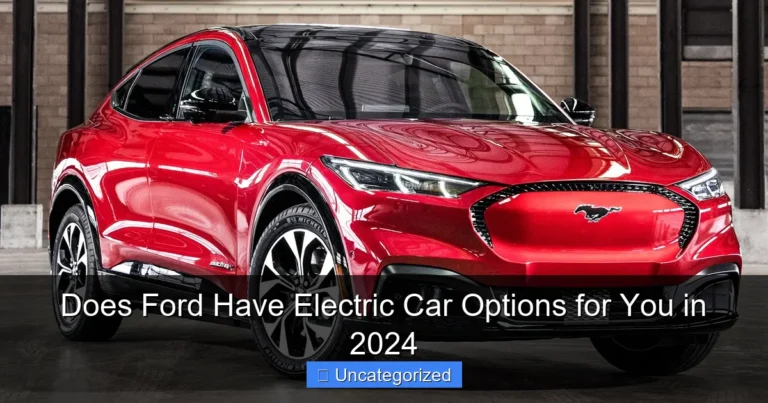
- Ford’s own F-150 Lightning (240–320 miles, but $60K+)
have raised the bar. Chevy’s Equinox EV (319 miles, $34,995 after tax credit) is a direct response. It’s proof they’re listening.
Regulatory Pressure
The U.S. government is pushing hard for EVs. The Inflation Reduction Act (IRA) ties tax credits to:
- Battery materials sourced from North America
- Final assembly in the U.S.
- MSRP under $80K for trucks, $55K for cars
This pushed Ford to restructure its Lightning lineup to qualify. Chevy’s Equinox EV was designed from the ground up to meet IRA rules.
Consumer Demand
Surveys show 40% of Americans are “seriously considering” an EV for their next car. Ford and Chevy can’t ignore that. The Lightning’s 200,000+ reservations in 2022 proved there’s demand—if they build it, people will come.
Data Table: Ford and Chevy EVs vs. Key Competitors (2023-2024)
| Model | Starting Price | Range (EPA) | Fast Charging (10-80%) | Key Tech Feature |
|---|---|---|---|---|
| Ford Mustang Mach-E | $42,995 | 247–314 miles | 40 mins (150 kW) | SYNC 4A, BlueCruise |
| Ford F-150 Lightning | $59,974 | 240–320 miles | 41 mins (150 kW) | Pro Power Onboard, Tesla NACS port (2024) |
| Chevy Blazer EV | $56,715 | 279–320 miles | 30 mins (190 kW) | Google Built-In, Super Cruise |
| Chevy Equinox EV | $34,995 (after tax credit) | 319 miles | 30 mins (190 kW) | Google Built-In, 17.7″ touchscreen |
| Hyundai Ioniq 5 | $41,650 | 220–303 miles | 18 mins (350 kW) | 800V architecture, Vehicle-to-Load (V2L) |
| Tesla Model Y | $43,990 | 260–330 miles | 25 mins (250 kW) | OTA updates, Full Self-Driving (FSD) |
This table shows Ford and Chevy are competitive on price and range, but lag in fast charging speed and software polish. The Equinox EV is a standout for affordability, but the Mach-E and Lightning still can’t match Hyundai’s 800V system.
The Road Ahead: Can Ford and Chevy Catch Up?
So, why haven’t Ford and Chevy built better electric cars yet? The answer isn’t simple—but it’s not hopeless. They’re grappling with:
- Legacy systems that slow innovation
- Supply chain hurdles (batteries, chips, materials)
- Charging infrastructure gaps
- Software shortcomings in infotainment and autonomy
But here’s the thing: They’re trying. The F-150 Lightning is the best-selling EV pickup. The Equinox EV is a game-changer for affordable EVs. Ford’s partnership with Tesla for charging access is smart. Chevy’s Ultium platform promises flexibility for future models.
The real test will be the next 3–5 years. Can Ford and Chevy:
- Scale battery production to meet demand?
- Improve software to match Tesla and Hyundai?
- Build a reliable, widespread charging network?
If they do, we might finally see the electric Mustang or Corvette we’ve been waiting for. If not, they risk becoming the Blockbuster of the EV era—remembered more for what they could have done than what they actually built.
For now, the message to Ford and Chevy is clear: The world is watching. And the clock is ticking.
Frequently Asked Questions
Why have Ford and Chevy not built better electric cars compared to Tesla?
Ford and Chevy have faced challenges in transitioning from legacy manufacturing systems and ICE-focused supply chains to EV innovation. While Tesla started as an EV-only company, Ford and Chevy must balance existing production lines, labor unions, and shareholder expectations, slowing their EV development pace.
Are Ford and Chevy falling behind in the electric car market?
Yes, both brands are playing catch-up in the electric car market due to delayed investments in dedicated EV platforms and battery technology. Their reliance on retrofitting existing models (like the Mach-E or Blazer EV) limits performance and efficiency compared to purpose-built EVs from rivals.
Why haven’t Ford and Chevy built better electric cars with longer range?
Building better electric cars requires advanced battery tech and lightweight materials, areas where Ford and Chevy have lagged behind early adopters. Recent partnerships (e.g., GM’s Ultium batteries) aim to close the gap, but scaling production takes time.
What’s holding back Ford and Chevy’s electric car innovation?
Legacy automakers face internal resistance to change, high costs of retooling factories, and slower decision-making processes. Unlike startups, they must also navigate union labor agreements and maintain profitability from gas-powered trucks and SUVs.
Will Ford and Chevy ever build competitive electric cars?
Yes, both are investing billions in electric car programs, including new battery plants and software-defined vehicles. However, it may take 3–5 years before they consistently match Tesla and other EV leaders in performance, price, and charging infrastructure.
Why do Ford and Chevy’s electric cars lack cutting-edge tech?
Their traditional approach to vehicle development prioritizes reliability over rapid tech integration, delaying features like over-the-air updates or advanced autonomy. Shifting to software-driven platforms is a cultural and engineering hurdle they’re still overcoming.