Does Nissan Make Electric Cars Explore Their EV Lineup Now
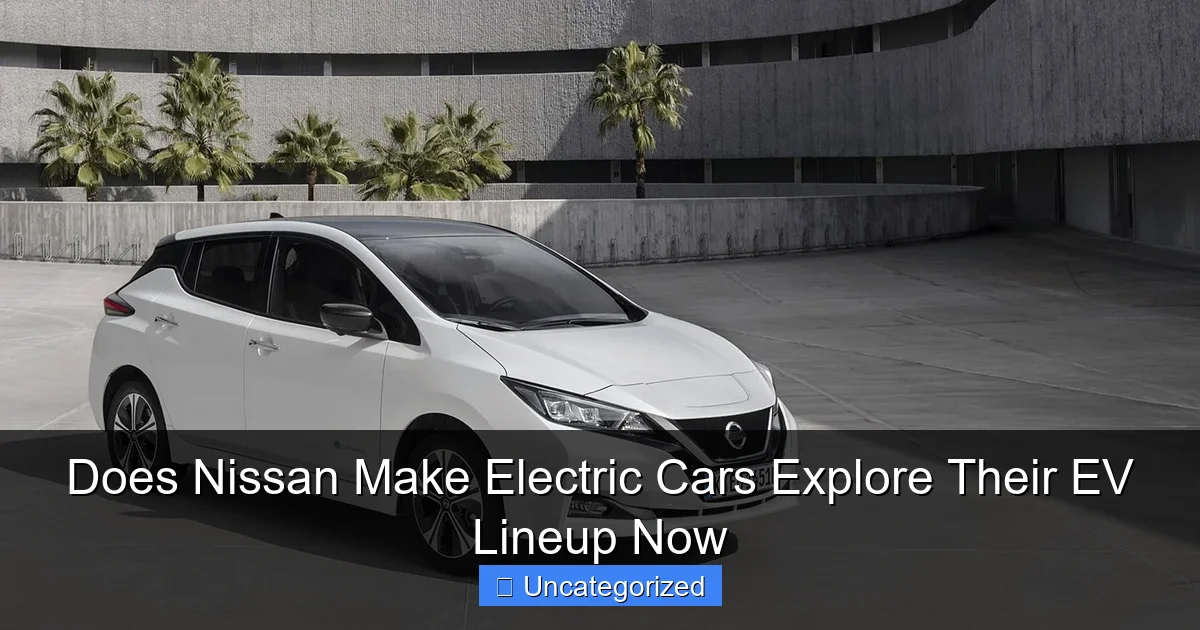
Featured image for does nissan make electric cars
Image source: d22frcvnzoa9by.cloudfront.net
Yes, Nissan is a pioneer in electric vehicles (EVs) and currently offers a diverse EV lineup, led by the popular Nissan LEAF and the all-new, more powerful Ariya SUV. With decades of EV expertise since the LEAF’s 2010 debut, Nissan continues to expand its electric offerings, combining affordability, innovation, and sustainability. The brand is fully committed to an electrified future, with plans to launch even more EVs globally in the coming years.
Key Takeaways
- Nissan leads in EVs: Pioneered with Leaf, now expanding its electric lineup.
- Leaf remains popular: Affordable, reliable choice for first-time EV buyers.
- Ariya is the future: New SUV offers 300+ miles range and advanced tech.
- Fast charging available: 130 kW DC fast charging on newer models.
- Global EV commitment: Aiming for 40% electrified sales by 2030.
📑 Table of Contents
- Does Nissan Make Electric Cars? A Deep Dive into Their EV Evolution
- The Birth of Nissan’s Electric Revolution: A Legacy of Innovation
- Current Nissan Electric Vehicle Lineup: Models You Can Buy Today
- Technology and Innovation: What Sets Nissan EVs Apart
- Real-World Performance: Range, Cost, and Ownership Experience
- Future Outlook: What’s Next for Nissan’s EV Expansion?
- Conclusion: Nissan Is All-In on Electric Mobility
- Data Table: Nissan EV Lineup Comparison (2023–2024 Models)
Does Nissan Make Electric Cars? A Deep Dive into Their EV Evolution
In an era defined by rapid technological advancements and a global push toward sustainability, electric vehicles (EVs) have emerged as the cornerstone of modern transportation. Automakers worldwide are racing to electrify their fleets, and one name that consistently comes up in the conversation is Nissan. With decades of automotive innovation under its belt, Nissan has positioned itself as a pioneer in the electric vehicle market. But does Nissan make electric cars? The answer is a resounding yes—and not just one model, but an entire lineup of EVs designed to meet the diverse needs of today’s eco-conscious drivers.
Nissan’s journey into electrification began over a decade ago, long before EVs became a mainstream phenomenon. The company’s commitment to sustainability and innovation has resulted in a robust portfolio of electric vehicles that blend performance, practicality, and cutting-edge technology. Whether you’re a city commuter, a long-distance traveler, or a family seeking a reliable green vehicle, Nissan offers electric solutions that cater to a wide range of lifestyles. In this comprehensive guide, we’ll explore Nissan’s EV lineup, examine their technological advancements, discuss real-world performance, and provide practical insights to help you decide if a Nissan electric car is right for you.
The Birth of Nissan’s Electric Revolution: A Legacy of Innovation
From Concept to Reality: The Nissan Leaf
The story of Nissan’s electric vehicle success begins with the Nissan Leaf, launched in December 2010. As one of the first mass-market, affordable electric cars, the Leaf disrupted the automotive industry and became a symbol of accessible electrification. With a modest starting price and zero tailpipe emissions, it quickly gained traction among environmentally conscious consumers. By 2023, over 600,000 units had been sold globally, making it one of the best-selling EVs in history.
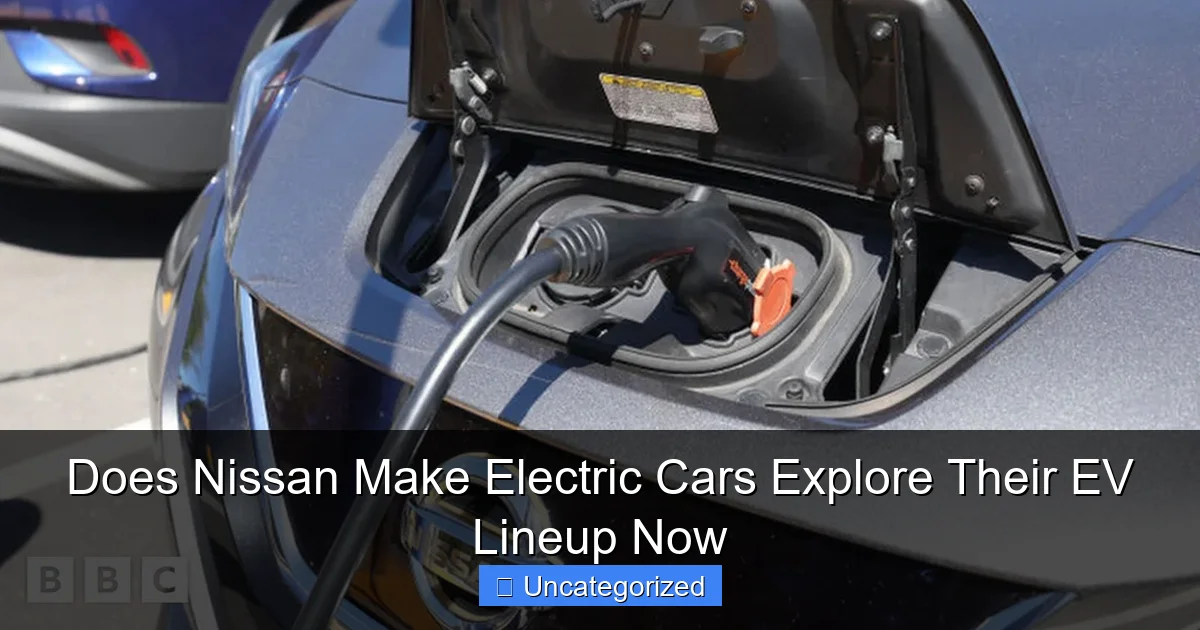
Visual guide about does nissan make electric cars
Image source: ichef.bbci.co.uk
The original Leaf featured a 24 kWh lithium-ion battery and offered around 73 miles of range—modest by today’s standards but revolutionary at the time. Its success was not just due to its electric powertrain but also Nissan’s bold marketing strategy, which included leasing battery packs to reduce upfront costs and offering home charging solutions. This approach helped alleviate early consumer concerns about battery life and charging infrastructure.
Lessons Learned and Continuous Improvement
Over the years, Nissan learned valuable lessons from the Leaf’s real-world performance. Early adopters reported range anxiety, battery degradation in extreme climates, and limited fast-charging capabilities. In response, Nissan introduced multiple generations of the Leaf, each improving on the last:
- 2013–2015: Introduction of the 30 kWh battery, increasing range to about 107 miles.
- 2018: Launch of the Leaf e+ with a 62 kWh battery, offering up to 226 miles of EPA-estimated range.
- 2023: Enhanced infotainment, improved regenerative braking (e-Pedal), and expanded ProPILOT driver-assist features.
These iterative upgrades demonstrate Nissan’s commitment to refining its EV technology based on user feedback and technological advancements. Unlike some automakers that abandoned early EV projects, Nissan doubled down, turning the Leaf into a trusted, reliable platform for future innovation.
A Strategic Vision: Nissan’s Ambition 2030 Plan
In 2021, Nissan unveiled its Ambition 2030 vision, a comprehensive roadmap to electrify its global lineup. The plan includes:
- Launching 23 new electrified models by 2030, including 15 fully electric vehicles.
- Investing $17.6 billion in electrification and battery technology.
- Expanding battery production with gigafactories in the U.S., U.K., and Japan.
- Targeting 40% electrified sales in the U.S. and 75% in Europe by 2026.
This aggressive strategy underscores Nissan’s long-term commitment to EVs, positioning it as a key player in the global transition to sustainable transportation. The company isn’t just making electric cars—it’s reimagining its entire business model around electrification.
Current Nissan Electric Vehicle Lineup: Models You Can Buy Today
Nissan Leaf: The Pioneer, Perfected
The Nissan Leaf remains the cornerstone of Nissan’s EV lineup, available in two main variants:
- Leaf S/SL: Equipped with a 40 kWh battery, offering up to 149 miles of range. Ideal for urban commuters and short-distance drivers.
- Leaf e+ (Plus): Features a 62 kWh battery with 212–226 miles of range (EPA), making it suitable for longer commutes and weekend getaways.
Key Features:
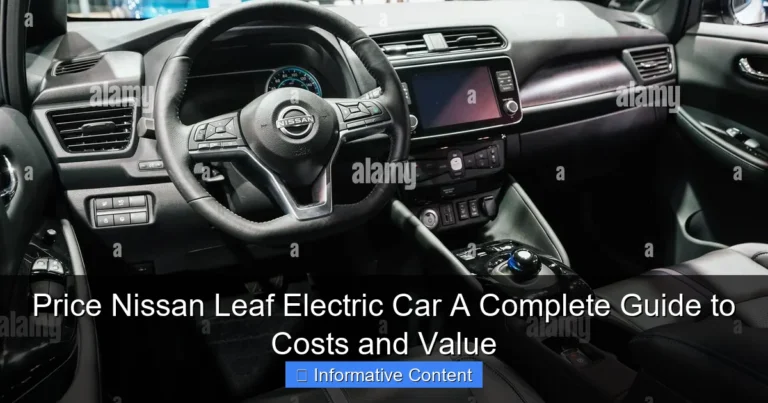
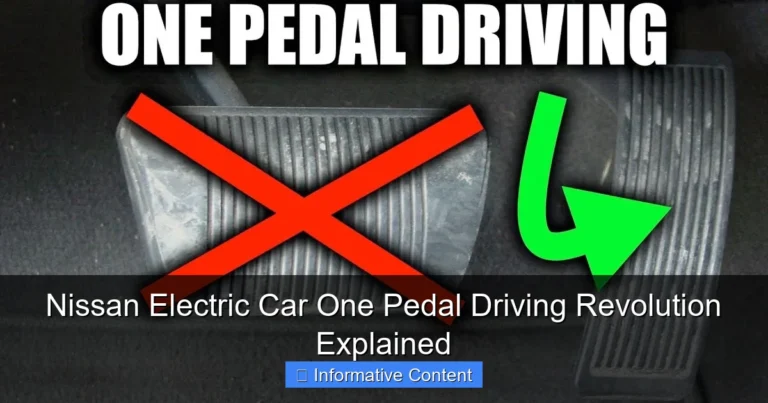
- e-Pedal technology: One-pedal driving that allows drivers to accelerate, decelerate, and stop using only the accelerator pedal.
- ProPILOT Assist: A semi-autonomous driving system that combines adaptive cruise control and lane-keeping assist.
- Apple CarPlay & Android Auto: Standard in all trims, with an 8-inch touchscreen and voice command support.
- DC Fast Charging (CHAdeMO): Capable of recharging up to 80% in 40–60 minutes at compatible stations.
Tip: If you live in a region with limited fast-charging infrastructure, the Leaf e+ is a better choice due to its longer range. However, the standard Leaf remains a cost-effective option for city dwellers with access to home charging.
Nissan Ariya: The Next-Generation Crossover SUV
Launched in 2022, the Nissan Ariya marks a significant leap forward in Nissan’s EV strategy. This all-electric crossover SUV blends premium design, advanced technology, and impressive range, targeting the growing demand for electric SUVs.
Variants and Range:
- Front-Wheel Drive (FWD): 63 kWh or 87 kWh battery, offering 216–304 miles of range.
- All-Wheel Drive (AWD) e-4ORCE: Dual motors with torque vectoring, providing 272–277 miles of range and enhanced handling.
Standout Features:
- e-4ORCE Dual Motor System: Delivers balanced power distribution, improved traction, and a smoother ride—especially in wet or snowy conditions.
- Zero Gravity Seats: Ergonomically designed for long-distance comfort.
- Advanced ProPILOT 2.0: Offers hands-free driving on highways with driver monitoring.
- 12.3-inch Dual Display: Seamless integration of digital gauge cluster and infotainment.
The Ariya is priced competitively with rivals like the Tesla Model Y and Hyundai Ioniq 5, but stands out with its refined interior, intuitive tech, and Nissan’s reputation for reliability. It’s an excellent choice for families and adventure seekers who want an electric SUV with substance and style.
Commercial EVs: The e-NV200 and Beyond
Nissan doesn’t limit its EV focus to passenger cars. The Nissan e-NV200 is a compact electric van designed for urban delivery services, small businesses, and fleet operators. With a 40 kWh battery and up to 124 miles of range, it’s perfect for last-mile logistics.
Why the e-NV200 Matters:
- Low operating costs: Electricity is cheaper than gasoline, and EVs require less maintenance.
- Zero emissions: Ideal for cities with strict air quality regulations (e.g., London, Paris).
- Flexible configurations: Available as a cargo van or a 5- or 7-passenger Combi version.
While not widely available in the U.S., the e-NV200 has been a hit in Europe and Japan, where urban delivery fleets are rapidly electrifying. Nissan is also exploring larger electric vans and trucks as part of its commercial EV strategy, signaling its intent to dominate the green logistics space.
Technology and Innovation: What Sets Nissan EVs Apart
e-Pedal: Revolutionizing the Driving Experience
One of Nissan’s most distinctive EV innovations is e-Pedal, a feature that allows drivers to control acceleration, deceleration, and stopping with just the accelerator pedal. When you lift off the pedal, strong regenerative braking kicks in, slowing the car significantly—often enough to come to a complete stop without using the brake.
Benefits of e-Pedal:
- Reduces brake wear and maintenance costs.
- Enhances energy recovery, extending range.
- Simplifies driving in stop-and-go traffic.
Tip: While e-Pedal takes some getting used to, most drivers adapt within a week. Use it in urban settings or during heavy traffic for maximum efficiency. For highway driving, you can disable it and use traditional braking.
ProPILOT and ProPILOT 2.0: Smarter, Safer Driving
Nissan’s ProPILOT Assist system (available on Leaf and Ariya) combines adaptive cruise control and lane-keeping assist to reduce driver fatigue on long trips. It’s not full autonomy, but it significantly eases the burden of highway driving.
The newer ProPILOT 2.0 (available on higher Ariya trims) takes it further:
- Hands-free driving: On pre-mapped highways, the system can steer, accelerate, and brake without driver input—as long as the driver remains attentive.
- Lane change assist: Automatically changes lanes when prompted.
- Driver monitoring: Uses cameras to ensure the driver is ready to take control if needed.
This level of automation puts Nissan on par with premium brands like Tesla and BMW, offering advanced safety and convenience at a more accessible price point.
Battery Technology and Charging Solutions
Nissan has invested heavily in lithium-ion battery innovation, focusing on:
- Durability: Batteries designed to last 10+ years with minimal degradation.
- Thermal management: Liquid cooling systems to maintain optimal battery temperature in extreme weather.
- Second-life applications: Repurposing used EV batteries for home energy storage (e.g., Nissan x Eaton x Enel).
Charging Infrastructure:
- Home Charging: Nissan partners with companies like ChargePoint and Qmerit to offer professional home installation of Level 2 chargers (240V), which can fully charge a Leaf in 7–8 hours.
- Public Charging: Ariya supports CCS (Combined Charging System) in North America, enabling faster charging at networks like Electrify America. The Leaf uses CHAdeMO, which is still widely available but gradually being phased out in favor of CCS.
- Fast Charging: Ariya can charge from 10% to 80% in about 30 minutes at a 130 kW DC fast charger.
Tip: Use apps like PlugShare or ChargeHub to locate compatible fast chargers along your route. Plan longer trips around charging stations with at least 100 kW capacity for minimal downtime.
Real-World Performance: Range, Cost, and Ownership Experience
Range and Efficiency: What to Expect
Nissan EVs offer competitive range for their class:
- Leaf (40 kWh): 149 miles – Best for city driving and short commutes.
- Leaf e+ (62 kWh): 212–226 miles – Ideal for suburban and mixed-use drivers.
- Ariya FWD (87 kWh): Up to 304 miles – Competes with premium EVs.
- Ariya AWD (87 kWh): 272–277 miles – Slight trade-off for all-weather performance.
Real-World Tip: Cold weather can reduce range by 20–30%. Precondition your battery while still plugged in (using the Nissan app) to minimize this effect.
Total Cost of Ownership: Savings Beyond the Sticker Price
While Nissan EVs have a higher upfront cost than gas-powered cars, they offer significant long-term savings:
- Fuel: Electricity costs about $0.12–$0.15 per kWh. Charging a Leaf e+ (62 kWh) costs ~$9–$12 for a full charge—equivalent to driving 226 miles.
- Maintenance: No oil changes, spark plugs, or exhaust systems. Brake pads last longer due to regenerative braking.
- Incentives: U.S. federal tax credit of up to $7,500 (subject to battery sourcing rules). Many states offer additional rebates (e.g., California: $2,000).
Example: A $45,000 Nissan Ariya could cost as little as $37,500 after the federal credit, making it competitive with similarly equipped gas SUVs when factoring in 5-year fuel and maintenance savings.
Reliability and Resale Value
Nissan EVs are known for reliability. The Leaf has consistently ranked high in reliability surveys (e.g., Consumer Reports), with few major recalls. The Ariya, being newer, has limited long-term data but shares many components with the proven Leaf platform.
Resale Value: EVs historically depreciate faster than gas cars, but the Leaf’s strong brand recognition helps. The Ariya is expected to retain value better due to its premium positioning and advanced tech.
Future Outlook: What’s Next for Nissan’s EV Expansion?
Upcoming Models and Concepts
Nissan has teased several upcoming EVs under its Ambition 2030 plan:
- Nissan Chill-Out: A sleek electric coupe-SUV concept previewing a future compact EV.
- Nissan Surf-Out: An electric pickup truck concept, signaling Nissan’s entry into the growing EV truck market.
- Nissan Max-Out: A convertible sports EV, highlighting Nissan’s focus on fun-to-drive electric performance.
These concepts suggest Nissan is moving beyond practicality to embrace style, performance, and versatility—key factors in attracting younger buyers and luxury customers.
Global Expansion and Localization
Nissan is building battery gigafactories in:
- Smyrna, Tennessee: To support U.S. EV production and qualify for tax credits under the Inflation Reduction Act.
- UK (Sunderland): Aiming for 100% electric production by 2030.
- Japan (Tochigi): Focused on solid-state battery R&D.
Local production reduces costs, improves supply chain resilience, and ensures Nissan EVs meet regional preferences and regulations.
Solid-State Batteries: The Game-Changer
Nissan is investing in solid-state battery (SSB) technology, which promises:
- 2x faster charging (10–15 minutes for full charge).
- 50% higher energy density (500+ miles on a single charge).
- Improved safety (no liquid electrolytes).
Nissan plans to launch its first SSB-powered EV by 2028, potentially leapfrogging competitors in the next phase of EV evolution.
Conclusion: Nissan Is All-In on Electric Mobility
So, does Nissan make electric cars? Absolutely—and not just one, but a diverse, evolving lineup designed for real-world needs. From the pioneering Nissan Leaf to the premium Ariya and future concepts like the Chill-Out and Surf-Out, Nissan is demonstrating that it’s not just keeping pace with the EV revolution—it’s helping to lead it.
What sets Nissan apart is its balance of affordability, innovation, and reliability. Whether you’re looking for a budget-friendly city car, a long-range family SUV, or a glimpse into the future of electric performance, Nissan offers compelling options. With aggressive electrification goals, cutting-edge technology like e-Pedal and ProPILOT 2.0, and a clear roadmap for solid-state batteries, Nissan is positioning itself as a long-term player in the global EV market.
For consumers, this means more choices, better value, and greater confidence in making the switch to electric. If you’ve been waiting for the right moment to go electric, now is the time—and Nissan’s lineup is worth serious consideration. Explore their current models, test drive an Ariya, and experience firsthand why Nissan remains a trusted name in the age of electrification.
Data Table: Nissan EV Lineup Comparison (2023–2024 Models)
| Model | Battery Size (kWh) | Range (EPA Est.) | Power (HP) | Charging (DC Fast, 10–80%) | Starting Price (USD) | Key Feature |
|---|---|---|---|---|---|---|
| Nissan Leaf S | 40 | 149 miles | 147 | 40–60 min | $28,040 | e-Pedal, ProPILOT Assist |
| Nissan Leaf e+ | 62 | 212–226 miles | 214 | 40–60 min | $36,040 | Longer range, enhanced tech |
| Nissan Ariya Engage (FWD) | 63 | 216 miles | 214 | 30–35 min | $43,190 | CCS charging, 12.3″ display |
| Nissan Ariya Venture+ (FWD) | 87 | 304 miles | 238 | 30 min | $47,190 | Max range, ProPILOT 2.0 |
| Nissan Ariya e-4ORCE (AWD) | 87 | 272–277 miles | 389 | 30–35 min | $51,190 | Dual motors, torque vectoring |
| Nissan e-NV200 (Cargo) | 40 | 124 miles | 109 | 30–40 min | ~$35,000 (varies by market) | Commercial EV, zero emissions |
Note: Prices and availability may vary by region. Federal tax credits and state incentives can significantly reduce net cost.
Frequently Asked Questions
Does Nissan make electric cars?
Yes, Nissan is a pioneer in the electric vehicle (EV) market and currently offers several electric models. Their lineup includes the popular Nissan LEAF and the more recent Nissan ARIYA, showcasing their commitment to sustainable mobility.
What electric cars does Nissan currently offer?
Nissan’s EV lineup features the Nissan LEAF, an affordable hatchback, and the Nissan ARIYA, a sleek electric SUV with extended range. Both models support fast charging and advanced driver-assist technologies.
Is the Nissan LEAF still in production?
Yes, the Nissan LEAF remains a core part of Nissan’s electric car lineup. It’s available in multiple trims with varying battery sizes, offering up to 212 miles of range on the LEAF Plus model.
How does Nissan’s EV lineup compare to other brands?
Nissan’s electric cars, like the LEAF and ARIYA, stand out for their affordability, reliability, and decades of EV expertise. The ARIYA competes with models like the Tesla Model Y, while the LEAF remains a budget-friendly EV option.
Does Nissan make electric SUVs?
Yes, the Nissan ARIYA is Nissan’s all-electric SUV, offering spacious interiors, dual-motor AWD options, and up to 304 miles of range. It’s designed for drivers seeking a versatile electric SUV.
Are Nissan electric cars reliable?
Nissan electric cars, especially the LEAF, have a proven track record for reliability and low maintenance costs. With over a decade of real-world data, Nissan EVs are backed by strong warranties and high customer satisfaction.