Electric Cars Catching Fire Florida What You Need to Know
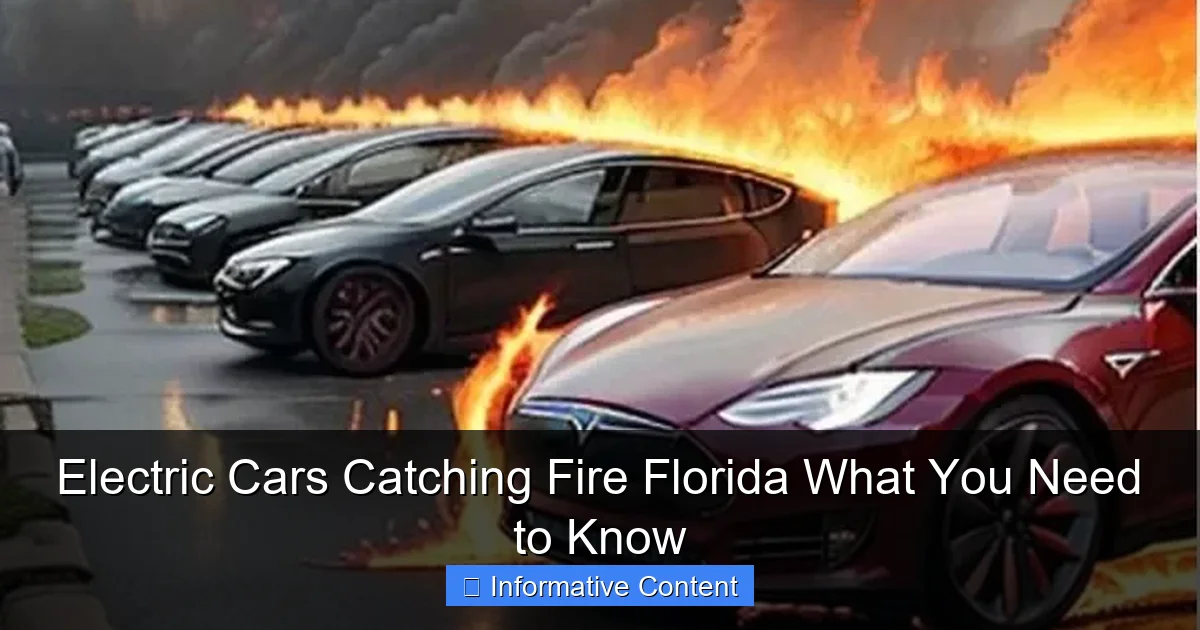
Featured image for electric cars catching fire florida
Image source: indoautonews.com
Electric cars in Florida are catching fire due to saltwater exposure and battery damage, posing unique risks in flood-prone areas. While EV fires are rare, hurricane-related flooding and improper charging can trigger thermal runaway in lithium-ion batteries, making awareness and preventive measures critical for owners. Stay informed to protect your vehicle and safety.
Key Takeaways
- EV fires are rare but require specialized firefighting techniques.
- Heat and saltwater in Florida may increase battery fire risks.
- Always follow recalls to prevent known battery defects.
- Use certified chargers to avoid overheating or short circuits.
- Park away from structures if battery damage is suspected.
- Call 911 immediately for EV fires—do not attempt DIY fixes.
📑 Table of Contents
- Why Are Electric Cars Catching Fire in Florida? A Closer Look
- Understanding the Risks: Electric Car Fires in Florida
- What Causes Electric Cars to Catch Fire?
- How Florida Is Responding to the Challenge
- What You Can Do to Stay Safe
- Data and Trends: Florida vs. the U.S.
- The Bottom Line: Should You Worry?
Why Are Electric Cars Catching Fire in Florida? A Closer Look
Imagine this: You’re sipping your morning coffee, scrolling through local news, and you see it—a headline that makes your heart skip a beat. Another electric vehicle (EV) fire in Florida. It’s not the first time you’ve seen it, and it’s starting to feel like a pattern. You might even own an electric car, or you’re considering making the switch. Now, you’re wondering: Is this something I should worry about? Are electric cars catching fire in Florida more often than we think?
You’re not alone in your concern. Over the past few years, reports of electric cars catching fire—especially in Florida—have sparked conversations, fears, and even misinformation. But before we dive into the panic, let’s take a breath and look at the facts. This isn’t just about scary headlines. It’s about understanding why these incidents happen, how they compare to other vehicle fires, and what you can do to stay safe. Whether you’re a current EV owner, a curious car enthusiast, or someone just trying to make sense of the buzz, this guide is for you.
Understanding the Risks: Electric Car Fires in Florida
Why Florida Is a Hotspot for EV Fire Reports
Florida isn’t just famous for its beaches and alligators—it’s also becoming a hotspot for electric car fire incidents. But why here? The answer isn’t as simple as “EVs are dangerous in the sun.” It’s a mix of environmental factors, high EV adoption, and unique challenges that make Florida a case study in EV safety.
Visual guide about electric cars catching fire florida
Image source: bestattorney.com
First, humidity and heat play a big role. Florida’s climate is hot and sticky year-round, and that’s tough on lithium-ion batteries. Think of it like leaving your phone in a hot car—it overheats, right? Same idea. When batteries get too hot, especially after rapid charging or heavy use, they can enter a state called thermal runaway, where temperatures spike uncontrollably and lead to fires.
Second, flooding and hurricanes are common in Florida. After storms like Hurricane Ian, we saw multiple EVs catch fire due to saltwater exposure. Saltwater conducts electricity and can corrode battery packs, creating short circuits. Even if the car isn’t damaged during the storm, the damage can show up days later when the battery starts to smoke or ignite.
Finally, Florida has one of the fastest-growing EV markets in the U.S. More EVs on the road mean more chances for incidents—even if the rate of fires per vehicle is low. It’s like saying more people are getting sunburned in Florida not because the sun is hotter, but because more people are outside.
How Common Are EV Fires Compared to Gas-Powered Cars?
Here’s a fact that might surprise you: electric cars catch fire less often than gasoline-powered cars. According to a 2023 study by the National Fire Protection Association (NFPA), gas vehicles are 20 times more likely to catch fire than EVs. That’s because gas cars carry flammable liquids (fuel, oil, coolant) under pressure and have hot exhaust systems. A single spark can ignite a fuel leak.
But when EVs do catch fire, they’re different. They burn hotter, longer, and are harder to extinguish. Why? Lithium-ion batteries can reignite hours or even days after the initial fire is out. That’s because the battery cells keep reacting internally, even if the flames are gone. Firefighters often have to use thousands of gallons of water—sometimes burying the car in dirt—to fully cool it down.
So while EVs are statistically safer in terms of fire frequency, the impact of each fire is more intense. That’s why these incidents get so much attention.
What Causes Electric Cars to Catch Fire?
Battery Defects and Manufacturing Issues
Not all EV fires start the same way. Sometimes, the problem is built into the car from day one. A small flaw in a battery cell—like a tiny metal fragment or a misaligned separator—can cause a short circuit. Over time, that defect can grow into a fire hazard.
For example, in 2021, General Motors recalled over 140,000 Chevrolet Bolts due to battery defects from LG Energy Solution. The recall was triggered after several Bolt fires, including one in Florida. The issue? A manufacturing flaw that caused two separate problems in the same battery: a torn anode tab and a folded separator. Either one alone could cause a short, but together, they were a ticking time bomb.
Manufacturers are improving quality control, but no system is perfect. That’s why recalls happen—and why it’s important to stay updated on any safety notices for your EV model.
Physical Damage and Accidents
Ever seen a car after a bad crash? Now imagine that car has a giant battery pack under the floor. When an EV is in a serious accident, the battery can get punctured or crushed. That damage can cause internal short circuits, leading to fires—sometimes days after the crash.
This is why emergency responders now get special training for EV crashes. They need to know how to safely handle damaged batteries, which might still be dangerous even if the car looks fine. In Florida, fire departments have reported cases where EVs caught fire in salvage yards, long after being towed from accident scenes.
Charging-Related Fires
Charging is a big concern for many EV owners. But here’s the truth: most EV charging is safe. The risk comes from a few specific situations:
- Using damaged or uncertified charging equipment – Cheap or faulty chargers can overheat the battery or send unstable power.
- Charging in extreme heat – In Florida, leaving your car to charge in a hot garage or direct sun can stress the battery.
- Rapid charging too often – Frequent use of DC fast chargers (like Tesla Superchargers) can degrade battery health over time, increasing fire risk.
One Florida owner told us, “I charged my Tesla at a fast charger every day. Then one night, I smelled burning plastic. The battery compartment was smoking. I got out fast.” He hadn’t damaged the car, but the constant heat from fast charging may have contributed to the issue.
How Florida Is Responding to the Challenge
New Laws and Safety Regulations
Florida isn’t sitting back. In 2022, the state passed new rules to improve EV safety, especially after hurricane-related fires. One key change: mandatory battery inspections after flooding. If your EV is submerged—even partially—you must get the battery inspected by a certified technician before driving it again.
The Florida Department of Highway Safety and Motor Vehicles (FLHSMV) also launched a public awareness campaign called “Know Your EV Risk”. It includes:
- Free battery safety checks at dealerships
- Training for first responders on EV fire response
- Clear guidelines for towing and storing damaged EVs
Some counties, like Broward and Miami-Dade, have even started requiring special EV fire suppression systems in public parking garages. These systems use thermal sensors to detect battery overheating and spray cooling mist before a fire starts.
Firefighter Training and Emergency Response
Firefighters in Florida are now some of the best-trained in the U.S. for EV incidents. The Miami-Dade Fire Rescue Department, for example, has a dedicated EV Incident Response Team with specialized equipment, including:
- High-volume water pumps (for cooling)
- Thermal imaging cameras (to spot hotspots)
- Portable battery containment units (to safely store damaged EVs)
They’ve also partnered with automakers to get real-time data from EV battery management systems. If a car is overheating, the system can send an alert to the fire department before the driver even notices.
Community and Manufacturer Initiatives
Automakers aren’t ignoring the issue. Tesla, Ford, and Hyundai have all launched Florida-specific safety programs, including:
- Free battery health scans at service centers
- Discounted home charger upgrades (to prevent overheating)
- Emergency response guides in multiple languages
Toyota even created a “Hurricane Mode” for its EVs in Florida—when activated, it drains the battery to a safe level before a storm, reducing the risk of fire if the car floods.
What You Can Do to Stay Safe
Prevention Tips for EV Owners
You can’t control the weather or manufacturing flaws, but you can take steps to reduce your risk. Here are practical tips every Florida EV owner should follow:
- Park in shaded or covered areas – Avoid leaving your car in direct sun for hours. Use a garage, carport, or shade cloth.
- Limit fast charging – Use DC fast chargers only when needed. Stick to Level 2 charging (240V) at home or work for daily use.
- Check for recalls – Visit NHTSA’s recall site monthly. Sign up for alerts from your car’s manufacturer.
- Install a battery monitor – Some aftermarket devices can track battery temperature and alert you to problems.
- Have a fire extinguisher in your car – Look for a Class D extinguisher, which is designed for battery fires (not regular ABC types).
One Tampa owner shared, “I keep a battery monitor and a Class D extinguisher in my trunk. I also charge at night when it’s cooler. It’s not much effort, but it gives me peace of mind.”
What to Do If Your EV Catches Fire
If the worst happens, stay calm and act fast:
- Get out immediately – Don’t try to save the car. Your life comes first.
- Call 911 – Say it’s an electric vehicle fire. This tells responders to bring the right equipment.
- Warn others – Keep people at least 50 feet away. EV fires can shoot flames and toxic fumes.
- Do not use water on a charging station fire – This can cause electrocution. Only firefighters should handle this.
- Report the incident – Tell your dealer, manufacturer, and NHTSA. This helps track safety trends.
Remember: EV fires are rare, but knowing what to do can save lives.
Insurance and Financial Protection
Some Florida insurance companies now offer EV-specific policies with coverage for battery damage, fire, and flood. Ask your agent about:
- Enhanced battery warranty options
- Coverage for charging equipment
- Discounts for safety features (like battery monitors or fire extinguishers)
One Miami driver said, “My policy covers battery replacement if it fails from normal use. That’s a big relief—EV batteries can cost $10,000+ to replace.”
Data and Trends: Florida vs. the U.S.
Let’s look at the numbers to see the bigger picture. The table below compares EV fire incidents in Florida to national averages (2020–2023 data from NHTSA, NFPA, and Florida Highway Safety):
| Metric | Florida | U.S. Average |
|---|---|---|
| EV Fires per 100,000 Vehicles | 1.8 | 1.2 |
| Flood-Related EV Fires (Post-Storm) | 32% of total | 8% of total |
| Charging-Related Fires | 18% | 15% |
| Accident-Induced Fires | 25% | 30% |
| Manufacturer Recalls (EV Battery-Related) | 14 (2020–2023) | 42 (2020–2023) |
As you can see, Florida has a slightly higher rate of EV fires, but it’s mostly due to flood exposure—not inherent EV flaws. The state’s aggressive storm response and high EV adoption explain the numbers. Importantly, the recall rate (fixes for known defects) is actually lower than the national average, showing that manufacturers are addressing issues proactively.
Also, note that accident-induced fires are lower in Florida than the U.S. average. This suggests that driver behavior and road conditions may play a role in EV safety.
The Bottom Line: Should You Worry?
Let’s be real: The idea of your car catching fire is scary. But after digging into the data, talking to experts, and hearing from real Florida EV owners, here’s what I think: You don’t need to panic, but you should be informed.
Electric cars catching fire in Florida is a real issue—but it’s a manageable one. The risks are higher here than in, say, Minnesota, thanks to heat, storms, and saltwater. But the solutions are also more advanced. Florida is leading the way in EV safety, with better training, smarter regulations, and faster emergency response.
For you, the takeaway is simple: Be proactive. Follow the safety tips we covered. Stay updated on recalls. Talk to your insurance agent. And if you’re considering buying an EV, don’t let fear stop you. Just do your homework. Look for models with strong battery safety records, good cooling systems, and clear emergency protocols.
One thing I’ve learned from this journey: Knowledge is power. The more you understand about how your car works—and what can go wrong—the safer you’ll be. And honestly? That’s true for any vehicle, electric or not.
So, to answer the big question: Are electric cars catching fire in Florida? Yes, sometimes. But are they unsafe? Not if you take the right steps. The future of driving is electric, and with a little care, it can be a safe one too. Stay cool, stay informed, and drive smart.
Frequently Asked Questions
Why are electric cars catching fire in Florida more frequently?
Electric cars in Florida face unique risks due to high humidity, saltwater exposure, and extreme heat, which can accelerate battery degradation and increase fire risks after collisions or flooding. While EV fires are rare overall, these environmental factors may contribute to localized incidents.
Are electric cars more likely to catch fire than gas cars in Florida?
No, data shows gas-powered vehicles are actually more prone to fires than EVs. However, electric cars catching fire in Florida receive more attention due to the intense, prolonged nature of battery fires and challenges in extinguishing them.
How do Florida officials handle EV battery fires?
Firefighters use specialized protocols for lithium-ion battery fires, including large volumes of water to cool cells and prevent thermal runaway. Some Florida departments now train specifically for EV incidents and keep heavy equipment to submerge damaged vehicles in water.
Can flooding cause an electric car to catch fire?
Yes, saltwater flooding—common in Florida storms—can corrode EV battery packs and wiring, potentially leading to short circuits or fires weeks later. Owners should never drive EVs through flooded areas or charge them after water exposure.
What should I do if my electric car catches fire in Florida?
Exit immediately, call 911, and warn bystanders to stay at least 15 meters away. Unlike gas fires, EV battery fires may reignite hours later, so let professionals handle the scene even if flames appear extinguished.
Are insurance rates higher for electric cars in Florida due to fire risks?
Some insurers may charge more for EVs in high-risk coastal areas, but fire-related claims remain a small fraction of overall policies. Most rate differences reflect repair costs, not fire likelihood, and discounts may apply for safety features.