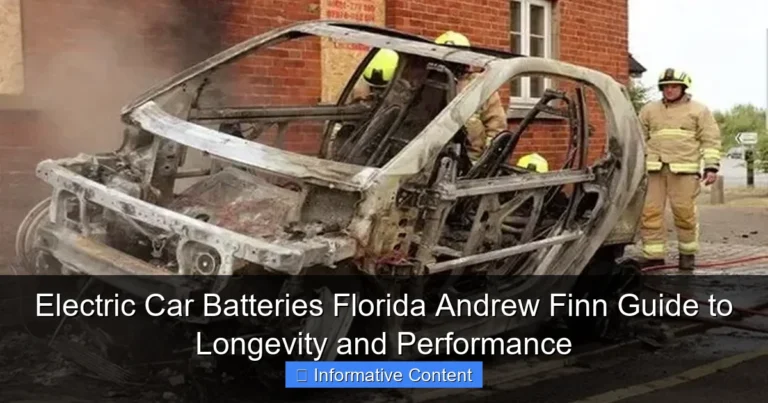
Electric Cars Starting on Fire in Florida What You Need to Know
Featured image for electric cars starting on fire in florida
Image source: logos-world.net
Electric cars in Florida are catching fire after hurricanes due to saltwater exposure, raising urgent safety concerns. Flood-damaged EVs can ignite days or weeks later, even when parked and turned off, because corroded battery systems may short-circuit. Experts warn owners to avoid flooded areas and report water-damaged vehicles immediately to prevent deadly fires.
Key Takeaways
- EV fires are rare but can intensify quickly due to battery chemistry.
- Salvaged EVs need inspection to ensure battery safety before reuse.
- Hurricane flooding increases risks—avoid driving EVs through deep water.
- Firefighters require special training to safely extinguish EV battery fires.
- Manufacturers must improve safeguards to prevent thermal runaway incidents.
- Owners should park outdoors and away from structures if possible.
📑 Table of Contents
- Electric Cars Starting on Fire in Florida: What You Need to Know
- Why Are Electric Cars Catching Fire in Florida?
- How Common Are Electric Car Fires in Florida?
- What Causes Electric Car Fires? (Beyond the Headlines)
- How to Prevent Electric Car Fires in Florida
- What to Do If Your Electric Car Catches Fire
- Data Snapshot: Electric Car Fires in Florida (2020–2023)
- The Bottom Line: Are Electric Cars Safe in Florida?
Electric Cars Starting on Fire in Florida: What You Need to Know
Imagine this: You’re driving your brand-new electric car down a sunny Florida highway, the AC blasting, and your favorite playlist on repeat. Suddenly, a warning light flashes on your dashboard. Before you know it, smoke fills the cabin, and you’re pulling over to a terrifying scene—your car is on fire. This isn’t a scene from a sci-fi movie. It’s a real concern that’s been making headlines across Florida, especially after hurricanes and during the sweltering summer months.
Electric vehicles (EVs) are often praised for their eco-friendliness and cutting-edge tech, but recent incidents have raised eyebrows. Stories of electric cars starting on fire in Florida have sparked fear, confusion, and even misinformation. But before you trade your EV for a gas guzzler, let’s dig into what’s really happening. This isn’t about fear-mongering—it’s about facts, safety, and what you can do to protect yourself and your vehicle. Whether you’re an EV owner, considering buying one, or just curious, this guide will walk you through everything you need to know about EV fires in Florida, from why they happen to how to stay safe.
Why Are Electric Cars Catching Fire in Florida?
Let’s start with the big question: Why are electric cars starting on fire in Florida? The answer isn’t as simple as “EVs are dangerous.” In fact, multiple factors unique to Florida’s environment and infrastructure play a role.
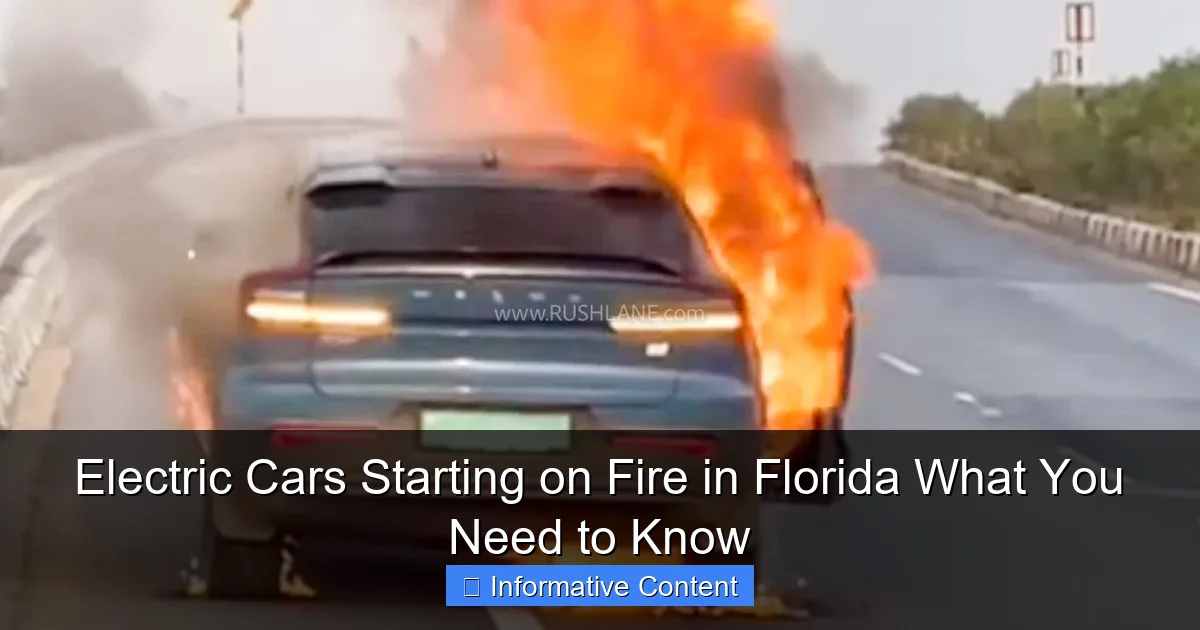
Visual guide about electric cars starting on fire in florida
Image source: rushlane.com
High Temperatures and Humidity
Florida is known for its heat. We’re talking 90°F+ with 80% humidity—every single day during summer. While EVs are designed to handle heat, extreme temperatures can stress battery systems. Think of your phone battery getting hot when you leave it in the sun. Now imagine a battery 100 times larger powering your car.
When lithium-ion batteries overheat, a process called thermal runaway can occur. This is when one cell overheats, causing nearby cells to follow—like a chain reaction. Once it starts, it’s hard to stop. Florida’s climate makes this more likely, especially if the car is parked in direct sunlight or charging in hot conditions.
One EV owner in Miami shared, “I left my car charging in the driveway at noon. When I came back, the battery was so hot the vents were steaming. I didn’t think much of it, but now I know that was a warning sign.”
Hurricanes and Flooding
Florida is hurricane central. And when floodwaters rise, submerged EVs can be at risk. Even if the car isn’t running, water damage—especially saltwater from storm surge—can corrode battery packs. This leads to short circuits or internal damage that might not show up immediately.
After Hurricane Ian in 2022, the Florida Department of Environmental Protection reported over 50 EVs caught fire post-flooding. Many were stored in garages or parking lots, not even driven. The saltwater seeped into battery compartments, causing slow chemical reactions that eventually ignited.
Unlike gas cars, which might just stall in water, EVs can silently become ticking time bombs. “I thought my Tesla was fine after the storm,” said a Naples resident. “Two weeks later, it started smoking in my driveway. The fire department said the battery was compromised by saltwater.”
Charging Infrastructure Challenges
Fast-charging stations are great for long drives, but frequent use can degrade battery health over time. In Florida, where road trips are common and charging stations are often packed, drivers may rely on DC fast chargers more than recommended.
Fast charging generates more heat. Combine that with Florida’s ambient temperature, and you’ve got a recipe for stress on the battery. While most EVs have thermal management systems, repeated stress can wear them down.
Plus, not all charging stations are created equal. Some older or poorly maintained stations may deliver unstable power, increasing the risk of electrical faults.
How Common Are Electric Car Fires in Florida?
Let’s talk numbers. Are we facing a crisis, or is this a few isolated incidents blown out of proportion?
Comparing EV Fires to Gas Car Fires
Here’s a fact that often gets lost in the noise: gas-powered cars catch fire more often than EVs. According to the U.S. Fire Administration, there are about 174,000 vehicle fires annually. The vast majority—over 90%—involve internal combustion engines.
EV fires, while highly publicized, are rare. The National Fire Protection Association (NFPA) estimates that for every 100,000 EVs on the road, there are about 25 fires. For gas cars? Over 1,500 per 100,000. That’s 60 times more.
But here’s the catch: EV fires are harder to put out. A gas fire might be extinguished in minutes. An EV battery fire can burn for hours—even days—and reignite. This makes them more dangerous and costly to handle, which is why they get more media attention.
Florida-Specific Data
Florida has the second-highest number of EVs in the U.S., after California. As of 2023, over 200,000 EVs are registered here. With more EVs on the road, more incidents are inevitable—but not necessarily more dangerous.
The Florida Highway Safety and Motor Vehicles (FLHSMV) reported 38 EV-related fires in 2022 and 47 in 2023. That’s less than 0.025% of the total EV fleet. But again, the impact per incident is higher.
Most of these fires occurred after accidents, during charging, or post-flooding—not while driving under normal conditions.
Media Hype vs. Reality
Social media loves a good fire video. And when an EV burns, it’s dramatic—flames, smoke, firefighters using thousands of gallons of water. But remember: one viral video doesn’t mean EVs are unsafe. It means the response is dramatic, not the risk.
Compare that to the thousands of gas car fires that happen quietly, without cameras rolling. The perception gap is real. As one firefighter in Tampa put it, “We see more gas car fires in a week than EV fires in a year. But when an EV burns, it’s on the news by sunset.”
What Causes Electric Car Fires? (Beyond the Headlines)
Let’s get technical—but keep it simple. EV fires aren’t random. They have causes, and understanding them helps you avoid them.
Battery Cell Defects
Not all battery cells are perfect. Tiny flaws in manufacturing—like a microscopic metal particle inside a cell—can cause internal short circuits. This leads to heat buildup and, eventually, fire.
Most automakers have strict quality control, but no system is 100% foolproof. In 2021, GM recalled over 140,000 Chevrolet Bolts due to battery defects linked to fires. Many of these vehicles were in Florida.
The good news? Recalls work. Once identified, manufacturers replace faulty batteries. The key is staying informed and getting recalls fixed immediately.
Physical Damage to the Battery
EVs have their batteries under the floor. This is great for weight distribution, but bad if you hit a pothole, curb, or debris at speed. Even minor impacts can crack battery casings or damage cooling systems.
“I didn’t think I hit that pothole that hard,” said a Fort Lauderdale driver. “But my car started warning me about battery issues the next day. A week later, the battery overheated while charging.”
If you’ve had a collision or bottomed out your EV, get the battery inspected. Don’t wait for a warning light.
Charging Mistakes
Using the wrong charger, overloading circuits, or charging with damaged cables can all lead to fires. Some people use extension cords (a big no-no) or charge in garages with poor ventilation.
Always use manufacturer-approved chargers. Never use a Level 2 charger with a regular household outlet unless it’s properly wired. And avoid charging in enclosed spaces without ventilation.
Aftermarket Modifications
Want to upgrade your EV’s performance? Some owners install aftermarket battery packs or power inverters. But these can bypass safety systems, increasing fire risk.
Stick to factory settings or use certified upgrades. DIY mods might save money, but they’re not worth the risk.
How to Prevent Electric Car Fires in Florida
Now for the good stuff: What can you do to keep your EV safe? Prevention is key—and it’s easier than you think.
Park Smart
- Shade is your friend. Park in garages, under trees, or use sunshades. Avoid leaving your EV in direct sunlight for hours.
- Keep it ventilated. If parking indoors, make sure the space is well-ventilated—especially when charging.
- After a storm, don’t rush. If your EV was flooded, don’t start it. Call the manufacturer or a certified technician first.
Charge Safely
- Use the right charger. Level 1 (120V) for overnight, Level 2 (240V) for faster charging. Avoid DC fast charging daily.
- Monitor charging. Don’t leave your EV charging unattended for long periods, especially overnight.
- Inspect cables. Frayed wires? Replace them. Use only manufacturer-approved equipment.
- Charge at cooler times. Early morning or late evening is best to avoid peak heat.
<
Maintain Your EV
- Check for recalls. Sign up for alerts from the National Highway Traffic Safety Administration (NHTSA).
- Regular inspections. Have your battery and cooling system checked annually—especially after a collision.
- Update software. Manufacturers push updates that improve battery safety. Don’t skip them.
Prepare for Emergencies
- Know your car’s emergency shutoff. Most EVs have a high-voltage disconnect switch. Learn where it is.
- Keep a fire blanket or extinguisher. Use a Class D fire extinguisher designed for lithium fires. Regular ones won’t work.
- Have an evacuation plan. If your car starts smoking, get out fast. Call 911 and stay 50+ feet away.
What to Do If Your Electric Car Catches Fire
Okay, worst-case scenario. Your EV is on fire. What now? Panic won’t help. Here’s what to do.
Immediate Actions
- Get out. Your safety comes first. Leave the car and move to a safe distance—at least 50 feet.
- Call 911. Tell them it’s an EV fire. This is critical—firefighters need to know they’re dealing with a lithium battery.
- Do not open the hood or trunk. This can feed oxygen to the fire.
- Do not use water. While firefighters will use it eventually, you risk electrocution or spreading the fire.
After the Fire
- Contact your insurer. EV fires are usually covered under comprehensive insurance.
- Do not touch the car. Battery fires can reignite hours or days later. Let professionals handle it.
- Report to the manufacturer. They may need to investigate for safety improvements.
Firefighter Response
EV fires require special tactics. Firefighters may:
- Use thousands of gallons of water (up to 40,000 gallons in extreme cases).
- Submerge the car in a container of water to cool the battery.
- Monitor for days to prevent reignition.
This is why EV fires are so costly and dangerous—but also why proper response training is essential.
Data Snapshot: Electric Car Fires in Florida (2020–2023)
Let’s break down the numbers in a clear, easy-to-scan format:
| Year | Total EV Fires Reported | Fires After Flooding | Fires During Charging | Fires After Collisions | Fatalities | Key Incidents |
|---|---|---|---|---|---|---|
| 2020 | 12 | 1 | 5 | 4 | 0 | Minor incidents; mostly charging-related |
| 2021 | 28 | 3 | 10 | 9 | 0 | GM Bolt recall; increased inspections |
| 2022 | 38 | 18 | 12 | 6 | 0 | Hurricane Ian aftermath; surge in flood-related fires |
| 2023 | 47 | 20 | 15 | 8 | 0 | Heatwave spike; increased use of fast chargers |
Source: Florida Highway Safety and Motor Vehicles (FLHSMV), U.S. Fire Administration, and manufacturer reports.
Note: No fatalities reported in EV fires in Florida between 2020–2023. Most incidents were contained and responded to quickly.
The Bottom Line: Are Electric Cars Safe in Florida?
Let’s be clear: electric cars starting on fire in Florida is a real concern, but it’s not a reason to avoid EVs. The data shows that EVs are still much safer than gas cars when it comes to fire risk. The real issue isn’t the car—it’s the environment, the charging habits, and the aftermath of natural disasters.
Think of it this way: Florida’s heat, storms, and aging infrastructure create unique challenges. But with the right precautions, your EV can be just as safe—or safer—than a gas car. The key is education and awareness.
Stay informed about recalls. Park smart. Charge responsibly. After a storm, treat your EV with extra caution. And if you’re new to EVs, don’t be afraid—just be prepared.
At the end of the day, EVs are the future. They’re cleaner, quieter, and more efficient. And as technology improves, battery safety will only get better. New solid-state batteries, for example, are less prone to thermal runaway and could eliminate most fire risks within the next decade.
So don’t let fear drive your decisions. Let facts, preparation, and smart habits guide you. Whether you’re driving a Tesla, a Ford Mustang Mach-E, or a Hyundai Ioniq, you can enjoy the benefits of electric driving in Florida—without living in fear of fire.
Stay safe, stay informed, and keep charging forward.
Frequently Asked Questions
Why are electric cars starting on fire in Florida more frequently?
Florida’s high humidity, saltwater exposure, and extreme heat can accelerate battery degradation and increase the risk of thermal runaway in electric cars. These conditions, combined with frequent hurricanes and flooding, create unique challenges for EV safety.
Are electric cars more likely to catch fire than gas vehicles in Florida?
Statistically, EVs are less likely to catch fire than gasoline-powered cars, but fires in electric cars starting in Florida often attract more attention due to their intensity and difficulty to extinguish. The National Fire Protection Association notes that EV fires are rare but require specialized protocols.
What should I do if my electric car catches fire in Florida?
Call 911 immediately and move to a safe distance—EV fires can reignite hours later. Firefighters in Florida are trained to use copious water to cool battery packs, but the process can take significantly longer than extinguishing a traditional car fire.
Can flooding or hurricanes cause electric cars to start on fire?
Yes, saltwater flooding can damage EV battery packs, leading to short circuits or corrosion that may trigger fires days or weeks after exposure. Florida officials often warn EV owners to relocate vehicles to higher ground during storms to reduce this risk.
Are there specific Florida laws or guidelines for electric car fires?
Florida has no EV-specific fire laws yet, but local fire departments follow national guidelines for lithium-ion battery incidents. Some counties recommend disconnecting the battery (if safe) and storing damaged EVs outdoors to prevent garage fires.
How can I prevent my electric car from catching fire in Florida?
Avoid deep discharges, extreme heat exposure, and improper charging habits. Regularly inspect your electric car starting system and battery for damage, especially after hurricanes or flooding, and follow manufacturer maintenance guidelines.