Nissan Electric Car Battery Lease What You Need to Know
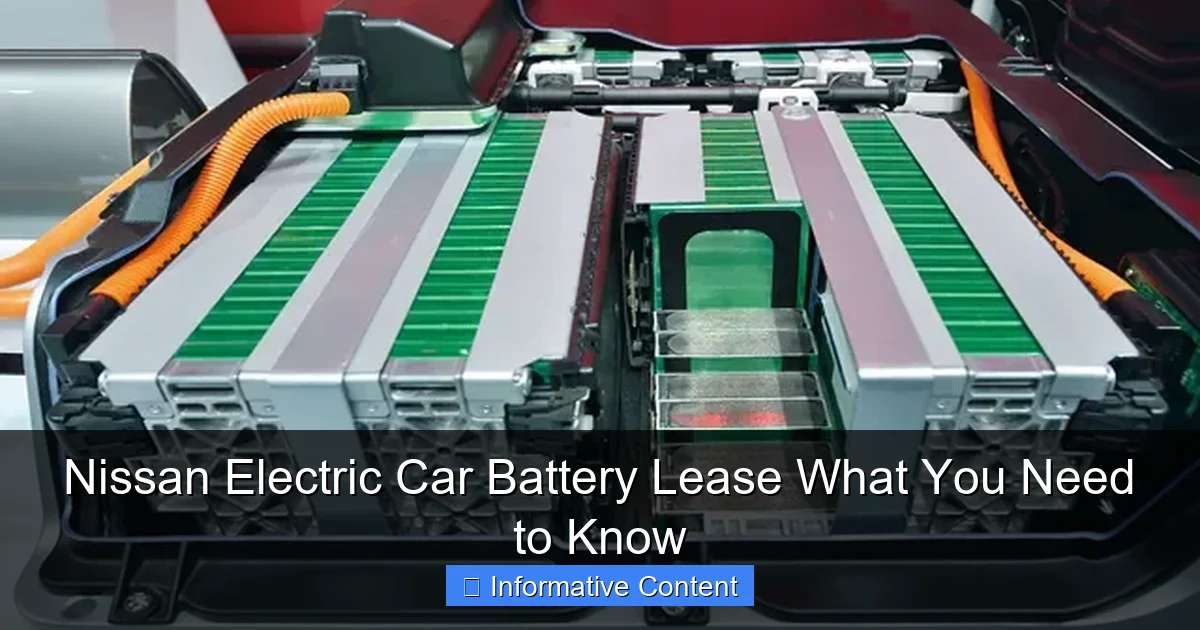
Featured image for nissan electric car battery lease
Image source: electriccarwiki.com
Nissan’s electric car battery lease program offers an affordable way to own an EV without the high upfront cost of battery ownership, making it ideal for budget-conscious drivers. With flexible terms, warranty coverage, and potential savings on maintenance, leasing the battery can enhance your EV experience—just be sure to compare long-term costs before committing.
Key Takeaways
- Lease terms vary: Check contract length and mileage limits before signing.
- Lower upfront cost: Leasing cuts initial price but may cost more long-term.
- Battery health matters: Monitor degradation to avoid unexpected fees at lease end.
- Upgrade flexibility: Leasing allows access to newer battery tech later.
- Read fine print: Understand buyout options and return conditions upfront.
- Compare ownership: Calculate if buying outright saves money over time.
📑 Table of Contents
- The Electric Lease That Might Save You Money: Nissan’s Battery Option
- What Exactly is a Nissan Electric Car Battery Lease?
- Breaking Down the Costs: Lease vs. Own (With Real Numbers)
- Peace of Mind and Battery Degradation: The Big Promise
- Resale Value and Transferability: What Happens When You Sell?
- Is the Nissan Electric Car Battery Lease Right For You? A Decision Checklist
- Conclusion: Weighing the Electric Equation
The Electric Lease That Might Save You Money: Nissan’s Battery Option
Imagine this: You’re excited about going electric. You love the idea of zipping around town in a sleek Nissan Leaf, saving on gas, and doing your part for the planet. But then you see the price tag and think, “Whoa, that’s steep.” What if I told you there’s a way to get behind the wheel of a Nissan electric car without the full battery price?
This is where the Nissan electric car battery lease comes in. It’s not a new idea, but it’s one that’s often overlooked. Think of it like leasing a phone instead of buying it outright. You get the car, but you rent the battery separately. It can make the monthly payments much more manageable. I remember when I first looked at EVs, the upfront cost was my biggest hurdle. This option felt like a game-changer. It let me experience the joy of electric driving without the massive initial hit. But, like anything, it’s not perfect. There are pros, cons, and some important things you need to know before signing on the dotted line. This isn’t about pushing a product; it’s about giving you the real, honest lowdown so you can decide if this path is right for you. We’ll explore the mechanics, the costs, the peace of mind (or lack thereof), and the long-term picture.
What Exactly is a Nissan Electric Car Battery Lease?
Let’s break down the concept. When you buy most cars, you own the engine, the chassis, everything. With an electric car like the Nissan Leaf, the battery is the “engine” – it’s the most expensive single component, often accounting for 25-35% of the total car price. A Nissan electric car battery lease separates this cost. You buy or lease the car itself (the “glider” – the body, wheels, interior, etc.) and then pay a separate, recurring fee to lease the battery pack that powers it. This is different from leasing the entire car (battery included).
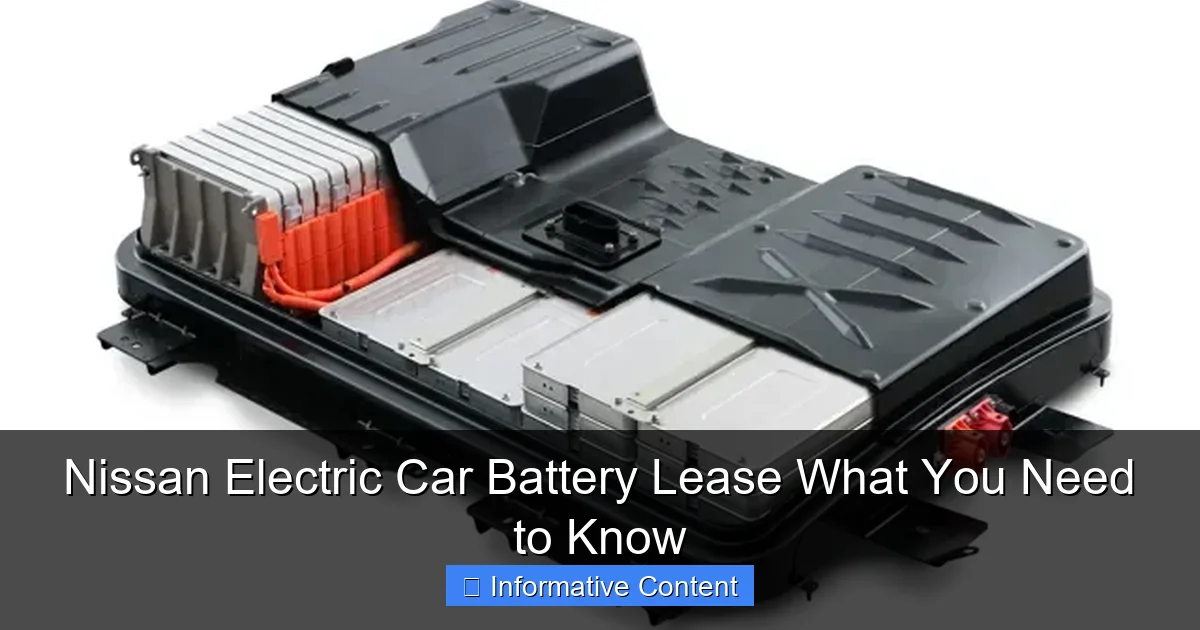
Visual guide about nissan electric car battery lease
Image source: electriccarwiki.com
How the Lease Structure Works
The mechanics are straightforward. Nissan (or a third-party financier they partner with, depending on the region and year) owns the battery pack. You pay a monthly lease fee, similar to your phone bill or car payment. This fee is added to your car payment if you’re financing the car, or it’s a separate bill if you buy the car outright but lease the battery. The lease is tied to the car, not you personally, so it transfers if you sell the car (more on that later). The lease term usually matches your car loan or lease term, or it can be shorter or longer, depending on the offer. Crucially, the battery remains under Nissan’s ownership and warranty throughout the lease period.
Why Nissan Offers This (And Why You Might Consider It)
For Nissan, this was a strategic move when the Leaf launched in 2010. Electric car tech was new, and battery degradation was a major consumer concern. By leasing the battery, Nissan took on the risk of degradation. They also made the upfront cost of the car much lower, making EVs accessible to more people. For *you*, the driver, the primary benefit is **immediate cost reduction**. Instead of paying $10,000-$15,000+ for the battery upfront, you might pay $60-$100 per month. This can make the difference between affording an EV and sticking with gas. It also provides **peace of mind about battery degradation**. If the battery loses significant capacity during your lease, Nissan is responsible for fixing or replacing it (within the lease terms). However, it’s vital to understand this isn’t a magic bullet. It changes *when* you pay, not necessarily *how much* you pay over the long haul.
Key Differences: Lease vs. Buy
- Ownership: With a lease, Nissan owns the battery. If you buy the battery, *you* own it.
- Upfront Cost: Leasing drastically reduces the initial price of the car. Buying means a larger down payment or higher loan amount.
- Monthly Cost: Leasing adds a recurring battery fee. Buying spreads the cost over your car loan payments.
- Long-Term Cost: Over the battery’s lifespan (10+ years), leasing *might* cost more than buying outright, but this depends on the lease rate, battery longevity, and potential future battery prices.
- Responsibility for Degradation: With a lease, Nissan handles significant degradation. With ownership, you bear the cost of replacement if it fails outside warranty.
Think of it like renting vs. buying a house. Renting (leasing) means lower entry, predictable monthly costs, and the landlord handles major repairs (like the roof/battery). Buying means higher upfront cost, but you build equity (value in the battery) and have more control.
Breaking Down the Costs: Lease vs. Own (With Real Numbers)
This is where things get real. Let’s compare the financials using a hypothetical but realistic example based on historical and current Nissan Leaf models (S Plus trim, ~226-mile range). Remember, exact numbers vary by year, location, incentives, and dealer, but this gives you a solid framework.
Scenario 1: Buying the Battery Outright (Financing the Whole Car)
Assume a total car price (with battery) of $35,000. You put $5,000 down and finance $30,000 at 5% APR for 60 months (5 years). Your monthly car payment would be approximately **$566**. After 5 years, you own the car *and* the battery. The total cost (principal + interest) is about **$33,960** (plus down payment).
Scenario 2: Nissan Electric Car Battery Lease (Car Financed, Battery Leased)
Assume the *car without the battery* (the “glider”) costs $25,000. You put $3,000 down and finance $22,000 at 5% APR for 60 months. Your monthly car payment is approximately **$411**. You then add the battery lease fee. Historically, Nissan battery leases were around **$70-$100/month**. Let’s use **$85/month** for 60 months. Your total monthly cost is **$411 + $85 = $496**. The total cost over 5 years is:
- Car loan: $24,660 (principal + interest)
- Down payment: $3,000
- Battery lease: $85 x 60 = $5,100
- Total: $32,760
In this specific example, the **battery lease saves you about $1,200 over 5 years** compared to buying the battery outright. That’s a real saving! Plus, you had $2,000 more cash upfront ($5k vs $3k down).
Scenario 3: Buying the Car Outright, Leasing the Battery
You pay $25,000 cash for the car (glider). You still pay the $85/month battery lease for 60 months ($5,100 total). Your total cost is **$30,100**. This is significantly cheaper than both previous options *over the 5-year period* and gives you full ownership of the car body. However, you still don’t own the battery.
The Long-Term Picture (Beyond 5 Years)
This is the crucial part. The savings from leasing the battery are front-loaded. After your 5-year lease ends:
- If you keep the car: You might need to renew the battery lease, potentially at a higher rate, or negotiate a buyout price. Battery technology and prices are dropping, so a buyout *might* be attractive, but it’s an unknown. You’re still paying monthly.
- If you sell the car: The battery lease transfers to the new owner. This can be a **major selling point** (they get a “new” battery with warranty) but also a **potential deterrent** (they have to take over the lease payments). You don’t get the value of the battery you’ve been leasing.
- Buying outright: After 5 years, you own the car and battery. You have more flexibility to sell, trade-in, or keep it indefinitely without ongoing battery payments. The battery’s residual value (even if degraded) is yours.
Over 10+ years, leasing *could* cost more due to ongoing monthly fees, especially if you renew the lease. Buying means you absorb the risk of the battery needing replacement after the original warranty expires (usually 8 years/100,000 miles), but you also own an asset that might still have value.
Data Table: Cost Comparison Summary (5-Year Period)
| Option | Upfront Cost (Down Payment) | Monthly Cost | Total Cost (5 Years) | Ownership After 5 Years | Risk of Battery Degradation |
|---|---|---|---|---|---|
| Buy Battery (Financed) | $5,000 | $566 | $33,960 | Car + Battery | You (after warranty) |
| Nissan Electric Car Battery Lease (Car Financed) | $3,000 | $496 | $32,760 | Car (glider) only | Nissan (during lease) |
| Buy Car, Lease Battery | $25,000 | $85 (battery lease only) | $30,100 | Car (glider) only | Nissan (during lease) |
Note: Costs are estimates based on hypothetical $35k total car price, $25k glider price, $85/month battery lease, 5% APR, 60 months. Actual prices vary.
Peace of Mind and Battery Degradation: The Big Promise
One of the biggest fears people have about EVs is battery degradation. We’ve all heard horror stories about older Leafs losing range. Nissan’s battery lease was designed to directly address this anxiety. The core promise: **If your battery degrades significantly during your lease, Nissan is on the hook to fix it.**
How Nissan’s Warranty Covers Degradation (During Lease)
The battery lease typically includes a robust warranty that covers capacity loss. For older Leafs (pre-2018), this was often an 8-year/100,000-mile warranty with a capacity guarantee (e.g., 70% of original capacity). If your battery falls below that threshold *and* it’s due to a defect (not normal wear and tear or extreme conditions like constant fast-charging in very hot climates), Nissan will repair or replace it. This is a huge benefit. Imagine your battery drops to 60% capacity after 4 years. With a lease, Nissan fixes it. If you bought the battery, you might be facing a $10k+ repair bill *outside* the warranty period. This peace of mind is a major selling point of the Nissan electric car battery lease.
What Counts as “Significant” Degradation?
It’s not a free pass for any loss. The warranty has specific thresholds. “Normal” degradation (losing 10-15% over 8 years) is expected. The warranty kicks in when loss is *beyond* normal and due to a manufacturing defect or material fault. Nissan uses battery health monitors (BHM) to assess capacity. They might require a diagnostic scan to prove the degradation is abnormal. Factors like extreme heat, frequent DC fast charging, and deep discharges can accelerate degradation, and Nissan might deny a claim if they determine the driver contributed to excessive wear. The key is the *cause* of the degradation, not just the amount.
The Catch: What the Lease *Doesn’t* Cover
It’s important to be realistic. The lease warranty covers **defects in materials or workmanship** leading to excessive degradation. It does *not* typically cover:
- Normal wear and tear: Expected capacity loss over time.
- Damage from accidents or misuse: If you damage the battery case in a crash.
- Degradation from extreme conditions: Consistently using fast chargers in 100°F weather might void the warranty.
- Software issues unrelated to hardware: Glitches in the battery management system that don’t cause physical degradation.
- Warranty expiration: After the lease term ends (usually 5-8 years), you’re on your own if the battery fails.
So, while the lease offers great protection *during* the term, you’re still responsible for driving habits that promote battery health. Think of it like a phone warranty: it covers a faulty battery, not a cracked screen from dropping it.
Real-World Example: The “Leaf Battery Blues” and the Lease Solution
Remember the early 2011-2012 Leafs? Many suffered rapid battery degradation, especially in hot climates like Arizona. Owners with the battery lease had a much easier time. Nissan replaced many of those batteries under warranty, saving owners thousands. Owners who bought the battery outright faced massive repair costs or were forced to sell their cars at a loss. This is a textbook case where the Nissan electric car battery lease proved its worth. However, newer Leafs (2018+) have improved battery chemistry and thermal management, making degradation less of an issue overall, which somewhat reduces the *relative* value of the lease for newer models.
Resale Value and Transferability: What Happens When You Sell?
Thinking about selling your leased-battery Leaf? This is a critical consideration. Unlike a car with an owned battery, you’re not selling the complete package. The battery lease is tied to the car, not you, so it **automatically transfers to the new owner** when you sell. This is a double-edged sword.
The Good: A “New” Battery for the Buyer
This is the **biggest selling point** of a leased-battery car. The new owner gets:
- A battery under Nissan’s warranty: They have peace of mind knowing Nissan covers significant degradation for the remainder of the lease term.
- Potentially better battery health: If the lease is relatively new, the battery might have more life left than a comparable car with an owned battery of the same age.
- Predictable monthly cost: The battery lease payment is fixed, unlike the uncertainty of owning a battery that might fail.
For a buyer concerned about battery longevity, this is incredibly attractive. It can make your car more desirable than a similar EV with an owned, older battery. Dealers often highlight this when selling used leased-battery Leafs.
The Bad: The Lease is a Commitment for the Buyer
This is the potential downside. The buyer must:
- Qualify for and accept the lease transfer: They need to be approved by Nissan or the lease holder (which can take time).
- Commit to the remaining lease payments: They inherit the monthly fee, which might be seen as a “hidden cost” if not clearly communicated.
- Be bound by the lease terms: They can’t just buy out the battery easily; they must continue the lease or negotiate a buyout with Nissan.
This can be a **deal-breaker** for some buyers. They might prefer the simplicity of buying a car with an owned battery, even if it’s older. The lease adds complexity to the transaction. I once looked at a used Leaf with a leased battery. The seller was great, the car was clean, but the thought of taking over the lease payments and the paperwork felt like a hurdle. I walked away, opting for a model with an owned battery instead. It’s a real concern.
Tips for Selling a Leased-Battery Car
If you’re selling, be proactive:
- Disclose the lease upfront and clearly: Don’t hide it. Explain the benefits (warranty, predictable cost) and the commitment (ongoing payments).
- Provide lease details: Share the monthly cost, remaining term, and contact info for the lease holder (Nissan or third party).
- Assist with the transfer process: Help the buyer contact the lease holder to start the approval process. Offer to be available for questions.
- Highlight the battery health: Provide recent BHM readings or service records showing the battery is in good condition.
- Be prepared for negotiation: The lease might affect your asking price. Buyers might offer less to account for the ongoing cost.
Transparency is key. A buyer who understands the lease is more likely to complete the purchase than one who feels misled.
Is the Nissan Electric Car Battery Lease Right For You? A Decision Checklist
After all this, the big question: Should *you* choose a Nissan electric car battery lease? There’s no one-size-fits-all answer. It depends on your priorities, financial situation, and long-term plans. Let’s break it down with a practical checklist.
Who Should Seriously Consider the Lease?
- You need lower monthly payments NOW: The biggest draw. If the upfront cost of buying the battery is a barrier, the lease makes EV ownership feasible. It’s like getting a $10k discount on the car price.
- You’re risk-averse about battery degradation: If the thought of a $10k+ battery replacement bill keeps you up at night, the lease’s warranty offers invaluable peace of mind, especially for older models.
- You plan to keep the car for the lease term (5-8 years): You benefit from the warranty and predictable costs. You avoid the uncertainty of owning a battery long-term.
- You’re comfortable with transferring a financial obligation: You accept that selling the car means the buyer takes over the lease, which might affect the sale process.
- You drive in extreme climates (hot/cold): Where battery degradation is more likely, the lease’s protection is more valuable.
Think of it as buying insurance for the most expensive part of your car, paid monthly.
Who Might Be Better Off Buying the Battery?
- You want to minimize long-term costs over 10+ years: If you plan to keep the car for a decade, the cumulative lease payments *might* exceed the cost of buying the battery, especially as battery prices continue to fall.
- You value full ownership and simplicity: You prefer owning all components of your car. You want the flexibility to sell, trade-in, or modify without lease restrictions.
- You’re a long-term planner and want to build equity: The battery, even when degraded, has some residual value that you own with a purchase.
- You drive a newer Leaf (2018+): With improved battery tech and lower degradation rates, the risk is lower, making the lease’s protection less critical.
- You have the upfront capital: If you can comfortably afford the higher down payment or loan amount, buying avoids the ongoing lease fee.
Buying is like paying for the insurance upfront and owning the asset.
The Crucial Questions to Ask Yourself (and Nissan)
Before deciding, ask:
- What is the exact monthly lease fee and term? Get a written quote. Fees vary.
- What are the specific warranty terms for degradation? What is the capacity threshold? Don’t assume; get the details in writing.
- What is the process for battery replacement under warranty? How long does it take? Know what to expect.
- What are the options at the end of the lease? Can I buy out the battery? What is the buyout price? This is crucial for long-term planning.
- How does the lease affect my car insurance and registration? Usually, it doesn’t, but confirm.
- What are the penalties for early termination? Understand the commitment.
- Compare total costs over 5, 8, and 10 years for lease vs. buy in my specific situation. Use the table above as a template.
Talk to your Nissan dealer and a financial advisor. Crunch the numbers with your own down payment, interest rate, and planned ownership period.
A Final Thought: It’s a Tool, Not a Magic Solution
The Nissan electric car battery lease is a financial tool. It solves specific problems: high upfront cost and battery degradation anxiety. It’s not inherently “better” or “worse” than buying. It’s about matching the tool to your needs. For someone starting their EV journey with budget constraints or significant battery fears, it can be a smart, stress-reducing choice. For someone with capital, long-term ownership plans, and comfort with risk, buying the battery outright offers more control and potentially lower lifetime cost. There’s no shame in either choice. The most important thing is making an informed decision based on your reality, not marketing hype.
Conclusion: Weighing the Electric Equation
Navigating the world of electric cars can feel overwhelming, especially when the biggest component – the battery – is also the most expensive and least understood. The Nissan electric car battery lease cuts through some of that complexity by offering a clear trade-off: lower entry cost and built-in degradation protection in exchange for ongoing monthly payments and a transferable financial obligation. It’s a path that opened the door to electric driving for many people who otherwise couldn’t afford it, and the peace of mind about battery health was, and still is, a powerful incentive.
We’ve walked through the mechanics – how you own the car but lease the “engine.” We’ve crunched the numbers, showing how leasing can save you money upfront and potentially over a 5-year period, but might cost more over a decade due to ongoing fees. We’ve explored the crucial promise of the warranty, which shields you from catastrophic battery failure *during* the lease term, a benefit that proved invaluable during the early Leaf’s battery issues. And we’ve looked at the real-world implications of selling a car with a leased battery – the advantage of offering a buyer a “new” battery under warranty, but the hurdle of transferring the lease payments.
The decision ultimately hinges on your individual priorities. If your primary concern is **affordability and minimizing risk in the short to medium term**, the lease is a compelling, practical option. The monthly savings can be significant, and knowing Nissan handles a major potential expense provides real comfort. It’s like having a safety net. However, if you prioritize **long-term cost minimization, full ownership, and maximum flexibility**, buying the battery outright is likely the better path. You absorb the risk, but you also own the asset and avoid perpetual monthly payments.
There are no easy answers, only informed choices. Don’t let the fear of battery degradation paralyze you, but don’t ignore it either. Don’t be swayed solely by the lower monthly payment without calculating the long-term picture. Talk to dealers, compare specific lease terms and financing rates, use the cost comparison table as your guide, and honestly assess your driving habits, climate, and ownership plans. The Nissan electric car battery lease is a valid, established option in the EV landscape. It’s not for everyone, but for the right person – someone needing lower payments, seeking peace of mind, and planning for a specific ownership window – it can be the smart, stress-reducing key that unlocks the door to a cleaner, quieter, and often more enjoyable driving experience. Go electric, but go informed.
Frequently Asked Questions
What is a Nissan electric car battery lease?
A Nissan electric car battery lease is an optional payment plan that allows you to rent the battery for your Nissan EV (like the Leaf) instead of purchasing it outright. This can lower the upfront cost of the vehicle while ensuring access to battery maintenance and replacements under the lease terms.
How does the Nissan electric car battery lease work?
With the battery lease, you pay a fixed monthly fee for the battery’s use, while the rest of the car is either financed or leased separately. Nissan handles battery servicing, repairs, and replacements if needed, providing peace of mind for long-term ownership.
Is leasing the battery cheaper than buying it with the car?
Leasing the battery can reduce the initial purchase price of your Nissan EV, making it more affordable upfront. However, over time, the total cost of leasing may exceed buying the battery outright, depending on the lease duration and terms.
What happens if the leased battery fails or degrades?
If the leased battery fails or falls below acceptable performance levels, Nissan will repair or replace it at no additional cost to you. This protection is a key benefit of the battery lease program.
Can I buy the battery at the end of the Nissan electric car battery lease?
Yes, in some cases, you may have the option to purchase the battery at the end of the lease term. Check your specific lease agreement for details, as terms can vary by model and region.
Are there any drawbacks to a Nissan EV battery lease?
The main drawback is the long-term cost, as leasing may end up being more expensive than buying. Additionally, leased batteries may come with usage restrictions or resale limitations, so reviewing the contract carefully is essential.