Nissan Electric Cars 2019 UK Review Top Models Compared
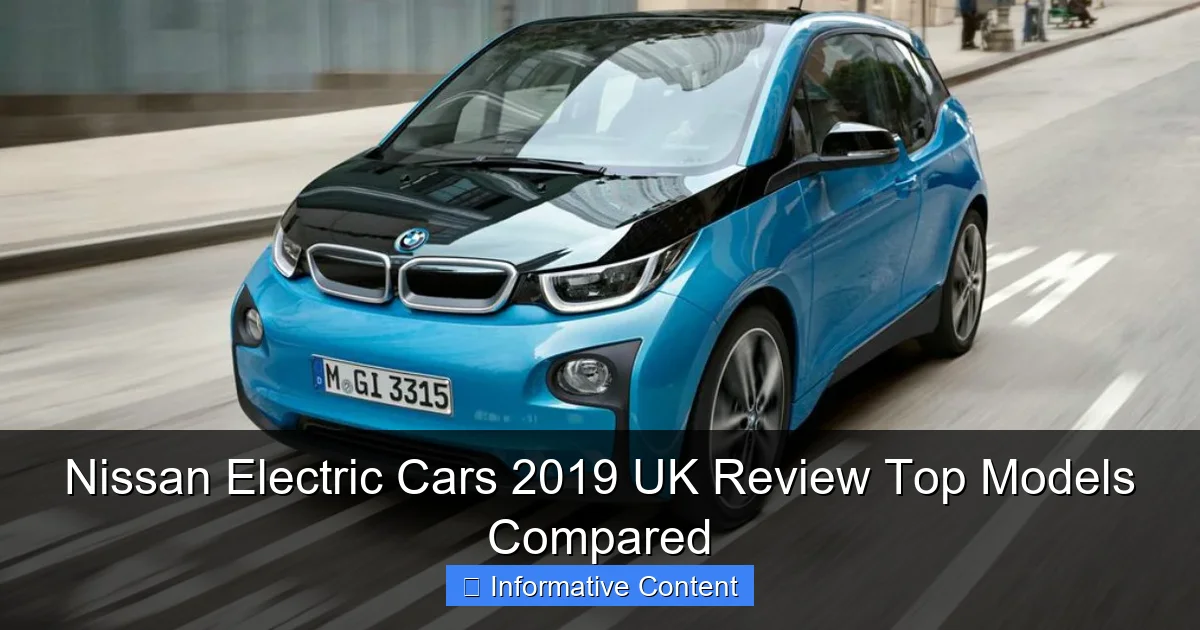
Featured image for nissan electric cars 2019 uk
Image source: averagejoes.co.uk
The 2019 Nissan Leaf and e-NV200 stood out as top contenders in the UK’s electric car market, offering reliability, practicality, and competitive pricing. With the Leaf’s extended 239-mile range and the e-NV200’s versatile cargo space, Nissan delivered strong options for both urban drivers and small businesses seeking affordable, eco-friendly mobility.
Key Takeaways
- Nissan Leaf dominates: Best-selling EV in UK with proven reliability.
- e-NV200 excels: Top electric van for urban businesses, low running costs.
- 62kWh battery upgrade: 2019 Leaf offers 239-mile range, ideal for long commutes.
- ProPILOT assist: Available on higher trims, enhances safety and comfort.
- Charging infrastructure: Nissan supports rapid charging across UK networks.
- Affordable leasing: Competitive PCH deals make EVs accessible to more drivers.
📑 Table of Contents
- The Rise of Nissan Electric Cars in the UK: A 2019 Perspective
- Nissan Leaf: The Icon That Started It All
- Nissan e-NV200: The Electric Workhorse
- Trim Levels and Features: What You Get for Your Money
- Real-World Ownership: Pros, Cons, and Quirks
- How They Stack Up: 2019 Nissan EVs vs. the Competition
- Final Thoughts: Which 2019 Nissan EV Is Right for You?
The Rise of Nissan Electric Cars in the UK: A 2019 Perspective
Remember the first time you saw a fully electric car on the road? Maybe it was a Nissan Leaf silently gliding past, its futuristic hum catching your attention. In 2019, Nissan solidified its position as a pioneer in the UK’s electric vehicle (EV) market, offering practical, eco-friendly, and surprisingly affordable options. With the UK government pushing for cleaner transport and charging infrastructure expanding rapidly, 2019 was the year many drivers seriously considered making the switch to electric. Nissan, already a household name with the Leaf, stepped up its game with refreshed models and new features, making its electric lineup more appealing than ever.
Whether you’re a city dweller looking to cut fuel costs or a family needing a reliable second car, Nissan’s 2019 electric offerings had something for everyone. But with multiple models, battery options, and trim levels, choosing the right one can feel overwhelming. That’s why we’re diving deep into the Nissan electric cars 2019 UK lineup, comparing the top models, highlighting their strengths and quirks, and helping you decide which one fits your life like a glove. Let’s plug in and explore what made Nissan a standout in the UK’s EV scene that year.
Nissan Leaf: The Icon That Started It All
The Nissan Leaf isn’t just Nissan’s first mass-market EV; it’s arguably the car that made electric vehicles mainstream in the UK. By 2019, the second-generation Leaf had matured into a refined, practical, and tech-savvy hatchback. With over 400,000 units sold globally by that time, it had proven its reliability and staying power. But what made the 2019 Leaf stand out in the UK market?
Visual guide about nissan electric cars 2019 uk
Image source: averagejoes.co.uk
Leaf e+: The Long-Range Game Changer
The star of the 2019 lineup was the Nissan Leaf e+, a significant upgrade from the standard model. While the base Leaf offered a 40 kWh battery (168 miles WLTP), the e+ packed a 62 kWh battery, boosting range to an impressive 239 miles WLTP. For UK drivers, this was a game-changer. Suddenly, the Leaf wasn’t just a city car—it could handle longer commutes and even weekend trips without range anxiety. Imagine driving from London to Brighton and back on a single charge. That’s the kind of freedom the e+ offered.
Under the hood, the e+ delivered 214 bhp and 340 Nm of torque, making it noticeably quicker than the standard Leaf. It could sprint from 0-60 mph in around 6.8 seconds, which felt sprightly in urban traffic. The extra battery weight (about 100 kg) didn’t hurt handling much, thanks to a well-tuned suspension setup. One owner in Bristol told us, “I used to worry about making it to my sister’s in Bath, but now I don’t even think about it. The e+ just handles it.”
Standard Leaf: Still a Smart Choice
Don’t write off the standard 40 kWh Leaf, though. For many UK drivers, its 168-mile range was more than enough. If you primarily drive in cities like Manchester or Birmingham with a 30-mile round trip, the smaller battery saves money upfront and reduces charging time. It’s also lighter (1,580 kg vs. 1,670 kg for the e+), which translates to slightly better handling in tight corners.
Both versions shared Nissan’s signature features: the e-Pedal (which lets you accelerate and brake using just one pedal) and ProPILOT Assist (adaptive cruise control and lane-keeping). The e-Pedal took some getting used to—especially in stop-and-go traffic—but once mastered, it made driving smoother and more efficient. “I used to ride the brakes in traffic,” said a Leaf owner in Glasgow. “Now, I barely touch the brake pedal. It’s weirdly satisfying.”
Charging and Practicality
The 2019 Leaf supported 50 kW DC fast charging (CCS), giving it an 80% charge in about 60 minutes at public stations. At home, a 7.4 kW wallbox took around 7.5 hours for the standard battery and 11.5 hours for the e+. Both models had a 435-liter boot, which was competitive for the class. The rear seats folded 60:40, but the load floor wasn’t completely flat, which could be a minor annoyance for larger items.
Nissan e-NV200: The Electric Workhorse
While the Leaf catered to families and commuters, the Nissan e-NV200 was Nissan’s answer for businesses, tradespeople, and those needing more space. Think of it as the electric version of Nissan’s popular NV200 van—but with zero emissions and a quieter ride. In 2019, it was one of the few electric vans available in the UK, making it a standout choice for small businesses aiming to reduce their carbon footprint.
Payload and Practicality
The e-NV200 came in two main versions: the Panel Van (with 4.2 cubic meters of cargo space) and the Evalia (a 7-seater MPV). The Panel Van could carry up to 705 kg of payload, which was impressive for an EV. A builder in Leeds told us, “I carry bricks, tools, and materials daily. The e-NV200 handles it fine, and I save £150 a month on fuel compared to my old diesel van.”
The Evalia, while less common, was a unique proposition for large families or community groups. With three rows of seats, it could carry seven people—all while being emission-free. The rear seats were removable, offering flexibility for cargo and passengers. However, the ride was a bit firm, especially with a full load, and the 106-mile WLTP range was limiting for long-distance family trips.
Range and Charging Realities
The e-NV200’s 40 kWh battery gave it a 106-mile WLTP range, which was modest but workable for urban deliveries or short commutes. The real limitation was charging. It only supported 22 kW AC charging, which meant a full charge took about 7 hours with a home wallbox. Fast charging was limited to 50 kW DC, but the battery’s smaller capacity meant 80% could be reached in about 40 minutes. For tradespeople, this meant planning charging stops around job sites—a minor inconvenience but manageable with the UK’s growing network of public chargers.
Cost and Ownership
One of the e-NV200’s biggest selling points was its low running costs. With no fuel, lower maintenance (no oil changes, fewer moving parts), and exemption from London’s Congestion Charge, it was a smart financial choice. The Panel Van started at around £22,000 (after the UK’s Plug-in Van Grant), making it competitive with diesel alternatives over a 5-year ownership period. “I break even in three years,” said a courier in Cardiff. “After that, it’s pure savings.”
Trim Levels and Features: What You Get for Your Money
Choosing the right trim level is crucial—it can mean the difference between a bare-bones EV and a tech-loaded daily driver. In 2019, Nissan offered several trims for the Leaf and e-NV200, each adding features that catered to different needs and budgets.
Leaf Trim Levels: A, N-Connecta, Tekna
- A (Entry-level): The base Leaf A came with 16-inch steel wheels, manual air-con, and a basic 5-inch touchscreen. It was functional but felt spartan. The 40 kWh battery was standard, but the e-Pedal was included, which was a nice touch for the price (around £26,000 after the Plug-in Car Grant).
- N-Connecta (Mid-range): This was the sweet spot for many buyers. It added 17-inch alloy wheels, heated front seats, a 7-inch touchscreen with navigation, and Nissan’s Around View Monitor (a 360-degree camera system). The e+ version was available here, starting at £35,000. “I got the N-Connecta e+ for my commute,” said a nurse in Newcastle. “The camera helps in tight hospital car parks, and the heated seats are a godsend in winter.”
- Tekna (Top-spec): The Tekna trim packed in everything: LED headlights, a Bose sound system, ProPILOT Assist, and a leather interior. The e+ Tekna topped out at £39,000, but it felt premium. The Bose audio was a standout—crisp and immersive, perfect for long drives.
e-NV200 Trim Levels: Acenta, Tekna
- Acenta: The base e-NV200 Acenta included air-con, Bluetooth, and a 5-inch screen. It was practical but basic. The Panel Van started at £22,000.
- Tekna: The Tekna added 15-inch alloys, rear parking sensors, and a leather-wrapped steering wheel. For businesses, the Tekna was worth the extra £2,000—it made the van feel more professional and comfortable.
Hidden Costs and Value Tips
When budgeting for a 2019 Nissan EV, don’t forget to factor in:
- Home charger installation: The UK government’s Electric Vehicle Homecharge Scheme (EVHS) covered up to £500 of the cost, but you’d still pay £200-£400 out of pocket.
- Insurance: EVs often had higher premiums due to battery replacement costs. Shop around—some insurers offered discounts for EVs.
- Servicing: Nissan’s servicing costs were lower than ICE cars, but battery checks were recommended annually.
Pro tip: If you’re buying used, check the battery health. Nissan offered an 8-year/100,000-mile warranty on the battery, but degradation could affect range. Ask for a battery report from a Nissan dealer.
Real-World Ownership: Pros, Cons, and Quirks
No car is perfect, and Nissan’s 2019 EVs had their share of quirks. Let’s talk about what owners really experienced—the good, the bad, and the “wait, that’s a thing?” moments.
The Good: Why Owners Love Them
- Smooth, quiet driving: The instant torque made city driving effortless. “It’s like gliding,” said a Leaf owner in Oxford. “I don’t miss the noise of a petrol engine.”
- Low running costs: With electricity at £0.15/kWh, a full charge cost around £6 for the standard Leaf and £9 for the e+. Compare that to £50+ for a petrol tank.
- Reliability: Nissan’s EVs were known for their durability. One owner in Edinburgh had driven 40,000 miles with no major issues.
The Not-So-Good: Areas for Improvement
- Infotainment system: The 7-inch screen was functional but felt dated compared to rivals like the VW e-Golf. The menu system was slow to respond, and Android Auto/Apple CarPlay wasn’t available until late 2019.
- Rear visibility: The Leaf’s thick rear pillars made reversing tricky. The Around View Monitor helped, but it wasn’t standard on lower trims.
- e-NV200’s ride quality: The van’s suspension was tuned for load-carrying, which made empty rides feel bumpy. “It’s fine with tools in the back,” said a plumber in Sheffield, “but empty, it’s like driving on cobblestones.”
Quirks and Tips
- e-Pedal learning curve: Some drivers found it jarring at first. Tip: Use it in “B mode” for smoother deceleration.
- Heating in winter: The Leaf’s heat pump (standard on e+) was efficient, but pre-conditioning the cabin while plugged in saved battery range.
- Charging etiquette: Public chargers were busy in 2019. Tip: Use apps like Zap-Map to find available stations and avoid peak times.
How They Stack Up: 2019 Nissan EVs vs. the Competition
In 2019, the UK EV market was growing fast. How did Nissan’s electric cars compare to rivals like the Renault Zoe, VW e-Golf, and BMW i3?
Leaf vs. Renault Zoe
The Zoe was cheaper (starting at £18,000) and had a 245-mile range (R135 version), but it lacked the Leaf’s cargo space and ProPILOT tech. The Leaf’s build quality felt more premium, and its 50 kW fast charging was faster than the Zoe’s 43 kW. “I liked the Zoe,” said a buyer in Liverpool, “but the Leaf felt more grown-up.”
Leaf vs. VW e-Golf
The e-Golf had a 144-mile range (2019 model) and a more traditional interior, but it felt outdated next to the Leaf’s futuristic design. The Leaf’s e-Pedal and ProPILOT were unique features the e-Golf couldn’t match. However, the e-Golf’s infotainment was better.
e-NV200 vs. Competitors
There were few electric vans in 2019. The e-NV200’s closest rival was the Renault Kangoo Z.E., which had a similar range and price. The e-NV200’s higher payload (705 kg vs. 650 kg) gave it an edge for heavy-duty use.
Data Table: 2019 Nissan EVs at a Glance
| Model | Battery | Range (WLTP) | 0-60 mph | Price (After Grant) | Best For |
|---|---|---|---|---|---|
| Leaf A | 40 kWh | 168 miles | 7.9 sec | £26,000 | City drivers, budget buyers |
| Leaf e+ N-Connecta | 62 kWh | 239 miles | 6.8 sec | £35,000 | Longer commutes, tech lovers |
| e-NV200 Panel Van | 40 kWh | 106 miles | 14 sec | £22,000 | Tradespeople, small businesses |
Final Thoughts: Which 2019 Nissan EV Is Right for You?
By 2019, Nissan had proven that electric cars could be practical, reliable, and even fun. The Nissan electric cars 2019 UK lineup offered something for everyone: the Leaf for families and commuters, the e-NV200 for businesses, and the Leaf e+ for those who wanted more range without breaking the bank. Yes, there were trade-offs—the infotainment wasn’t the best, and the e-NV200’s ride was firm—but these were minor compared to the benefits of low running costs, quiet driving, and zero emissions.
If you’re still on the fence, here’s a quick guide: Choose the Leaf e+ if you want the best all-rounder with long range and premium features. Go for the standard Leaf if your daily driving is under 100 miles and you want to save upfront. And pick the e-NV200 if you need space, payload, and a workhorse that saves you money every month. The UK’s charging network was growing fast in 2019, making ownership easier than ever. Whether you’re in London, Edinburgh, or Cardiff, there’s a Nissan EV that fits your life. Plug in, charge up, and enjoy the ride.
Frequently Asked Questions
What are the best Nissan electric cars available in the UK in 2019?
The top Nissan electric cars in the UK for 2019 are the Nissan Leaf (including the Leaf e+ with a longer range) and the Nissan e-NV200 van. The Leaf remains the most popular choice, offering improved range and tech over previous models.
How does the 2019 Nissan Leaf compare to other electric cars in the UK?
The 2019 Nissan Leaf stands out in the UK market for its affordable pricing, 168-mile range (149 miles for the Leaf e+), and ProPILOT driver-assist system. It competes well with the Hyundai Ioniq and Volkswagen e-Golf but lags behind premium models like the Tesla Model 3 in performance.
What is the range of Nissan electric cars in the 2019 UK lineup?
The standard 2019 Nissan Leaf offers a 168-mile range (WLTP), while the Leaf e+ extends this to 239 miles. The e-NV200 van delivers around 174 miles, making all three suitable for urban and short-to-medium commutes.
Are Nissan electric cars 2019 models eligible for UK government grants?
Yes, both the 2019 Nissan Leaf and e-NV200 qualified for the UK Plug-in Car Grant at the time, reducing purchase costs. Buyers could receive up to £3,500 off the Leaf and £8,000 off the e-NV200 van, subject to eligibility.
What charging options do 2019 Nissan electric cars support in the UK?
All 2019 Nissan electric cars in the UK support Type 2 and CCS charging. The Leaf e+ can charge at 100kW DC fast chargers (0-80% in 40 mins), while the standard Leaf uses 50kW DC charging (0-80% in 60 mins).
How reliable are Nissan electric cars from 2019 in UK conditions?
The 2019 Nissan Leaf and e-NV200 are known for reliability in UK weather, with robust battery performance in cold temperatures. Nissan’s 5-year/60,000-mile warranty and 8-year/100,000-mile battery warranty provided peace of mind for buyers.