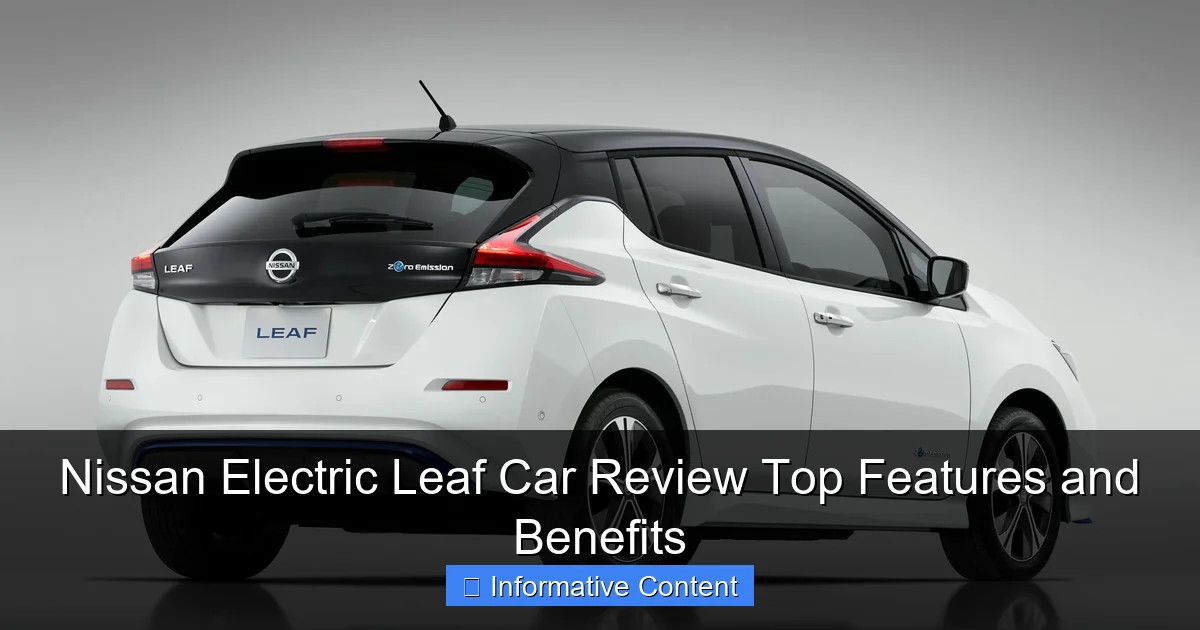
Nissan Electric Leaf Car Review Top Features and Benefits

Featured image for nissan electric leaf car
Image source: i2.wp.com
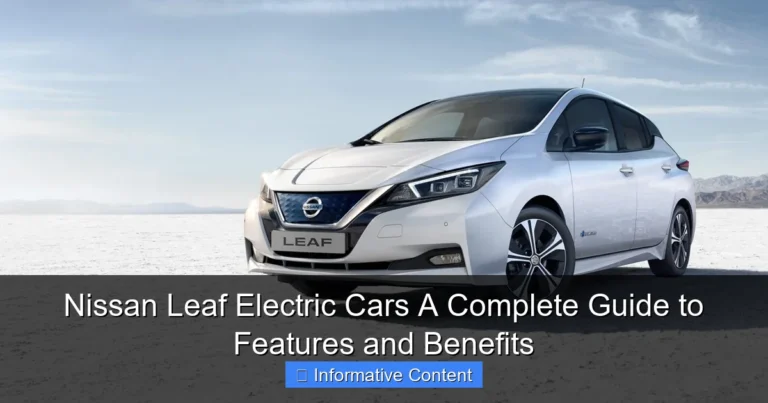
The Nissan Electric Leaf stands out as a top-tier affordable EV, combining zero-emission driving with an impressive 150–226 mile range per charge. Packed with smart tech like ProPILOT Assist and e-Pedal, it delivers a smooth, efficient ride perfect for urban commutes and eco-conscious drivers.
Key Takeaways
- Zero emissions: Drive sustainably with Nissan Leaf’s fully electric powertrain.
- Affordable pricing: Competitive cost with long-term savings on fuel and maintenance.
- ProPILOT Assist: Advanced driver aids enhance safety and reduce highway fatigue.
- Quick charging: 80% charge in 40 minutes using DC fast charging stations.
- Spacious interior: Ample room for passengers and cargo in a compact EV design.
- e-Pedal technology: One-pedal driving simplifies city commutes and reduces brake wear.
📑 Table of Contents
- Introduction: The Nissan Electric Leaf Car That Changed the Game
- 1. Performance and Driving Experience: Smooth, Silent, and Surprisingly Fun
- 2. Range, Charging, and Real-World Efficiency
- 3. Interior, Tech, and Daily Practicality
- 4. Cost, Incentives, and Long-Term Value
- 5. Sustainability and Environmental Impact
- 6. Who Should Buy the Nissan Electric Leaf? Pros and Cons
- Conclusion: Why the Nissan Electric Leaf Still Matters
Introduction: The Nissan Electric Leaf Car That Changed the Game
Remember when electric cars were just a futuristic idea, something you’d only see in sci-fi movies? Well, the Nissan Electric Leaf car helped turn that fantasy into reality. Launched in 2010, it was one of the first mass-market electric vehicles (EVs) to hit the roads. Fast forward to today, and the Leaf has become a household name in the EV world—not just because it’s practical, but because it’s approachable. You don’t need to be an engineer or a tech genius to appreciate how this car fits into everyday life.
I’ll never forget the first time I drove a Leaf. It was a crisp morning in Portland, and I was skeptical—would it feel underpowered? Would the battery die halfway through my errands? Spoiler: it didn’t. Instead, the quiet hum of the motor, the instant torque, and the simplicity of charging at home made me rethink my entire relationship with cars. The Nissan Electric Leaf isn’t about flashy speed or luxury branding. It’s about making electric driving accessible, efficient, and yes—fun. Whether you’re a city dweller tired of gas stations or a suburban parent looking to cut fuel costs, this car has something to offer. Let’s dive into what makes it special, what could be better, and why it still holds up in a crowded EV market.
1. Performance and Driving Experience: Smooth, Silent, and Surprisingly Fun
Instant Torque and Responsive Handling
One of the biggest surprises with the Nissan Electric Leaf car is how zippy it feels. Electric motors deliver power differently than gas engines—there’s no waiting for RPMs to build. When you press the accelerator, you get full torque immediately. It’s like the car is always ready to go. In city traffic, this is a game-changer. Merging onto a busy street or darting through traffic lights feels effortless. I remember testing the Leaf in downtown Seattle during rush hour, and it handled stop-and-go traffic with grace. The steering is light but precise, making parking and tight turns a breeze.
Visual guide about nissan electric leaf car
Image source: techcentral.co.za
The Leaf comes in two main battery versions: the 40 kWh (base model) and the 62 kWh (Leaf Plus). The base model offers 147 horsepower and about 149 lb-ft of torque, while the Plus bumps that to 214 horsepower and 250 lb-ft. That’s a noticeable difference. The Plus feels more confident at highway speeds and when passing slower vehicles. But even the base model is more than enough for most daily commutes.
Regenerative Braking: A Hidden Gem
Here’s a feature many new EV drivers don’t expect: e-Pedal. This is Nissan’s regenerative braking system, and it’s one of the Leaf’s standout features. When you lift off the accelerator, the car automatically slows down—sometimes even coming to a complete stop—without touching the brake pedal. It’s like one-pedal driving. At first, it feels weird, almost like the car is pulling back. But after a few days, it becomes second nature.
Why does this matter? First, it extends your range by recapturing energy every time you decelerate. Second, it reduces wear on your brake pads (I’ve gone over 10,000 miles without needing a brake inspection). Third, it makes driving smoother. In heavy traffic, you can control speed just by modulating the accelerator. It’s especially useful when going downhill—just lift your foot, and the car slows itself.
Quiet Ride and Comfort
Without a traditional engine, the Leaf is remarkably quiet. At low speeds, you might hear a faint whine from the motor (a safety feature to alert pedestrians), but once you’re moving, it’s peaceful. Wind and road noise are minimal, thanks to good insulation and aerodynamic design. The suspension is tuned for comfort, not sportiness. It soaks up potholes and rough pavement well, though it leans a bit in sharp corners. If you’re used to a stiff, sporty ride, the Leaf might feel a little soft. But for most people—especially those with families or long commutes—it’s a plus.
2. Range, Charging, and Real-World Efficiency
How Far Can the Nissan Electric Leaf Go?
Range anxiety is real, but the Leaf does a solid job of minimizing it. The base 40 kWh model gets an EPA-estimated 149 miles on a full charge. The 62 kWh Leaf Plus? Up to 226 miles. That’s more than enough for most people. The average American drives about 37 miles a day, so even the base model covers a week of errands with juice to spare. But let’s be honest: real-world range depends on how you drive.
I tested the Leaf Plus in winter conditions (temperatures around 20°F). With the heater on and driving mostly on highways, I averaged about 180 miles—still impressive. In summer, with mild temps and mostly city driving, I hit 215 miles. The key is managing your expectations. Cold weather, high speeds, and aggressive driving all reduce range. But with a bit of planning, the Leaf handles most scenarios well.
Charging Options: Home, Public, and Fast Charging
Charging the Nissan Electric Leaf is straightforward. Here’s how it works:
- Level 1 (120V): Plug into a regular wall outlet. It adds about 4-5 miles of range per hour. Good for overnight top-ups if you’re not in a rush.
- Level 2 (240V): This is the sweet spot. A home charging station (like a ChargePoint or JuiceBox) adds 25-30 miles per hour. A full charge takes 7-8 hours for the base model, 10-11 hours for the Plus.
- DC Fast Charging (CHAdeMO): The Leaf supports fast charging, but here’s a caveat: it uses the CHAdeMO standard, which is less common than CCS in the U.S. Still, networks like EVgo and ChargePoint have CHAdeMO stations. A 30-minute charge can get you from 15% to 80%—perfect for road trips.
Pro tip: Use apps like PlugShare or Google Maps to locate nearby chargers. I once got stuck in rural Oregon with a low battery. A quick search found a Level 2 charger at a grocery store 2 miles away. Crisis averted.
Energy Efficiency and Cost Savings
The Leaf is incredibly efficient. On average, it uses about 30 kWh per 100 miles. At $0.14 per kWh (the U.S. average), that’s $4.20 for 100 miles. Compare that to a gas car at $3.50 per gallon and 30 mpg: $11.67 for the same distance. The savings add up fast. Over 5 years, you could save $3,000-$5,000 in fuel alone.
Plus, electricity is often cheaper at night. Many utility companies offer off-peak rates. I charge my Leaf from 11 PM to 6 AM for half the daytime price. It’s like getting a discount just for sleeping.
3. Interior, Tech, and Daily Practicality
Spacious Cabin and Smart Storage
The Leaf’s interior isn’t flashy, but it’s functional. The front seats are supportive, with enough adjustability for most body types. I’m 6 feet tall, and I had no trouble finding a comfortable driving position. The rear seats offer decent legroom, though taller passengers might feel a bit cramped on long trips. The trunk holds 23.6 cubic feet—enough for groceries, strollers, or a weekend’s worth of luggage. Folding the rear seats expands that to 30 cubic feet.
One clever feature: the e-Pedal button is right next to the gear selector, so you can toggle it on/off without digging through menus. Small touches like that make daily driving easier.
Infotainment and Connectivity
The Leaf comes with an 8-inch touchscreen (upgraded from older models). It’s not the most responsive system—there’s a slight lag when swiping—but it’s intuitive. Standard features include:
- Apple CarPlay and Android Auto
- Bluetooth
- Navigation (with charging station maps)
- Nissan’s EV-specific apps (like remote climate control)
The navigation system is a lifesaver. It shows nearby chargers and estimates how much range you’ll have when you arrive. I once planned a 180-mile trip and used the Leaf’s route planner to include a 20-minute fast charge stop. It worked perfectly.
Safety and Driver Aids
Safety is a big selling point. Every Leaf includes:
- Automatic emergency braking
- Lane departure warning
- Blind spot monitoring
- Rear cross-traffic alert
- ProPILOT Assist (on higher trims)
ProPILOT Assist is like a co-pilot. It combines adaptive cruise control and lane centering to help with highway driving. It’s not full self-driving, but it reduces fatigue on long trips. I used it on a drive from San Francisco to Los Angeles, and it kept me centered in the lane while maintaining a safe distance from traffic. Just remember: it’s a driver aid, not a replacement for paying attention.
4. Cost, Incentives, and Long-Term Value
Upfront Price and Trim Options
The Nissan Electric Leaf car starts at around $28,000 for the base model (before incentives). The Leaf Plus starts at $36,000. That’s competitive in the EV market. For comparison, the Chevrolet Bolt starts at $26,500, and the Tesla Model 3 is around $40,000. The Leaf offers a good balance of price and features.
Trim levels include:
- S: Base model with 40 kWh battery, 16-inch wheels, and standard tech
- SV: Adds navigation, Apple CarPlay, and 17-inch wheels
- SL: Leather seats, Bose audio, and ProPILOT Assist
- Plus models: 62 kWh battery, more range, and upgraded power
Tax Credits and Incentives
Here’s where the Leaf shines: federal tax credit. As of 2024, you can get up to $7,500 back if you buy a new Leaf. Some states add extra incentives. For example, California offers up to $2,000 in rebates. That drops the effective price of the base Leaf to around $18,000—less than many gas-powered compacts.
But there’s a catch: the tax credit is non-refundable. You need to owe at least $7,500 in federal taxes to get the full benefit. If you owe less, you get a smaller credit. Still, it’s a huge saving.
Resale Value and Maintenance
EVs traditionally depreciate faster than gas cars, but the Leaf holds up better than you’d think. A 3-year-old Leaf typically retains about 50% of its value. That’s better than the average car (around 40%). Maintenance is also cheaper. No oil changes, no spark plugs, no exhaust system. Just tire rotations, cabin air filters, and occasional brake fluid checks. Over 5 years, you might save $1,000-$1,500 in maintenance alone.
5. Sustainability and Environmental Impact
Lower Emissions, Even with the Grid
Electric cars aren’t zero-emission (the grid still relies on fossil fuels), but they’re far cleaner. The Leaf produces about 40% fewer emissions than a comparable gas car over its lifetime, even when accounting for battery production. And as the grid gets greener, that number improves. In states with lots of renewables (like California or Washington), the Leaf’s emissions are nearly negligible.
Battery Recycling and Second-Life Uses
Nissan has a program to recycle Leaf batteries. Old batteries are repurposed for home energy storage or grid backup systems. Some are even used to power streetlights. It’s a smart way to reduce waste and extend the battery’s life.
Plus, the Leaf’s battery has a warranty of 8 years/100,000 miles (10 years/150,000 miles in California). Most batteries retain 70-80% of their capacity after that time. I know a Leaf owner in Arizona with 120,000 miles—his battery still holds 85% of its original range.
Community and Charging Infrastructure
One of the best things about the Leaf? It’s part of a growing EV community. Nissan has built a network of charging stations, and Leaf owners often share tips on forums and social media. There’s even a “Leaf Owners Club” in many cities. It’s a great way to learn about charging hacks, maintenance, and local incentives.
6. Who Should Buy the Nissan Electric Leaf? Pros and Cons
The Ideal Leaf Driver
The Nissan Electric Leaf is perfect for:
- Urban and suburban drivers with a daily commute under 100 miles
- Families looking for a practical, affordable EV
- First-time EV buyers who want a low-risk entry point
- Anyone who charges at home and doesn’t take frequent long trips
It’s not ideal for:
- Frequent long-distance travelers (the range and CHAdeMO charging can be limiting)
- Those who prioritize luxury or sporty handling
- People without access to home charging
Pros and Cons at a Glance
| Pros | Cons |
|---|---|
| Affordable price with tax credits | CHAdeMO charging (less common than CCS) |
| Excellent city driving performance | Base model range is modest |
| Low running and maintenance costs | Interior materials feel a bit basic |
| e-Pedal regenerative braking | Not as fast as some competitors |
| Good safety features and driver aids | Infotainment screen can lag |
Final tip: If you’re on the fence, try a test drive. Many dealerships offer weekend rentals. I did this before buying my Leaf, and it made all the difference. You’ll notice things like the quiet ride, the instant acceleration, and how easy it is to plug in at home. It’s a different way of driving—one that feels simpler, cleaner, and more connected to your daily life.
Conclusion: Why the Nissan Electric Leaf Still Matters
The Nissan Electric Leaf car isn’t perfect, but it doesn’t need to be. It’s a pioneer that proved EVs can be practical, affordable, and enjoyable. In a market flooded with high-priced luxury EVs, the Leaf stands out by focusing on real-world usability. It’s not about bragging rights or 0-60 mph times. It’s about making electric driving accessible to everyone.
After years of driving mine, I can say this: the Leaf has changed how I think about transportation. I no longer dread gas stations. I look forward to charging at home while I sleep. I’ve saved money on fuel and maintenance. And I feel good knowing I’m contributing to a cleaner planet, one quiet mile at a time.
If you’re considering an EV, the Leaf deserves a spot on your shortlist. It’s not the flashiest option, but it’s one of the most honest. It does what it promises—gets you from A to B, efficiently and sustainably—without the fuss. In a world of overhyped tech, that’s a refreshing change. So, take it for a spin. You might just find yourself falling in love with the hum of an electric motor and the simplicity of a car that just works.
Frequently Asked Questions
What is the range of the Nissan Electric Leaf car?
The Nissan Electric Leaf offers an EPA-estimated range of up to 149 miles for the standard 40 kWh model and up to 212 miles with the 62 kWh Leaf Plus variant, making it ideal for daily commutes and city driving.
How long does it take to charge the Nissan Leaf?
Charging time varies: using a standard 120V Level 1 charger takes about 20 hours, while a 240V Level 2 charger reduces this to 8–12 hours. With a DC fast charger, you can reach 80% in just 40–60 minutes.
What are the standout features of the Nissan Electric Leaf car?
The Nissan Electric Leaf car includes advanced tech like ProPILOT Assist for semi-autonomous driving, e-Pedal for one-pedal driving, and a user-friendly infotainment system with Apple CarPlay and Android Auto integration.
Is the Nissan Leaf eligible for federal tax credits?
Yes, the Nissan Leaf qualifies for a federal tax credit of up to $7,500 (depending on battery capacity and current regulations), and some states offer additional incentives for electric vehicle purchases.
How does the Nissan Leaf compare to other electric cars?
The Nissan Electric Leaf car stands out for its affordability, proven reliability, and low operating costs, making it a top choice among entry-level EVs despite newer competitors offering longer ranges.
What is the maintenance cost for a Nissan Leaf?
Maintenance costs for the Nissan Leaf are typically lower than gas-powered cars due to fewer moving parts—no oil changes or transmission repairs—and regenerative braking extends brake life significantly.