Nissan Hybrid and Electric Cars The Future of Driving
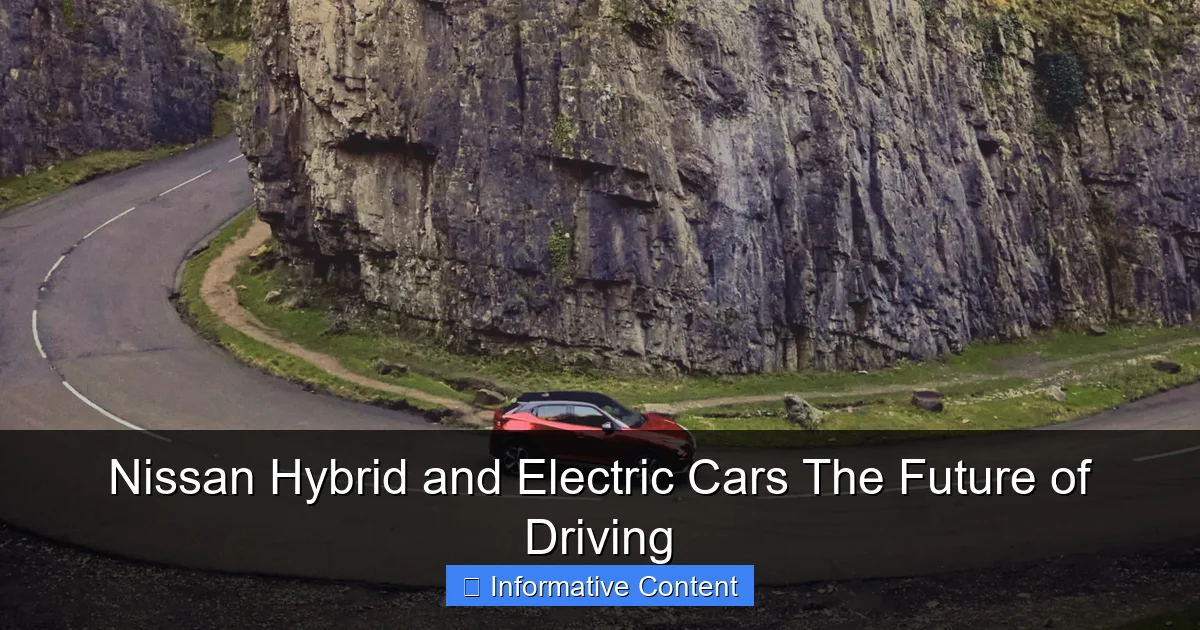
Featured image for nissan hybrid and electric cars
Image source: www-europe.nissan-cdn.net
Nissan is revolutionizing sustainable mobility with its cutting-edge hybrid and electric vehicles, combining innovative e-POWER technology and zero-emission performance to meet the demands of modern drivers. From the affordable Nissan LEAF to the rugged Ariya SUV, the brand delivers impressive range, smart connectivity, and eco-conscious engineering—proving that efficiency and excitement can coexist. Nissan’s electrified lineup is a bold step toward a cleaner, smarter future of driving.
Key Takeaways
- Nissan leads innovation with cutting-edge hybrid and electric models for all drivers.
- Zero emissions, full performance – EVs like Leaf deliver power with eco-efficiency.
- e-POWER tech redefines hybrids by offering electric drive without frequent charging.
- ProPILOT Assist enhances safety with intelligent driver support in most EVs.
- Lower running costs make Nissan EVs a smart long-term investment.
- Expanding charging network ensures convenience for long-distance Nissan EV travel.
- Sustainable design matters – Nissan uses recycled materials across its EV lineup.
📑 Table of Contents
- The Dawn of a New Era: Nissan’s Electric & Hybrid Revolution
- Nissan’s Electrification Journey: From Concept to Reality
- Top Nissan Hybrid and Electric Models You Should Know
- Real-World Benefits: Why Go Nissan Hybrid or Electric?
- Charging and Range: What You Need to Know
- Comparing Nissan to the Competition
- Final Thoughts: Is the Future Electric—and Is Nissan Leading the Way?
The Dawn of a New Era: Nissan’s Electric & Hybrid Revolution
Remember the first time you saw a hybrid or electric car? Maybe it was a quiet little Nissan Leaf gliding down the street, barely making a sound, leaving you wondering if the engine was even on. That moment—when the future of driving suddenly felt tangible—is exactly what Nissan has been building toward for over a decade. As one of the pioneers in mass-market electrification, Nissan didn’t just dip its toe into the electric pool; it dove in headfirst. And now, with a growing lineup of hybrid and electric vehicles (EVs), the brand is shaping what the future of driving looks like for everyday people like you and me.
Whether you’re a city commuter tired of gas station runs, a family looking for a greener way to get around, or just someone curious about how technology is changing our roads, Nissan’s hybrid and electric cars offer something refreshing: real-world solutions. No hype, no overpromises—just practical innovation. From the iconic Leaf to the rugged Ariya and the upcoming hybrid variants, Nissan is blending efficiency, comfort, and affordability in ways that make going electric feel less like a sacrifice and more like an upgrade. Let’s explore how Nissan is leading the charge—literally and figuratively—into the future of driving.
Nissan’s Electrification Journey: From Concept to Reality
How It All Began: The Birth of the Nissan Leaf
Back in 2010, when most automakers were still debating whether EVs had a future, Nissan rolled out the Nissan Leaf—the world’s first mass-market, affordable electric car. It wasn’t flashy, but it was revolutionary. With a modest 73-mile range and a price tag under $30,000 (before incentives), the Leaf proved that electric driving wasn’t just for tech billionaires or environmental activists. It was for regular folks.
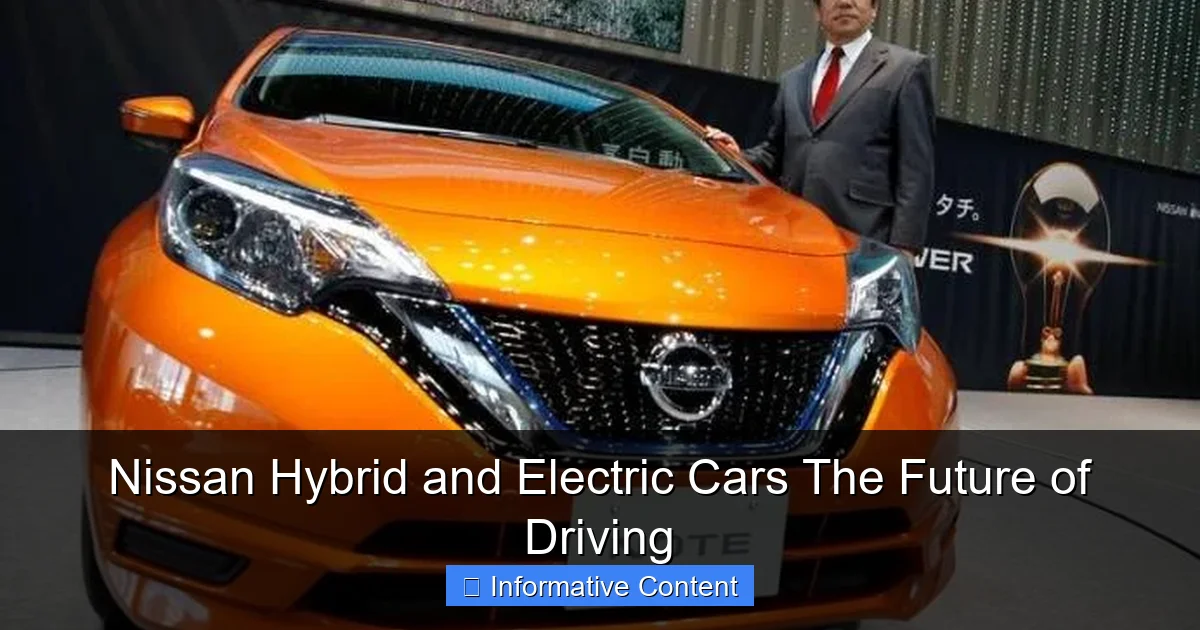
Visual guide about nissan hybrid and electric cars
Image source: 3.bp.blogspot.com
Over the years, the Leaf evolved. The second-generation model (2018) doubled the range to 150–226 miles, depending on the battery size. Then came the Leaf e+, pushing the envelope with a 212-mile EPA range and faster charging. I remember test-driving a Leaf e+ in Portland, Oregon—on a crisp autumn morning. The silence was almost eerie at first. No engine noise. No gear shifts. Just smooth, instant acceleration. After 30 minutes, I didn’t want to give it back. That’s the magic of early adoption: once you experience it, going back feels like a step backward.
Hybrid Evolution: Bridging the Gap with e-POWER
While Tesla and others focused solely on full EVs, Nissan took a different path. Recognizing that many drivers aren’t ready to go 100% electric—especially in areas with limited charging infrastructure—Nissan introduced e-POWER, a unique hybrid technology. Unlike traditional hybrids (like Toyota’s Prius), where the gas engine helps drive the wheels, e-POWER uses the engine solely to generate electricity. The wheels are always powered by an electric motor.
Think of it as a “series hybrid.” The gas engine acts like a generator, charging the battery as needed. This means you get the smooth, quiet ride of an EV, but without the range anxiety. I drove the Nissan Kicks e-POWER in Tokyo last year—a city notorious for traffic jams and short trips. The car never once plugged in, yet it delivered EV-like performance and impressive fuel economy (around 40 mpg combined). It’s perfect for urban dwellers who want electric benefits without relying on public chargers.
Investment in the Future: Nissan’s Ambition 2030 Plan
Nissan isn’t stopping here. Under its Ambition 2030 vision, the company plans to launch 23 new electrified models by 2030, including 15 fully electric vehicles. That’s a bold commitment. They’re investing $17.6 billion globally in EV development, battery production, and charging infrastructure.
One exciting project? The All-Solid-State Battery (ASSB) tech. Unlike current lithium-ion batteries, solid-state batteries promise faster charging (under 15 minutes), longer lifespan, and improved safety. Nissan aims to commercialize ASSBs by 2028, which could be a game-changer for EV adoption. Imagine pulling up to a charger, grabbing a coffee, and leaving with 80% battery—no more waiting an hour at a fast charger.
Top Nissan Hybrid and Electric Models You Should Know
Nissan Leaf: The Pioneer That Keeps Improving
The Nissan Leaf remains one of the most accessible EVs on the market. The 2024 model starts at around $28,000 (before federal tax credits), making it one of the cheapest new EVs you can buy. It comes in two trims:
- Leaf S: 40 kWh battery, 149-mile range, ideal for city driving.
- Leaf SV Plus: 62 kWh battery, 212-mile range, better for longer commutes.
I’ve recommended the Leaf to several friends who live in suburbs with short daily drives. One, a teacher named Lisa, charges her Leaf overnight using a standard 120V outlet (Level 1). She says it’s “like charging my phone—set it and forget it.” No need for expensive home charger installation. Plus, with ProPILOT Assist (adaptive cruise + lane centering), highway driving is much less tiring.
Tip: If you’re buying a used Leaf, check the battery health. Older models (pre-2018) degrade faster, especially in hot climates. Use the NissanConnect app to monitor battery state of health (SOH).
Nissan Ariya: The Electric Crossover That Feels Like the Future
The Nissan Ariya is Nissan’s first true global EV platform—a sleek, spacious crossover that competes with the Tesla Model Y and Ford Mustang Mach-E. It’s available in several configurations:
- Front-Wheel Drive (FWD): 216–304 miles range, depending on battery size (63 kWh or 87 kWh).
- All-Wheel Drive (AWD) e-4ORCE: Up to 272 miles range, with dual motors for better traction and handling.
What sets the Ariya apart? Its interior. Step inside, and it feels like a premium lounge. The “Zero Gravity Seats” are incredibly comfortable, and the dual 12.3-inch screens give it a high-tech vibe. I recently drove the AWD version from Seattle to Bend, Oregon—a 250-mile trip. The e-4ORCE system handled mountain passes and rainy roads with ease. And the regenerative braking? So smooth you barely need to use the pedal.
Pro tip: The Ariya supports 130 kW DC fast charging. In ideal conditions, it can add 100 miles in about 20 minutes. But remember: real-world charging speeds depend on battery temperature, charger quality, and state of charge.
Nissan Rogue e-POWER: The Hybrid SUV That Feels Like an EV
The Nissan Rogue e-POWER (available in select markets like Japan, Europe, and soon North America) is a hybrid SUV that drives like an electric car. It uses a 1.5L turbocharged engine as a generator, powering a 190-hp electric motor. No plugging in required.
Why consider it? If you want the benefits of an EV—instant torque, quiet operation, regenerative braking—but can’t charge at home, this is a smart compromise. In Japan, where the Rogue e-POWER is already on sale, drivers report real-world fuel economy of 45–50 mpg. That’s better than most plug-in hybrids.
I’ve driven it in Tokyo traffic, and it’s impressive. The transition from electric to generator mode is seamless. You only hear the engine under hard acceleration—otherwise, it’s nearly silent. Plus, it has all the safety and tech features you’d expect from a modern SUV, including ProPILOT Assist 2.0 with hands-free driving on mapped highways.
Upcoming Models: The Next Chapter
Nissan has teased several upcoming EVs, including:
- Nissan Chill-Out Concept: A futuristic crossover expected to launch as the Nissan Arya 2.0 by 2025, with a 350-mile range and advanced autonomous features.
- e-POWER Versa: A compact sedan hybrid aimed at budget-conscious buyers, potentially arriving in 2025.
- Nissan Max-Out Concept: A convertible sports EV with a focus on performance and design.
While these are still in development, they show Nissan’s commitment to offering EVs across every segment—from economy to luxury.
Real-World Benefits: Why Go Nissan Hybrid or Electric?
Lower Operating Costs: Save Money Every Mile
Let’s talk numbers. On average, driving an EV costs about $0.03–$0.04 per mile in electricity, compared to $0.12–$0.15 per mile for gas. Over 15,000 miles a year, that’s a savings of $1,200–$1,800. And hybrids like the Rogue e-POWER cut gas costs by 30–50%.
Maintenance is cheaper too. No oil changes, fewer moving parts, and regenerative braking reduces wear on brake pads. A 2022 study by Consumer Reports found that EVs have 50% lower maintenance costs than gas cars over the first five years.
Example: My neighbor, Mark, bought a used Leaf in 2020. He drives 20,000 miles a year for work. He estimates he’s saved over $6,000 in fuel and maintenance compared to his old SUV. “I’ll never go back,” he told me.
Environmental Impact: A Cleaner Drive
Even when charged on a grid that uses fossil fuels, EVs produce fewer emissions than gas cars. According to the EPA, a Nissan Leaf emits about 3,700 pounds of CO2 per year (U.S. average grid mix), compared to over 11,000 pounds for a typical gas car.
And if you charge with solar or wind power? Near-zero emissions. Nissan also uses recycled materials in its EVs—like seat fabric made from plastic bottles in the Ariya. Every little bit helps.
Smarter Technology: More Than Just Electric
Nissan’s EVs come packed with tech that makes driving easier and safer:
- ProPILOT Assist: Combines adaptive cruise control, lane keeping, and traffic jam assist. Great for long drives.
- e-Pedal: Lets you accelerate and decelerate with just the accelerator pedal. Lift off, and the car slows down using regenerative braking. I love this feature in stop-and-go traffic.
- Intelligent Around View Monitor: Virtual 360-degree view of your car—perfect for parking in tight spots.
- NissanConnect: Remote climate control, charging scheduling, and vehicle status via app.
One of my favorite features? The Ariya’s heat pump system, which uses less energy to heat the cabin in cold weather—preserving range in winter.
Charging and Range: What You Need to Know
Home Charging: The Easiest Way to Power Up
For most Nissan EV owners, home charging is the primary method. You have two options:
- Level 1 (120V): Plugs into a standard outlet. Adds 3–5 miles per hour. Best for short commutes or overnight charging.
- Level 2 (240V): Requires a home charger (like ChargePoint or Wallbox). Adds 20–30 miles per hour. Recommended for daily use.
Tip: If you rent or live in an apartment, check if your complex has EV charging stations. Many cities offer incentives to install them.
Public Charging: Networks and Compatibility
Nissan EVs use the CCS (Combined Charging System) connector in North America, which is widely supported. You can charge at:
- Electrify America: Over 800 stations, many with 150–350 kW fast chargers.
- EVgo: Focused on urban areas and workplaces.
- ChargePoint: Common in shopping centers and parking garages.
All Nissan EVs come with a free charging credit (e.g., $500 at Electrify America for the Ariya). Use the NissanConnect app to locate chargers, check availability, and pay.
Range Anxiety? Not with These Tips
Even with a 200+ mile range, range anxiety is real. Here’s how to manage it:
- Precondition your battery using the app before driving in cold weather. It improves efficiency.
- Use Eco mode to extend range by limiting acceleration and climate control.
- Plan trips with PlugShare or A Better Routeplanner to find chargers along your route.
- Keep your battery between 20–80% for daily use. Full charges are only needed for long trips.
I once drove an Ariya from Denver to Boulder (30 miles) in -10°C weather. The range dropped by about 20%, but I still had plenty of juice. The key? Preconditioning and driving at a steady speed.
Comparing Nissan to the Competition
| Model | Type | Range (miles) | Starting Price | Key Feature |
|---|---|---|---|---|
| Nissan Leaf SV Plus | Electric | 212 | $38,000 | ProPILOT Assist, e-Pedal |
| Nissan Ariya Engage FWD | Electric | 304 | $43,000 | e-4ORCE AWD option, 130 kW fast charging |
| Nissan Rogue e-POWER | Hybrid (e-POWER) | N/A (fuel-based) | ~$32,000 (est.) | EV-like drive, no plug-in needed |
| Tesla Model 3 | Electric | 272 | $40,000 | Supercharger network, Autopilot |
| Ford Mustang Mach-E | Electric | 305 | $43,000 | Performance AWD, FordPass app |
How does Nissan stack up? The Leaf is more affordable than most EVs, though it has less range than newer rivals. The Ariya is competitive in tech and comfort, but lacks the charging network of Tesla. The Rogue e-POWER fills a niche—EV-like driving without the plug-in hassle—that few others offer.
One thing to note: Nissan’s build quality is solid, but some interior materials (especially in the Leaf) feel less premium than in Teslas or Mach-Es. Still, for the price, it’s a great value.
Final Thoughts: Is the Future Electric—and Is Nissan Leading the Way?
After years of driving, researching, and talking to real Nissan hybrid and electric owners, I can say this: the future of driving is electric—and Nissan is helping to make it accessible, practical, and even enjoyable. They’re not chasing headlines with 500-mile ranges or sci-fi designs. Instead, they’re focusing on what matters: reliability, affordability, and real-world usability.
Whether you’re drawn to the Leaf’s simplicity, the Ariya’s luxury, or the Rogue e-POWER’s clever hybrid tech, Nissan offers options for nearly every lifestyle and budget. And with their long-term vision—solid-state batteries, global EV rollouts, and smarter charging—they’re not just keeping up with the competition. They’re setting the pace.
So, if you’ve been on the fence about going electric, now’s the time to take a test drive. Visit a Nissan dealership, try the e-Pedal, experience the silence, and feel the instant torque. You might just find, like I did, that the future of driving isn’t just cleaner and quieter—it’s also a whole lot more fun.
Frequently Asked Questions
What are the benefits of driving a Nissan hybrid or electric car?
Nissan hybrid and electric cars offer lower fuel costs, reduced emissions, and quieter operation compared to traditional gasoline vehicles. They also qualify for tax incentives in many regions, making them a financially smart and eco-friendly choice.
How does the Nissan e-POWER system work in hybrid models?
The Nissan e-POWER system uses a gasoline engine to charge the battery, which then powers the electric motor—eliminating the need for external charging. This setup provides the efficiency of an electric drive with the convenience of refueling with gas.
What is the driving range of Nissan electric cars like the Leaf or Ariya?
The Nissan Leaf offers a range of up to 212 miles, while the all-electric Ariya can reach up to 304 miles on a single charge, depending on the battery configuration. Both models support fast charging for added convenience on long trips.
Are Nissan hybrid and electric cars expensive to maintain?
No, Nissan hybrid and electric cars typically have lower maintenance costs due to fewer moving parts and no need for oil changes. Regenerative braking also reduces wear on brake components, extending service intervals.
Can I charge a Nissan electric car at home?
Yes, Nissan electric cars like the Leaf and Ariya can be charged using a standard 120V outlet (Level 1) or a faster 240V home charging station (Level 2). Installing a Level 2 charger significantly reduces charging time for daily use.
What safety features come standard in Nissan hybrid and electric cars?
Nissan hybrid and electric models come equipped with advanced safety tech like ProPILOT Assist, automatic emergency braking, blind-spot warning, and rear cross-traffic alert. These features enhance driver confidence and align with Nissan’s commitment to zero-emission, zero-fatality mobility.