Toyota Electric Car Concepts Shaping the Future of Mobility
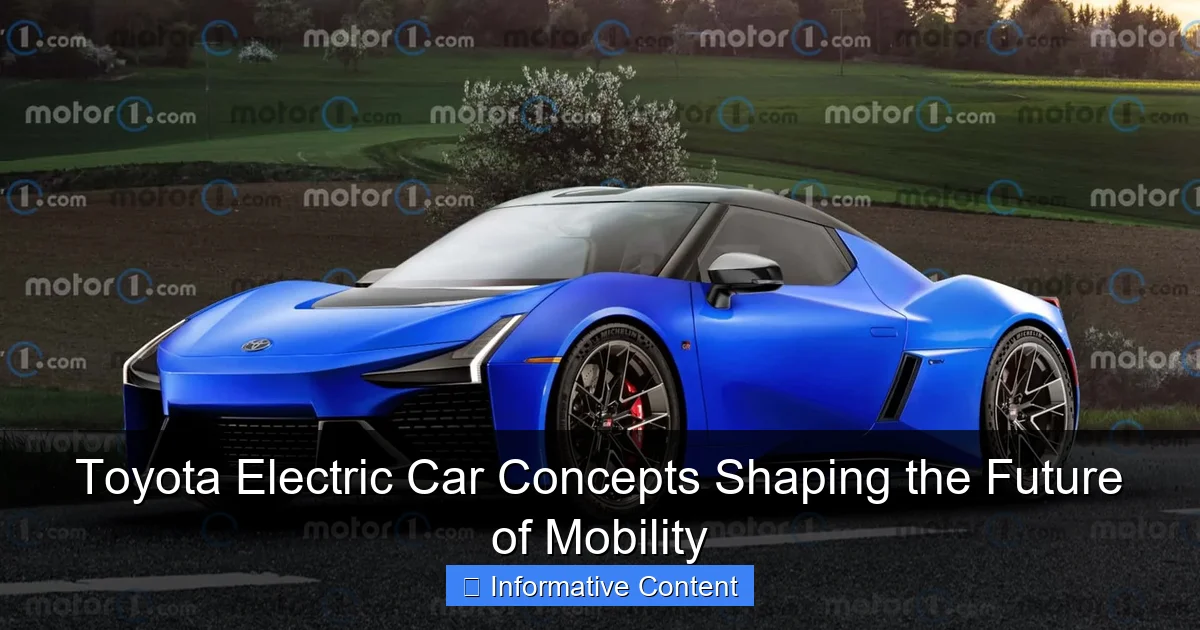
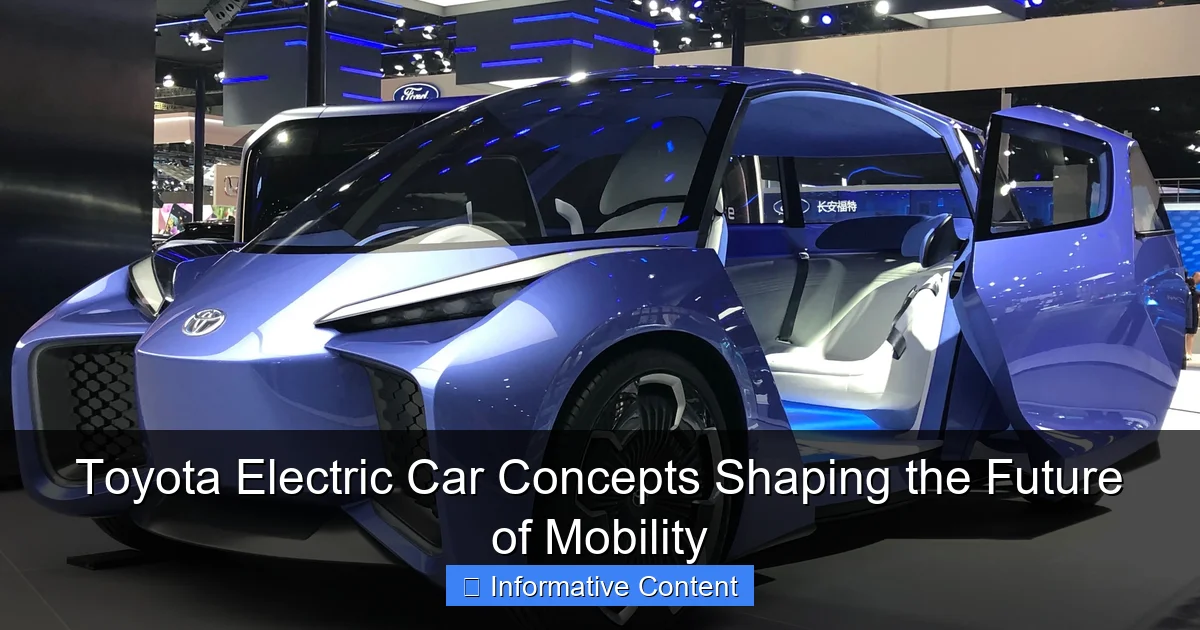
Featured image for toyota electric car concepts
Image source: cdn.motor1.com
Toyota’s electric car concepts are redefining the future of mobility with bold innovation and sustainable design. From sleek urban pods to rugged off-road EVs, these visionary models showcase advanced battery technology, AI integration, and eco-conscious materials. With a commitment to carbon neutrality, Toyota is accelerating toward an electrified future that balances performance, practicality, and environmental responsibility.
Key Takeaways
- Toyota’s concepts highlight bold steps toward carbon neutrality by 2050.
- Solid-state batteries promise faster charging and longer range in future models.
- Modular platforms enable flexible designs for diverse EV needs and markets.
- AI integration enhances autonomous driving and in-car user experiences.
- Sustainable materials reduce environmental impact across the vehicle lifecycle.
- Vehicle-to-grid tech supports energy sharing and smart grid compatibility.
📑 Table of Contents
- Toyota Electric Car Concepts Shaping the Future of Mobility
- The Evolution of Toyota’s Electric Vision
- Top Toyota Electric Car Concepts to Watch
- Technology and Innovation Behind the Concepts
- Real-World Applications and User Benefits
- Challenges and What’s Next for Toyota EVs
- Conclusion
Toyota Electric Car Concepts Shaping the Future of Mobility
Imagine a world where your car doesn’t just get you from point A to point B—it’s quiet, clean, smart, and actually helps reduce your carbon footprint. That’s not science fiction. It’s the vision Toyota is actively bringing to life through its bold electric car concepts. As one of the world’s most trusted automakers, Toyota has long been synonymous with reliability, innovation, and forward-thinking design. But when it comes to electric vehicles (EVs), the brand is stepping up in a big way—not just with production models, but with groundbreaking concepts that hint at what’s possible.
You might already know Toyota for pioneering the Prius, the world’s first mass-produced hybrid car. But now, the company is shifting gears—literally—toward a fully electric future. While some automakers rushed into EVs with flashy launches, Toyota took a more measured approach, focusing on sustainability, battery technology, and real-world usability. The result? A growing lineup of electric car concepts that aren’t just about zero emissions—they’re about reimagining how we move, live, and connect. From compact urban pods to rugged off-roaders and family-friendly SUVs, Toyota’s EV concepts are as diverse as the drivers who might one day own them.
In this post, we’ll dive deep into the most exciting Toyota electric car concepts currently shaping the future of mobility. We’ll explore the technology behind them, what makes them different, and how they’re designed to meet real-life needs—whether you’re commuting in the city, road-tripping with the family, or exploring the great outdoors. Whether you’re an EV enthusiast, a Toyota fan, or just curious about what’s next in transportation, this guide will give you a clear, honest look at where Toyota is headed—and why it matters.
The Evolution of Toyota’s Electric Vision
Toyota’s journey into electric mobility didn’t start yesterday. In fact, the company has been quietly laying the groundwork for decades. While many automakers jumped straight into battery-electric vehicles (BEVs), Toyota took a different path—one rooted in hybrid technology. The 1997 launch of the Prius marked a turning point, proving that fuel-efficient, low-emission vehicles could be practical and desirable. But Toyota never stopped there. The company continued investing in hydrogen fuel cells, plug-in hybrids, and now, fully electric platforms.
Visual guide about toyota electric car concepts
Image source: image.cnbcfm.com
From Hybrids to Full Electrification
The Prius was just the beginning. Over the years, Toyota expanded its hybrid lineup to include models like the Camry Hybrid, RAV4 Hybrid, and even the luxury Lexus hybrids. These vehicles demonstrated that electrification didn’t have to mean sacrificing performance or range. But as battery technology improved and global emissions standards tightened, Toyota recognized the need to go all-in on electric powertrains.
In 2021, Toyota announced its ambitious “Beyond Zero” initiative, aiming to achieve carbon neutrality across its entire vehicle lifecycle by 2050. A key part of that plan? Launching 30 new battery-electric models by 2030. That’s a massive shift for a company once seen as cautious about full electrification. But Toyota isn’t just chasing trends—it’s building a sustainable ecosystem, from sourcing raw materials responsibly to designing vehicles that last longer and recycle more easily.
Why Concepts Matter More Than Ever
You might wonder: why focus on concepts instead of production models? After all, concepts are often seen as futuristic prototypes that never make it to showrooms. But for Toyota, concepts are strategic tools. They allow engineers and designers to test bold ideas, gather public feedback, and refine technology before committing to mass production.
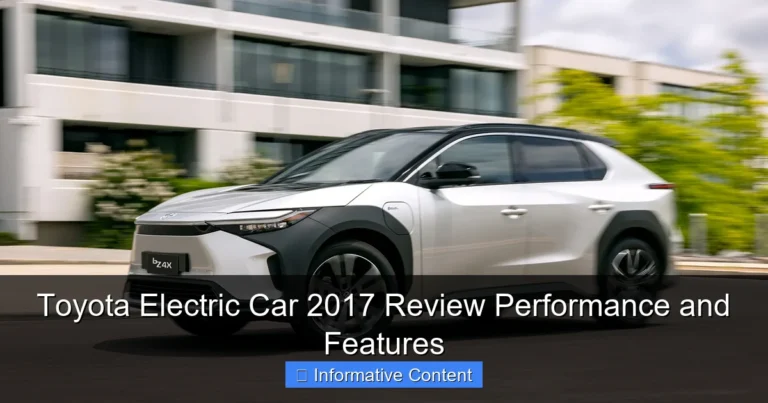
Take the Toyota bZ4X, for example. While it’s now a real production SUV, its roots trace back to the bZ (“beyond Zero”) concept series. These early designs helped Toyota explore everything from interior layouts to battery placement and charging systems. Concepts also let Toyota experiment with new materials, like plant-based plastics and recycled fabrics, which reduce environmental impact without compromising quality.
Moreover, Toyota uses concepts to address specific mobility challenges. In dense urban areas, for instance, compact EVs with tight turning radii and smart parking features are more useful than large SUVs. In rural or off-grid locations, rugged electric vehicles with solar roofs or swappable batteries could be game-changers. By developing a range of concepts, Toyota ensures it’s ready for diverse markets and lifestyles.
Top Toyota Electric Car Concepts to Watch
Now, let’s get to the exciting part—the actual concepts that are turning heads and sparking conversations. Toyota has unveiled several electric car concepts in recent years, each designed with a unique purpose and audience in mind. These aren’t just concept cars; they’re blueprints for the future of transportation.
Toyota bZ Compact SUV Concept
One of the most talked-about concepts is the bZ Compact SUV. Unveiled in 2022, this sleek, angular design hints at a smaller, more affordable electric SUV aimed at urban drivers and young families. With a low roofline, wide stance, and bold LED lighting, it looks more like a futuristic crossover than a traditional SUV.
What sets it apart? The interior. Toyota designed the cabin to feel open and airy, with a panoramic glass roof and minimalist dashboard. The steering yoke—similar to what you’d see in a Tesla—reduces clutter and improves visibility. But unlike some competitors, Toyota kept physical buttons for essential functions, ensuring ease of use while driving.
Under the skin, the bZ Compact SUV uses Toyota’s new e-TNGA platform, which is flexible enough to support different battery sizes and motor configurations. Early estimates suggest a range of around 300 miles, with fast-charging capability that can add 150 miles in just 20 minutes. While not yet in production, this concept is widely expected to influence Toyota’s next-generation compact EVs.
Toyota FT-Se Concept
For driving enthusiasts, the FT-Se concept is a thrilling glimpse into Toyota’s electric performance future. Short for “Future Toyota Sport electric,” this two-seater coupe blends retro styling with cutting-edge tech. Think sleek lines, a low center of gravity, and a driver-focused cockpit.
The FT-Se is built for agility and speed. With dual electric motors and all-wheel drive, it’s designed to deliver instant torque and precise handling. Toyota hasn’t released exact performance figures, but insiders suggest 0-60 mph times under 4 seconds—comparable to high-end sports cars.
What’s really interesting is the battery placement. Instead of a traditional flat pack under the floor, Toyota explored a T-shaped layout that lowers the center of gravity even further. This improves cornering and stability, making the FT-Se not just fast, but fun to drive. While it may never become a mass-market model, the FT-Se signals that Toyota is serious about electric performance.
Toyota LQ Concept
The LQ concept takes a different approach—focusing on emotional connection and artificial intelligence. Unveiled at the 2019 Tokyo Motor Show, this autonomous-ready EV features an AI-powered assistant named Yui. Yui doesn’t just control the climate or play music—it learns your preferences, adapts to your mood, and even suggests routes based on your schedule.
Imagine getting in your car after a long day, and Yui greets you with your favorite playlist and a calming interior light. Or picture the car adjusting the seat and mirrors automatically as you approach. The LQ concept turns the vehicle into a personal companion, not just a machine.
While full autonomy is still years away, the LQ showcases how Toyota envisions the future of in-car experience. The interior is spacious and lounge-like, with swiveling seats and a panoramic display. It’s less about getting somewhere fast and more about enjoying the journey.
Toyota Micro BOX Concept
Not all concepts are about speed or luxury. The Micro BOX is Toyota’s answer to urban mobility challenges. Designed for crowded cities like Tokyo or Jakarta, this tiny electric pod seats two people side-by-side and is perfect for short commutes, errands, or ride-sharing.
Measuring just over 8 feet long, the Micro BOX can navigate narrow streets and fit into tight parking spots. It’s powered by a small battery pack that delivers about 60 miles of range—more than enough for daily city driving. Charging is simple: just plug it into a standard outlet overnight.
What’s clever is the modular design. The interior can be reconfigured for passengers, cargo, or even mobile offices. Toyota envisions fleets of Micro BOXes used by delivery services, taxis, or car-sharing programs. It’s a practical, no-frills solution that could make electric mobility accessible to millions.
Technology and Innovation Behind the Concepts
Behind every Toyota electric car concept is a suite of advanced technologies designed to improve performance, safety, and sustainability. Toyota isn’t just building EVs—it’s rethinking how they work from the ground up.
Next-Generation Battery Systems
Battery technology is the heart of any electric vehicle, and Toyota is investing heavily in next-gen solutions. While most EVs today use lithium-ion batteries, Toyota is exploring solid-state batteries—a breakthrough that could revolutionize the industry.
Solid-state batteries use a solid electrolyte instead of a liquid one, making them safer, more energy-dense, and faster to charge. Toyota has been developing this technology for over a decade and plans to introduce it in production vehicles by the mid-2020s. Early tests show solid-state batteries can deliver over 500 miles of range and charge in under 10 minutes.
But Toyota isn’t putting all its eggs in one basket. The company is also working on lithium iron phosphate (LFP) batteries, which are cheaper and more sustainable, though less energy-dense. By offering different battery options, Toyota can tailor vehicles to different needs—whether it’s long-range luxury sedans or affordable city cars.
Smart Charging and Energy Management
Charging anxiety is a real concern for many EV buyers. Toyota’s concepts address this with intelligent energy management systems. For example, the bZ4X can precondition its battery while plugged in, ensuring optimal charging speed regardless of weather.
Some concepts also feature vehicle-to-everything (V2X) technology. This allows the car to send power back to the grid, your home, or even another vehicle. Imagine using your EV as a backup power source during a blackout—Toyota is making that possible.
Additionally, Toyota is partnering with charging networks to expand access. The company supports the IONITY network in Europe and is working with ChargePoint and EVgo in the U.S. to ensure Toyota drivers have reliable charging options wherever they go.
Sustainable Materials and Design
Toyota’s commitment to sustainability goes beyond zero emissions. The company is redesigning vehicles with eco-friendly materials. For instance, the bZ4X uses seat fabrics made from recycled plastic bottles, and the dashboard incorporates bio-based plastics.
Even the manufacturing process is getting greener. Toyota’s plants are increasingly powered by renewable energy, and the company aims to eliminate CO2 emissions from all production facilities by 2035. Concepts like the LQ and Micro BOX showcase how design can reduce waste—using fewer parts, modular components, and recyclable materials.
It’s not just about being green—it’s about being responsible. Toyota knows that true sustainability means considering the entire lifecycle of a vehicle, from raw materials to end-of-life recycling.
Real-World Applications and User Benefits
Concepts are exciting, but do they translate to real-world benefits? Absolutely. Toyota’s electric car concepts are designed with everyday drivers in mind—people who want reliability, affordability, and practicality, not just futuristic gimmicks.
Urban Mobility Made Easy
For city dwellers, the Micro BOX and bZ Compact SUV offer solutions to common problems: parking, traffic, and pollution. The Micro BOX’s compact size makes it ideal for narrow streets and crowded lots, while the bZ Compact SUV provides enough space for families without sacrificing efficiency.
Both concepts prioritize ease of use. Features like 360-degree cameras, automated parking, and smartphone integration help reduce stress and save time. And with low operating costs—electricity is cheaper than gas, and maintenance is simpler—these vehicles can save drivers hundreds of dollars a year.
Family-Friendly Features
Toyota understands that families need more than just range and speed. The bZ4X and upcoming bZ models include thoughtful touches like rear-seat entertainment systems, ample cargo space, and advanced safety features.
For example, the bZ4X comes standard with Toyota Safety Sense 3.0, which includes adaptive cruise control, lane-keeping assist, and automatic emergency braking. These systems help protect passengers and reduce the risk of accidents—especially important for parents driving with kids.
Charging is also family-friendly. The bZ4X supports DC fast charging, so you can top up during a road trip without long waits. And with over 130,000 charging stations in the U.S. alone, finding a plug is easier than ever.
Off-Road and Adventure Ready
Not all electric vehicles are built for the outdoors—but Toyota is changing that. The bZ4X, for instance, offers an optional all-wheel-drive system with off-road modes. It can handle dirt trails, snow, and rough terrain with confidence.
Future concepts may take this even further. Imagine an electric version of the Land Cruiser—rugged, capable, and emissions-free. Toyota is already exploring such ideas, combining its legendary durability with clean energy.
For adventurers, this means exploring remote areas without harming the environment. And with V2X technology, your EV can even power camping gear or a portable fridge. It’s freedom, reimagined.
Challenges and What’s Next for Toyota EVs
Of course, no journey is without hurdles. Toyota’s electric future faces challenges—from battery supply chains to consumer adoption. But the company is tackling them head-on.
Overcoming Range and Charging Concerns
While Toyota’s concepts promise impressive range, real-world performance depends on infrastructure. In rural areas, charging stations are still sparse. Toyota is addressing this by partnering with governments and private companies to expand networks.
The company is also working on battery-swapping technology, especially for commercial fleets. Instead of waiting to charge, drivers could swap depleted batteries for fully charged ones in minutes—similar to how you’d refill a gas tank.
Affordability and Market Competition
Electric vehicles are still more expensive than gas-powered ones, though prices are falling. Toyota aims to make its EVs competitive by scaling production and using cost-effective battery technologies like LFP.
The bZ3 sedan, developed in partnership with BYD, is a great example. Priced under $30,000 in China, it shows that affordable EVs are possible. Toyota plans to bring similar models to other markets, including the U.S. and Europe.
The Road Ahead
Looking ahead, Toyota’s electric car concepts are just the beginning. The company plans to invest $70 billion in electrification by 2030, with half of that focused on battery development. New factories in the U.S. and Japan will produce next-gen batteries and vehicles.
We can expect more concepts in the coming years—especially in the luxury segment (under the Lexus brand) and commercial vehicles. Toyota is also exploring flying cars and autonomous shuttles, though these are still in early stages.
One thing is clear: Toyota isn’t just keeping up with the EV revolution—it’s helping shape it. With a focus on sustainability, innovation, and real-world usability, the brand is building a future where electric mobility is accessible, reliable, and enjoyable for everyone.
Conclusion
Toyota’s electric car concepts are more than just futuristic designs—they’re a roadmap to a cleaner, smarter, and more connected world. From the compact Micro BOX to the high-performance FT-Se, these vehicles reflect Toyota’s deep understanding of what drivers really need: practicality, reliability, and a touch of innovation.
What sets Toyota apart isn’t just the technology, but the philosophy. The company isn’t rushing to electrify for the sake of trends. Instead, it’s taking a thoughtful, holistic approach—balancing performance with sustainability, luxury with affordability, and innovation with real-world usability.
As we look to the future, one thing is certain: mobility is changing. And Toyota is at the forefront, not just adapting to the shift, but leading it. Whether you’re a daily commuter, a weekend adventurer, or a family on the go, there’s a Toyota electric car concept—and soon, a production model—designed with you in mind.
So the next time you see a sleek, silent Toyota EV gliding down the street, remember: it’s not just a car. It’s a glimpse into the future of mobility—one that’s electric, intelligent, and built to last.
| Concept Name | Key Features | Target Audience | Expected Launch |
|---|---|---|---|
| bZ Compact SUV | e-TNGA platform, 300-mile range, yoke steering | Urban families, young professionals | 2025 (estimated) |
| FT-Se | Dual motors, AWD, sport-tuned suspension | Driving enthusiasts, performance seekers | 2026+ (concept phase) |
| LQ | AI assistant Yui, autonomous-ready, lounge interior | Tech-savvy users, luxury buyers | 2027+ (limited release) |
| Micro BOX | Compact size, 60-mile range, modular interior | City dwellers, ride-sharing services | 2024 (pilot programs) |
Frequently Asked Questions
What are the latest Toyota electric car concepts?
Toyota has unveiled several innovative electric car concepts, including the bZ4X, LQ, and the futuristic EV-PEV series, showcasing advanced design, autonomous capabilities, and sustainable technology. These concepts highlight Toyota’s vision for zero-emission mobility and next-generation user experiences.
How do Toyota electric car concepts compare to competitors like Tesla?
While Tesla focuses on high-performance EVs, Toyota electric car concepts emphasize reliability, affordability, and hybrid-electric synergy, often integrating hydrogen fuel cells alongside battery-electric systems. Toyota aims for a broader, more inclusive approach to sustainable transportation.
Will Toyota electric car concepts be available for purchase soon?
Some concepts, like the bZ4X, have already entered production and are available in select markets, while others remain in development or testing phases. Toyota plans to launch 30 new battery-electric models by 2030, bringing more concepts to reality.
Do Toyota electric car concepts support autonomous driving?
Yes, many Toyota electric car concepts, such as the LQ and Concept-i, feature advanced driver-assistance systems (ADAS) and Level 2+ autonomous driving capabilities. These vehicles are designed to evolve with future software updates and infrastructure improvements.
What makes Toyota’s electric car concepts environmentally friendly?
Toyota electric car concepts prioritize sustainability through recyclable materials, solar roof integration, and energy-efficient manufacturing processes. Additionally, Toyota explores hydrogen and hybrid-electric platforms to reduce overall carbon footprint.
Are Toyota electric car concepts designed for global markets?
Yes, Toyota designs its electric car concepts with global adaptability in mind, considering diverse climates, road conditions, and charging infrastructures. The company tailors models like the bZ series to meet regional regulations and consumer needs worldwide.