Toyota Electric Car Market Growth and Future Outlook
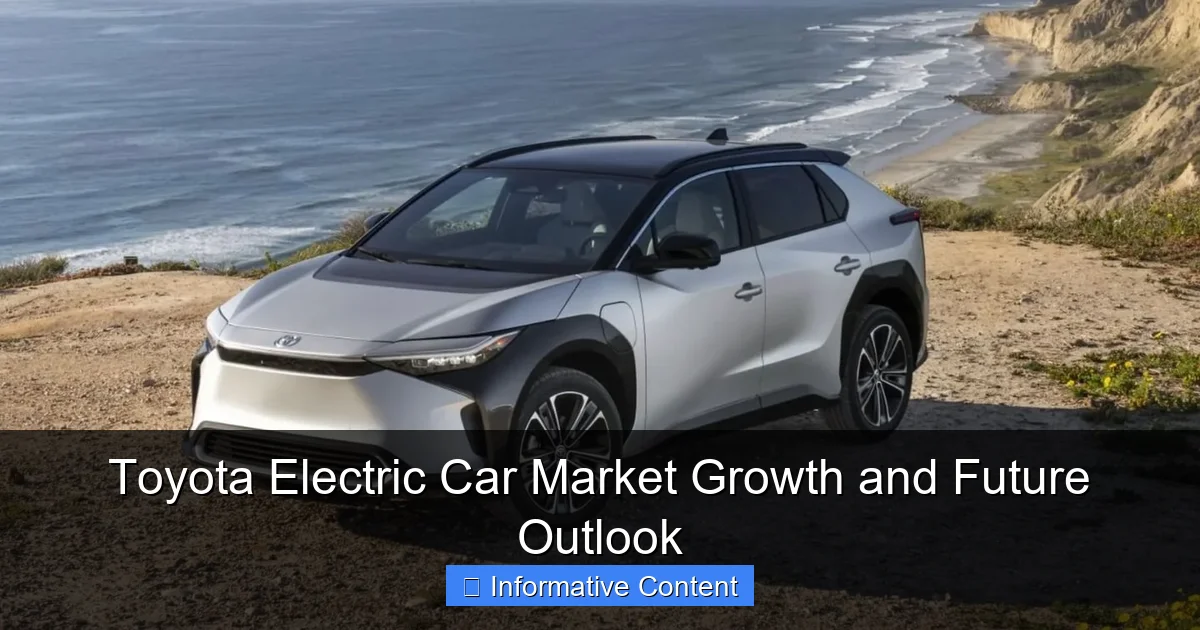
Featured image for toyota electric car market
Image source: locardeals.com
Toyota is accelerating its electric vehicle (EV) ambitions with a $70 billion investment to expand its EV lineup and battery technology by 2030. Despite being slower to adopt full electrification than some rivals, the automaker is leveraging its hybrid expertise and global manufacturing strength to capture a larger share of the growing electric car market. With plans to launch 30 new EV models and achieve annual sales of 3.5 million electric vehicles by the end of the decade, Toyota aims to balance innovation with sustainability, positioning itself as a key player in the future of clean transportation.
Key Takeaways
- Toyota leads in hybrid tech but lags in full EV market share.
- Expand EV lineup with 10+ new models by 2026 for global reach.
- Battery innovation is critical to reduce costs and boost range.
- North America and Europe are key growth markets for Toyota EVs.
- Charging partnerships with networks will ease consumer adoption barriers.
- Sustainability focus aligns with global regulations and brand loyalty.
- Invest in autonomy to integrate EVs with next-gen mobility solutions.
📑 Table of Contents
Toyota Electric Car Market Growth and Future Outlook
Imagine driving down a quiet suburban street, the only sound being the gentle hum of your car’s electric motor. No engine roar, no exhaust fumes—just smooth, silent progress. For years, this futuristic vision seemed like a distant dream, especially when it came to mainstream automakers like Toyota. Known for their reliable hybrids like the Prius, Toyota was often seen as cautious—some might say hesitant—when it came to fully electric vehicles (EVs). But times are changing, and fast.
Today, Toyota is stepping boldly into the electric car market, not as a latecomer, but as a strategic player with a long-term vision. While competitors like Tesla, Ford, and Hyundai raced ahead with flashy EVs, Toyota focused on perfecting hybrid technology and exploring alternative fuels like hydrogen. But now, with global pressure to reduce emissions, government incentives, and rapidly advancing battery tech, Toyota is accelerating its EV plans. The question isn’t whether Toyota will succeed in the electric car market—it’s how big of an impact they’ll make.
In this post, we’ll take a deep dive into Toyota’s journey into the electric car market, where they stand today, and what the future holds. Whether you’re a long-time Toyota fan, an EV enthusiast, or just curious about the shift to electric mobility, this guide will give you a clear, honest look at Toyota’s role in shaping the future of transportation.
Toyota’s Historical Approach to Electrification
Toyota didn’t just wake up one day and decide to build electric cars. Their path to electrification has been decades in the making, rooted in a philosophy of practical innovation. Long before “EV” became a household term, Toyota was already experimenting with electric powertrains. In fact, their first electric vehicle prototype dates back to the 1970s—a small electric van that never made it to mass production. But it showed that Toyota was thinking about clean mobility long before it was trendy.
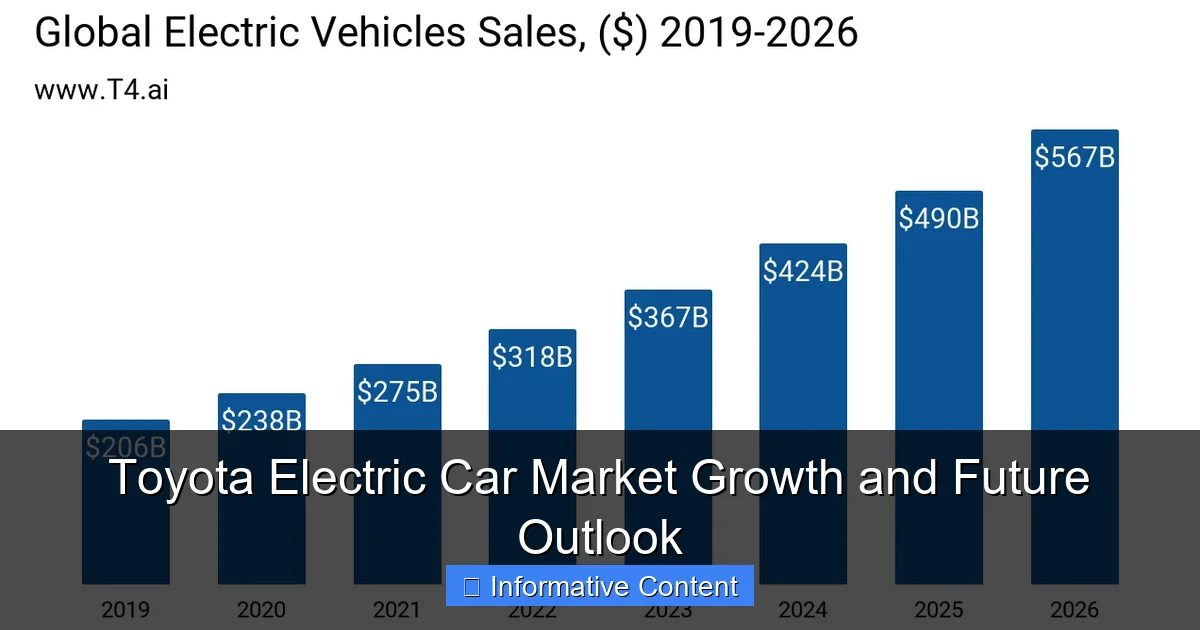
Visual guide about toyota electric car market
Image source: global-uploads.webflow.com
The Hybrid Revolution: Prius and Beyond
The real breakthrough came in 1997 with the launch of the Toyota Prius, the world’s first mass-produced hybrid car. It wasn’t fully electric, but it was a game-changer. By combining a gasoline engine with an electric motor, the Prius delivered impressive fuel efficiency and lower emissions—without requiring drivers to plug in. For many, it was the first time they considered that cars could be both practical and environmentally friendly.
Over the years, Toyota expanded its hybrid lineup to include models like the Camry Hybrid, RAV4 Hybrid, and Highlander Hybrid. These vehicles proved that electrification didn’t have to mean sacrificing range, performance, or affordability. In fact, Toyota has sold over 20 million hybrid vehicles worldwide as of 2023—more than any other automaker. This experience gave Toyota invaluable insights into battery management, regenerative braking, and consumer behavior around electrified driving.
Why Toyota Was Slow to Embrace Full EVs
Despite their hybrid success, Toyota was notably cautious about jumping into the fully electric vehicle market. While companies like Tesla were building sleek, high-performance EVs, Toyota remained focused on hybrids and hydrogen fuel cell vehicles like the Mirai. Why the hesitation?
One reason was philosophy. Toyota believed that hybrids offered the best balance between environmental benefits and real-world usability, especially in regions with limited charging infrastructure. They also questioned the sustainability of lithium-ion batteries, citing concerns about mining, recycling, and energy-intensive production.
Another factor was market readiness. In the early 2010s, EV adoption was still niche. Charging stations were scarce, battery ranges were limited, and prices were high. Toyota’s leadership, including then-CEO Akio Toyoda, argued that pushing EVs too quickly could lead to consumer frustration and wasted investment.
But by the late 2010s, the landscape began to shift. Governments around the world started setting aggressive emissions targets. China, Europe, and California announced plans to ban internal combustion engines. Battery costs dropped by over 80% in a decade. And consumers began to see EVs not as compromises, but as desirable, high-tech alternatives.
Realizing the tide was turning, Toyota began to pivot. In 2021, they announced a bold new strategy: to sell 3.5 million electric vehicles annually by 2030. This marked a dramatic shift from their earlier stance and signaled that Toyota was finally ready to compete in the electric car market.
Current Toyota Electric Car Lineup
So, what does Toyota’s electric car lineup look like today? While they’re still catching up to some competitors, they’ve made significant strides in a short time. Their current EV offerings focus on practicality, reliability, and affordability—hallmarks of the Toyota brand.
Toyota bZ4X: The First Dedicated EV
The Toyota bZ4X is the company’s first fully electric SUV built on a dedicated EV platform. Launched in 2022, it represents Toyota’s commitment to the electric future. The bZ4X comes in front-wheel and all-wheel-drive versions, with a range of up to 252 miles on a single charge (EPA estimate). It features a spacious interior, modern infotainment system, and Toyota’s Safety Sense 3.0 suite of driver-assist technologies.
One standout feature is the optional solar roof, which can generate enough power to add up to 1,200 miles of range per year under ideal conditions. While not a game-changer, it’s a clever nod to Toyota’s innovative spirit. The bZ4X also supports fast charging, allowing drivers to recharge from 10% to 80% in about 30 minutes.
But the bZ4X isn’t without its challenges. Early models faced a recall due to a loose wheel hub issue, which raised concerns about quality control. Additionally, its range and performance lag behind rivals like the Hyundai Ioniq 5 and Ford Mustang Mach-E. Still, for buyers looking for a reliable, no-frills EV from a trusted brand, the bZ4X is a solid entry point.
Lexus RZ: Luxury Meets Electric
Toyota’s luxury division, Lexus, has also entered the EV space with the RZ 450e. This compact electric SUV shares its platform with the bZ4X but offers a more premium experience. With dual motors delivering 308 horsepower, the RZ accelerates from 0 to 60 mph in just 5.2 seconds—impressive for an SUV. It also boasts a range of up to 220 miles and features a sleek, minimalist interior with a 14-inch touchscreen.
The RZ emphasizes comfort and refinement, with advanced noise insulation and adaptive suspension. It’s aimed at buyers who want the environmental benefits of an EV without sacrificing luxury. While it’s pricier than the bZ4X, it positions Lexus as a serious contender in the premium EV market.
Upcoming Models and the bZ Series
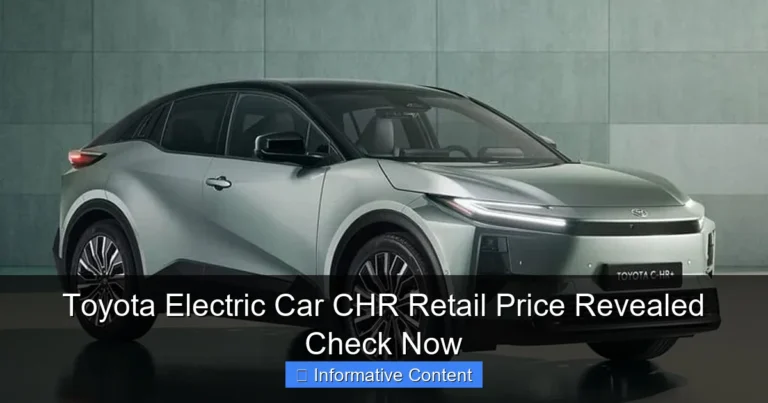
Toyota has big plans for its electric future. The “bZ” (Beyond Zero) series will include a range of EVs, from compact cars to large SUVs. The bZ3, a sedan developed in partnership with BYD (a Chinese EV giant), is already on sale in China and may come to other markets. It offers a range of over 370 miles and uses BYD’s Blade Battery technology, known for its safety and longevity.
Other upcoming models include the bZ Compact SUV and bZ Large SUV, expected to launch by 2025. These vehicles will leverage Toyota’s global manufacturing scale and supply chain expertise to offer competitive pricing and widespread availability.
One key advantage Toyota has is its partnership network. By collaborating with companies like BYD, Subaru (co-developing the bZ4X), and Panasonic (for battery production), Toyota can accelerate development and reduce costs. This collaborative approach reflects their pragmatic style—instead of going it alone, they’re building a coalition for the electric age.
Market Performance and Global Strategy
So how is Toyota actually doing in the electric car market? The numbers tell a mixed but promising story. In 2023, Toyota sold approximately 130,000 fully electric vehicles worldwide—a significant increase from previous years, but still a small fraction of their total sales (over 10 million vehicles annually).
For comparison, Tesla sold over 1.8 million EVs in 2023, and BYD surpassed 3 million. Even traditional rivals like Volkswagen and General Motors are selling hundreds of thousands of EVs each year. So while Toyota is growing, they’re still playing catch-up.
Regional Focus: Where Toyota Is Prioritizing EVs
Toyota’s electric strategy varies by region, reflecting local market conditions and government policies.
In Europe, where strict emissions regulations are pushing automakers toward electrification, Toyota is accelerating its EV rollout. The bZ4X is widely available, and the company plans to offer a fully electric model in every segment by 2026. They’re also investing in charging infrastructure and partnering with energy companies to support EV adoption.
In China, the world’s largest EV market, Toyota is leveraging its joint ventures with BYD and FAW to produce affordable electric cars. The bZ3 sedan, built with BYD’s technology, is a key part of this strategy. Toyota aims to capture a share of the booming budget EV segment, where brands like Wuling and NIO dominate.
In the United States, Toyota’s EV presence is growing but still limited. The bZ4X is available in most states, and the RZ is gaining traction among luxury buyers. However, Toyota faces stiff competition from Tesla, Ford, and Hyundai. To strengthen its position, Toyota is investing $13.6 billion in U.S. battery production and EV development through 2030.
Sales Data and Market Share
Here’s a snapshot of Toyota’s electric car sales and market position in key regions (2023 data):
| Region | Toyota EV Sales (2023) | Market Share (EV Segment) | Key Competitors |
|---|---|---|---|
| Europe | 45,000 | 2.1% | Volkswagen, Tesla, Renault |
| China | 50,000 | 1.8% | BYD, NIO, Wuling |
| United States | 25,000 | 1.5% | Tesla, Ford, Hyundai |
| Global Total | 130,000 | 1.2% | — |
While these numbers may seem modest, they represent a strong starting point. Toyota’s strength lies in its global reach and brand loyalty. Once their EV lineup expands and charging infrastructure improves, they’re well-positioned to scale quickly.
Challenges and Criticisms
No journey is without obstacles, and Toyota’s electric car market push is no exception. Despite their resources and reputation, they face several challenges that could slow their progress.
Battery Technology and Supply Chain
One of the biggest hurdles is battery technology. While Toyota has expertise in nickel-metal hydride batteries (used in hybrids), they’re still developing their lithium-ion and solid-state battery capabilities. Solid-state batteries, which promise higher energy density, faster charging, and improved safety, are a key part of Toyota’s long-term plan. They’ve announced plans to launch solid-state EVs by 2027–2028, but the technology is still in the prototype phase.
Supply chain issues also pose a risk. The demand for lithium, cobalt, and nickel is skyrocketing, and geopolitical tensions could disrupt supply. Toyota is investing in battery recycling and alternative materials, but these solutions take time to scale.
Charging Infrastructure and Consumer Perception
Even with great cars, EVs need a reliable charging network. In many regions, public charging stations are still sparse or unreliable. Toyota is partnering with charging providers like EVgo and ChargePoint, but infrastructure development is a slow process.
Consumer perception is another challenge. Some buyers still associate Toyota with hybrids, not EVs. Overcoming this mindset requires strong marketing and real-world proof that Toyota EVs are competitive in range, performance, and technology.
Competition from EV Specialists
Toyota isn’t just competing with other automakers—they’re up against companies built entirely around EVs. Tesla’s brand loyalty, software integration, and Supercharger network give them a significant edge. Newer players like Rivian and Lucid are also raising the bar with innovative designs and high-performance models.
To compete, Toyota must leverage its strengths: reliability, affordability, and global service networks. They can’t just build good EVs—they need to build EVs that feel truly Toyota.
Future Outlook and Strategic Investments
Looking ahead, Toyota’s electric car market strategy is both ambitious and pragmatic. They’re not trying to dominate overnight. Instead, they’re building a sustainable, scalable EV ecosystem.
$13.6 Billion Investment in Electrification
In 2023, Toyota announced a massive $13.6 billion investment in electrification, with a focus on battery production, vehicle development, and charging infrastructure. This includes new battery plants in North Carolina and Japan, as well as partnerships with Panasonic to produce next-generation batteries.
The goal is to reduce battery costs by 50% and increase energy density by 30% by 2030. These improvements will make Toyota EVs more affordable and competitive.
Solid-State Batteries: The Game Changer?
Solid-state batteries could be Toyota’s secret weapon. Unlike traditional lithium-ion batteries, solid-state versions use a solid electrolyte, which reduces the risk of fire and allows for faster charging. Toyota has filed over 1,000 patents related to solid-state technology and plans to introduce it in hybrid vehicles by 2025 and fully electric models by 2027–2028.
If successful, this could give Toyota a significant advantage in range, safety, and charging speed—key factors for mainstream EV adoption.
Expanding the bZ Lineup
By 2030, Toyota plans to offer 30 fully electric models globally. The bZ series will include everything from compact city cars to large three-row SUVs. They’re also exploring new body styles, like electric pickups and commercial vans, to serve diverse markets.
This broad portfolio will allow Toyota to compete across price points and segments, from budget buyers to luxury seekers.
Conclusion
Toyota’s journey into the electric car market is a story of evolution, not revolution. They didn’t rush in when the trend started—they waited, learned, and prepared. Now, with a clear strategy, strong partnerships, and massive investments, they’re ready to make their mark.
Yes, they’re behind some competitors in terms of EV sales and technology. But Toyota’s strengths—reliability, global reach, and customer trust—can’t be ignored. Their focus on practical innovation, like solar roofs and solid-state batteries, shows they’re thinking long-term.
The electric car market is still young, and the race is far from over. As charging networks grow, battery tech improves, and consumer attitudes shift, Toyota has every chance to become a major player. Whether you’re considering a bZ4X, waiting for the next bZ model, or just watching from the sidelines, one thing is clear: Toyota is all in on electric.
So the next time you see a quiet, efficient Toyota EV gliding down the road, remember—it’s not just a car. It’s the result of decades of learning, a billion-dollar bet on the future, and a promise to keep driving forward, one electric mile at a time.
Frequently Asked Questions
What is the current state of the Toyota electric car market?
Toyota has been steadily expanding its presence in the electric car market, with a growing lineup of hybrid and fully electric vehicles like the bZ4X. While historically focused on hybrids, the company is now investing heavily in battery electric technology to compete globally.
How is Toyota planning to grow its electric car market share?
Toyota aims to grow its electric car market share by launching 30 new battery electric vehicles by 2030 and investing $70 billion in electrification efforts. The company is also developing solid-state batteries to improve range and charging speed.
What challenges does Toyota face in the electric car market?
Toyota faces challenges such as intense competition from Tesla and Chinese EV makers, as well as slower adoption of fully electric models compared to hybrids. Additionally, scaling up production and battery supply remains a key hurdle.
Are Toyota electric cars available in all major markets?
Toyota electric cars, including the bZ4X, are available in key markets like the U.S., Europe, and Japan, but availability varies by region. The company is working to expand distribution and charging infrastructure to support broader adoption.
What role do hybrids play in Toyota’s electric car market strategy?
Hybrids remain a core part of Toyota’s strategy, serving as a bridge to full electrification while meeting diverse consumer needs. They help Toyota maintain market relevance while developing next-generation electric vehicles.
What is the future outlook for Toyota in the electric car market?
The future outlook for Toyota in the electric car market is promising, with plans to sell 3.5 million battery electric vehicles annually by 2030. Continued innovation in battery tech and strategic partnerships will be key to long-term success.