Toyota Electric Car Production Goals What You Need to Know
Featured image for toyota electric car production goals
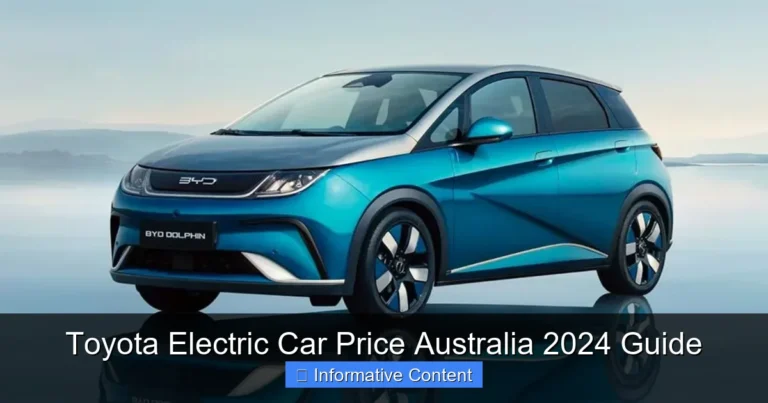
Image source: images.carexpert.com.au
Toyota aims to produce 3.5 million electric vehicles annually by 2030, marking a major shift in its electrification strategy. This aggressive target includes launching 30 new EV models worldwide, signaling Toyota’s commitment to dominate the future of sustainable mobility.
Key Takeaways
- Toyota aims for 3.5 million EVs annually by 2030: A bold shift from hybrid focus to full electric commitment.
- Solid-state batteries will debut by 2027-2028: Promises faster charging and longer range for future models.
- Over $50 billion invested in electrification: Signals serious long-term strategy and global competitiveness.
- New dedicated EV platform launching soon: Improves efficiency, cost, and scalability across models.
- Hybrid models remain part of the transition: Balances current demand with future zero-emission goals.
- Global production expansion underway: Factories in U.S., Japan, and Europe scaling up EV output.
📑 Table of Contents
- The Road Ahead: Toyota’s Electric Car Production Goals
- Why Toyota Is Betting Big on Electric Vehicles
- Toyota’s Electric Car Production Goals: The Numbers and Timeline
- Challenges Toyota Faces in Meeting Its EV Goals
- How Toyota Is Innovating Beyond Just Building EVs
- What This Means for Consumers and the Future of Mobility
- The Bottom Line: Can Toyota Deliver?
The Road Ahead: Toyota’s Electric Car Production Goals
Imagine this: You’re driving down the highway in your trusty Toyota, the sun shining, the windows down. But instead of the familiar hum of a combustion engine, all you hear is the smooth, silent glide of an electric motor. That future isn’t just a dream anymore—it’s a reality Toyota is actively building. As the world shifts toward cleaner energy and sustainable transportation, Toyota, a company long synonymous with reliability and innovation, is making bold moves in the electric vehicle (EV) space. But what exactly are their electric car production goals? And how do they plan to get there?
You might know Toyota as the king of hybrid vehicles, thanks to the legendary Prius. But the EV landscape is changing fast, and Toyota is no longer content to be just a hybrid pioneer. With competitors like Tesla, Ford, and Hyundai accelerating their EV offerings, Toyota is stepping up its game. Their electric car production goals aren’t just about numbers—they’re about reshaping the entire company’s identity for a zero-emission future. Whether you’re an eco-conscious driver, a tech enthusiast, or simply curious about the future of cars, understanding Toyota’s EV strategy is essential. So let’s dive in, break it down, and see what’s really happening behind the scenes.
Why Toyota Is Betting Big on Electric Vehicles
From Hybrids to Full Electrics: A Strategic Pivot
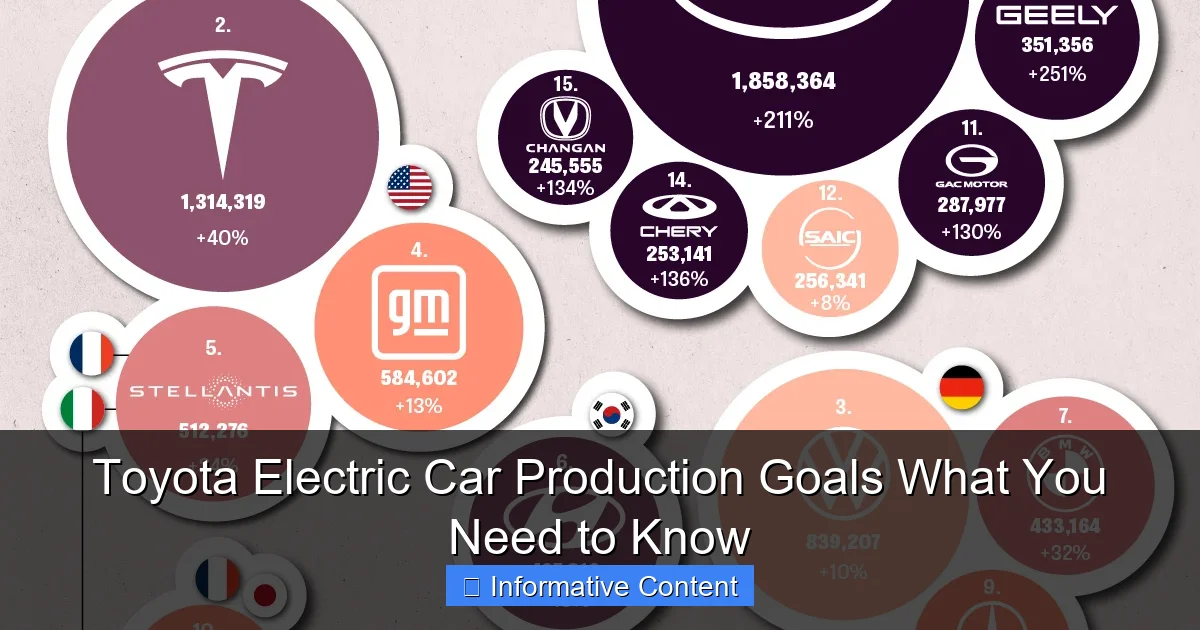
Let’s be real—Toyota didn’t get where it is today by ignoring trends. For decades, they led the charge with hybrid technology, proving that fuel efficiency and performance could coexist. But the world is moving beyond hybrids. Governments are setting aggressive carbon neutrality targets. Consumers are demanding cleaner, quieter, and more tech-packed vehicles. And investors are watching closely.
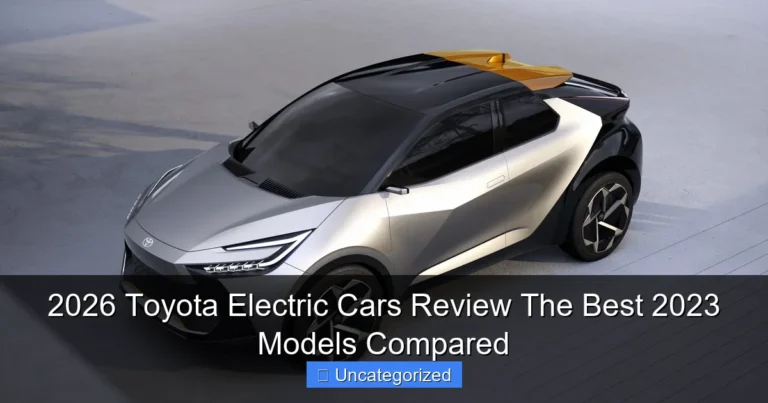
Visual guide about toyota electric car production goals
Image source: visualcapitalist.com
So, Toyota’s shift to full electric vehicles isn’t just a reaction—it’s a long-term strategy. In 2021, the company announced its “Toyota Environmental Challenge 2050,” a bold initiative to eliminate CO₂ emissions across all its operations and vehicle lifecycles. A key part of that? Electrifying its fleet. While Toyota still believes in a multi-pathway approach—including hybrids, plug-in hybrids, fuel cell vehicles (FCEVs), and EVs—they’ve made it clear: battery electric vehicles (BEVs) are the future.
Market Pressure and Consumer Demand
Think about your last car shopping experience. Did you notice how many EVs are now on the lot? From the Ford Mustang Mach-E to the Hyundai Ioniq 5, automakers are flooding the market with electric options. And consumers are responding. In 2023, global EV sales hit over 14 million—nearly 18% of all new cars sold. In Europe and China, that number is even higher.
Toyota, which once focused heavily on hybrid and hydrogen vehicles, realized it was falling behind in the BEV race. The bZ4X, their first global BEV, launched in 2022 with mixed reviews. Some praised its build quality and safety features, but others noted its range (around 250 miles) and charging speed lagged behind rivals. This feedback was a wake-up call. Toyota now knows it must not only catch up but also innovate to stay competitive.
Regulatory Push and Global Climate Goals
Here’s a practical example: California, the largest auto market in the U.S., plans to ban the sale of new gasoline-powered cars by 2035. The European Union has a similar 2035 deadline. China, another massive market, is aggressively promoting EVs through subsidies and infrastructure investment.
For Toyota, these regulations aren’t just red tape—they’re business-critical. If they can’t meet zero-emission targets, they risk losing market share and facing hefty fines. So, their electric car production goals aren’t just about innovation—they’re about survival. As one Toyota executive put it, “We’re not just building EVs. We’re building a new Toyota.”
Toyota’s Electric Car Production Goals: The Numbers and Timeline
2023–2025: Laying the Foundation
Let’s talk numbers—because that’s where the rubber meets the road. In 2023, Toyota set a goal to sell **3.5 million electrified vehicles annually by 2030**, with **1.7 million of those being battery electric vehicles (BEVs)**. That’s a massive jump from their 2022 BEV sales of just 24,000 units. Yes, you read that right—24,000.
To hit this target, Toyota is focusing on three key phases:
- Phase 1 (2023–2025): Expand the BEV lineup and improve battery technology. Launch at least 10 new BEV models globally, including the bZ4X, bZ3 (China-only), and upcoming compact SUVs.
- Phase 2 (2026–2028): Scale production and introduce next-gen batteries (solid-state and advanced lithium-ion). Target 1 million BEV sales per year.
- Phase 3 (2029–2030): Achieve full-scale BEV production with 1.7 million annual sales. Offer BEVs in every major segment—from subcompact cars to luxury SUVs.
<
Investing in Battery Production
You can’t build EVs without batteries. That’s why Toyota is pouring **$13.5 billion into battery development and production** through 2030. They’re building new battery plants in North Carolina (U.S.), Japan, and China. The North Carolina facility, set to open in 2025, will produce batteries for over 1.2 million vehicles annually.
But Toyota isn’t just buying batteries—they’re innovating. They’re investing in:
- Lithium-ion batteries with higher energy density and faster charging (aiming for 20-minute 10–80% charge).
- Solid-state batteries (SSBs), which promise longer range, faster charging, and improved safety. Toyota plans to launch SSB-powered EVs by 2027–2028.
- Battery recycling programs to reduce waste and lower production costs.
Regional Production Strategy
Toyota isn’t putting all its eggs in one basket. Instead, they’re localizing production to meet regional demand and avoid supply chain disruptions. For example:
- North America: BEVs will be built in Kentucky (U.S.) and Ontario (Canada), with batteries from the new North Carolina plant.
- Europe: Production in France and the UK, focusing on compact and mid-size BEVs.
- Asia: Major hubs in Japan, Thailand, and China. The bZ3, for instance, is built in China for the Chinese market.
This regional approach helps Toyota reduce costs, comply with local regulations, and respond faster to market changes.
Challenges Toyota Faces in Meeting Its EV Goals
Battery Supply Chain and Raw Material Shortages
Let’s be honest: building millions of EVs isn’t easy. One of Toyota’s biggest hurdles? Securing enough raw materials like lithium, cobalt, and nickel. These metals are in high demand, and supply chains are fragile. For example, 60% of the world’s cobalt comes from the Democratic Republic of Congo, a region with ethical and geopolitical concerns.
To tackle this, Toyota is:
- Partnering with mining companies to secure long-term contracts.
- Developing cobalt-free and low-cobalt batteries.
- Investing in recycling to recover materials from old batteries.
But even with these efforts, supply chain risks remain. A single mine shutdown or trade dispute could delay production.
Competition from Tesla, Chinese EV Makers, and Legacy Rivals
Tesla has a head start. They’ve built a global supercharger network, mastered battery tech, and created a loyal fanbase. Meanwhile, Chinese EV makers like BYD, NIO, and XPeng are offering affordable, high-tech vehicles with impressive range. In 2023, BYD outsold Tesla in global EV sales.
And don’t forget Ford, GM, and Volkswagen—all investing billions in EVs. Ford’s F-150 Lightning, for example, is a hit with truck buyers. Toyota’s bZ4X, while solid, lacks the “wow” factor of some competitors.
Tip: If you’re considering a Toyota EV, compare its specs and pricing with rivals. The bZ4X starts at around $42,000, similar to the Hyundai Ioniq 5, but with less range and slower charging.
Consumer Trust and Brand Perception
Toyota’s brand is built on reliability and durability. But EVs are a different beast. Consumers worry about:
- Range anxiety: “Will I make it to the next charger?”
- Charging infrastructure: “Are there enough stations?”
- Resale value: “Will my EV hold its value?”
To address these concerns, Toyota is:
- Offering 8-year/100,000-mile battery warranties.
- Partnering with charging networks (e.g., ChargePoint in the U.S.).
- Providing free charging credits for early adopters.
But trust takes time. Toyota must prove its EVs are as dependable as its hybrids.
How Toyota Is Innovating Beyond Just Building EVs
Solid-State Batteries: The Game-Changer
Remember when your phone battery lasted all day? Now imagine a car battery that does the same. That’s the promise of solid-state batteries (SSBs). Unlike traditional lithium-ion batteries, which use liquid electrolytes, SSBs use solid materials. The benefits?
- Higher energy density: Up to 2x more range (500+ miles on a charge).
- Faster charging: 10–15 minutes for a full charge.
- Improved safety: No risk of fire or leakage.
Toyota has been researching SSBs for over a decade. They hold more SSB patents than any other company—over 1,000. Their goal: launch SSB-powered EVs by 2027–2028. If successful, this could leapfrog Toyota ahead of competitors.
Vehicle-to-Grid (V2G) and Energy Ecosystems
Here’s a cool idea: your EV isn’t just a car—it’s a power source. Toyota is developing vehicle-to-grid (V2G) technology, allowing EVs to feed electricity back into the grid during peak demand. This could:
- Stabilize the power grid.
- Lower electricity costs for owners.
- Support renewable energy (e.g., solar + EV storage).
For example, Toyota’s “Smart Grid” pilot in Japan lets EV owners earn credits by supplying power during blackouts. This isn’t just about cars—it’s about creating a sustainable energy ecosystem.
Autonomous Driving and AI Integration
EVs are more than just motors and batteries—they’re computers on wheels. Toyota is investing in AI and autonomous driving tech through its subsidiary, Woven Planet. Their goals include:
- Advanced driver-assistance systems (ADAS) with hands-free highway driving.
- Over-the-air (OTA) updates to improve safety and features.
- AI-powered navigation that learns driver habits.
Imagine your Toyota EV learning your favorite coffee shop and automatically charging when you arrive. That’s the future Toyota is building.
What This Means for Consumers and the Future of Mobility
More Choices, Better Value
By 2030, Toyota plans to offer BEVs in every major segment. That means:
- Affordable EVs: Sub-$30,000 compact cars for urban drivers.
- Family SUVs: Spacious, long-range models with 300+ miles.
- Luxury EVs: Premium models under the Lexus brand (e.g., Lexus RZ).
- Commercial EVs: Electric vans and trucks for delivery fleets.
This variety means more options for you, whether you’re a city commuter or a road-tripper.
Lower Total Cost of Ownership
EVs are cheaper to maintain than gas cars. No oil changes, fewer moving parts, and lower fuel costs. Toyota’s focus on battery longevity and recycling will further reduce costs. For example:
- A Toyota BEV could save you $1,000+ per year in fuel and maintenance.
- Recycled batteries could cut production costs by 20%.
Tip: Calculate your total ownership cost using tools like the U.S. Department of Energy’s Vehicle Cost Calculator.
Environmental Impact
Switching to EVs reduces CO₂ emissions, but the full impact depends on how the electricity is generated. Toyota is working with utilities to promote renewable energy. They’re also investing in hydrogen fuel cells for heavy-duty vehicles, which could further reduce emissions.
Here’s a quick look at Toyota’s projected environmental benefits by 2030:
| Metric | 2022 (Actual) | 2030 (Target) |
|---|---|---|
| Annual BEV Sales | 24,000 | 1.7 million |
| CO₂ Emissions per Vehicle | 120 g/km | 0 g/km (tailpipe) |
| Battery Recycling Rate | 5% | 95% |
| Renewable Energy Usage in Production | 20% | 100% |
These goals show Toyota’s commitment to a sustainable future—not just for cars, but for the planet.
The Bottom Line: Can Toyota Deliver?
So, what’s the verdict? Can Toyota meet its electric car production goals? The answer is: it’s complicated. On one hand, Toyota has the resources, expertise, and global reach to make it happen. Their investment in solid-state batteries, regional production, and energy ecosystems is impressive. On the other hand, they’re playing catch-up in a fast-moving market.
But here’s the thing: Toyota has a track record of long-term thinking. They didn’t dominate the hybrid market overnight—it took 20+ years. The same patience and persistence could pay off in the EV space. If they deliver on their promises—affordable EVs, reliable batteries, and innovative tech—they could regain their position as an industry leader.
For you, the consumer, this means more choices, better value, and a cleaner future. Whether you’re ready to switch to an EV now or waiting for the perfect model, Toyota’s electric car production goals are worth watching. The road ahead is electric—and Toyota is finally putting the pedal to the metal.
Frequently Asked Questions
What are Toyota’s electric car production goals for the next decade?
Toyota aims to produce 3.5 million electric vehicles (EVs) annually by 2030, accounting for one-third of its global sales. This aligns with its broader strategy to achieve carbon neutrality by 2050.
How does Toyota plan to meet its EV production targets?
Toyota is investing heavily in battery technology, including solid-state batteries, and expanding its EV lineup with 30 new models by 2030. The company is also building dedicated EV factories and partnerships to scale production.
Is Toyota focusing only on fully electric cars, or will hybrids still play a role?
Toyota remains committed to its “multi-pathway” approach, offering hybrids, plug-in hybrids, and fuel-cell vehicles alongside EVs. However, the toyota electric car production goals prioritize a significant ramp-up in battery-electric models.
When will Toyota start mass-producing solid-state batteries for its EVs?
Toyota plans to begin mass-producing solid-state batteries by 2027-2028, which will boost EV range and reduce charging times. This technology is critical to achieving its long-term EV production and performance goals.
How does Toyota’s EV strategy compare to other automakers?
While Toyota was slower to adopt EVs than rivals, its 2030 targets now match industry leaders. The company’s focus on battery innovation and global manufacturing scale sets it apart in the EV race.
Are Toyota’s electric car production goals achievable given past delays?
Toyota has addressed early setbacks by restructuring its EV division and accelerating investments. With its proven manufacturing expertise, the toyota electric car production goals are ambitious but realistic.