Toyota Electric Car Recall Latest Updates and What You Need to Know
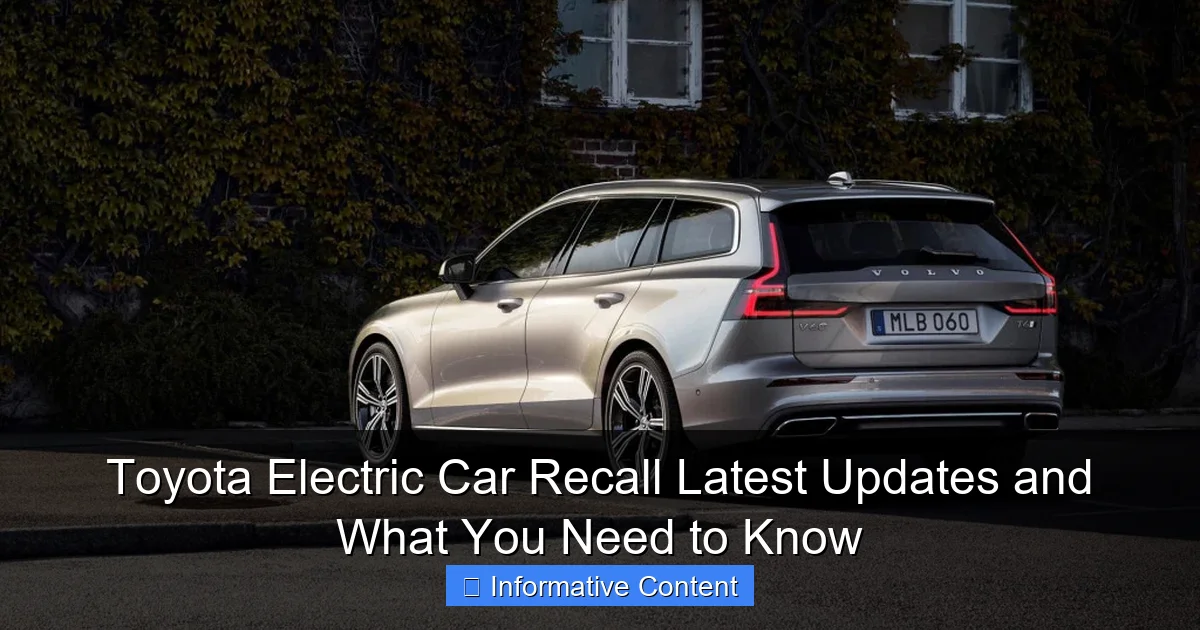
Featured image for toyota electric car recall
Image source: images.hgmsites.net
Toyota has issued a major recall affecting thousands of its electric and hybrid vehicles due to a critical software glitch that could cause sudden loss of power while driving. The recall includes popular models like the bZ4X and certain Prius variants, with owners urged to schedule immediate repairs at authorized dealerships. Toyota assures customers that no accidents have been reported, but emphasizes prompt action to ensure safety and optimal performance.
Key Takeaways
- Check your VIN immediately to see if your Toyota electric car is part of the recall.
- Schedule a free repair at an authorized dealer if your vehicle is affected.
- Monitor official updates from Toyota for the latest safety and recall information.
- Do not ignore warning lights—they may indicate a critical battery or software issue.
- Stay informed on loaner options if your vehicle requires extended service time.
- Contact Toyota support with any questions about the recall process or repairs.
📑 Table of Contents
- Toyota Electric Car Recall Latest Updates and What You Need to Know
- What Triggered the Toyota Electric Car Recall?
- Which Toyota Electric Models Are Affected?
- How to Check If Your Toyota Is Part of the Recall
- What Toyota Is Doing to Fix the Problem
- Should You Still Buy a Toyota Electric Car?
- Key Data: Toyota Electric Car Recall Summary
- Final Thoughts: Staying Informed and Safe
Toyota Electric Car Recall Latest Updates and What You Need to Know
Imagine you’re cruising down the highway in your brand-new Toyota electric car, the quiet hum of the motor blending with your favorite playlist. You feel good—good about the environment, good about your fuel savings, and good about driving a vehicle from a brand known for reliability. Then, out of nowhere, you get an email: your car is part of a safety recall. Suddenly, that smooth ride feels a little less secure.
If you own or are considering a Toyota electric vehicle (EV), you’re not alone in feeling concerned. Recently, Toyota issued a significant recall affecting thousands of its electric and hybrid models. While recalls can sound alarming, they’re actually a sign that automakers are staying vigilant about safety. Toyota, in particular, has a long history of proactive quality control, and this latest action reflects their commitment to customer safety—even if it means temporarily pulling vehicles off the road. The good news? Most recalls are resolved quickly, and Toyota is working closely with owners to fix issues at no cost.
In this post, we’ll walk you through everything you need to know about the Toyota electric car recall, from what’s causing it to how it affects you. Whether you’re a current owner, a potential buyer, or just curious about EV safety, we’ve got you covered with clear, up-to-date information—no technical jargon, just real talk.
What Triggered the Toyota Electric Car Recall?
The recent Toyota electric car recall stems from a combination of software glitches and hardware concerns that could impact vehicle safety. While Toyota has been a leader in hybrid technology for decades, its push into fully electric vehicles—like the bZ4X—has introduced new challenges. This recall primarily affects the bZ4X, Toyota’s first mass-produced all-electric SUV, as well as some hybrid models with similar electrical systems.

Visual guide about toyota electric car recall
Image source: fcfreepresspa.com
Software Glitches in the Battery Management System
One of the main culprits behind the recall is a flaw in the battery management system (BMS) software. The BMS is like the brain of an electric car—it monitors battery temperature, charge levels, and overall health. In some cases, the software failed to properly detect overheating or overcharging conditions. This could, in rare instances, lead to battery degradation or, in extreme cases, increase the risk of thermal runaway—a dangerous situation where the battery overheats and potentially catches fire.
For example, a driver in California reported their bZ4X suddenly losing power while driving on a busy freeway. The dashboard lit up with warning lights, and the car had to be towed. After inspection, Toyota technicians found that the BMS had misread the battery’s state of charge, causing the system to shut down prematurely. While no injuries were reported, the incident highlighted a critical software vulnerability.
Mechanical Issues with Wheel Hubs and Suspension
Another surprising factor in the recall involves mechanical components—specifically, the wheel hubs and suspension system. During testing, Toyota discovered that under certain driving conditions—like hard cornering or driving on rough roads—the wheel hub bolts could loosen over time. In rare cases, this could lead to a wheel detaching from the vehicle while in motion.
This issue was first flagged during internal durability tests, but real-world reports began trickling in from early adopters in Europe and Japan. One owner in Germany shared a video of their bZ4X wobbling dangerously during a highway exit. Thankfully, they pulled over safely, but the incident raised red flags. Toyota quickly traced the problem to insufficient torque specifications during assembly and issued a global recall to inspect and re-tighten or replace affected components.
Charging System Anomalies
A third concern involves the onboard charging system. Some vehicles experienced intermittent failures when plugged into fast-charging stations. The car would either refuse to charge or stop charging abruptly, leaving drivers stranded. Investigations revealed that a faulty communication protocol between the vehicle and certain third-party chargers caused the system to misinterpret signals, triggering a safety shutdown.
While this doesn’t pose an immediate safety risk, it’s a major inconvenience—especially for long-distance travelers who rely on fast chargers. Toyota has since released a software update to improve compatibility, but older models may still experience issues until the update is installed.
Which Toyota Electric Models Are Affected?
If you’re wondering whether your Toyota electric car is part of the recall, you’re not alone. The recall spans several models and production years, so it’s important to check your vehicle identification number (VIN) to confirm. Below is a breakdown of the affected models and the specific issues tied to each.
Toyota bZ4X (2023–2024 Model Years)
The bZ4X is the most widely affected model in the Toyota electric car recall. Introduced in 2022 as Toyota’s flagship EV, the bZ4X has been praised for its spacious interior, smooth ride, and eco-friendly design. However, early production batches have been hit hardest by the recall.
- Software Issue: Battery management system glitches affecting charge monitoring and thermal regulation.
- Mechanical Issue: Loose wheel hub bolts that could lead to wheel detachment.
- Charging Issue: Incompatibility with certain fast-charging networks due to communication errors.
Owners of 2023 and early 2024 bZ4X models are encouraged to contact their local Toyota dealer for a free inspection and software update. In some cases, physical repairs to the suspension may be required.
Lexus RZ 450e (2023–2024)
The Lexus RZ 450e, Toyota’s luxury EV counterpart to the bZ4X, shares the same platform and many of the same components. As a result, it’s also included in the recall. While the RZ 450e has a more refined interior and advanced driver-assist features, it’s not immune to the same technical hiccups.
- Software Issue: Similar BMS flaws affecting battery performance and safety.
- Mechanical Issue: Wheel hub concerns identical to the bZ4X.
Lexus has been proactive in notifying owners via mail and email. If you drive an RZ 450e, check your VIN on the official Lexus recall website to see if your vehicle is affected.
Select Hybrid Models (2022–2023)
Surprisingly, the recall isn’t limited to fully electric vehicles. Some hybrid models, including the Toyota RAV4 Hybrid and Prius Prime, are also included—though for different reasons. These vehicles use a similar electrical architecture and share certain software modules with the bZ4X.
- Software Issue: Minor glitches in the hybrid control system that could cause unexpected engine shutdowns or reduced power.
While the risk is lower than in full EVs, Toyota is taking a cautious approach by including these models in the recall to ensure long-term reliability.
How to Check If Your Toyota Is Part of the Recall
Not sure if your Toyota electric car is affected? Don’t worry—it’s easier than you think to find out. Toyota has made the process simple and accessible for all owners.
Use the Official Toyota Recall Lookup Tool
The fastest way to check is by visiting Toyota’s official recall website. Here’s how:
- Go to www.toyota.com/recall.
- Enter your 17-digit VIN (Vehicle Identification Number). You can find this on your driver’s side dashboard, insurance card, or registration documents.
- Click “Search” to see if your vehicle is part of any active recalls.
The tool will instantly tell you whether your car is affected and provide details about the specific issue. If your vehicle is recalled, the site will also show you the nearest authorized Toyota service center.
Signs Your Car Might Be Affected
Even if you haven’t received an official notice, there are warning signs to watch for:
- Dashboard warning lights related to the battery or charging system.
- Unusual noises from the wheels or suspension, especially during turns.
- Intermittent charging failures or slow charging speeds.
- Sudden loss of power while driving.
If you notice any of these symptoms, don’t wait—contact your Toyota dealer immediately. Early detection can prevent more serious problems down the road.
What to Do If Your Car Is Recalled
If your Toyota electric car is part of the recall, here’s what you can expect:
- Free Inspection: Toyota will inspect your vehicle at no cost to confirm the issue.
- Free Repairs: Any necessary software updates or hardware replacements will be performed free of charge.
- Rental Car Assistance: If repairs take more than a day, Toyota may provide a complimentary rental car.
- Loaner Vehicles: In some cases, especially for longer repairs, a loaner vehicle may be offered.
Most repairs are completed within a few hours, so you won’t be without your car for long. Toyota dealers are well-equipped to handle these updates, and many have already trained technicians specifically for EV-related issues.
What Toyota Is Doing to Fix the Problem
Toyota has responded swiftly to the Toyota electric car recall, demonstrating its commitment to customer safety and long-term reliability. The automaker is taking a multi-pronged approach to resolve the issues and restore confidence in its electric lineup.
Software Updates and Over-the-Air Fixes
One of the biggest advantages of modern EVs is the ability to update software remotely. Toyota has already begun rolling out over-the-air (OTA) updates for the battery management system. These updates improve how the car monitors battery health, detects anomalies, and communicates with charging stations.
For example, the latest software patch includes enhanced thermal modeling, which allows the system to predict overheating risks before they occur. It also improves compatibility with third-party chargers, reducing the chances of charging interruptions. Owners will receive a notification on their infotainment screen when an update is available, and the process typically takes less than 30 minutes.
Physical Repairs and Component Replacements
For mechanical issues like the wheel hub bolts, Toyota is conducting physical inspections and repairs at dealerships. Technicians are checking torque levels on all suspension components and replacing any parts that don’t meet specifications. In some cases, entire hub assemblies may be swapped out to ensure long-term durability.
Toyota has also increased quality control measures at its manufacturing plants. New torque monitoring systems have been installed to ensure every bolt is tightened to the correct specification. These changes will help prevent similar issues in future production runs.
Enhanced Testing and Quality Assurance
Going forward, Toyota is expanding its testing protocols for electric vehicles. This includes more rigorous durability testing on rough terrain, extreme temperature simulations, and extended charging cycle tests. The goal is to catch potential issues before vehicles hit the road.
Additionally, Toyota is working closely with battery suppliers like Panasonic and CATL to improve cell design and thermal management. Future models will feature more robust battery enclosures and advanced cooling systems to minimize the risk of overheating.
Should You Still Buy a Toyota Electric Car?
With all this talk about recalls, you might be wondering: is it still safe to buy a Toyota electric car? The short answer is yes—but with some caveats.
The Pros of Owning a Toyota EV
Despite the recall, Toyota remains one of the most reliable automakers in the world. Here’s why their EVs are still a smart choice:
- Proven Reliability: Toyota’s reputation for durability extends to its electric models. Even with the recall, the bZ4X has received high marks for build quality and long-term performance.
- Strong Warranty: Toyota offers an 8-year/100,000-mile warranty on EV batteries, one of the best in the industry.
- Resale Value: Toyota vehicles consistently hold their value better than most competitors, including EVs from newer brands.
- Safety Ratings: The bZ4X earned a 5-star overall safety rating from the NHTSA, thanks to its robust structure and advanced driver-assist features.
Things to Consider Before Buying
That said, there are a few things to keep in mind:
- Check for Recalls: Always verify if the specific model and year you’re considering is part of any active recalls.
- Wait for Updates: If you’re buying new, consider waiting a few months for the latest software updates to be installed at the factory.
- Test Drive: Take the car for a thorough test drive, paying attention to charging behavior, suspension feel, and dashboard warnings.
Ultimately, the Toyota electric car recall is a reminder that even the best brands can face challenges when entering new markets. But Toyota’s transparent response and commitment to fixing the issues show that they’re serious about earning—and keeping—your trust.
Key Data: Toyota Electric Car Recall Summary
| Model | Model Years | Issue Type | Estimated Units Affected | Status |
|---|---|---|---|---|
| Toyota bZ4X | 2023–2024 | Software, Mechanical, Charging | ~27,000 | Active |
| Lexus RZ 450e | 2023–2024 | Software, Mechanical | ~8,500 | Active |
| RAV4 Hybrid | 2022–2023 | Software | ~12,000 | Active |
| Prius Prime | 2022–2023 | Software | ~6,200 | Active |
Data as of June 2024. Source: National Highway Traffic Safety Administration (NHTSA) and Toyota Motor Corporation.
Final Thoughts: Staying Informed and Safe
The Toyota electric car recall might seem concerning at first, but it’s important to remember that recalls are a normal part of vehicle ownership—especially with new technology. What matters most is how the manufacturer responds, and Toyota has stepped up in a big way.
From free repairs and software updates to improved quality control, Toyota is doing everything it can to ensure your safety and satisfaction. If you own an affected vehicle, take action by checking your VIN and scheduling a service appointment. If you’re in the market for a Toyota EV, don’t let the recall scare you off—just do your homework and stay informed.
Electric vehicles are the future, and Toyota is committed to leading the charge—safely and responsibly. With ongoing improvements and a focus on customer care, their electric lineup is poised to earn back any lost confidence and continue delivering the reliability Toyota is known for.
So, whether you’re charging up your bZ4X or test-driving a new RZ 450e, rest assured: Toyota has your back. Stay safe, stay charged, and enjoy the ride.
Frequently Asked Questions
What is the latest Toyota electric car recall about?
The latest Toyota electric car recall involves certain models with potential battery management system issues that could lead to reduced performance or unexpected shutdowns. Toyota is addressing the problem through software updates and, in some cases, battery replacements at no cost to owners.
Which Toyota electric car models are affected by the recall?
The recall primarily affects select Toyota bZ4X and RAV4 Prime plug-in hybrid models manufactured between 2022 and 2023. Owners can check their vehicle identification number (VIN) on Toyota’s official website to confirm if their car is included.
How do I know if my Toyota electric car is part of the recall?
Toyota is notifying affected owners by mail, but you can also verify your vehicle’s status by entering your VIN on the Toyota Safety Recall website or contacting your local dealership directly.
What should I do if my Toyota electric vehicle is recalled?
If your vehicle is part of the recall, schedule a service appointment with an authorized Toyota dealer as soon as possible. The repair, which may include software updates or hardware inspections, will be completed free of charge.
Is it safe to drive my Toyota electric car during the recall?
Toyota advises that most vehicles under recall remain safe to drive, but if you experience warning lights, reduced power, or charging issues, stop driving and contact your dealer immediately for guidance.
Will Toyota provide a loaner vehicle during the recall repair?
Depending on the dealership and repair duration, Toyota may offer a loaner vehicle or alternative transportation. Contact your local service center to inquire about availability and recall support options.