Toyota Electric Car Release What You Need to Know Now
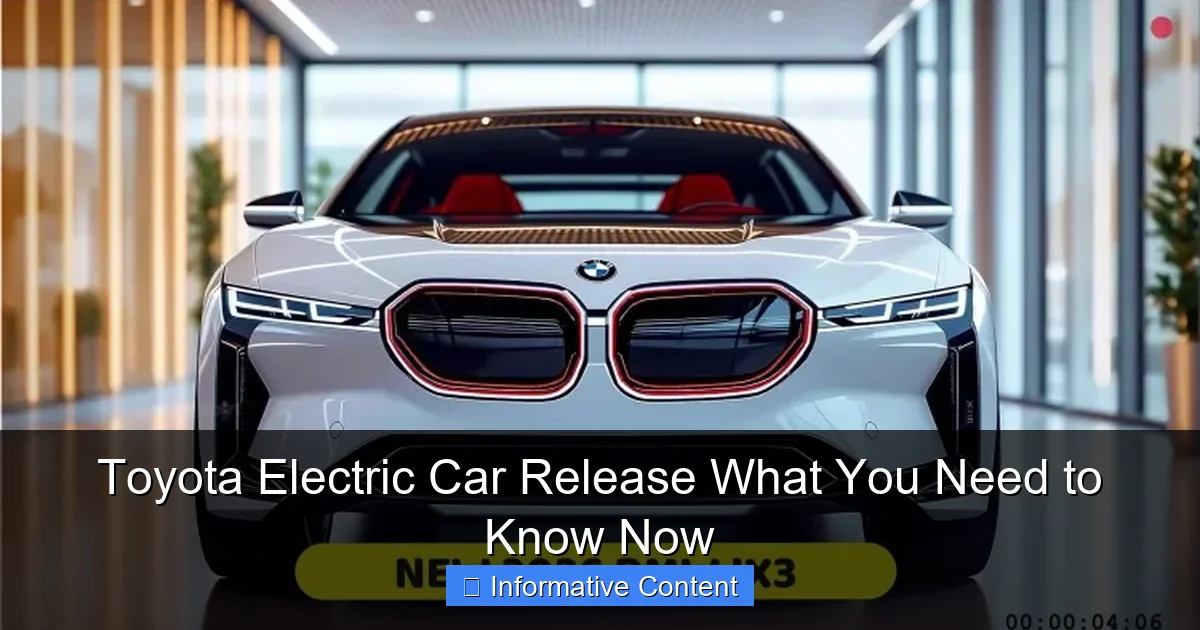
Featured image for toyota electric car release
Image source: electrichunter.com
Toyota is accelerating into the electric future with its highly anticipated electric car release, marking a pivotal shift in its decades-long automotive legacy. The new lineup promises cutting-edge technology, impressive range, and eco-friendly innovation, positioning Toyota as a serious contender in the competitive EV market. With production ramping up and global rollouts beginning in 2025, now is the time to understand how Toyota’s electric vision will reshape sustainable driving.
Key Takeaways
- Toyota plans 30 new EV models by 2030: massive expansion signals major shift toward electrification.
- Solid-state batteries coming by 2027–2028: longer range and faster charging could redefine EV performance.
- Affordable EVs in development: Toyota aims to compete on price without sacrificing reliability.
- Global rollout prioritized: expect launches in key markets like the U.S., Europe, and Asia first.
- Hybrid focus continues: Toyota will support hybrids while scaling full electric offerings.
- Charging infrastructure partnerships expanding: easier access to charging networks for future Toyota EV owners.
📑 Table of Contents
- Toyota Electric Car Release: What You Need to Know Now
- Why Toyota Is Going All-In on Electric
- Toyota’s Electric Car Lineup: Models You Should Know
- Charging and Infrastructure: What Toyota Offers
- Pricing, Incentives, and Ownership Costs
- Technology and Safety Features
- The Road Ahead: What’s Next for Toyota EVs?
- Final Thoughts: Is a Toyota Electric Car Right for You?
Toyota Electric Car Release: What You Need to Know Now
Imagine driving past a gas station and not even glancing at the price of fuel. No more budgeting for oil changes, no more worrying about emissions, and no more loud engine noise disrupting your morning commute. That’s the quiet revolution Toyota is bringing to the table with its latest electric car release. For decades, Toyota has been synonymous with reliability, fuel efficiency, and innovation—think Prius, the world’s best-selling hybrid. But now, the Japanese automaker is stepping boldly into the fully electric future, and it’s not just dipping its toes in the water. This isn’t a half-hearted attempt; it’s a full-throated commitment to electrification.
If you’ve been on the fence about switching to an electric vehicle (EV), Toyota’s new electric lineup might be the nudge you need. Whether you’re a long-time Toyota fan or someone who’s never considered the brand for an EV, this shift is worth paying attention to. With rising fuel costs, growing environmental concerns, and government incentives making EVs more accessible, now is the perfect time to understand what Toyota is offering. In this post, we’ll break down everything you need to know about Toyota’s electric car release—from the models hitting the road to charging options, pricing, and what it all means for your wallet and the planet.
Why Toyota Is Going All-In on Electric
Toyota has long been a leader in hybrid technology, but for years, critics questioned whether the company was moving fast enough into full electric vehicles. While competitors like Tesla, Hyundai, and Ford were launching sleek, high-performance EVs, Toyota seemed to lag. But that perception is changing—fast. The company’s recent electric car release marks a major pivot, signaling that Toyota is no longer just playing defense in the EV space. It’s going on the offensive.

Visual guide about toyota electric car release
Image source: autocar.co.uk
A Strategic Shift Toward Sustainability
Toyota’s decision to ramp up electric vehicle production isn’t just about keeping up with trends. It’s part of a broader Environmental Challenge 2050, a company-wide initiative aimed at reducing carbon emissions across all operations. By 2030, Toyota plans to offer 30 different EV models globally and sell 3.5 million electric vehicles annually. That’s a massive leap from where they were just a few years ago.
This shift is also driven by changing consumer demands. More drivers are prioritizing sustainability, and governments around the world are tightening emissions regulations. In Europe, for example, new cars must meet strict CO₂ standards, and several countries have announced bans on internal combustion engines by 2035. Toyota knows it can’t afford to fall behind.
Learning from the Prius Legacy
Let’s not forget: Toyota invented the modern hybrid with the Prius in 1997. That car proved that fuel-efficient, low-emission vehicles could be practical and popular. Now, Toyota is applying that same engineering mindset to full electric vehicles. The company isn’t rushing to release flashy, high-speed EVs just for the sake of headlines. Instead, it’s focusing on reliability, affordability, and real-world usability—hallmarks of the Toyota brand.
For example, Toyota’s electric cars are being designed with longer battery life and better thermal management systems to prevent overheating—a common issue in EVs during hot weather or fast charging. This attention to detail shows that Toyota isn’t just copying what others are doing; it’s improving upon it.
Toyota’s Electric Car Lineup: Models You Should Know
So, what exactly is Toyota offering? The brand’s electric car release includes a growing lineup of battery-electric vehicles (BEVs), each tailored to different lifestyles and budgets. From compact city cars to spacious SUVs, Toyota is covering a wide range of needs.
Toyota bZ4X: The Flagship SUV
The Toyota bZ4X is the brand’s first global all-electric SUV and the cornerstone of its new electric strategy. “bZ” stands for “beyond Zero,” reflecting Toyota’s vision of a carbon-neutral future. The bZ4X is built on a dedicated EV platform, meaning it’s designed from the ground up as an electric vehicle—not a converted gas car.
Here’s what makes the bZ4X stand out:
- Range: Up to 252 miles on a single charge (EPA estimate), which is competitive for its class.
- Performance: Available in front-wheel drive and all-wheel drive versions, with the AWD model offering 214 horsepower.
- Charging: Supports DC fast charging, allowing you to go from 10% to 80% in about 30 minutes.
- Interior: Spacious cabin with a 12-inch touchscreen, wireless Apple CarPlay, and Android Auto.
The bZ4X is perfect for families or commuters who want a reliable, roomy EV without sacrificing efficiency. It’s also priced competitively, starting around $42,000 before incentives—making it more affordable than many Tesla models.
Compact and Urban Options: The Future bZ Models
Toyota has announced several upcoming models under the “bZ” series, including a compact crossover and a smaller city car. While details are still emerging, these vehicles are expected to target urban drivers who need agility, low running costs, and easy parking.
One rumored model is the bZ Small Crossover, which could be similar in size to the Hyundai Kona Electric or Nissan Ariya. It’s expected to offer around 200 miles of range and a starting price under $35,000. Another possibility is a tiny urban EV, possibly called the bZ Mini, designed for short commutes and city driving.
These smaller models will be crucial for Toyota’s global strategy, especially in markets like Europe and Asia where compact cars dominate. They’ll also appeal to first-time EV buyers who want something simple and affordable.
Commercial and Fleet EVs
Toyota isn’t just focusing on personal vehicles. The company is also developing electric vans and light commercial vehicles for businesses. These models will help companies reduce their carbon footprint while cutting fuel and maintenance costs.
For example, Toyota is working on an electric version of its popular Hiace van, which is widely used for deliveries, shuttles, and mobile services. This move could make EVs more accessible to small businesses and delivery drivers who rely on reliable, cost-effective transportation.
Charging and Infrastructure: What Toyota Offers
One of the biggest concerns for new EV buyers is charging. Where do you plug in? How long does it take? Is it reliable? Toyota is addressing these questions head-on with a mix of hardware, software, and partnerships.
Home Charging Made Simple
Toyota offers a home charging solution through its partnership with ChargePoint, one of the largest EV charging networks in North America. When you buy a Toyota electric car, you can opt for a professionally installed Level 2 home charger. This allows you to fully charge your vehicle overnight—typically in 6 to 8 hours—depending on the battery size.
For example, the bZ4X with a 71.4 kWh battery can be charged from 0% to 100% in about 9 hours using a 7.4 kW home charger. That’s perfect for overnight charging while you sleep. Plus, Toyota provides a mobile app that lets you monitor charging status, set schedules, and even pre-condition the cabin temperature before you drive.
Public Charging and Network Access
Toyota is also making it easier to charge on the go. The bZ4X comes with access to the Toyota Charging Network, which includes over 30,000 public charging stations across the U.S. through partnerships with Electrify America, EVgo, and ChargePoint.
Here’s a quick breakdown of charging speeds:
- Level 1 (120V): Adds about 4-5 miles of range per hour. Best for emergencies or very light use.
- Level 2 (240V): Adds 20-30 miles per hour. Ideal for home and workplace charging.
- DC Fast Charging: Adds up to 100 miles in 30 minutes. Found at public stations along highways.
Toyota also offers a charging credit program. For example, bZ4X buyers in the U.S. receive $500 in charging credits to use at participating stations during their first year of ownership. That’s enough to cover dozens of fast-charging sessions.
Solar and Renewable Energy Integration
Looking ahead, Toyota is exploring ways to integrate solar power into its EVs. The bZ4X, for instance, has an optional solar roof that can generate up to 1,800 miles of range per year under ideal conditions. While it won’t power your cross-country road trip, it can help offset daily driving and reduce reliance on the grid.
Toyota is also partnering with renewable energy providers to offer home solar + EV packages. This allows owners to charge their cars using clean energy, further reducing their carbon footprint.
Pricing, Incentives, and Ownership Costs
Let’s talk money. One of the biggest barriers to EV adoption is upfront cost. But Toyota is working to make its electric cars more accessible through competitive pricing and incentives.
Starting Prices and Trim Levels
The Toyota bZ4X starts at around $42,000 for the front-wheel-drive XLE trim. The Limited AWD version goes up to about $52,000. That’s in line with competitors like the Ford Mustang Mach-E and Hyundai Ioniq 5, but more affordable than the Tesla Model Y.
Here’s a quick comparison of base prices (before incentives):
| Model | Starting Price (USD) | Estimated Range (miles) |
|---|---|---|
| Toyota bZ4X | $42,000 | 252 |
| Ford Mustang Mach-E | $43,895 | 247 |
| Hyundai Ioniq 5 | $41,450 | 303 |
| Tesla Model Y | $47,740 | 330 |
Keep in mind that prices can vary by region and dealer incentives. Some states also offer additional rebates. For example, California residents may qualify for a $2,000 Clean Vehicle Rebate, and Colorado offers up to $5,000 in state tax credits.
Federal and State Incentives
The U.S. federal government offers a tax credit of up to $7,500 for new EV purchases, but not all Toyota models currently qualify. As of 2024, the bZ4X is eligible for the full credit if it meets battery and assembly requirements. However, this could change as supply chains evolve, so it’s best to check with your dealer or the IRS website before buying.
Other perks include:
- Exemption from state emissions testing
- Access to HOV lanes (in some states)
- Reduced registration fees
Long-Term Savings
While the upfront cost of an EV might be higher, the long-term savings are significant. Electricity is cheaper than gasoline—typically costing about $0.04 to $0.08 per mile compared to $0.15 to $0.20 for gas cars. Maintenance is also lower: no oil changes, fewer moving parts, and regenerative braking that extends brake life.
According to a 2023 study by Consumer Reports, EV owners save an average of $6,000 to $10,000 over the life of the vehicle compared to gas-powered cars. With Toyota’s reputation for reliability, those savings could be even higher.
Technology and Safety Features
Toyota isn’t just building electric cars—it’s building smart, safe, and connected vehicles. The brand’s electric lineup comes packed with advanced technology designed to make driving easier, safer, and more enjoyable.
Toyota Safety Sense 3.0
Every Toyota electric car comes standard with Toyota Safety Sense 3.0, the latest version of the company’s suite of driver-assistance features. This includes:
- Pre-Collision System with Pedestrian Detection
- Lane Departure Alert with Steering Assist
- Dynamic Radar Cruise Control
- Road Sign Assist
- Automatic High Beams
These features use cameras and radar to monitor your surroundings and help prevent accidents. In crash tests, the bZ4X earned a 5-star overall safety rating from the National Highway Traffic Safety Administration (NHTSA).
Infotainment and Connectivity
The bZ4X features a modern 12-inch touchscreen with intuitive controls. It supports wireless Apple CarPlay and Android Auto, so you can easily connect your phone without fumbling with cables. The system also includes Amazon Alexa integration, allowing you to control smart home devices from your car.
Toyota’s app lets you remotely start the car, check battery level, and even pre-heat or cool the cabin. This is especially useful on cold winter mornings or hot summer days.
Over-the-Air Updates
Like Tesla, Toyota is rolling out over-the-air (OTA) software updates for its EVs. This means your car can receive new features, performance improvements, and security patches without visiting a dealership. For example, Toyota recently updated the bZ4X to improve charging speed and add new voice commands.
This technology ensures your Toyota electric car stays up to date for years to come—just like your smartphone.
The Road Ahead: What’s Next for Toyota EVs?
Toyota’s electric car release is just the beginning. The company has ambitious plans for the future, including solid-state batteries, expanded model lines, and global production.
Solid-State Batteries: The Game Changer
One of the most exciting developments is Toyota’s work on solid-state batteries. Unlike traditional lithium-ion batteries, solid-state batteries use a solid electrolyte, which makes them safer, faster to charge, and capable of longer range.
Toyota aims to launch vehicles with solid-state batteries by 2027 or 2028. These batteries could offer up to 500 miles of range and charge in under 10 minutes. While still in development, this technology could revolutionize the EV industry—and Toyota wants to lead the charge.
Global Expansion and Local Production
Toyota is investing billions in EV production facilities worldwide. In the U.S., the company is building a $1.3 billion battery plant in North Carolina. In Japan, it’s expanding its Tahara plant to assemble more EVs. These efforts will help reduce shipping costs and make Toyota electric cars more affordable in key markets.
The company also plans to launch EVs in emerging markets like India and Southeast Asia, where demand for affordable, efficient transportation is growing.
Partnerships and Collaboration
Toyota isn’t going it alone. It’s partnering with companies like Panasonic for battery development and Subaru for platform sharing (the bZ4X shares its platform with the Subaru Solterra). These collaborations help reduce costs and speed up innovation.
Toyota is also working with governments and utilities to expand charging infrastructure and promote renewable energy adoption.
Final Thoughts: Is a Toyota Electric Car Right for You?
So, should you consider a Toyota electric car? If you value reliability, practicality, and long-term value, the answer is likely yes. Toyota’s electric car release represents a thoughtful, well-executed entry into the EV market. The bZ4X is a solid choice for families and commuters, and upcoming models will offer even more options.
Yes, Tesla still leads in performance and range, and some competitors offer flashier designs. But Toyota brings something different: a proven track record, strong resale value, and a focus on real-world usability. Plus, with federal incentives and lower operating costs, the total cost of ownership is increasingly attractive.
If you’re ready to make the switch, now is a great time to explore your options. Visit a Toyota dealer, take a test drive, and ask about charging solutions and incentives. The future of driving is electric—and Toyota is helping to make it accessible, affordable, and reliable for everyone.
Frequently Asked Questions
When is the Toyota electric car release date?
Toyota has announced plans to expand its electric vehicle lineup significantly, with several new models expected between 2024 and 2026. While exact release dates vary by model and region, the bZ4X SUV is already available in select markets, marking Toyota’s first global EV.
What Toyota electric car models are being released?
Toyota is rolling out multiple electric vehicles under its “bZ” (Beyond Zero) series, including the bZ4X SUV and upcoming bZ3 sedan. The automaker aims to offer 30 battery-electric models globally by 2030.
How much will the new Toyota electric car cost?
Pricing for Toyota’s electric cars varies by model and market, with the bZ4X starting around $42,000 in the U.S. Future models, like the bZ3, are expected to offer more affordable options as Toyota scales up production.
What is the range of Toyota’s electric car?
The Toyota bZ4X offers an estimated range of up to 252 miles on a single charge, depending on driving conditions and configuration. Future models are expected to improve range with advancements in battery technology.
Where can I buy a Toyota electric car?
Toyota electric cars like the bZ4X are available at certified Toyota dealerships in select regions, including the U.S., Europe, and China. Online reservations and pre-orders are also offered through Toyota’s official website in supported areas.
Does Toyota offer charging support for its electric cars?
Yes, Toyota provides access to public charging networks and offers home charging solutions through partnerships. The bZ4X supports fast charging, allowing drivers to recharge from 10% to 80% in about 30 minutes at compatible stations.