Used Nissan Leaf Electric Car A Smart Buy for Eco Drivers
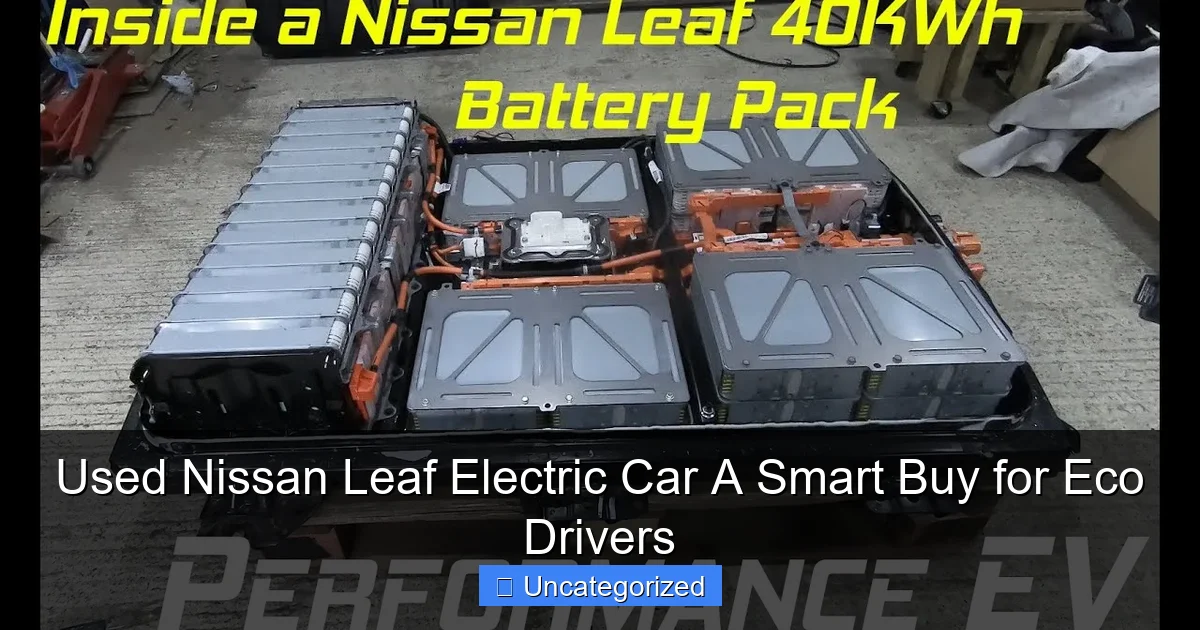
Featured image for used nissan leaf electric car
Image source: i.ytimg.com
The used Nissan Leaf electric car delivers exceptional value for eco-conscious drivers, combining zero-emission performance with a budget-friendly price tag. With reliable battery options and low maintenance costs, it’s a smart, sustainable choice for city commuters and first-time EV buyers alike.
Key Takeaways
- Proven reliability: The used Nissan Leaf offers dependable performance with minimal maintenance needs.
- Affordable entry: Lower upfront cost than new EVs, ideal for budget-conscious eco drivers.
- Check battery health: Always verify battery capacity and degradation before purchasing.
- Charging convenience: Compatible with Level 1 and 2 chargers for home or public use.
- Eco-friendly value: Zero emissions and lower operating costs than gas-powered vehicles.
- Trim matters: Higher trims offer more range and features—prioritize based on needs.
📑 Table of Contents
- Introduction: Why the Used Nissan Leaf is a Game-Changer for Eco-Conscious Drivers
- Why Buy a Used Nissan Leaf? The Top 5 Advantages
- Understanding Nissan Leaf Generations: What to Look For
- Critical Inspection Checklist for Buying a Used Leaf
- Maximizing Your Used Leaf: Ownership Tips and Tricks
- Real-World Ownership Data: What the Numbers Say
- Conclusion: The Used Nissan Leaf as a Sustainable, Economical Choice
Introduction: Why the Used Nissan Leaf is a Game-Changer for Eco-Conscious Drivers
The electric vehicle (EV) revolution is no longer a futuristic concept—it’s happening now, and the used Nissan Leaf electric car is one of the most accessible entry points into this sustainable movement. Since its global debut in 2010, the Nissan Leaf has become one of the best-selling electric cars in history, with over 600,000 units sold worldwide. For eco-conscious drivers, budget-savvy buyers, and urban commuters alike, a used Nissan Leaf offers a compelling blend of affordability, reliability, and environmental responsibility. Unlike gas-powered vehicles, EVs like the Leaf produce zero tailpipe emissions, significantly reducing your carbon footprint and helping combat climate change.
But what makes the used Nissan Leaf such a smart buy? Beyond its green credentials, the Leaf delivers low operating costs, minimal maintenance, and a surprisingly smooth driving experience. As battery technology and charging infrastructure have matured, older models have become even more practical. With prices for used Leafs ranging from $7,000 to $20,000 depending on model year and battery health, this EV opens the door to electric mobility for a broad audience. Whether you’re a first-time EV buyer or looking to downsize your carbon footprint without downsizing your lifestyle, the Nissan Leaf stands out as a pragmatic, planet-friendly choice.
Why Buy a Used Nissan Leaf? The Top 5 Advantages
1. Exceptional Affordability Compared to New EVs
One of the most compelling reasons to consider a used Nissan Leaf electric car is cost. A brand-new EV, even with incentives, often starts above $30,000. In contrast, a 2015–2018 Leaf with 50,000–70,000 miles can be found for under $10,000. For example, a 2017 Leaf SV with a 30 kWh battery typically sells for $9,500–$11,000—less than half the original MSRP. This makes it one of the most cost-effective ways to enter the EV market.
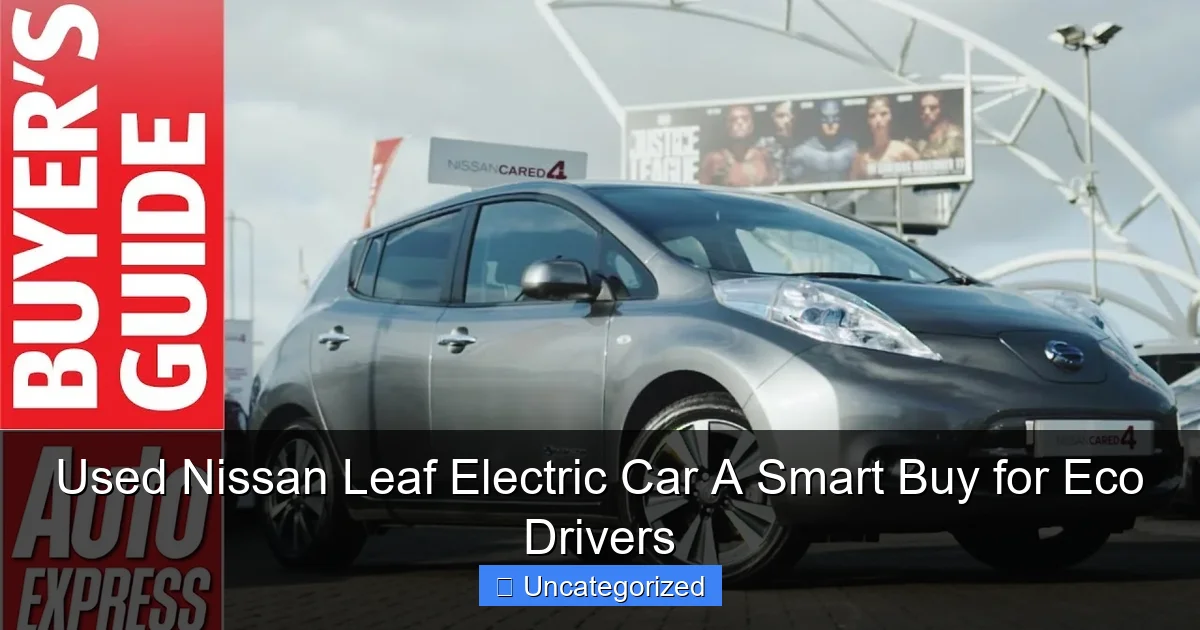
Visual guide about used nissan leaf electric car
Image source: i.ytimg.com
Additionally, used EVs often come with transferable federal or state tax credits (if purchased from a dealership), further reducing the effective price. Unlike new cars that depreciate rapidly in the first few years, a used Leaf has already absorbed most of its depreciation, meaning your investment holds value better over time.
2. Lower Operating and Maintenance Costs
Electric vehicles have fewer moving parts than internal combustion engine (ICE) vehicles, which translates into dramatically lower maintenance costs. The Nissan Leaf requires no oil changes, spark plug replacements, or exhaust system repairs. According to a 2022 study by Consumer Reports, EV owners spend about 50% less on maintenance over the life of the vehicle compared to gas cars.
For a used Leaf, common maintenance items include:
- Brake fluid replacement every 2–3 years
- 12V battery replacement every 3–5 years
- Tire rotations and alignments (same as ICE vehicles)
- HVAC filter changes
The regenerative braking system also reduces wear on brake pads, often lasting 80,000+ miles—double that of a typical gas car.
3. Proven Reliability and Real-World Longevity
The Nissan Leaf has been on the road for over a decade, giving it a well-documented track record. While early models (2011–2012) faced battery degradation issues in hot climates, Nissan responded with improved thermal management systems starting in 2013. By 2016, the Leaf’s battery design was robust enough to withstand daily use in most U.S. regions.
Real-world data from Plug-In America shows that Leafs driven in temperate zones (e.g., Pacific Northwest) retain 85–90% of their original range after 8 years. Even in hot areas like Arizona, proper care (e.g., avoiding full charges in summer, using climate control pre-conditioning) can mitigate degradation. Many owners report driving their Leafs over 100,000 miles with minimal issues.
4. Eco-Friendly Lifecycle with Minimal Carbon Footprint
Buying a used Nissan Leaf isn’t just about saving money—it’s about reducing environmental impact. Manufacturing a new EV produces more emissions than building a gas car, but reusing an existing vehicle avoids this “carbon debt.” According to the Union of Concerned Scientists, a used EV breaks even environmentally after just 6–18 months of driving compared to a new gas car.
The Leaf’s battery is also recyclable. Nissan has partnered with recycling firms like Redwood Materials to recover up to 95% of battery materials, ensuring responsible end-of-life management.
5. Access to EV Incentives and Perks
Even as a used car, the Nissan Leaf may qualify for local incentives. For example:
- California: Clean Fuel Reward (up to $1,500 for income-eligible buyers)
- Oregon: Used EV rebate of up to $2,500
- Utility programs: Many offer discounted home charging installation or time-of-use electricity rates for EV owners
Additionally, Leafs are often exempt from tolls, congestion charges, and HOV lane restrictions in cities like Seattle and Los Angeles.
Understanding Nissan Leaf Generations: What to Look For
First Generation (2011–2017): The Pioneer Years
The original Leaf (ZE0) launched with a 24 kWh battery, offering 73–84 miles of EPA-rated range. While modest by today’s standards, this was revolutionary for 2011. Key features included:
- Standard CHAdeMO DC fast charging (uncommon in early EVs)
- Regenerative braking with “e-Pedal” mode (2013+ models)
- Basic infotainment with Bluetooth (SV/SL trims)
Pros: Proven durability, low purchase price, widespread parts availability.
Cons: Limited range, no heat pump (colder climates see 30–40% range loss), older battery tech.
Tip: For buyers in warm states (e.g., Texas, Florida), a 2013–2017 Leaf with a 24 or 30 kWh battery is ideal for city driving. Avoid 2011–2012 models in hot climates unless the battery has been replaced.
Second Generation (2018–2023): The Modern Upgrade
The redesigned Leaf (ZE1) introduced a 40 kWh battery (150 miles EPA) and optional 62 kWh “e+” model (226 miles). Key improvements:
- Heat pump for efficient cabin heating (reduces winter range loss)
- NissanConnect EV with smartphone app (remote climate control, charging status)
- ProPILOT Assist (semi-autonomous driving on highways)
- Improved interior materials and cargo space
Pros: Better range, modern tech, improved ride quality.
Cons: Higher price point (typically $15,000–$20,000 used), slightly heavier weight.
Tip: The 2018+ Leaf is a sweet spot for buyers who need longer range or plan to drive in cold climates. Look for “e+” models if you want over 200 miles of range.
Battery Capacity and Range: Matching Your Needs
Battery size directly impacts range and value:
- 24 kWh (2011–2015): 73–84 miles → Best for short commutes (≤20 miles/day)
- 30 kWh (2016–2017): 107 miles → Ideal for urban/suburban use
- 40 kWh (2018–2022): 150 miles → Covers most daily needs
- 62 kWh “e+” (2019–2023): 226 miles → Suitable for road trips
Example: A family in Chicago might prioritize a 2019 Leaf e+ for winter driving, while a retiree in San Diego could opt for a 2017 Leaf S with 30 kWh.
Critical Inspection Checklist for Buying a Used Leaf
1. Battery Health: The Heart of the EV
The battery is the most expensive component to replace (~$8,000–$12,000). To assess health:
- Check the “Battery Capacity” gauge: Located in the dashboard, it shows remaining capacity as a percentage of original. Aim for ≥75% (e.g., 30 kWh battery should show ≥22.5 kWh).
- Request a battery report: Many dealers use tools like LeafSpy (OBD2 dongle + app) to provide detailed health data. Look for:
- SOH (State of Health): ≥80% is excellent
- Internal resistance: Low values indicate healthy cells
- Ask about battery history: Has it been replaced under warranty? (Nissan offers 8-year/100,000-mile battery coverage in most states.)
Tip: Test drive in cold weather if possible. A battery with high internal resistance may lose 20–30% range when temperatures drop below 32°F.
2. Charging System and Connectivity
Verify all charging functions work:
- Level 1 (120V): Should charge at 1.4 kW (adds ~4 miles/hour)
- Level 2 (240V): Should charge at 3.3–6.6 kW (adds 10–25 miles/hour). Bring a portable EVSE to test.
- DC Fast Charging (CHAdeMO): Available on all Leafs except base 2023 models. Should charge at 50 kW (adds ~70 miles in 30 minutes).
Also test the NissanConnect EV app to ensure remote start, climate control, and charging scheduling work properly.
3. Tires, Brakes, and Suspension
EVs are heavier than gas cars (Leaf: 3,400–3,900 lbs vs. 2,800–3,200 lbs for a Corolla). Inspect:
- Tires: Look for uneven wear (sign of alignment issues) and tread depth (≥4/32″).
- Brakes: Regenerative braking reduces pad wear, but rotors may rust if the car sits idle.
- Suspension: Test for clunking sounds over bumps (check control arm bushings).
4. Software and Recall Compliance
Ensure all software updates are installed:
- 2018+ Leafs: Must have the latest NissanConnect firmware to avoid connectivity issues.
- Recall checks: Visit NHTSA.gov/recalls and enter the VIN. Common past recalls include:
- 2013–2015: Inverter software update
- 2018–2019: Propilot Assist calibration
Maximizing Your Used Leaf: Ownership Tips and Tricks
1. Charging Smartly to Extend Battery Life
To preserve battery health:
- Keep charge between 20% and 80% for daily use. Reserve 100% for long trips.
- Avoid DC fast charging daily: Use Level 2 charging (240V) when possible.
- Pre-condition the battery: In cold weather, plug in while parked to warm the battery before driving.
Example: A Leaf owner in Minneapolis uses a timer to pre-heat the cabin while still plugged in, reducing battery drain during morning commutes.
2. Winter Driving: Beating the Cold
Cold weather reduces range by 30–40%. Mitigate this by:
- Using seat heaters instead of cabin heat (uses 5x less energy)
- Parking in a garage or using a car cover
- Activating “Eco” mode to limit power output
First-gen Leafs (no heat pump) suffer more in winter. Consider a 2018+ model if you live in a cold climate.
3. Home Charging Setup: What You Need
For home charging:
- Level 1 (120V): Use the included portable charger. Takes 20+ hours for a full charge.
- Level 2 (240V): Install a 32-amp EVSE (e.g., ChargePoint Home Flex). Costs $600–$1,200 with installation. Charges a 40 kWh Leaf in ~6 hours.
Tip: Many utility companies offer rebates covering 50–100% of installation costs. Check with your provider.
4. Finding Public Charging: Apps and Networks
Use these tools to locate chargers:
- PlugShare: Crowdsourced map with real-time availability
- ChargePoint: Largest U.S. network (many free or low-cost stations)
- Electrify America: Offers 30 minutes of free charging for Nissan owners
Real-World Ownership Data: What the Numbers Say
| Model Year | Battery Size (kWh) | Avg. Used Price (2024) | Avg. Range (EPA) | Battery Degradation (After 5 Years) | Annual Maintenance Cost |
|---|---|---|---|---|---|
| 2015 | 24 | $8,500 | 84 miles | 15–20% | $250 |
| 2017 | 30 | $10,200 | 107 miles | 10–15% | $275 |
| 2019 | 40 | $15,800 | 150 miles | 5–8% | $300 |
| 2021 (e+) | 62 | $19,500 | 226 miles | 3–5% | $325 |
Data sources: Kelley Blue Book, Plug-In America, Consumer Reports (2023)
This table illustrates key trends: newer models command higher prices but offer better range, lower degradation, and modern features. The 2019 40 kWh model emerges as the “sweet spot” for most buyers, balancing cost and capability.
Conclusion: The Used Nissan Leaf as a Sustainable, Economical Choice
The used Nissan Leaf electric car represents a rare trifecta: affordability, sustainability, and reliability. With over a decade of real-world testing, multiple generations to choose from, and a robust support network of parts and charging infrastructure, it remains one of the smartest EVs for budget-conscious eco-drivers. Whether you’re drawn to the Leaf’s zero-emission driving, low operating costs, or access to EV perks like HOV lane access, this vehicle proves that going green doesn’t require a six-figure budget.
By following the inspection checklist, understanding battery health, and leveraging home charging, you can enjoy years of dependable, planet-friendly transportation. The Leaf may not have the flash of a Tesla or the luxury of a BMW i3, but it delivers where it counts: in daily usability, cost savings, and environmental impact. As EV technology continues to evolve, the used Leaf stands as a testament to how far electric mobility has come—and how accessible it has become for everyday drivers. For anyone considering their first EV, the Nissan Leaf isn’t just a smart buy; it’s a responsible one.
Frequently Asked Questions
What is the average price of a used Nissan Leaf electric car?
The average price of a used Nissan Leaf ranges from $10,000 to $20,000, depending on the model year, battery condition, and mileage. Older models (pre-2018) are more affordable, while newer ones with larger batteries cost more.
How does the battery life of a used Nissan Leaf hold up over time?
Nissan Leaf batteries typically last 8–10 years or 100,000 miles, but degradation varies based on usage and climate. Most used models still retain 70–80% capacity, with battery health reports available via dealerships or third-party apps.
Is a used Nissan Leaf electric car reliable for daily commuting?
Yes, the Nissan Leaf is a reliable choice for daily commutes, offering a smooth ride and low maintenance costs. Early models (2011–2017) have a 73–84 mile range, while 2018+ models reach 150+ miles, suiting most urban drivers.
What should I check before buying a used Nissan Leaf?
Inspect the battery’s health (ask for a degradation report), service history, and charging port condition. Also, verify if the car has the CHAdeMO fast-charging option, which is handy for longer trips.
Are there any common issues with used Nissan Leaf electric cars?
Early models may have battery cooling system problems, while some owners report HVAC system quirks. Regular software updates and proper maintenance help mitigate these issues, so review the vehicle’s service records.
Can I upgrade the battery in an older used Nissan Leaf?
Yes, Nissan offers a battery upgrade program for older Leafs, replacing the original pack with a higher-capacity one (e.g., upgrading from 24kWh to 40kWh). Costs vary, but it’s a cost-effective way to extend range.